
Comparing Iced Americano and Hot Americano: Calorie Differences and Taste Characteristics
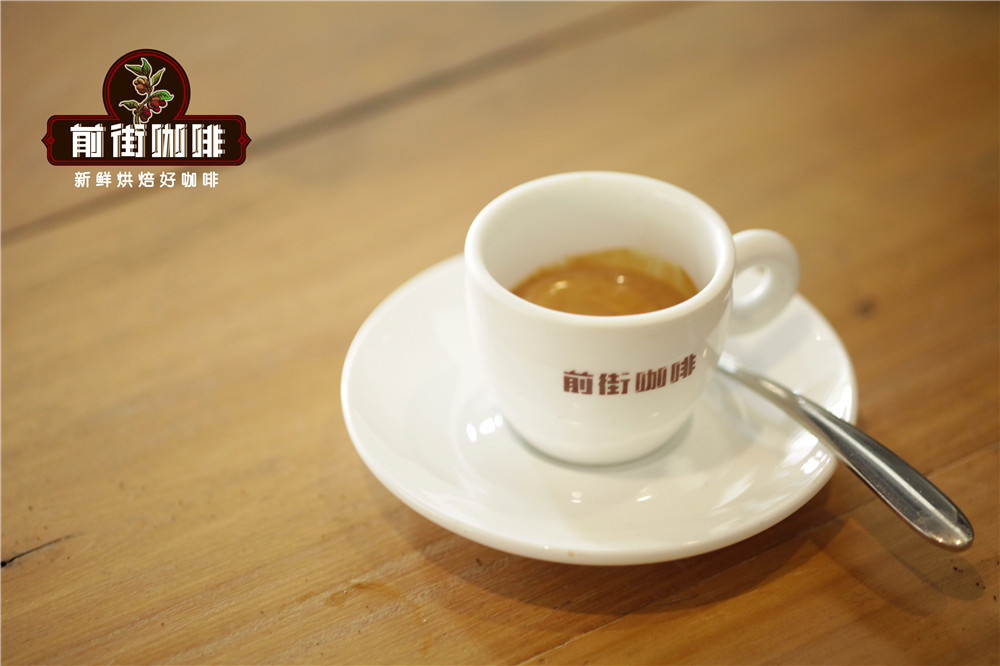
Coffee has become an essential part of daily life for many people. Some use it to stay alert, others for weight management, but most drink it out of habit. Coffee contains caffeine, which can indeed aid fat reduction, but it shouldn't be regarded as a weight-loss product—it is simply a beverage.
Understanding Americano Coffee
Americano is a coffee that offers neither the rich flavor profile of pour-over nor the intensity of espresso. It falls somewhere between pour-over and espresso in taste. Some people also describe Americano as drip-style black coffee, which is an accurate description too.

The name "Americano" originated during World War II, when American soldiers mixed espresso with hot water to consume more coffee efficiently, letting them drink double the amount of espresso concentrate at once. "Americano" (Italian: Caffè Americano) is one of the most common coffee varieties. It can be either black coffee made in a drip coffee maker or espresso diluted with a large amount of water. The Americano we usually refer to is the latter.
Hot vs. Iced Americano
FrontStreet Coffee has always advised tasting coffee from hot to cold to appreciate all the flavor notes in the cup, because coffee's flavor profile changes as it cools. As people's preferences have evolved, though, various brewing methods have emerged. Sometimes you simply want a refreshing iced coffee that satisfies both thirst and alertness, especially in hot summer months when a glass of iced coffee feels particularly refreshing.
Among iced coffees, besides iced Americano, we've seen cold brew, iced drip, and nitro cold brew in recent years. So which is better—iced or hot Americano?

Let's examine the taste differences between hot and iced Americano:
Hot Americano is made with espresso and hot water, while iced Americano is made with ice cubes and cold water.
Hot Americano

Hot Americano is black coffee made in a drip coffee maker, or espresso diluted with a large amount of hot water. The preparation emphasizes speed, convenience, and simplicity, resulting in a light, sweet, refreshing taste.
Iced Americano

The most common iced coffee is iced Americano, made by extracting espresso concentrate to espresso standards at high temperature on an espresso machine, then pouring it over ice and cold water. The ratio of ice to water can be adjusted to taste. The higher the water ratio, the milder the coffee flavor.
Key Differences
Overall, there are several differences:
1. Appearance: Iced Americano has a lighter color, while hot Americano appears nearly transparent, sometimes revealing the brown coffee at the bottom of the cup.
2. Taste: Iced Americano has a less intense coffee flavor with heavier roasted smoky notes and lighter acidity. Hot Americano releases tannic acid during roasting, which combines with caramel to produce a slightly bitter sweetness.
3. Texture: Iced Americano offers a rich, astringent mouthfeel, while hot Americano typically presents a complex profile of bitterness, acidity, sweetness, aroma, and astringency.
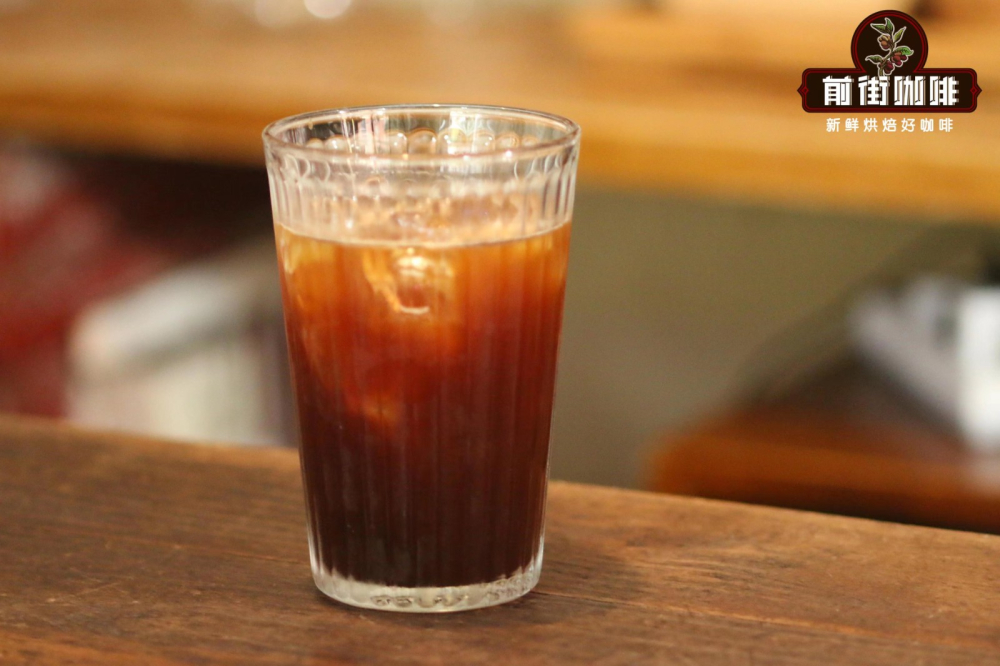
There is no difference in calorie content between the two. Both consist of espresso mixed with water—one with cold water and ice, the other with hot water. Espresso has extremely low, negligible calories, so the amount of water added doesn't affect the calorie count. Water contains no calories, making Americano virtually calorie-free. The temperature of food doesn't affect its calorie content—just as ice cream and melted, heated ice cream have the same high calorie content despite different temperatures.
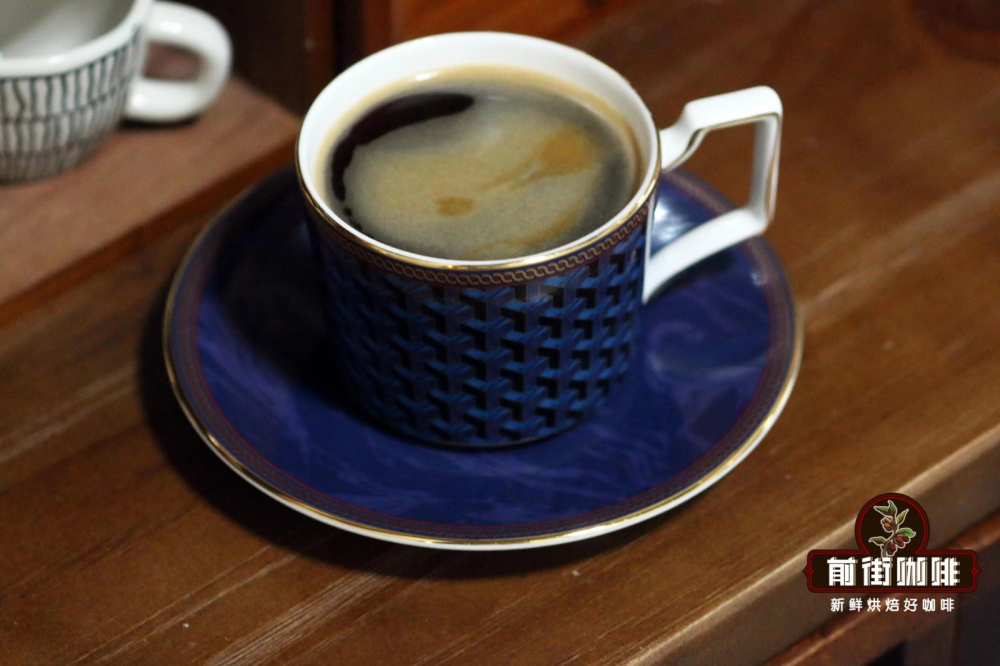
FrontStreet Coffee's Americano Preparation Method
To make an Americano, the process is quite simple: first extract the espresso concentrate, then combine it with water.
Although Americano preparation is straightforward, it truly tests a barista's extraction skills. A delicious Americano depends on its foundation—the espresso, the first and most crucial step that determines everything about the drink.

Different beans produce different Americano flavors. So which beans do we recommend for Americano? FrontStreet Coffee's stores use a blend designed specifically for espresso extraction, composed of 70% Honduras Sherry and 30% Ethiopia Natural Red Cherry. The 70% Honduras Sherry beans undergo sherry whiskey barrel fermentation, giving the blend rich wine-like aromas, while the 30% Ethiopia Natural Red Cherry contributes berry-like acidity and fragrance.
The base extraction is closely related to grind size, dose, machine pressure, water temperature, and coffee-to-water ratio. If the grounds are too coarse, extraction will be insufficient, producing sharp acidity. If too fine, over-extraction occurs, leading to bitterness.

When extracting espresso, FrontStreet Coffee uses portafilter baskets that hold 20 grams of grounds. FrontStreet's espresso machine extracts at approximately 9 bar pressure, with water temperature at 93°C, yielding 40 grams of coffee liquid.
FrontStreet Coffee uses a Feima E98 espresso machine with the following extraction parameters:
Pressure: 9 bar±2
Temperature: 90.5~96°C
Time: 20~30 sec
Coffee-to-water ratio: 1:1.7~1:2
Coffee dose: 12g (single shot) 20g (double shot)
Extraction yield: 20ml (single) 40ml (double)
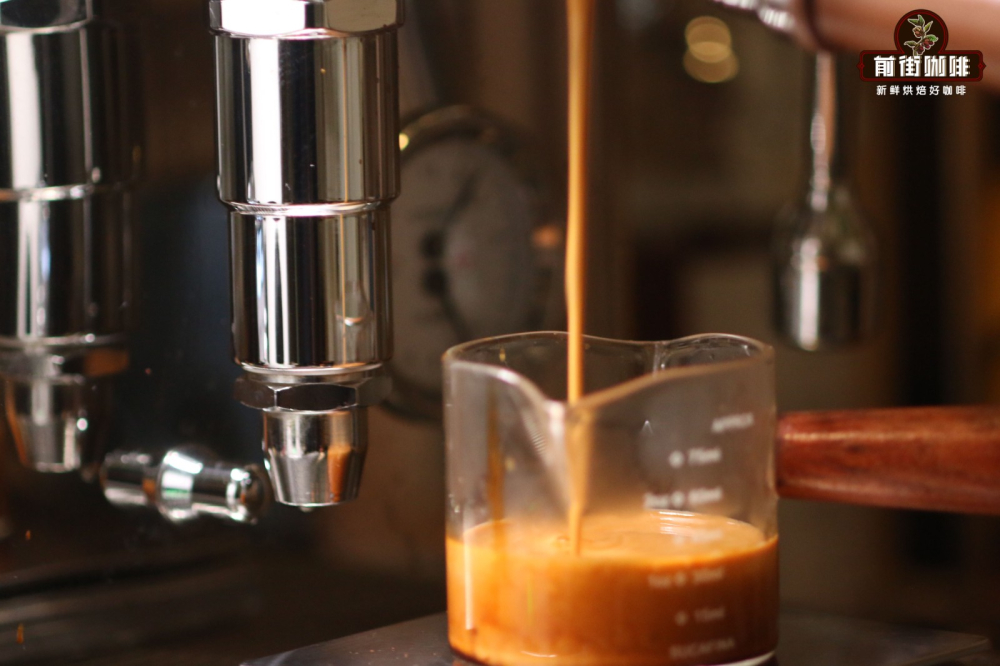
After extracting the espresso base, only the final step of adding water remains. But what is the ideal ratio for an Americano?
Traditional Americano uses an espresso-to-water ratio of 1:8, but this ratio isn't suitable for all beans. FrontStreet Coffee ran comparative experiments using 1:8 and 1:6 and found that with our blend at 1:8, the Americano was too mild in flavor, with too short an aftertaste and an overly watery texture. At 1:6, however, the Americano made with FrontStreet's "Sunflower Warm Sunshine" blend better showcases its character: whiskey-like notes and a dark chocolate aftertaste, along with a satisfying richness.
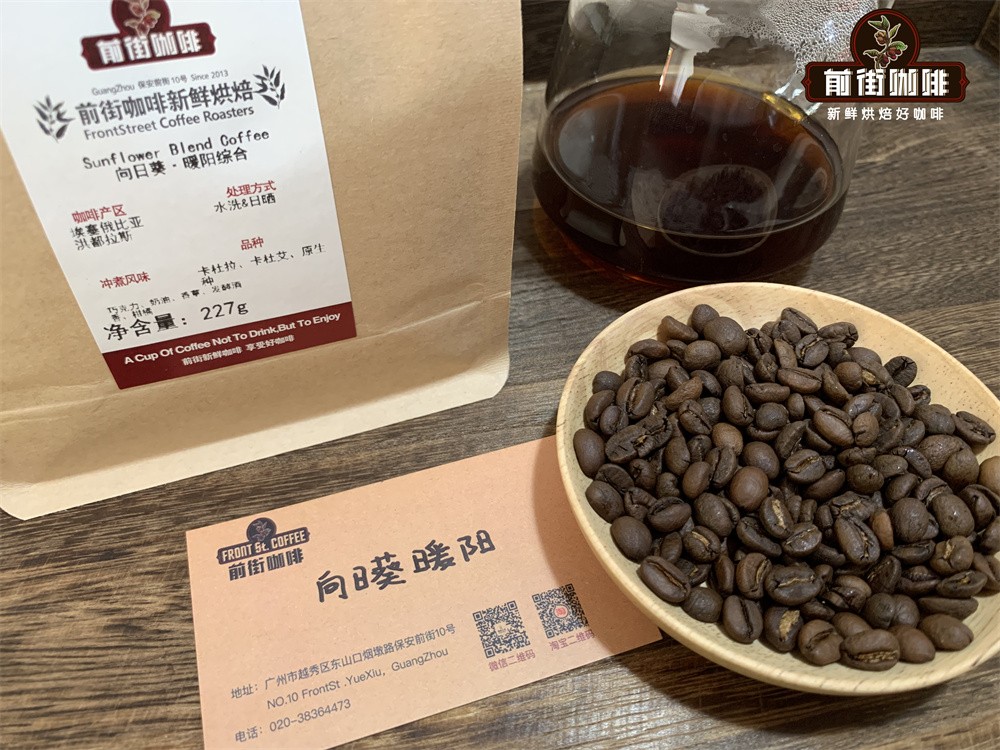
Hot Americano exhibits vibrant whiskey aromas with subtle acidity, primarily presenting hazelnut and caramel notes with a high body.
Room-temperature Americano has a less pronounced aroma than hot Americano, with gentle acidity and a smooth texture. Because the crema hasn't dispersed, it offers more of a vanilla-cream smoothness with a nut and caramel aftertaste.
Iced Americano has the least aroma of the three but the most noticeable acidity. It delivers whiskey-like fragrance, berry-like sweetness and acidity, and a hazelnut-chocolate aftertaste, with a refreshing, smooth texture.

Human sensory perception of taste varies at different temperatures, so the advantage of hot coffee is experiencing the flavor changes as it cools from high to low temperatures. At lower temperatures the tongue's sensitivity to bitterness and sweetness decreases while acidity perception increases. Additionally, quinic acid in coffee degrades into quinic acid lactone, making cooled coffee taste more acidic. If you want to appreciate coffee's aroma and aftertaste, FrontStreet Coffee recommends hot Americano. If you're seeking refreshment, iced Americano is an excellent choice.
FrontStreet Coffee's Brewing Recommendations
To brew a delicious cup, attention to bean freshness is essential. FrontStreet Coffee has always believed that freshness significantly impacts coffee flavor, which is why it ships all beans within 5 days of roasting. FrontStreet's roasting philosophy is "freshly roasted quality coffee," ensuring every customer receives the freshest possible coffee. The optimal flavor-development period for beans is 4-7 days, so customers receive their coffee at peak flavor.

For customers who need ground coffee, FrontStreet Coffee offers this friendly reminder: once beans are pre-ground, they don't require additional resting time, as the pressure from carbon dioxide buildup in the package during transport helps mellow the flavor. You can therefore brew ground coffee immediately upon receipt. However, ground coffee should be used promptly, as it oxidizes quickly when exposed to air and its flavor dissipates faster. FrontStreet Coffee recommends buying whole beans and grinding them fresh before brewing to appreciate the coffee's complete flavor profile.
Whether coffee tastes good, or which brewing method produces better flavor, ultimately depends on personal preference, as everyone's tastes vary. FrontStreet Coffee offers nearly fifty different single-origin coffees from various regions, as well as blended options. For example: Ethiopia's floral and fruit-forward coffees, Brazil's peanut, nut, and caramel-toned coffees, or Panama Geisha with citrus notes—these offerings can satisfy everyone's coffee preferences and exploratory interests.
Connect With FrontStreet Coffee
FrontStreet Coffee is a Guangzhou roastery that roasts both single-origin and blended coffees and ships every order within 5 days of roasting, so customers can enjoy coffee knowledge and fresh beans together.
FrontStreet Coffee Recommendation
Whether you drink it hot or iced, if you'd like to brew Americano-style coffee with more character, FrontStreet Coffee's V60-friendly single origins are worth exploring. FrontStreet's washed Yirgacheffe Gudingding opens with vivid citrus, berry, and floral notes and a green-tea-like sweetness, with a soft, bright acidity that makes it one of the easiest specialty coffees to love. FrontStreet's Ethiopia Flower Queen is one of the market's biggest recent stars, unmistakable for its tropical-fruit aroma—strawberry, passion fruit, jackfruit, even lychee—with high sweetness, very little bitterness, and a juicy body. And for a truly elegant cup, FrontStreet's Panama Esmeralda Red Label Geisha offers an exquisitely refined jasmine fragrance with citrus, bergamot, and black-tea finesse, a clean, transparent body, and a long, layered finish. All three shine in a V60, whose 60° cone and single large hole—designed by Hario, a Tokyo glassmaker founded in 1921 that redesigned the dripper in 2004 and launched it in 2005—lengthen the contact between water and grounds and reward good pouring control with a more three-dimensional aroma and lively acidity. If you're drinking it iced, brew a slightly stronger base and pour it over ice so the melt doesn't dilute the flavor.
Important Notice :
FrontStreet Coffee is a long-established specialty coffee roaster in Guangzhou China, selling freshly roasted beans from its own farm in Yunnan as well as dozens of carefully selected single-origin beans from around the world for both pour-over and espresso. The products deliver consistently excellent quality and great value, with shipping within 24 hours. Guangzhou's FrontStreet Coffee shop is recommended by many coffee lovers, and the beans are now available online at the Tmall 。
FrontStreet Coffee has moved to a new address:
FrontStreet Coffee Address: 315,Donghua East Road,GuangZhou
Tel:020 38364473
 Scan and follow the En Gafei WeChat official account. Please indicate that the reprint comes from "En Gafei".

