
What is Blue Mountain Style Coffee: Authentic Blue Mountain Coffee Bean Brands, Grades, and Flavor Characteristics

Search "Blue Mountain" in any search engine and you'll be flooded with articles about spotting authentic Blue Mountain coffee. The reason is simple: Blue Mountain's international reputation has tempted plenty of unscrupulous merchants to pass off cheaper commercial coffee as the real thing, and the market is awash in fakes — products labeled "Blue Mountain flavor," "Blue Mountain blend," or "Blue Mountain instant" that have nothing to do with genuine Blue Mountain coffee.
What Is Blue Mountain Flavor?
Blue Mountain coffee was once hailed as the "Hermès of the coffee world." The so-called Blue Mountain character means rich, dense, long-lasting chocolate and roasted hazelnut aromas, with flawless balance among acidity, sweetness, bitterness, fragrance, and body. FrontStreet Coffee believes Blue Mountain's standing is inseparable from the careful cultivation and strict grading system maintained by Jamaican growers.
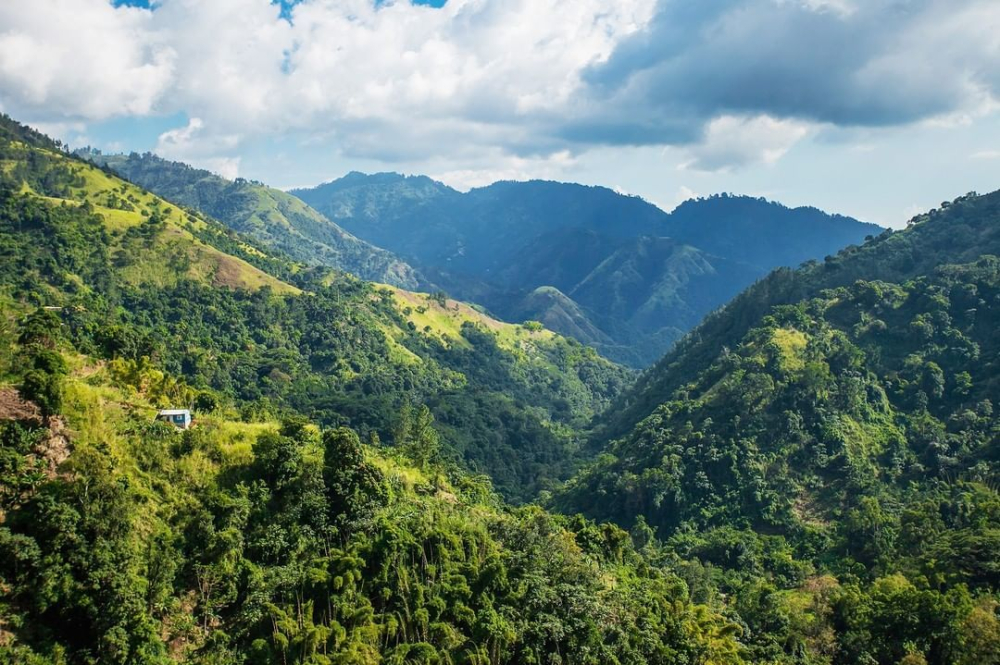
The Blue Mountain region enjoys exceptional terroir — a rare combination of conditions that forms a near-perfect coffee-growing environment. As with any agricultural product, the final flavor of the coffee is shaped by variety, altitude, harvesting, and post-harvest processing.
By the official definition of the Jamaica Coffee Industry Board (CIB), only Typica coffee grown in designated forest zones at 910–1,700 meters may be called authentic "Jamaican Blue Mountain coffee." Typica needs high altitudes to show its best qualities, but the variety has poor disease resistance, is highly susceptible to infection, and yields little fruit per plant, demanding extra human care. The rugged terrain of the Blue Mountains' highlands makes management and harvesting difficult, requiring highly skilled pickers — which further constrains production. In recent years, less than 15% of Jamaican coffee beans can be labeled Blue Mountain, roughly 900 tons.
Many people have heard the rumor that "authentic Blue Mountain has been monopolized by Japan." The claim isn't baseless. UCC — the Japanese coffee company formerly known as Ueshima Coffee Co., Ltd. — established a farm in Jamaica in 1981 to run its Blue Mountain operation, and Jamaica committed to allocating 90% of Blue Mountain quotas to Japan. Combined with Japan's energetic promotion, this made Blue Mountain expensive and hard to find for decades. Today, with coffee culture flourishing worldwide, enjoying a cup is no longer difficult: at FrontStreet Coffee, a pour-over of authentic FrontStreet Jamaican Blue Mountain No. 1 costs just 60 yuan.
Not All Jamaican Coffee Is "Blue Mountain Coffee"
The CIB has designated roughly 6,000 hectares within the Blue Mountains with strict rules: only Typica coffee produced inside this zone may be called "Blue Mountain Coffee." Coffee from elsewhere on the island is labeled High Mountain Coffee or Jamaica Prime Coffee.
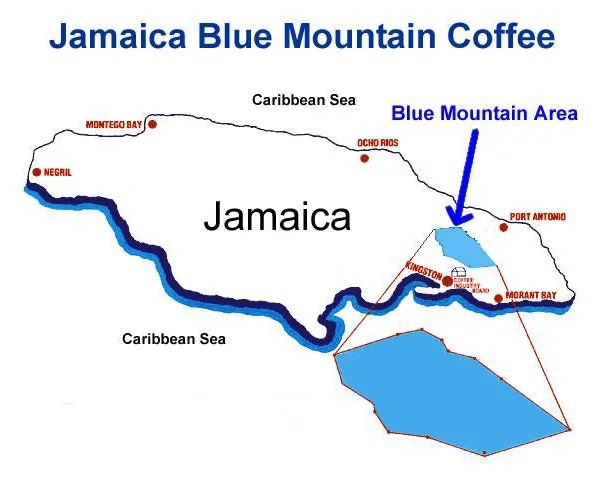
Within the CIB's boundaries, the forest zones where Blue Mountain coffee grows sit at 910–1,700 meters, spread mainly across St. Thomas, St. Mary, St. Andrew, and Portland — together accounting for one-third of the entire Blue Mountain growing region.
On the quality-control side, the CIB regulates the planting, production, and sale of Jamaican Blue Mountain coffee to raise quality, standardize production and processing procedures, and coordinate market sales. It is also responsible for grading all coffee produced in the Blue Mountains and for quality testing. In practice, this means every bag of Jamaican Blue Mountain sold worldwide must be CIB-certified and carry its label.
Jamaica was, in fact, the first coffee-producing country to formally recognize coffee's "regional flavor." The standards for evaluating Blue Mountain green beans span multiple categories: bean size, defect rate, color, uniformity, and post-roast cupping performance (dry aroma, wet aroma, acidity, flavor, body, cleanliness, and so on).

Under these standards, Blue Mountain coffee is divided into 4 grades, from highest to lowest: Blue Mountain No. 1, No. 2, No. 3, and Peaberry. Top-grade Blue Mountain No. 1 must screen at 17 mesh or larger, with a defect rate below 3% and moisture content around 13%, and must cup with rich aroma, a smooth balanced taste, low acidity, and a lasting aftertaste. After quality testing, different grades are shipped in different packaging: Blue Mountain No. 1, No. 2, and No. 3 are the only coffees in the world exported in wooden barrels, in three sizes — 70kg, 30kg, and 15kg — while all other grades of Jamaican coffee go out in 60kg jute bags.
How to Brew Blue Mountain Flavor?
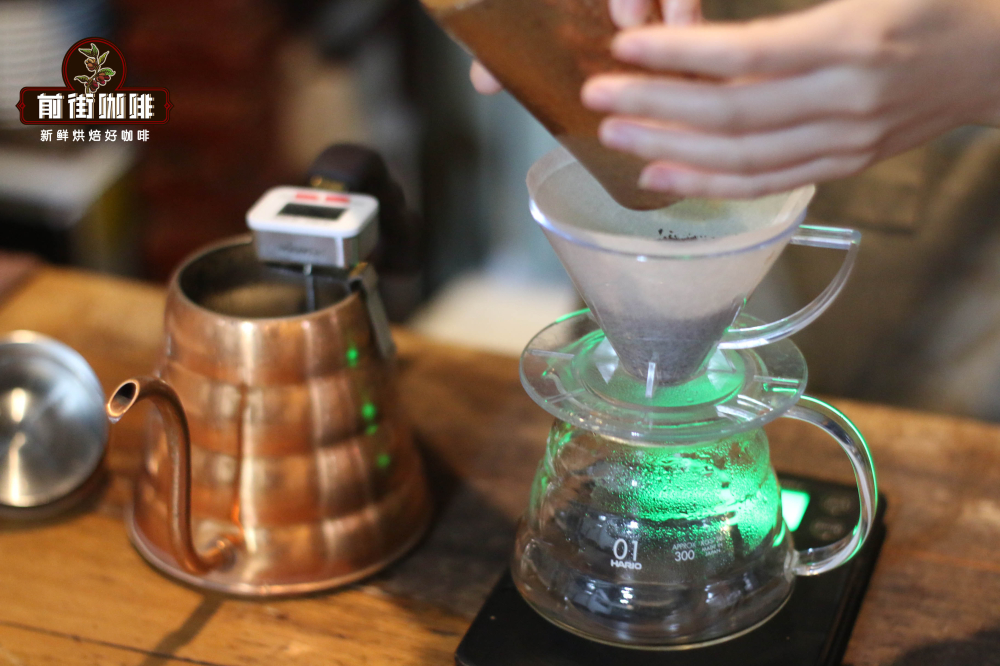
To highlight the rich, mellow body of FrontStreet Jamaican Blue Mountain No. 1, FrontStreet Coffee brews it with a KONO dripper. The KONO's ribs are less than half the height of the cup, so after wetting, the filter paper presses flush against the wall, restricting airflow and lengthening the coffee particles' contact time with water for more even extraction. As a bonus, the KONO works beautifully not just for Blue Mountain No. 1 but also for FrontStreet Brazil Queen Estate, FrontStreet PWN Golden Mandheling, and other medium-dark roasted beans.
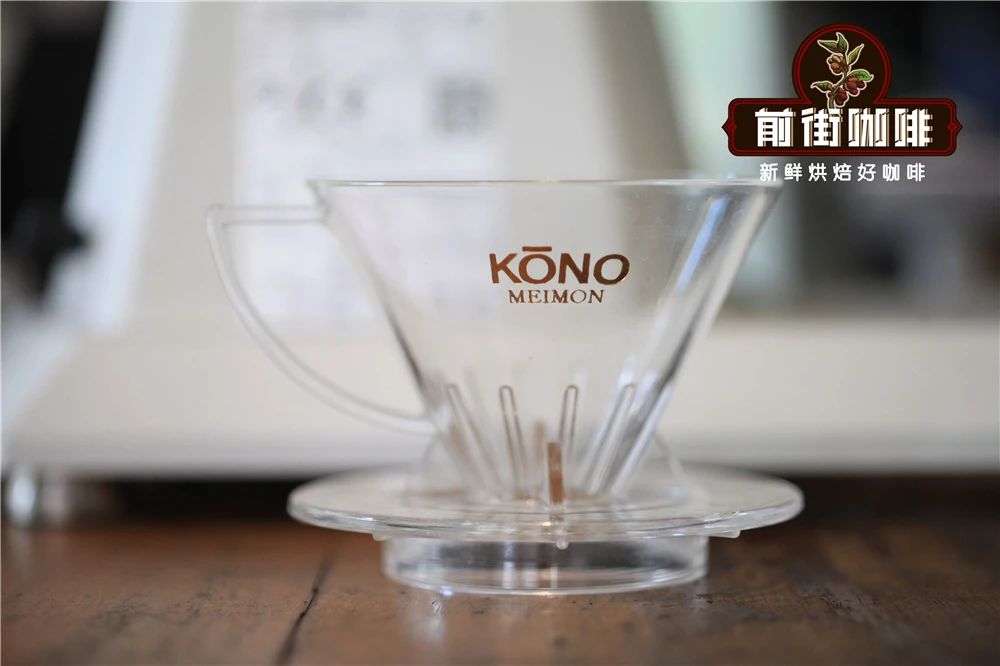
Brewing parameters: 15g of coffee, 1:15 ratio, grind size at EK43s setting 10.5 (75% retention on the China #20 standard sieve), water at 87–88°C, segmented pouring.
Set the filter paper in the KONO, rinse it to seat it snugly, add the coffee, and tap gently to level the bed. Pour 30g of water gently to bloom for 30 seconds. Then pour to about 125g, circling evenly and steadily outward. Wait for the liquid to draw down to half, then finish pouring to 225g. Let everything drip through — total extraction time about 2 minutes.
The finished cup of FrontStreet Jamaican Blue Mountain No. 1 presents dark chocolate and nutty notes with very rich body and a distinct almond aftertaste. As it cools, roasted hazelnut and creamy sweetness emerge, joined by a whisper of gentle acidity and caramel, with an aroma that lingers in the mouth.
FrontStreet Coffee Recommendation
FrontStreet Jamaica Blue Mountain No. 1
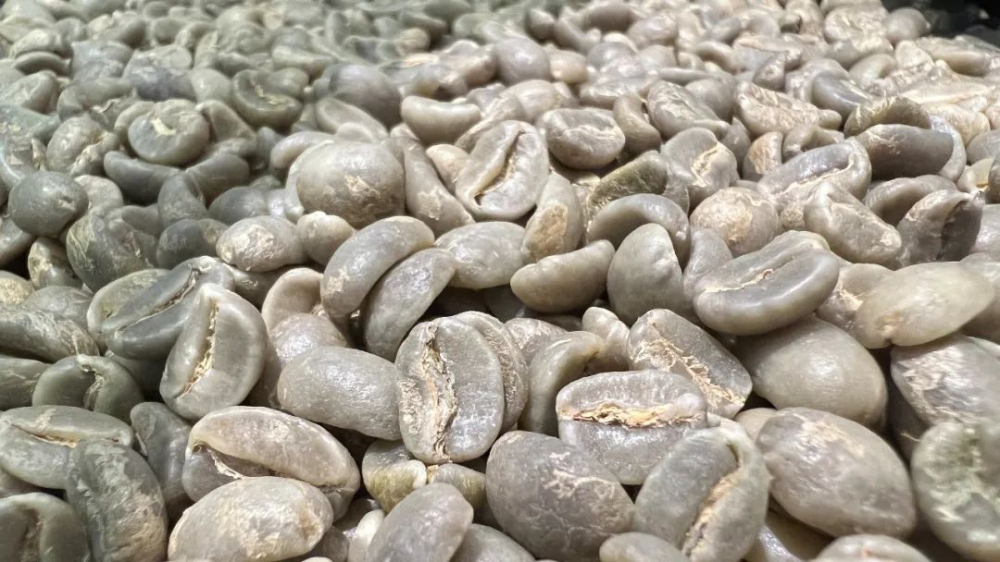
Blue Mountain's reputation was built on its balance: no harsh fruit acidity, no heavy bitterness, but an even, harmonious interplay of sweet, sour, bitter, and aromatic — cream, caramel, chocolate, nuts, honey, and a light fruit note, with a clean, long finish. Genuine Blue Mountain comes with Jamaica government certification and proof of origin, ships in wooden barrels stamped with batch details, and its green beans are plump and uniform with slightly upturned ends and a greenish hue. FrontStreet Coffee's Blue Mountain No. 1 comes from the historic Clifton Farm — growing coffee since around 1750 at an average of 4,300 feet (1,310.64 meters), where altitude, afternoon cloud and mountain shade, sunshine, and mineral-rich soil extend cherry ripening and shape the cup's finesse.
Brewing It at Home
FrontStreet Coffee roasts its Blue Mountain No. 1 medium-dark and ships it fresh within 5 days of roasting, so the beans arrive at full flavor. Rest them 4–7 days (roast day counts as day one), then brew on a Kono dripper for extra body: 15g of coffee, ground coarser than a light roast — about white-sugar coarseness — water at 87–88°C (too hot scorches, too cool flattens), and a 1:15 ratio. Pour in three stages: 30g to bloom for 30 seconds, then a slow fine stream in circles to 120g, pause, then continue to 225g with a slightly faster flow to prevent over-extraction. The result: a clean, complex, gentle cup with dense chocolate sweetness, strong body, moderate acidity, and a lasting fruity finish. If you prefer a bolder mug, the same beans also shine in a moka pot — slightly finer grind, start with hot water, heat over medium-low flame, and pull it off the heat just as the coffee finishes flowing, which amplifies the chocolate, caramel, and nut notes while keeping Blue Mountain's signature balance intact.
Important Notice :
FrontStreet Coffee is a long-established specialty coffee roaster in Guangzhou China, selling freshly roasted beans from its own farm in Yunnan as well as dozens of carefully selected single-origin beans from around the world for both pour-over and espresso. The products deliver consistently excellent quality and great value, with shipping within 24 hours. Guangzhou's FrontStreet Coffee shop is recommended by many coffee lovers, and the beans are now available online at the Tmall 。
FrontStreet Coffee has moved to a new address:
FrontStreet Coffee Address: 315,Donghua East Road,GuangZhou
Tel:020 38364473
 Scan and follow the En Gafei WeChat official account. Please indicate that the reprint comes from "En Gafei".

