Is Pour-Over Coffee Better Cold or Hot? At What Temperature Does Pour-Over Coffee Taste Best?
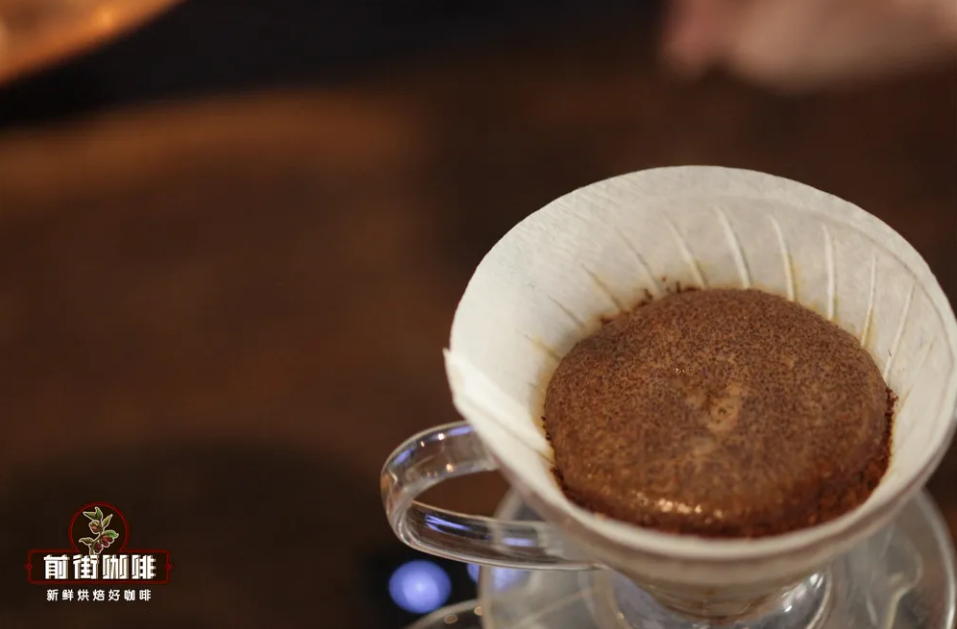
FrontStreet Coffee often points out that our perception of flavor shifts significantly depending on how hot the coffee is. At its highest temperature, for instance, the heat reduces the tongue's sensitivity, so bitterness is less pronounced while acidity and sweetness stand out more. As the coffee cools, bitterness gradually increases and becomes most obvious when the cup is cold. That is why dark-roasted beans are generally best drunk hot: bitterness at lower temperatures becomes pronounced enough to make the cup hard to finish.

Next comes medium temperature, which FrontStreet Coffee defines as close to body temperature, around 45°C-35°C. At this point our perception of sweetness is at its sharpest, which is when the coffee's sweetness and aftertaste are most apparent.
At low temperatures, both acidity and bitterness become more pronounced while sweetness fades. Unless a bean has special characteristics, coffee is generally not at its best once it has cooled down.
So, at what temperature does pour-over coffee taste best?

On why pour-over should be drunk hot, FrontStreet Coffee has shared several reasons before, but many readers found the difference hard to grasp because the explanation was not intuitive enough. So today FrontStreet Coffee is running a side-by-side comparison to make it clearer why hot pour-over is the way to taste the full flavor. First, here are the parameters FrontStreet Coffee uses for both methods.
Hot pour-over parameters: 15g of coffee, ground at setting 10 on the Ek43, water temperature of 92°C, a 1:15 coffee-to-water ratio, meaning 15g of coffee with 225ml of hot water, with a brewing time of about 2 minutes.
Iced pour-over parameters: 15g of coffee, ground at setting 9.5 on the Ek43, water temperature of 92°C, a 1:10 coffee-to-water ratio, meaning 15g of coffee with 150ml of hot water, and a 1:6 coffee-to-ice ratio, meaning 15g of coffee uses 90g of ice, though not all the ice will completely melt, with a brewing time of about 2 minutes.

As you can see, the main differences between the two are water amount and grind size. Iced pour-over uses less water because the ice provides rapid cooling. That is why we increase the coffee concentration by reducing the water, preventing the drink from turning into watery "coffee water" once the ice melts.
Because the water amount is reduced, though, the same brewing method can no longer extract enough flavor from the coffee. FrontStreet Coffee therefore grinds finer to raise the extraction rate appropriately. So the source of the difference comes mainly from using different amounts of water.

Because pour-over has no pressure assistance like an espresso machine, when water is not abundant it is hard to fully extract the flavor compounds we want through drip brewing alone. Next, FrontStreet Coffee will make this point clearer through an experimental comparison. Readers can also try this at home when they have time, since it directly demonstrates the difference between the two methods.
Comparative Experiment
FrontStreet Coffee brews two pots of coffee using 1:15 and 1:10 coffee-to-water ratios, with the parameters listed above. The difference is that the 1:10 coffee has no ice added and is instead diluted with hot water. This keeps the temperature and concentration of both pots similar, better showing the differences caused by the amount of extraction water.

The beans used this time are FrontStreet Coffee's Gudingding. Since the brewing method was covered in yesterday's article, FrontStreet Coffee will not go into it here. Once brewing is complete, we need to measure the liquid weight of both pots separately.

Measured, the pot with a 1:15 coffee-to-water ratio yielded 195ml of liquid, while the pot with a 1:10 ratio yielded 120ml.
We take a spoonful of coffee liquid, about 1ml, from each to test extraction rate, then add 70ml of 65°C hot water to the 1:10 coffee to dilute it to a concentration similar to the 1:15, and finally conduct a taste test.

No joke, the difference is truly significant. The 1:15 coffee had an extraction rate of 20.6%, with rich layers, full sweet and sour flavors, and tasting notes of citrus, strawberry, cream, and berries. After swallowing, a distinct honey-like aftertaste appeared.
The 1:10 coffee had an extraction rate of 18.1%, with relatively fewer layers and more prominent sweet and sour flavors, with almost no bitterness. Its tasting notes were strawberry, berries, and citrus. There was no aftertaste after swallowing, though it was still an enjoyable cup.

FrontStreet Coffee then had customers in the shop taste both pots and choose blindly. Unanimously, everyone chose the 1:15 coffee. The conclusion was that both were good, but the 1:15 had fuller flavors and tasted even better.
At this point some readers might ask: if the incomplete dissolution of compounds comes from too little water, could we compensate for the reduced extraction efficiency by grinding much finer and raising the water temperature? On extraction logic alone, the reasoning is correct. In actual practice, though, we have to consider not just the relationships between parameters but also issues beyond them, such as fine particles.

A finer grind does give more surface area for the coffee to contact water, but it also produces more fine particles. Fine particles dissolve faster than regular ones, meaning they more easily release all their bitter compounds.
FrontStreet Coffee once tested grinding to setting 7 on the Ek43 with all other parameters unchanged, brewing at a 1:10 ratio. The result was an extraction rate of 20%, within the Golden Cup range. It might look like a good cup on paper, but the actual taste was not pleasant. It showed no distinct flavors, mostly bitterness and off-flavors.

So when the grind is too fine, coffee easily becomes over-extracted because of the excess fine particles. Meeting an extraction rate standard only means the calculated figure is an average, which cannot measure how much sour, sweet, or bitter compounds are present. That is why most coffee shops' iced pour-overs make only minor adjustments to the original hot recipe to ensure stability, rather than chasing unstable extraction methods for a more prominent flavor expression.
Some shops, aiming for more complete extraction, increase the dose of coffee to increase the water used, which naturally reaches the goal but raises both cost and price, so most shops do not take that route for iced pour-over.

In conclusion, you can now see why pour-over should be drunk hot to taste its flavors. Hot brewing has enough water to dissolve the flavor compounds in the coffee, giving a more complete expression of flavor.
FrontStreet Coffee Recommendation
The flavor differences in this experiment come down to how much you can extract, so it pays to start with a bean that has plenty to give. FrontStreet Washed Yirgacheffe, as used in the test, brings white jasmine, bright citrus and lemon acidity, and a tea-like body. Yirgacheffe is a town in the Sidamo region of southern Ethiopia at roughly 1700-2100m, with trees planted above 1800m, one of the highest growing regions in the world.
For a fruitier, more layered cup to compare hot and iced side by side, FrontStreet Ethiopia Huakui is a strong pick, with tropical aromas of strawberry, passionfruit, jackfruit, and lychee, pronounced sweetness, and almost no bitterness. If you want a cleaner, more delicate profile, FrontStreet Panama Emerald Estate Red Label Gesha shows jasmine florals with citrus, bergamot, and black tea notes and a long, transparent finish.
Important Notice :
FrontStreet Coffee is a long-established specialty coffee roaster in Guangzhou China, selling freshly roasted beans from its own farm in Yunnan as well as dozens of carefully selected single-origin beans from around the world for both pour-over and espresso. The products deliver consistently excellent quality and great value, with shipping within 24 hours. Guangzhou's FrontStreet Coffee shop is recommended by many coffee lovers, and the beans are now available online at the Tmall 。
FrontStreet Coffee has moved to a new address:
FrontStreet Coffee Address: 315,Donghua East Road,GuangZhou
Tel:020 38364473
 Scan and follow the En Gafei WeChat official account. Please indicate that the reprint comes from "En Gafei".