
Is Vietnamese Weasel Coffee Authentic and Pure? Why Is Vietnamese Civet Coffee So Cheap?
Authentic Kopi Luwak comes from Indonesia and is one of the most expensive coffees in the world. Yet there is Vietnamese Kopi Luwak on the market that isn't very expensive, so what's going on? FrontStreet Coffee believes this situation is somewhat similar to Blue Mountain coffee. Authentic Jamaican Blue Mountain is one of the world's most expensive coffees with limited production, and precisely for that reason there are many coffees on the market labeled as Blue Mountain flavor or Blue Mountain coffee.
Vietnam primarily produces Robusta coffee, generally used for instant coffee and espresso blends, so the price isn't very high. Kopi Luwak, originally called Luwak coffee, was first produced in Indonesia. It is made from the feces of a tree-dwelling wild animal called the "civet cat" on the island of Sumatra, Indonesia, processed through multiple steps such as selection, drying, deodorization, processing, and roasting. Its price is extremely high, making it currently the most expensive and unique coffee variety.

The civet cat is a species unique to Indonesia. It seeks out ripe coffee cherries to eat. When the cherries are digested in the civet's body, the fruit skin, pulp, and pectin are broken down, but the parchment layer cannot be digested. The beans are eventually excreted through feces, which are then cleaned thoroughly, dried, and finally hulled to complete the whole green bean processing. Kopi Luwak beans undergo fermentation in the special environment of the civet's stomach, giving the beans special flavors with lower bitterness and higher body. Authentic Kopi Luwak beans have a rich taste with almost no acidity.
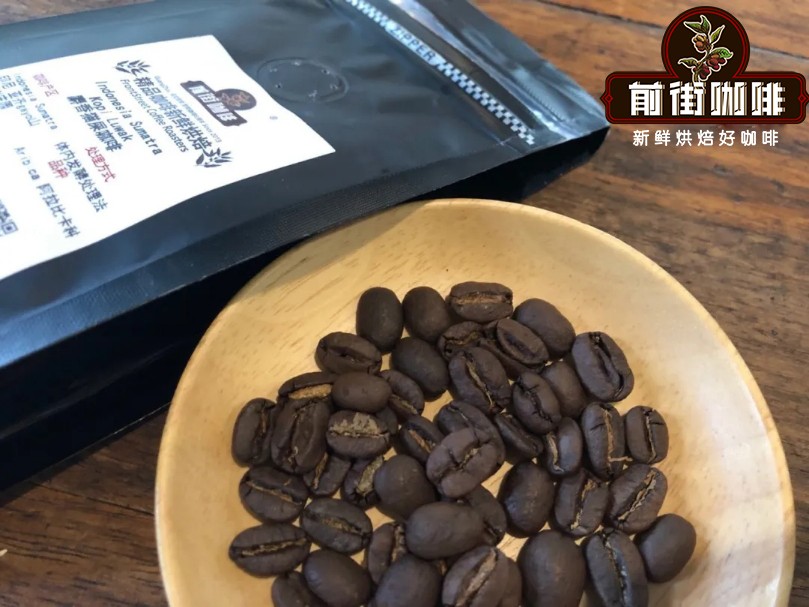
So Vietnamese Kopi Luwak is just coffee with a Kopi Luwak flavor, not authentic Kopi Luwak, and its price is naturally lower. Vietnam does have Kopi Luwak, but it differs in taste and quality from Indonesia's native Kopi Luwak. Indonesia's civets are local native species that evolved over long periods to feed on local mature, high-quality coffee beans, producing Kopi Luwak after internal fermentation. Vietnam's civets are introduced species that are supplemented with fed coffee beans, not naturally evolved, with significant human intervention.
Vietnamese Kopi Luwak
(1) Vietnam Zhongyuan G8 Weasel Coffee
Zhongyuan creates No. 8 Wild Weasel Legendary Coffee, a special blended coffee made from two types of highland coffee beans, Robusta and Arabica, carefully selected and blended.
Here we need to talk about weasel coffee. In the central highlands of Vietnam there is a special musk weasel (also known as the civet cat). Whenever the coffee garden is full of fruit, they choose ripe red coffee beans to feast on. But the beans are not digested in the weasel's stomach; instead, digestive tract enzymes combine with the beans, breaking down proteins and reducing the coffee's bitterness. The next day, coffee workers collect the beans excreted by the musk weasels based on experience, then carefully roast them after washing and drying to make musk weasel coffee.
Weasel coffee has a rich, saturated body and is a coffee with a relatively strong and mellow taste. This coffee is from Vietnam's Zhongyuan Coffee Company, made using Vietnamese methods, and can compete with Blue Mountain coffee in taste.

(2) Vietnam Vinacafe Kopi Luwak
Three-in-one instant coffee powder, though instant, has a very pure taste, delicate texture, moderate sweetness, and a pleasant aftertaste. Instant Kopi Luwak is particularly easy to brew and tastes good, making it very popular with the public.
(3) Vietnam Yuegong Kopi Luwak
An instant coffee, this one is particularly delicious, with a strong milky flavor when brewed and a very aromatic cup. It is the first choice for those who like milky flavors.
(4) Vietnam Cat Emperor Golden Kopi Luwak
Also a three-in-one instant coffee, it has an aroma the moment you open it. In any case, it's the best coffee this editor has ever tasted: fragrant, smooth, and rich, with a typical Vietnamese coffee flavor.

These are probably the most famous types of Vietnamese Kopi Luwak. If you want to drink authentic Kopi Luwak, you still need to buy Indonesian Kopi Luwak beans and grind and brew them yourself.
However, FrontStreet Coffee does not recommend that everyone pursue "Kopi Luwak," because there are many fakes of this coffee, and the current production process is quite cruel. Why are there so many fakes? Because civet cats are already relatively rare animals, their population is not high, and they are almost untamable. Civet cats don't eat much, so their natural excrement is not abundant, and the proportion of usable coffee beans in civet excrement is only about 30%. Adding cleaning and grinding losses, the annual production of genuine "Kopi Luwak" does not exceed 400 kilograms, so there won't be much "Kopi Luwak" circulating on the market.

Beyond the many fakes, the current production process of "Kopi Luwak" is also cruel. Initially, "Kopi Luwak" was just discovered when people accidentally picked up civet excrement, but after realizing the huge profits, civet cats suffered. They were caged by humans, losing their freedom, and began a tragic life of being artificially fed coffee cherries to produce coffee beans.
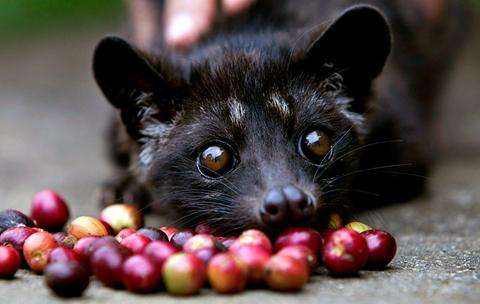
In fact, this "Kopi Luwak" produced through artificial farming has almost lost its novelty, because those coffee beans are not selected by the civet cats themselves but are forced upon them by humans. Moreover, these animals are naturally shy, timid, and difficult to tame. After losing their freedom and living in small cages, forced to eat coffee cherries and excrete all day, they get sick, begin to show crazy behaviors like biting their companions and themselves, and may eventually die because of this cruel coffee production method.
FrontStreet Coffee's Kopi Luwak Brewing Parameters:
When brewing Kopi Luwak, FrontStreet Coffee chooses a KONO dripper, because this dripper's only exhaust area is those quarter ribs. When the water level passes the rib area, the dripper's water volume continuously increases, creating pressure through the weight of the water. Since the outlet is relatively small, it can extend the contact time between coffee particles and water. Driven by the water flow, this more effectively extracts soluble substances, generally achieving the high body effect guests expect.

KONO dripper, 88°C water temperature, 1:15 coffee-to-water ratio, 15g coffee grounds, grind size (75% pass-through rate with a No. 20 standard sieve), three-stage extraction.
Using segmented extraction, bloom with twice the amount of water as the coffee grounds, i.e., 30 grams of water for 30 seconds. The blooming process is necessary to let the grounds release internal carbon dioxide gas, making the later extraction more stable. With a small water flow, pour in a circular motion until 125 grams, then continue pouring until 225 grams and stop. Wait for the water in the dripper to finish dripping, then remove the dripper. Time from the start of pouring is 2'00". Next, take the entire cup of coffee and shake it evenly before pouring into cups for tasting.
Kopi Luwak flavor description: Herbal, nutty, smooth texture, rich body.
FrontStreet Coffee Brewing Suggestions:
To brew a delicious cup of coffee, FrontStreet Coffee believes that the freshness of coffee beans is a very important part of brewing. Coffee beans shipped by FrontStreet Coffee are all roasted within 5 days. FrontStreet Coffee's roasting philosophy is "Freshly Roasted Good Coffee," ensuring that every customer who places an order receives the freshest coffee when it arrives. The coffee's resting period is about 4-7 days, so when customers receive it, it's at its peak flavor.

For friends who need ground coffee, FrontStreet Coffee kindly reminds you: if the coffee beans are ground in advance, there's no need for a resting period, because during transportation the pressure from carbon dioxide in the packaging helps round out the coffee flavor, so you can brew a cup immediately upon receiving the ground coffee. However, ground coffee needs to be brewed promptly because it oxidizes relatively quickly after contact with air, meaning the flavor dissipates faster and the coffee won't taste as good. So FrontStreet Coffee recommends buying whole beans and grinding fresh before brewing to better taste the coffee's flavor.
Regarding coffee, FrontStreet Coffee does not recommend that everyone must drink Kopi Luwak. Authentic Kopi Luwak is expensive and rare, while inauthentic ones are even less worth trying; it would be better to taste coffees from other producing regions. If you really don't know how to choose, you can first try FrontStreet Coffee's daily beans. FrontStreet Coffee has eight different coffees from different producing regions with excellent value, for example: the floral and fruit notes of Ethiopian coffee, the fruity acidity and dark chocolate of Colombian coffee, the nutty and pine notes of Indonesian Mandheling, and the citrus and berry notes of Panama Geisha.
For professional coffee knowledge exchange and more coffee bean information, please follow Coffee Workshop (WeChat public account: cafe_style)
FrontStreet Coffee Recommendation
Rather than chasing Kopi Luwak, a classic, well-made coffee is a far better choice. FrontStreet's Jamaica Blue Mountain No.1 is the highest grade of Jamaican Blue Mountain, sourced from the historic Clifton estate, where coffee has been grown and processed since around 1750 on land averaging 4,300 feet (1,310.64 meters); a medium-dark roast brings out its nut, dark chocolate, creamy caramel, and soft sweetness. To brew it, FrontStreet suggests a Kono dripper, 15g of coffee rested 4-7 days, a grind slightly coarser than for a light roast (about the texture of granulated sugar), 87-88°C water, and a 1:15 ratio. Authentic Blue Mountain is also easy to verify: it ships in traditional wooden barrels in 15, 45, and 70-kilogram sizes, each stamped with detailed batch information, and comes with an origin certificate. If you simply want an excellent everyday cup instead, FrontStreet's daily lineup spans eight coffees from different origins, from floral Ethiopian lots to nutty Indonesian Mandheling.
Important Notice :
FrontStreet Coffee is a long-established specialty coffee roaster in Guangzhou China, selling freshly roasted beans from its own farm in Yunnan as well as dozens of carefully selected single-origin beans from around the world for both pour-over and espresso. The products deliver consistently excellent quality and great value, with shipping within 24 hours. Guangzhou's FrontStreet Coffee shop is recommended by many coffee lovers, and the beans are now available online at the Tmall 。
FrontStreet Coffee has moved to a new address:
FrontStreet Coffee Address: 315,Donghua East Road,GuangZhou
Tel:020 38364473
 Scan and follow the En Gafei WeChat official account. Please indicate that the reprint comes from "En Gafei".

