How to Create Heart-Shaped Latte Art? A Beginner's Guide with Step-by-Step Visual Instructions
The Art of Coffee Latte: A Beginner's Guide to Mastering Latte Art
Watching a barista hold the cup in one hand and the pitcher in the other, wrist rocking in even rhythm as a beautiful pattern blooms in the cup—there's something almost therapeutic about it. But when you try it yourself, you can't even produce a clean dot, let alone a small heart... Is this magic reserved for seasoned baristas?

Master the key points below, and latte art stops being a dream!
I can't say how much a latte energizes you, but a latte with art certainly lifts the spirits! Whether it's a simple little heart or an intricate multi-pattern design, every seemingly magical piece of latte art rests on the same elements: rich, smooth espresso; fresh milk frothed into microfoam that's neither too thick nor too thin, just silky and fine; an evenly blended coffee surface; small, controlled pouring techniques; and a calm heart.
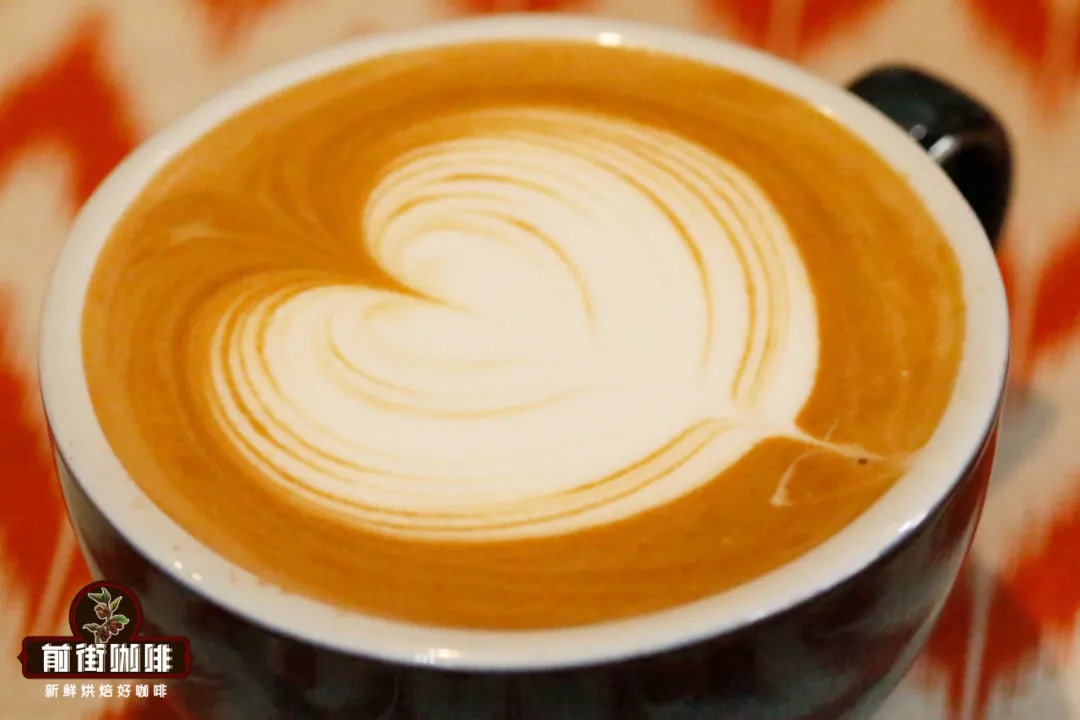
Rich and Smooth Espresso
FrontStreet Coffee holds that whichever extraction method you use, bean freshness is paramount. Coffee beans produce carbon dioxide during roasting, and after the roast, that gas steadily escapes day by day until it's gone—and the CO2 in the beans directly determines how crema forms.

Crema from stale beans is inevitably thin, but beans that are too fresh—still loaded with CO2—produce crema that's overblown and coarse. Either extreme disrupts how the milk foam flows through the coffee, which ultimately undermines both the evenness of the blend and the fluidity of your pattern.
For espresso with just the right crema, FrontStreet Coffee suggests using espresso beans and resting them—sealed in their one-way-valve bag—for 7–10 days before extracting. One more thing: adjust your espresso parameters every day to match the beans' current state!
Fresh Milk Frothed to Produce Microfoam That's Neither Too Thick Nor Too Thin but Smooth and Delicate
Stable milk foam starts with milk that has enough protein and milk fat. Pasteurization preserves more of fresh milk's protein and fat, and its abundant lactose gives the milk greater sweetness when heated. Within milk protein, whey proteins form films around air as steam agitates the milk's surface, creating bubbles; casein generates surface tension when bubbles meet the liquid, making them more stable and less likely to burst. Milk fat then stabilizes the foam further and adds viscosity (body) to the milk.
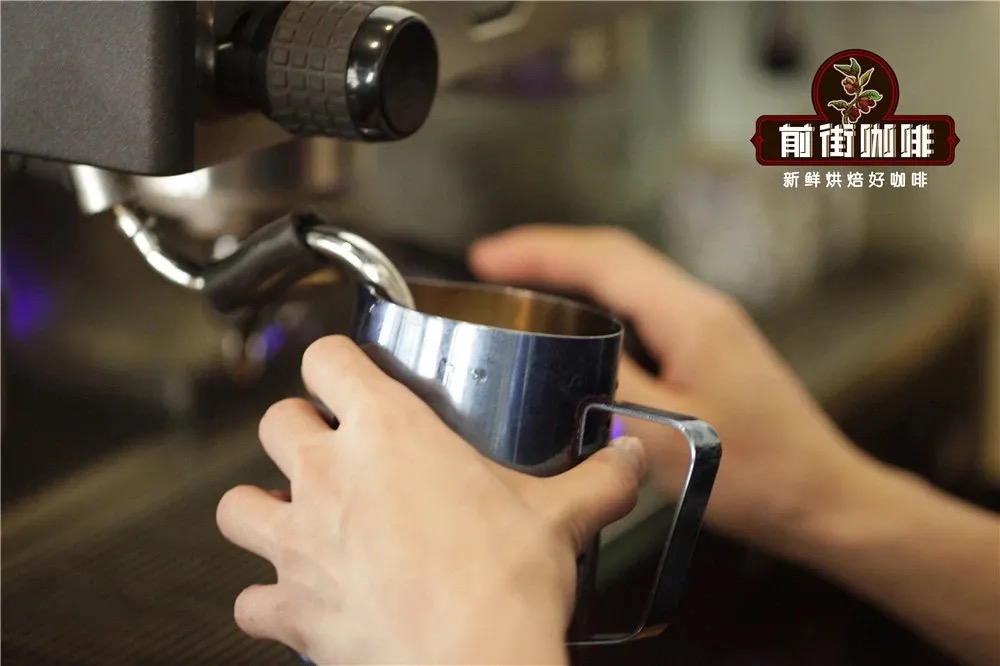
To get microfoam that's fine and glossy rather than thick or thin, control how long the steam wand tip sits at the milk's surface—this is the aeration phase. For latte foam, 2–3 seconds of aeration is enough. Hold the wand tip about 1 cm into the milk surface, open the steam, and listen for four "squeaks." Then sink the wand to 2–3 cm below the surface and angle the pitcher to spin a vortex. This is the heating phase: it warms the milk while polishing the foam finer and smoother. The finished latte foam should be about 1 cm thick.
Even Integration of Espresso and Milk
Blending coffee and milk evenly isn't just preparation for the pattern—it genuinely improves the drink's texture and flavor. So don't skimp: uniform integration matters enormously! Before pouring, swirl the foam and milk in the pitcher so they're one homogeneous mixture, never separated. Watch the flow rate of the milk as you pour: the stream should be about as thick as a regular drinking straw.
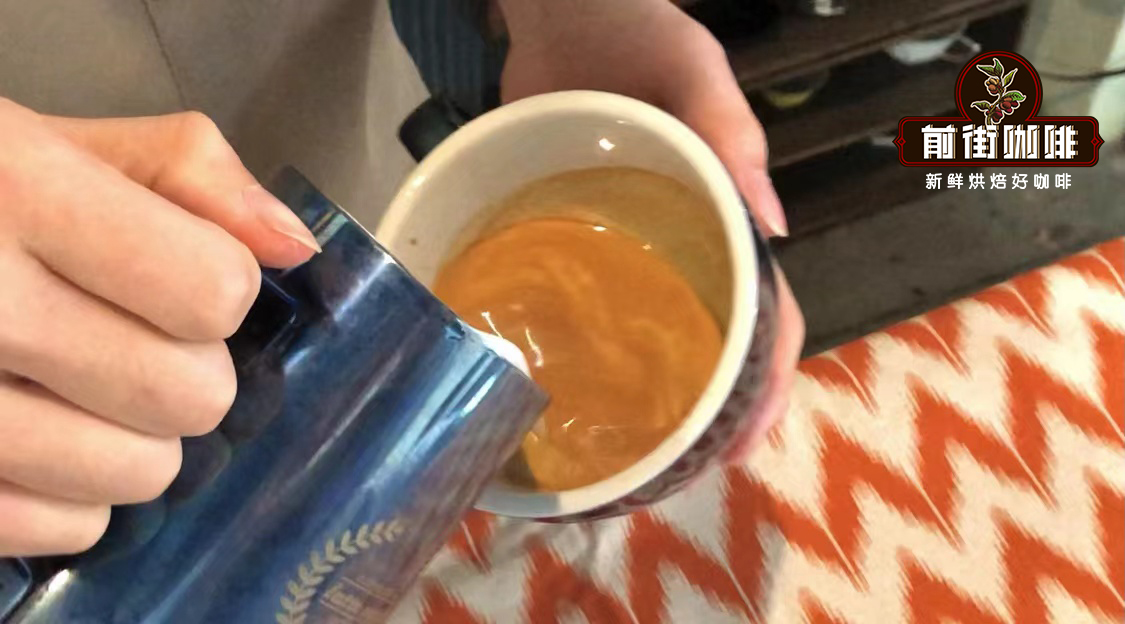
Pour from a height of 5–8 cm with the cup held steady at a 45-degree angle. As you begin the blend—whether the cup or the pitcher does the circling—the milk flow must stay continuous and stable, never interrupted.
During integration, let the coffee's surface rotate inside the cup to keep it fluid. Try not to strike the cup's wall, and if white foam appears on the surface, aim the milk stream at that spot to push it back under the coffee. When integration is done, the surface should be clean and uniform in color—anything less will sabotage the pattern to come.

Latte Art Pattern Creation Tips
Take the humble heart as the example. Once the cup is about 7/10 full, lower the pitcher and begin the pattern. The core technique: as foam flows onto the coffee surface, simultaneously straighten the cup so the foam drifts in along the new angle. In other words—whatever the pattern—if you want foam to appear on the surface, you must pour while gradually righting the cup (⚠️: not all at once).
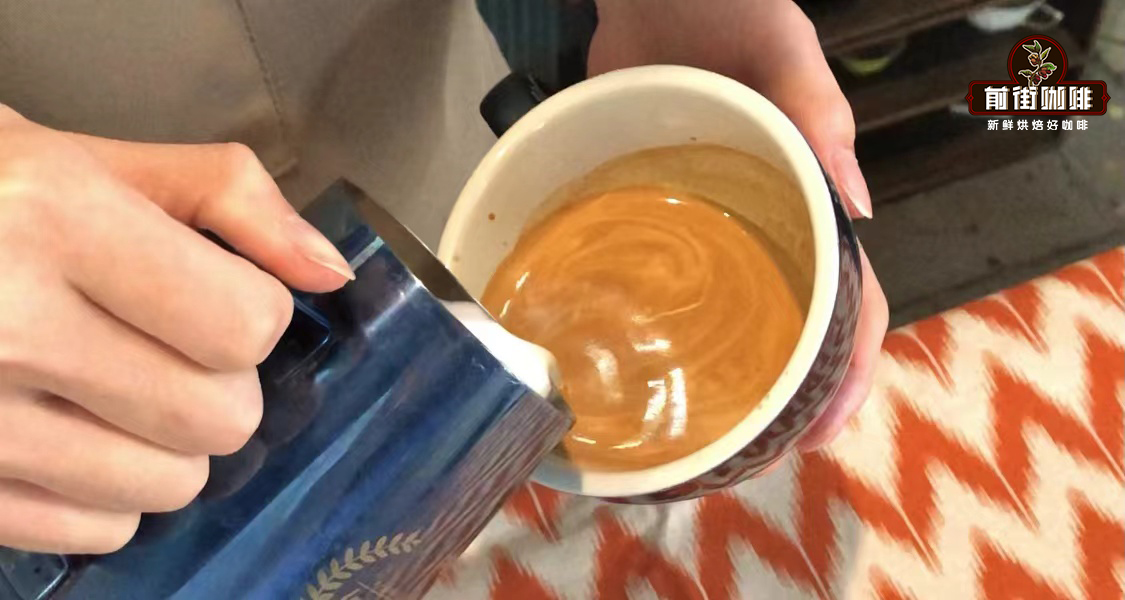
At 7/10 full, bring the pitcher right down close to the cup and start injecting at the center of the surface. As your left hand rights the cup, the right hand's pitcher increases the flow and swings evenly left and right (a smooth swing, not a vibration). You'll see the foam floating on top gather into a circle that slowly widens. As the cup approaches 180 degrees, the foam circle is formed (don't lift and push forward at the same moment). Now use the downward force of the pour to press the upper coffee layer down—the circle develops a heart-shaped indentation as the flow converges from both sides toward the center.
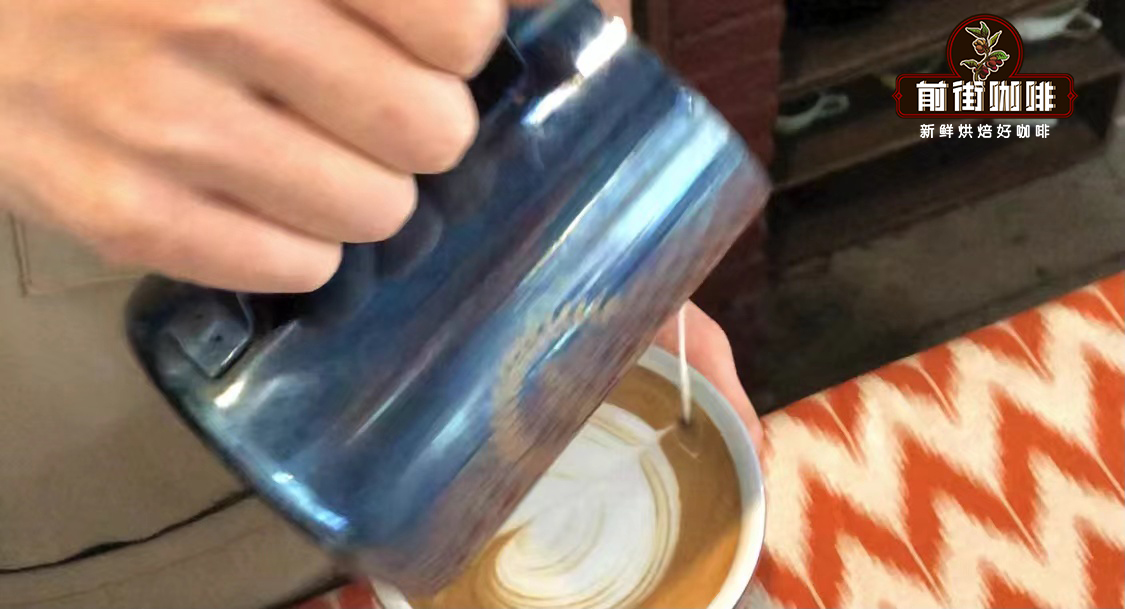
When the heart looks full and the surface is nearly at the rim, raise the pitcher, cut the milk flow to the thinnest possible, and sweep forward across the whole pattern—the heart appears! (⚠️: Stop the flow the instant you finish the sweep. Keep pouring after the sweep and gravity in the stream will drag the pattern out of shape.)
A Calm Heart
Haste makes waste—a calm mind is what does things well. Latte art can't be rushed; it's built on constant practice. Extraction, milk texturing, even how you grip the pitcher—everything ultimately shapes the pattern. When frustration creeps in during practice, stop and rest. Practice through numbness only breeds inconsistency and, eventually, a grudge against latte art itself.

For professional coffee knowledge exchange and more coffee bean information, follow Coffee Workshop (WeChat public account: cafe_style).
For more specialty coffee beans, add FrontStreet Coffee on WeChat, ID: kaixinguoguo0925
FrontStreet Coffee Recommendation
Great latte art starts with beans that pour great crema. For beginners practicing at home, the FrontStreet Classic Blend is the natural choice: a medium-dark espresso blend of three origins, inspired by the classic "Mamba" formula of Mandheling and Brazil, with a touch of robusta for extra aroma and crema. Expect pronounced butter, toasted bread, and caramel cookie notes, a solid body, fine, dense crema, and remarkably stable extraction—an essential house bean for any home barista.
If you love rich, nutty flavors, the FrontStreet Signature Blend pairs washed Colombian beans with pulped-natural Brazil, delivering nuts, dark chocolate, and caramel through espresso, with cream, almond, and cocoa coming forward in milk drinks. Its crema holds its own against café output—more than enough for hours of pour practice—making it just as suitable for an aspiring shop owner as a home learner.
And when you're ready to open your own counter, the FrontStreet Commercial Blend—built on the Signature formula with a touch more robusta—was made for exactly that: deeper brown crema, a heavier body, and nuts, cocoa, and caramel in every Americano, latte, and mocha, with latte art made effortlessly easy.
Important Notice :
FrontStreet Coffee is a long-established specialty coffee roaster in Guangzhou China, selling freshly roasted beans from its own farm in Yunnan as well as dozens of carefully selected single-origin beans from around the world for both pour-over and espresso. The products deliver consistently excellent quality and great value, with shipping within 24 hours. Guangzhou's FrontStreet Coffee shop is recommended by many coffee lovers, and the beans are now available online at the Tmall 。
FrontStreet Coffee has moved to a new address:
FrontStreet Coffee Address: 315,Donghua East Road,GuangZhou
Tel:020 38364473
 Scan and follow the En Gafei WeChat official account. Please indicate that the reprint comes from "En Gafei".