
How to Learn Techniques for Pour-Over Japanese Drip Method? Which Coffee Beans Are Best for Kono-Style Pour-Over Coffee?
Drip-Style Coffee Brewing
Many coffee enthusiasts are drawn to drip-style brewing but never quite pin down its finer points. FrontStreet Coffee is here to break down how you can master the art of drip-style coffee.
The Kono Drip Method
The Kono pour-over method, also known as Japanese drip coffee, dates back to 1973 and the Kono family, founders of Japan's Kono brand. Kono started out specializing in siphon brewers, a field in which it remains distinctive. Later, to research and replicate the mouthfeel of cloth-filtered coffee, they invented the Kono dripper. The drip method was born precisely to brew rich, mellow coffee.

The Kono drip method uses a coffee-to-water ratio of 1:10. It begins by adding water drop by drop, gradually moistening all the coffee grounds to extract pure, rich flavors, then follows with a larger water flow to dilute the concentrate.
What draws the most attention to Kono drip brewing is the brewer's calm and focused performance, which embodies true craftsmanship. That may be exactly what attracts people to the method.
FrontStreet Coffee will now share several segments of Mr. Yamada from Taiwan's Yamada Coffee Shop demonstrating the Kono pour-over method, so we can analyze it together.
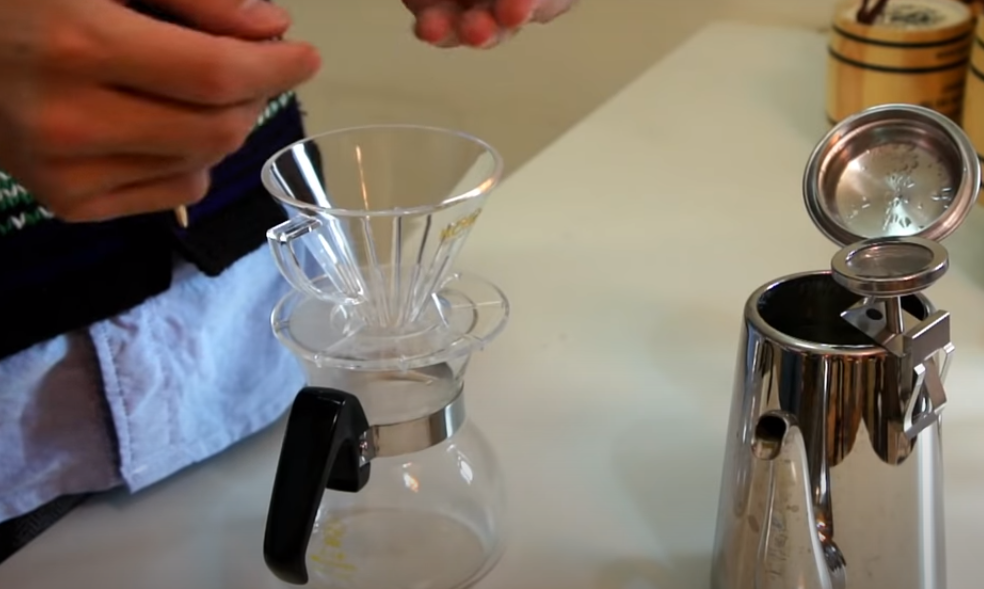
In this image, Mr. Yamada is folding the filter paper. Note that he is using a Yukiwa Kono wide-mouth pour-over kettle, a special model designed for Kono brewing. Its spout widens toward the bottom, which makes precise drip pouring easier.
The dripper in use is the Kono MD-21, characterized by ribs that occupy half of the dripper body, convenient for brewing with large amounts of coffee grounds. Kono also makes two short-rib models, and the shorter the ribs, the slower the flow. The serving pot is from Kono as well (its special feature will be explained later), making this a complete standard Kono setup. Notably, there is no electronic scale in sight.
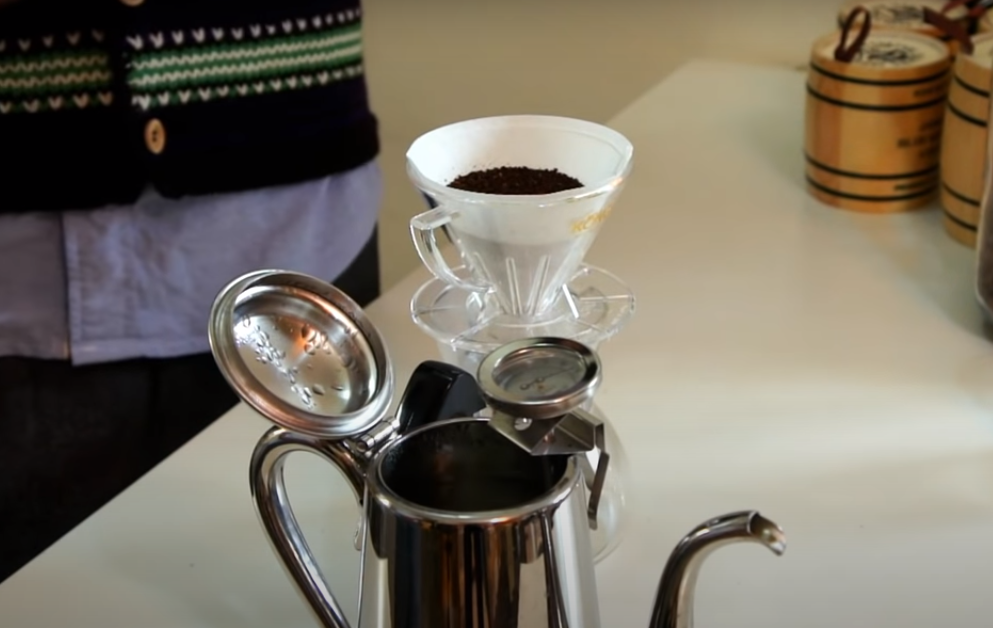
Here we can see coffee grounds already placed in the dripper, but the filter paper has not been pre-wetted. This is a hallmark of the Kono method. Kono designed the dripper on the belief that when the filter paper is dry, the weight of the coffee grounds presses it perfectly against the dripper. To dispel any paper-taste concerns, Kono introduced its own filter paper. Dry filter paper also helps with degassing as the grounds absorb water and ensures a better fit against the dripper.
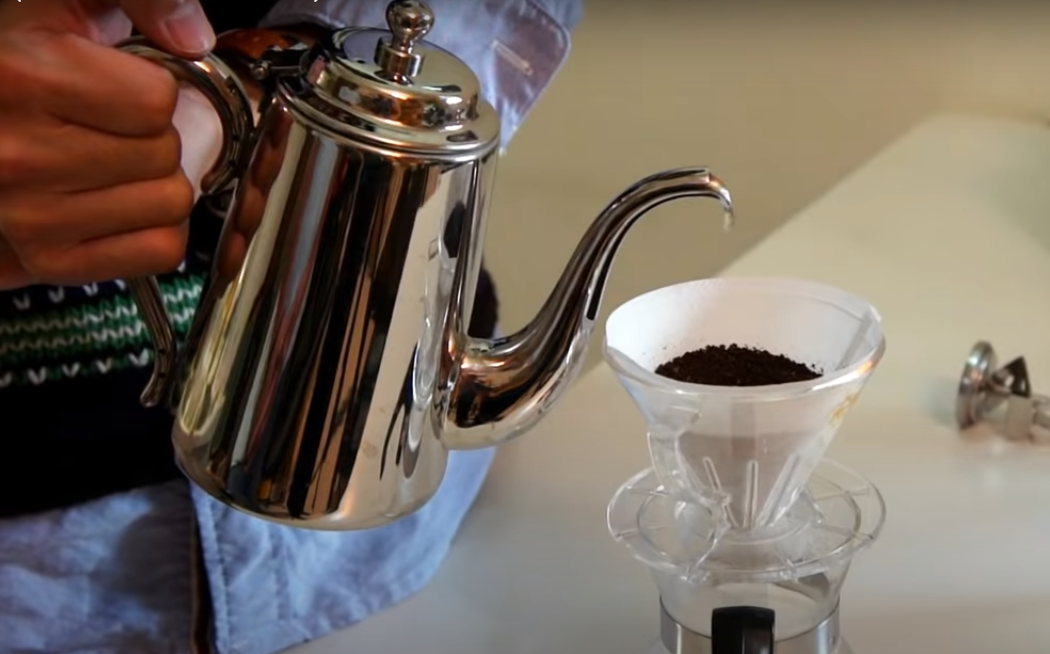
This image shows Mr. Yamada's posture as he prepares to pour. The water temperature at this point is 88°C. Those who want to learn drip brewing can practice along, keeping two key points in mind. First, the height of the table matters a great deal: when the table sits roughly at the root of your thighs, holding the pour-over kettle in your right hand lets it stay parallel to the ground without lifting your arm, which is far less tiring, since drip brewing is an endurance test.
The second point is how you hold the kettle. Hold it with your right hand while supporting your right wrist with your left hand, and step slightly forward with your left foot. This distributes the force more evenly and gives you greater stability when holding the kettle.
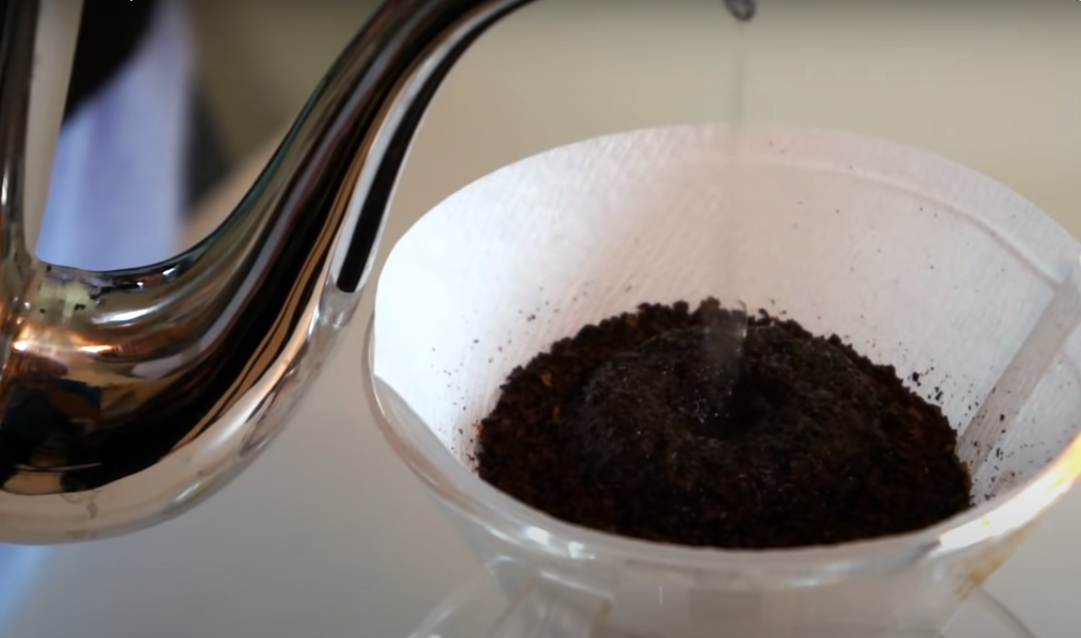
Next, add water drop by drop to the center. Because the middle layer of grounds is thicker, dripping water into the center causes the coffee to expand gradually outward.
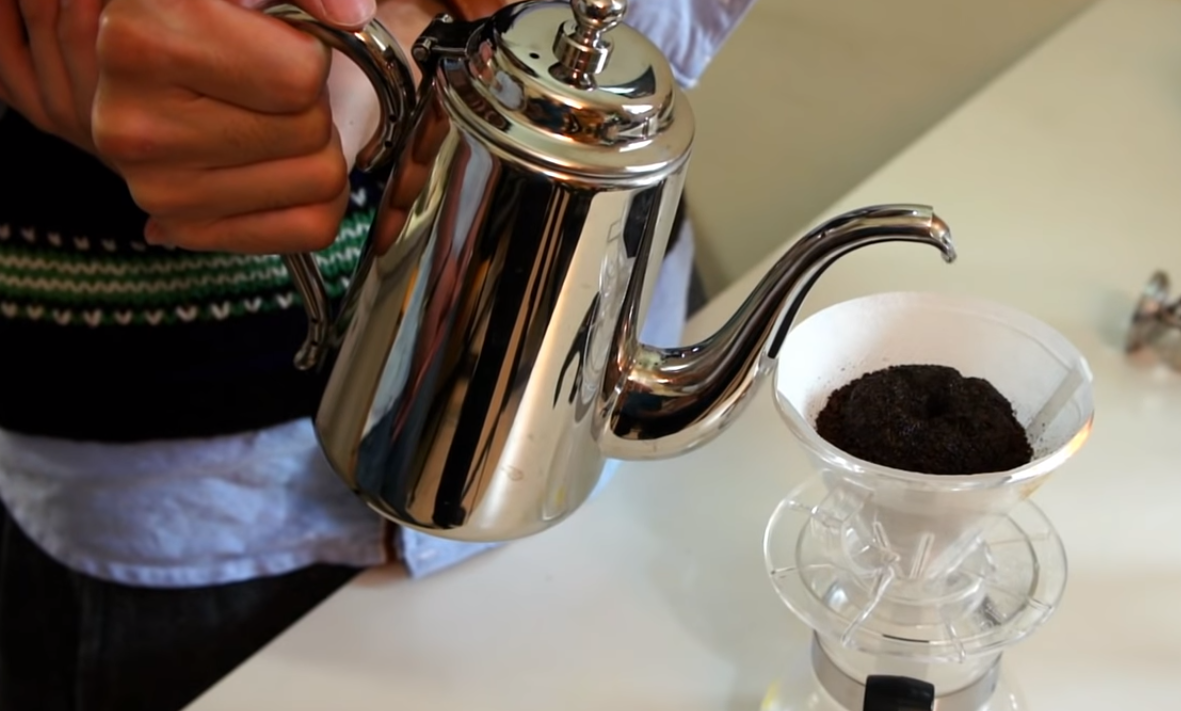
When dripping, the frequency of the drops must be steady, neither too fast nor too slow. Some may ask, "This isn't something I can control with my hand." The only solution is practice. In the video, Mr. Yamada also mentions that even someone with no brewing experience can master water control through a month of practice.
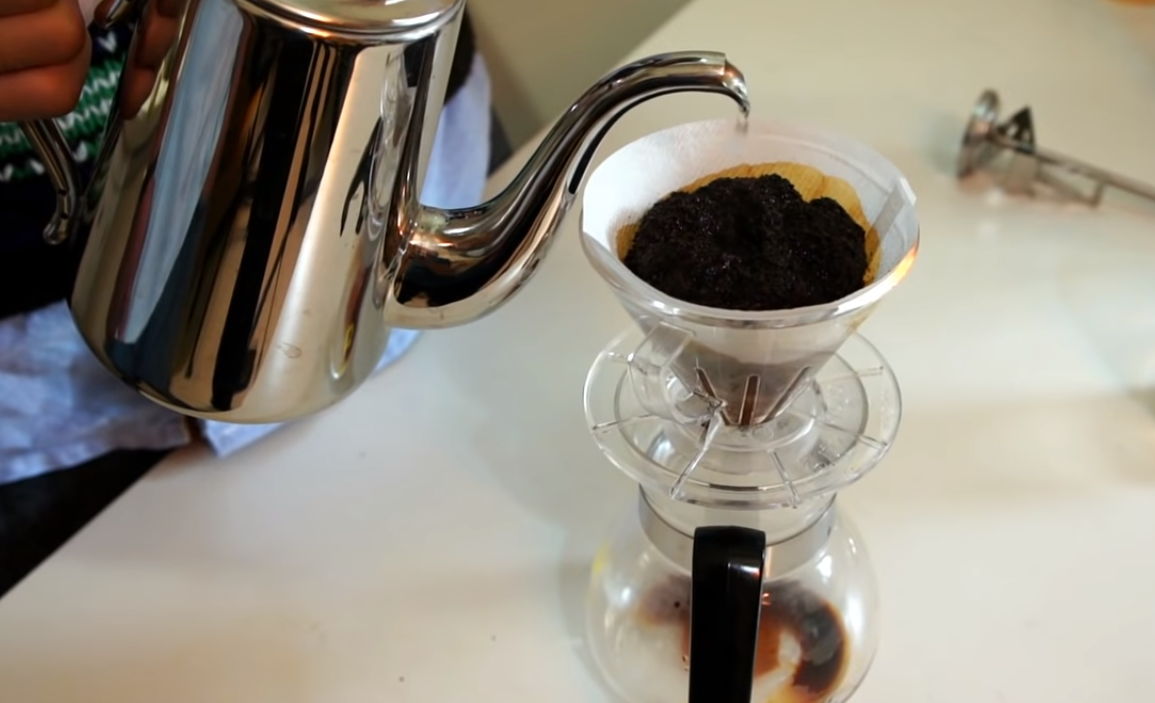
After about 2 minutes of dripping, coffee liquid begins to drip from the bottom. At this point, under normal circumstances, the surface of the coffee grounds should be completely moistened. If it has not expanded and moistened, it may be because the coffee is ground too coarsely or the beans were roasted too long ago.

There are two indicators for when to stop the drip stage. First, as shown in the image, the coffee grounds are fully expanded and moistened and the filter paper is completely soaked. Second, a layer of coffee liquid has accumulated at the bottom of the serving pot.
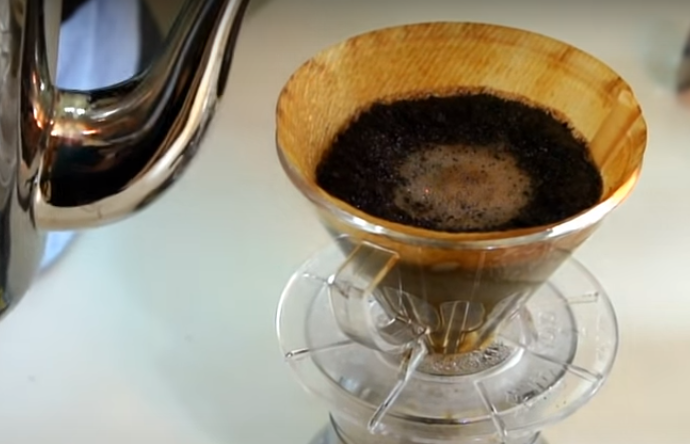
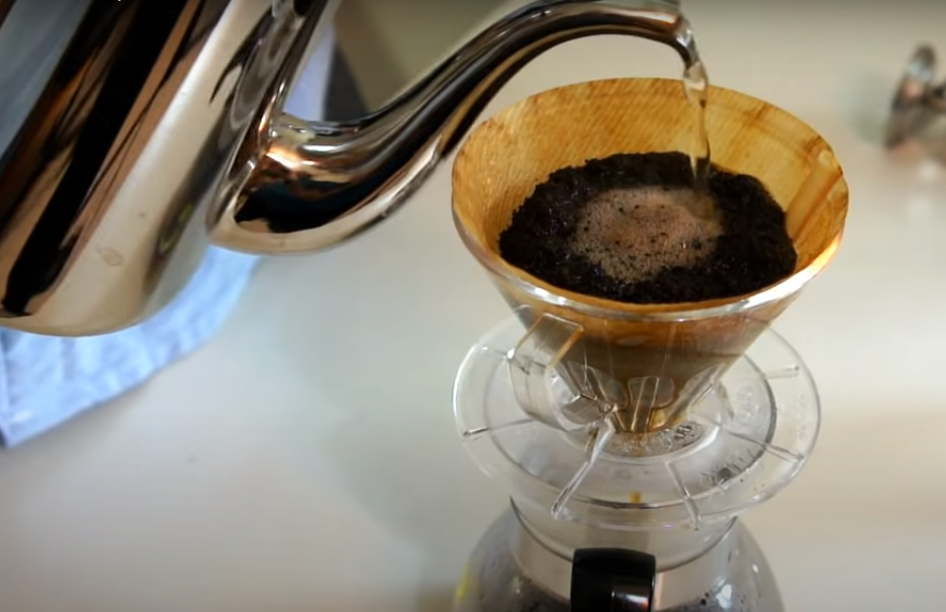
At this point, roughly 2 minutes and 40 seconds into the dripping process, you can move to the second stage: using a small water flow to pour in small circles. The coffee grounds will rise in the middle. When they are about to "overflow," stop pouring and let the center of the bed sink. When a small depression appears, continue pouring in the same manner. Repeat this 2-3 times, making it look as if the coffee grounds are breathing.
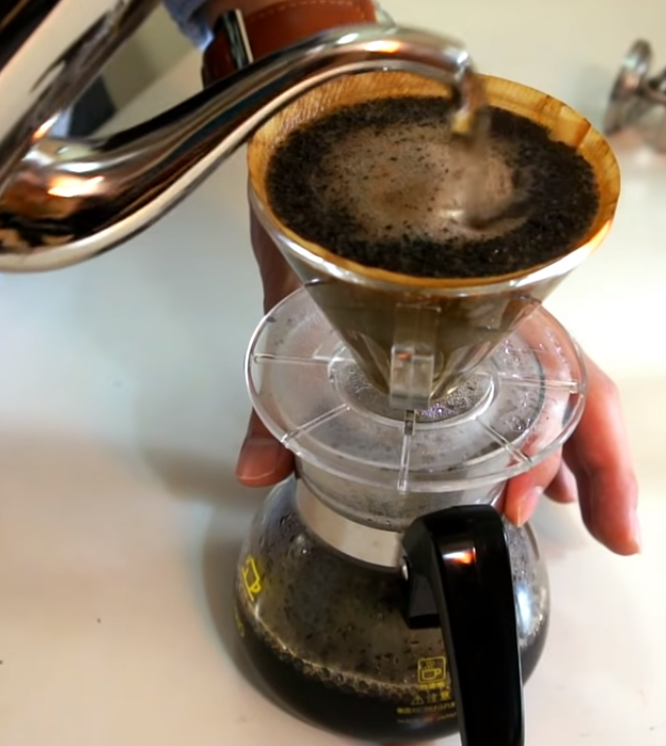
When the coffee liquid reaches 2/3 of the target amount, use a large water flow to lift the grounds.
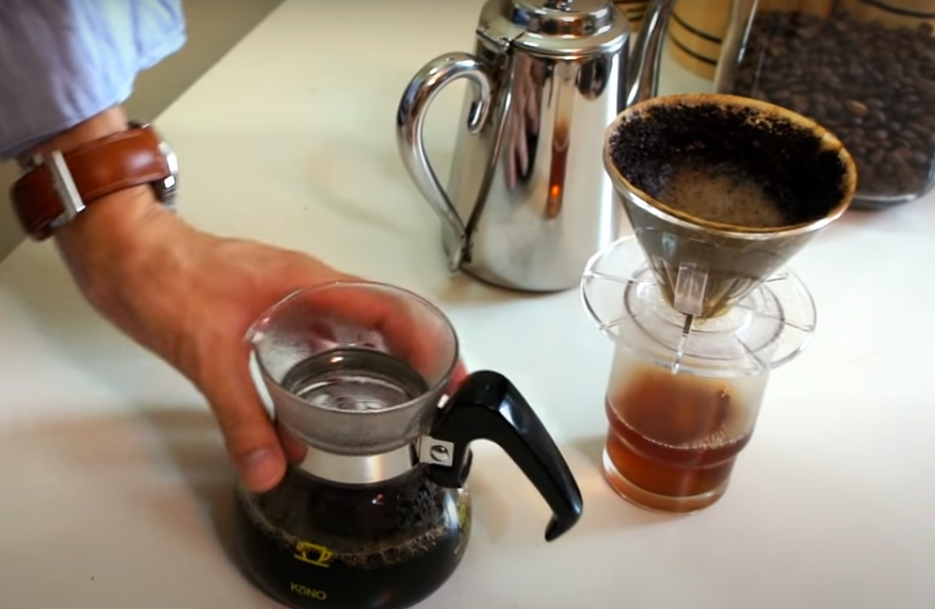
When you reach the target coffee amount, remove the dripper immediately rather than waiting for all the liquid to finish dripping. In Japanese pour-over philosophy, the bitterness and off-flavors in coffee come from the foam. If you wait for every last drop, the bitter and off-flavors held in the foam transfer into the coffee liquid. Hence the technique of using a large water flow at the end to lift the dripper and then remove it. The total time from starting to pour to removing the dripper is 3 minutes and 32 seconds.
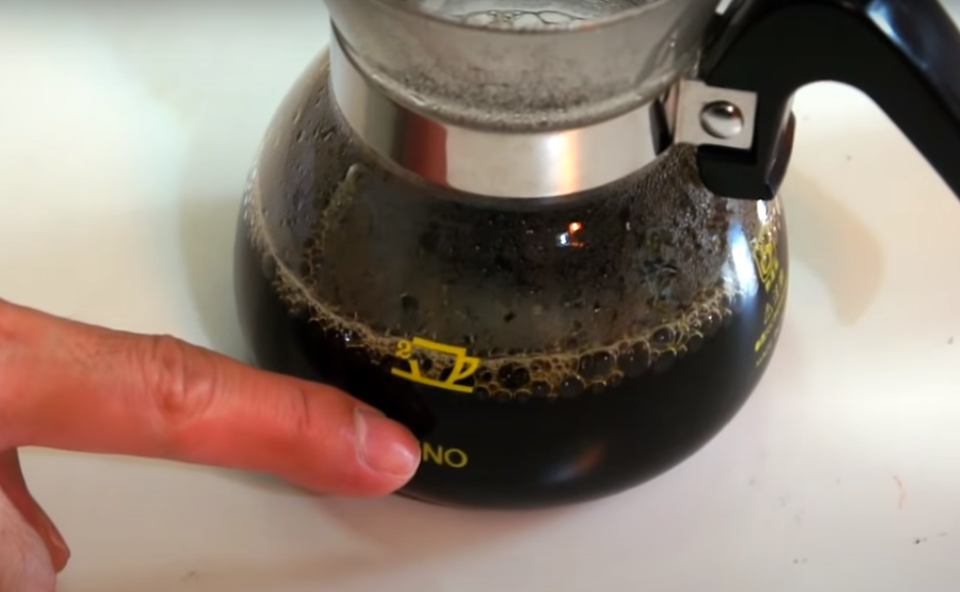
This reveals the special feature of the Kono serving pot. On its body there is a coffee cup logo, and the bottom horizontal line of that logo marks the 240ml (2 servings) level. So when brewing 24g of coffee grounds, coffee liquid reaching that line signals a 1:10 coffee-to-water ratio.
Summary
To master the Kono drip method, keep these key points in mind:
1. Coffee beans: Generally, choose fresh dark-roasted beans. The more carbon dioxide they hold, the better the degassing. For grind size, use a coarse grind, roughly a 62% pass-through rate on a #20 sieve.
2. Brewing equipment: When the pour-over kettle's spout curves downward, it prevents backflow during dripping, which also helps you learn the drip-pouring technique more easily. The matching Kono dripper will enhance the overall performance of the coffee.
3. Steady drip water flow: The method has been explained above. Pay attention to posture, fill the kettle 8/10 full with water, and leave the rest to practice. The dripping frequency should be roughly 3 drops per second. Dripping too slowly may keep the grounds from expanding, while dripping too quickly may send water into the serving pot before the grounds have fully absorbed it.
4. Time points are not what Kono brewing focuses on. The times above are given only to give you a sense of timing. What matters is watching the nodes where the state of the grounds changes.
5. Be patient. This is a brewing method that emphasizes endurance. It is not inherently hard to learn, but persistence is the challenge.
6. When friends practice drip brewing, the usual problems, such as grounds not being fully moistened, grounds not reacting or expanding, and burnt or bitter coffee, usually trace back to the five points above.
FrontStreet Coffee Recommendation
Kono's classic guidance calls for fresh dark-roasted beans, and that is exactly where a rich, syrupy drip cup begins. FrontStreet's PWN Golden Mandheling, from Indonesia, is roasted dark for very low acidity and a full, lingering body, opening with layers of herbal and dark chocolate aroma touched by a faint earthy note. It is the natural match for anyone who likes a bold cup and does not want sourness, and it stands up beautifully to a slow, controlled drip pour.
If you would rather use the drip method to chase the delicate, fragrant side of coffee, FrontStreet's Ethiopia beans are just as rewarding. The Yirgacheffe Geduding Cooperative, a washed coffee, is bright with citrus, berry, and floral notes and a green-tea-like sweetness, while the Huakui from Ethiopia leads with tropical fruit, strawberry, passionfruit, and jackfruit aromas, with pronounced sweetness and almost no bitterness. Both reward the gentle, even extraction that a practiced drip pour delivers.
Important Notice :
FrontStreet Coffee is a long-established specialty coffee roaster in Guangzhou China, selling freshly roasted beans from its own farm in Yunnan as well as dozens of carefully selected single-origin beans from around the world for both pour-over and espresso. The products deliver consistently excellent quality and great value, with shipping within 24 hours. Guangzhou's FrontStreet Coffee shop is recommended by many coffee lovers, and the beans are now available online at the Tmall 。
FrontStreet Coffee has moved to a new address:
FrontStreet Coffee Address: 315,Donghua East Road,GuangZhou
Tel:020 38364473
 Scan and follow the En Gafei WeChat official account. Please indicate that the reprint comes from "En Gafei".

