
Recommended Pour-Over Coffee Beans for Beginners, Introduction to Pour-Over Coffee Process, and Basic Knowledge on How to Taste Pour-Over Coffee
What is Pour-Over Coffee?
Pour-over coffee is the manual brewing method, sometimes called drip coffee. It was invented in 1908 by the German housewife Melitta Bentz. To promote her entirely new way of extracting coffee, Mrs. Melitta founded the Melitta Company the same year, selling coffee equipment. In pour-over, hot water dissolves the soluble compounds from the ground coffee, and the extracted liquid drips through filter paper or a screen into a vessel at its own pace — that liquid is the coffee.

Coffee Bean Recommendations for Beginners
For a first attempt at pour-over, choose beans with distinct regional character that won't break the bank. FrontStreet Coffee suggests the Ethiopia Natural Red Cherry or the washed Gedeb — bright, fruity cups that capture the classic African profile. For a Brazilian option, try FrontStreet Coffee's Queen Estate beans, with prominent nut and chocolate notes. For an Asian option, explore Indonesian coffees and their herbal aromatics, with FrontStreet Coffee's Mandheling as the classic representative.
Pour-Over Coffee Brewing Process
First, what are the variables?
Bean freshness, grind size, coffee-to-water ratio, water temperature, pouring technique, and extraction time. Change any of these six and the final flavor shifts. How exactly does each affect the cup? FrontStreet Coffee breaks it down.
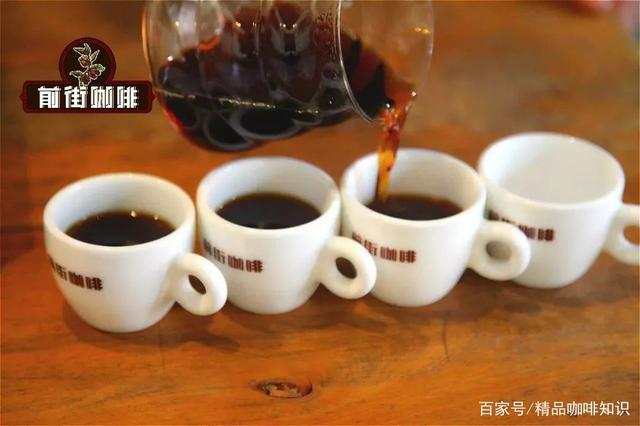
Coffee Bean Freshness
Freshness shows up most directly as carbon dioxide release. Resting beans is really the process of letting CO2 escape — and alongside it, aromatic compounds that define flavor and aroma. Those small-molecule aromatics volatilize faster than the large-molecule compounds behind bitterness. Older beans therefore hold less CO2 and fewer aromatics, leaving less of interest to extract.
Coffee Bean Grind Size
Grind size is the particle size of the grounds, and it governs how long water takes to penetrate each particle to its core. The larger the particle, the more time water needs to reach the center and extract what's inside; the smaller the particle, the less time — and the faster the extraction.
Pour-Over Coffee-to-Water Ratio
The higher the ratio (more water per coffee), the lighter the cup; the lower the ratio, the stronger. Adding water to raise the ratio extracts more flavor material overall but thins the taste. Cutting water to lower the ratio extracts less and tastes richer. Adding coffee to lower the ratio reduces extraction of the late-stage, large-molecule compounds while intensifying flavor; using less coffee to raise the ratio — short of the limit — extracts the flavor spectrum more completely but at lower intensity.
For detailed technique, FrontStreet Coffee has published videos — one watch and it clicks.
How to Taste Pour-Over Coffee
Once brewed, sit back and enjoy. Some ask: how should I actually taste? There is a systematic approach — use your nose and tongue to detect sour, sweet, bitter, and salty notes. But FrontStreet Coffee doesn't encourage textbook tasting. Coffee is first and foremost a pleasure, and the joy of drinking it is fundamental; overcomplicating the ritual can erase that. So when the coffee lingers in your mouth and nose, simply pay attention to its most prominent, outstanding flavors — nothing more.
FrontStreet Coffee Recommendation
For beginners who want a guaranteed hit, the FrontStreet Yirgacheffe Guodingding (Worka Cooperative) is a classic gateway: a washed lot from the Worka region at Yirgacheffe's southeastern edge, independent since 2012 with about 300 member farmers. Pulped before drying, it shows clean citrus and lemon tones with elegant white florals — light, tea-like, and gently bright. For low-acidity drinkers, the FrontStreet PWN Indonesia Golden Mandheling is the flagship: beans screened above 18 mesh at the strict G1 grade (fewer than 3 defects per 300 g sample) plus triple hand-sorting, then roasted medium-dark for herbal and dark-chocolate depth, heavy body and caramel sweetness — the classic Sumatran wildness without the harshness.
And if you'd rather put Mandheling in a machine, the FrontStreet Classic Blend adds medium-dark Mandheling to Brazil's creamy nut base, with butter, roasted chestnut and caramel notes plus a touch of robusta for extra crema — effortless for latte art or a layered Dirty.
Important Notice :
FrontStreet Coffee is a long-established specialty coffee roaster in Guangzhou China, selling freshly roasted beans from its own farm in Yunnan as well as dozens of carefully selected single-origin beans from around the world for both pour-over and espresso. The products deliver consistently excellent quality and great value, with shipping within 24 hours. Guangzhou's FrontStreet Coffee shop is recommended by many coffee lovers, and the beans are now available online at the Tmall 。
FrontStreet Coffee has moved to a new address:
FrontStreet Coffee Address: 315,Donghua East Road,GuangZhou
Tel:020 38364473
 Scan and follow the En Gafei WeChat official account. Please indicate that the reprint comes from "En Gafei".

