How Can Beginners Brew Pour-Over Coffee at Home? How Should You Choose a Gooseneck Kettle?
Getting Started with Specialty Coffee

Breaking into specialty coffee as a beginner means getting to know — and eventually buying — a few essentials: coffee beans, a grinder, a pour-over kettle, a dripper or two, and eventually maybe an espresso machine (that last one is optional).
Beans come first; good beans make everything else worthwhile, which is why it bears repeating. Beginners often eye other people's gear with envy, but the smartest move is picking the best tools within your budget. The best equipment is what's on hand and convenient to brew with — what actually matters is whether the coffee tastes good. A favorite cup can even make the whole experience better.
Explore and Compare

FrontStreet Coffee's advice to beginners is simple: try widely, and drink, drink, drink. Experience the flavors of as many origins as you can. There's no secret to tasting coffee — just drink more of it, ideally unadorned.
Before buying beans, visit a café, taste what they brew, then try to recreate it at home. Commercial grinders tend to be more professional with higher grind uniformity, which draws out finer flavor detail — exactly why a grinder is the most worthwhile equipment investment you'll make. Once you hear the difference, there's no going back.
Water Quality and Temperature
Water temperature governs how much you extract: put simply, hotter water dissolves more aromatic compounds from the grounds. And good filtered water will make your coffee taste better.

Coffee Dose
The right coffee-to-water ratio is what makes delicious coffee repeatable. A precise electronic scale dramatically raises your odds of a successful brew.

Brew Time
The longer the brew runs, the longer the grounds steep in hot water and the more intense the flavors become. More of everything gets extracted — the good gets better and the bad gets worse.
Next, FrontStreet Coffee puts those principles into practice with our Yirgacheffe, sharing the daily extraction parameters we use at the shop.
What Is Yirgacheffe?
In the ancient Ethiopian language, Yirgacheffe means "let us settle down in this wetland." It began as the name of a small town in Ethiopia — the birthplace of coffee. Altitudes here run 1700–2200 meters; the relatively low temperatures let coffee grow slowly and accumulate more nutrients and flavor compounds. The beans are so distinctive and so fine that Ethiopian farmers take pride in coffee carrying the Yirgacheffe name, and in 2004 the Ethiopian government patented "Yirgacheffe" as a regional designation to promote the country's coffee. Today, Yirgacheffe is shorthand for Ethiopian specialty coffee.

Anyone who has tasted Yirgacheffe remembers it instantly: bright, uplifting lemon acidity, floral and honeyed sweetness, soft fruit acidity and citrus, and a fresh, pleasant mouthfeel. There's none of the heavy roasted bitterness of traditional coffee — instead it drinks like a fruit tea, and people fall for it at first sip. That's why it's so often the gateway coffee.
Yirgacheffe also marks the shift from the "era of bitter coffee" to the "new era of fruity, acidic coffee." Coffee turns strong and bitter mainly when roasters push the beans dark toward nut and dark chocolate territory. With the rise of specialty coffee, roasters now roast Yirgacheffe only to a suitable light level, preserving its acidity and letting it express pleasant fruit sweetness and white florals.

That preference for sweetness over bitterness matches public taste perfectly, which is part of why Yirgacheffe is loved worldwide. Naturally, FrontStreet Coffee includes it in our introductory bean series: our staple beans let newcomers taste the fundamental flavors of different origins at very low prices, and the small packaging keeps half-finished bags from going to waste.
Yirgacheffe Brewing Parameters
Dripper: V60
Water temperature: 92–93°C
Dose: 15g
Coffee-to-water ratio: 1:15
Grind size: fine sugar texture (78% pass through a #20 sieve)

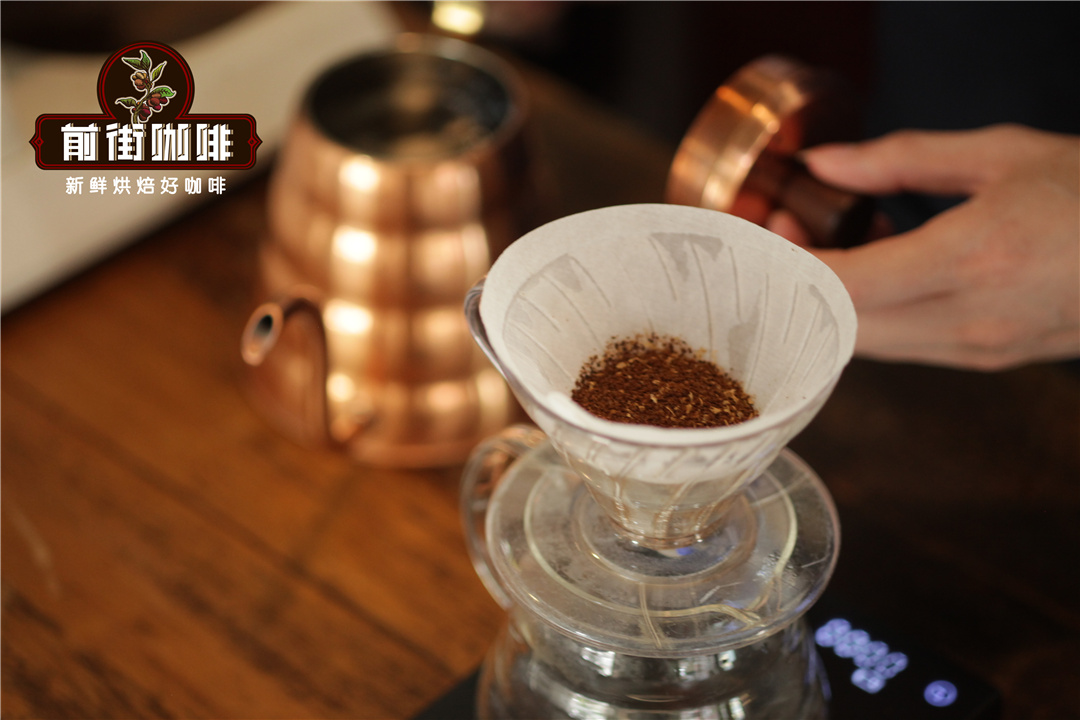
Pour 30g of water to bloom for 30 seconds, then continue to 95g (the scale reads about 125g), finishing that pour around the 1-minute mark. When the water level drops to two-thirds of the coffee bed, pour the remaining 100g (scale reads about 225g), finishing around 1:35. Extraction completes at 2'10" — lift the dripper off.

The first sip brings citrus and black tea. As the cup cools, cream, caramel, and almond notes surface, with a pronounced sweet aftertaste and a clean, sweet mouthfeel.
FrontStreet Coffee Recommendation
Since the walkthrough above used a washed Yirgacheffe, that's the bean to start with: FrontStreet Coffee's washed Yirgacheffe daily bean is the classic beginner's choice — white jasmine, bright citrus and lemon acidity, and a tea-like finish, all at a very accessible price.
Once you're comfortable with the V60, branch out across the flavor map. For lush tropical fruit, try FrontStreet Coffee's Ethiopia Hibiscus (Huakui), with its strawberry, passion fruit, and lychee sweetness; for Geisha character, the Strawberry Sugar blend pairs honey-processed Costa Rican coffee with washed Panamanian Geisha for orange blossom and rounded sweetness; and for raisined intensity, the Costa Rica Mozart is hard to beat.
Whatever you pick, brew it with the parameters above — V60, 15g, 92–93°C, 1:15 — and adjust grind and temperature from there to suit the bean.
Important Notice :
FrontStreet Coffee is a long-established specialty coffee roaster in Guangzhou China, selling freshly roasted beans from its own farm in Yunnan as well as dozens of carefully selected single-origin beans from around the world for both pour-over and espresso. The products deliver consistently excellent quality and great value, with shipping within 24 hours. Guangzhou's FrontStreet Coffee shop is recommended by many coffee lovers, and the beans are now available online at the Tmall 。
FrontStreet Coffee has moved to a new address:
FrontStreet Coffee Address: 315,Donghua East Road,GuangZhou
Tel:020 38364473
 Scan and follow the En Gafei WeChat official account. Please indicate that the reprint comes from "En Gafei".