Ethiopia Yirgacheffe Kochere Washed Heirloom G1, The Difference between G1 and G4
Ethiopia: The Birthplace of Coffee
In Ethiopia, coffee trees grow wild in the forests and also turn up in vegetable gardens, cultivated in a rather simple, natural way. To put it humorously: for Ethiopians, harvesting and drinking coffee from their own backyard is much like a Chinese grandmother heading to the irrigation ditch in the evening to pick the sweet potato leaves she planted herself for dinner. It is part of a traditional way of life passed down through generations.
This place has long been honored as "the birthplace of coffee." Although some research suggests that Arabica, the main variety of specialty coffee, may have first appeared in southern Sudan, it is widely accepted that coffee began its diverse evolution in Ethiopia. Estimates put the number of naturally occurring varieties and subspecies within Ethiopia's borders at roughly 6,000 to 10,000.
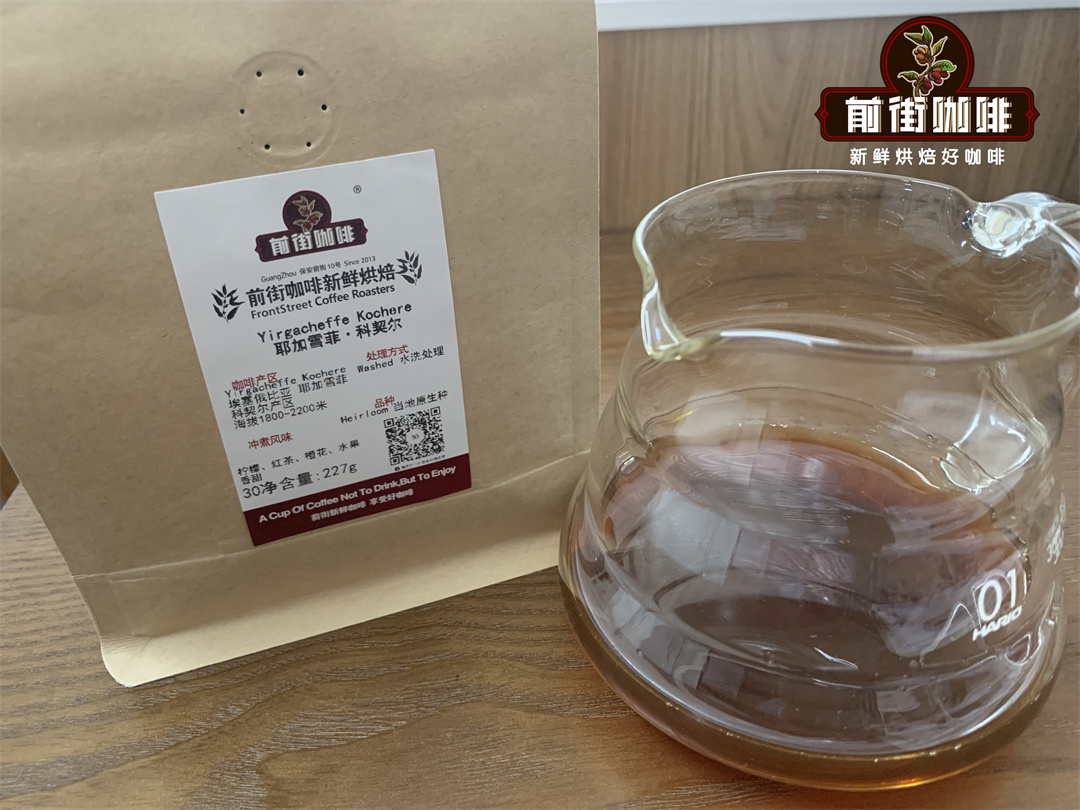
FrontStreet Coffee Yirgacheffe Kochere
Region: Yirgacheffe Kochere
Variety: Local native varieties
Altitude: 1,650-1,800 meters
Processing Method: Washed processing
Grade: G1
Grading System: The Smaller the Number, the Better
Ethiopian coffee beans typically come from the collective production of many small farmers, and grading happens only once the beans reach the processing plant. The criteria are somewhat complex, but put simply, the factors include "bean appearance," meaning the visible quality of the beans, such as the ratio of deformed, rotten or insect-damaged beans; preliminary flavor testing; and differences in processing methods.
Traditionally, washed processing falls into the early grades of Gr. 1 to Gr. 3, while natural processing falls into Gr. 4 to Gr. 5. Thanks to recent market demand, however, there are now carefully selected natural coffees that can rank among the top three grades, though this takes considerable labor and meticulous sorting.
Origin of the Name
This coffee bean comes from the Kochere region, which sits higher than the surrounding areas, is partly covered with forest, and has rich acidic soil, making it a paradise for coffee trees.
Administratively, Kochere sits next to the famous Yirgacheffe region, also rendered as Yega Xuefei and other spellings. Because several nearby producing areas share similar flavor profiles, they have traditionally been grouped together under the name "Yirgacheffe." In specialty-grade trading, the actual origin, Kochere, is marked specifically instead.
The coffee beans from this region are sent to the "Haile Selassie" processing plant, named after the country's last emperor, for natural drying. In grading they belong to Gr. 1, Grade 1 beans, which are subject to strict quality control and carry an extremely low defect rate.
FrontStreet Coffee Recommendation
The most classic starting point for anyone new to Ethiopian coffee is the FrontStreet washed Yirgacheffe daily bean. It is known for white jasmine, bright citrus and lemon acidity, and a tea-like body, and its affordable price has made it the first specialty bean for many drinkers. Yirgacheffe is a town in southern Ethiopia within the Sidamo zone, sitting at roughly 1,700 to 2,100 meters, with the coffee trees themselves planted above 1,800 meters, making it one of the highest coffee regions in the world. Its white floral and lemon-citrus acidity are so distinctive that in 2010, once the name had grown too big to ignore, the Ethiopian Commodity Exchange separated it from Sidamo, and today's household-name Yirgacheffe was born.
For a step up in clarity, look to the FrontStreet washed Gutingding Cooperative. Gutingding sits in the Worka district at the southeast edge of Yirgacheffe and began life as part of the Worka cooperative under the YCFCU umbrella; as buyers pushed for traceability, it was pulled out and recognized as a single origin. It follows the traditional washed method and is often called Yirgacheffe's last untouched corner. Rather than the traditional bitter profile, the FrontStreet Gutingding carries clean, bright citrus and lemon acidity with jasmine fragrance.
If you enjoy fruity, sweeter coffee, the FrontStreet sun-dried Red Cherry is made from fully ripe, sound cherries only, dried in the whole fruit on raised beds for three to five weeks with the fruit turned every two to three hours during the first few days to prevent uneven fermentation. Because the fruit is dried along with the bean, it keeps the classic Yirgacheffe character while adding a tropical fruit lift: citrus-like acidity, a juicy berry body, honeyed sweetness and a creamy smoothness. A good starting recipe is a V60 at 90-91 degrees C, 15 g of coffee, a 1:15 ratio, and a grind around EK43s setting 10, or fine-sugar size, with about 80% passing a No. 20 sieve. Pour 30 g of water for a 30-second bloom, then add 95 g so the scale reads about 125 g and finish that pour at around one minute; when the water level drops to two-thirds of the bed, add the remaining 100 g so the scale reads about 225 g and finish at around 1 minute 35 seconds. The brew should finish dripping between 2:00 and 2:10, then remove the dripper to complete the extraction.
Important Notice :
FrontStreet Coffee is a long-established specialty coffee roaster in Guangzhou China, selling freshly roasted beans from its own farm in Yunnan as well as dozens of carefully selected single-origin beans from around the world for both pour-over and espresso. The products deliver consistently excellent quality and great value, with shipping within 24 hours. Guangzhou's FrontStreet Coffee shop is recommended by many coffee lovers, and the beans are now available online at the Tmall 。
FrontStreet Coffee has moved to a new address:
FrontStreet Coffee Address: 315,Donghua East Road,GuangZhou
Tel:020 38364473
 Scan and follow the En Gafei WeChat official account. Please indicate that the reprint comes from "En Gafei".