Recommendation for Low-Acidity Pour-Over Coffee Beans — Flavor Profile of Brazil Queen Estate Pulped Natural Yellow Bourbon Coffee Beans

Owned by the renowned and respected Carvalho Dias family, the four major estates under Carvalho Dias have won awards every year since the first Brazil Cup of Excellence (COE) competition in 1999, taking more than 12 wins in 7 years. In 2004 they even swept the championship, 9th place, and 11th place. Many estates in Brazil, large and small, feel honored simply to take part in this competition, yet Queen's Estate has claimed this award year after year, which speaks to how far it rises above typical Brazilian coffee beans.

Among the two Brazilian coffees FrontStreet Coffee offers, one is the FrontStreet Coffee Brazil Queen's Estate Yellow Bourbon. Compared with beans from other Brazilian regions, those from Queen's Estate carry a distinctive sweet freshness. Beyond the rich nutty and cocoa notes typical of Brazil, the aftertaste brings a brown sugar sweetness that is genuinely memorable.
That unique performance comes from two factors. First, Queen's Estate operates on an estate management system. Rather than collecting fruit from many small farmers and processing it centrally, Queen's Estate grows and processes its own coffee, which yields more stable quality. Second, Queen's Estate primarily cultivates the Yellow Bourbon variety, which is defined by balanced, smooth acidity, weak and clean bitterness, and an overall bright, refreshing profile.

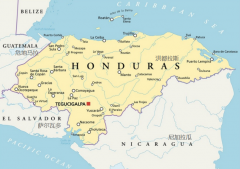
Queen's Estate (Fazenda Rainha) sits in the Mogiana region at an altitude of 1400-1950m. The unique geography and pleasant climate make it an exceptional origin for specialty coffee. It is managed by José Renato G. Dias, an agricultural engineer specializing in coffee production.
At Queen's Estate, all workers live on the farm itself, so there is no temporary employment, and they receive appropriate support through health plans and unlimited hospital care. Recently the workers built the second unit of the Pedro Roza IT school and a small chapel designed by Oscar Niemayer. Fazenda Rainha's environmental policy is built around coordinating production with environmental protection. It is a BSCA-certified property with a UTZ-certified social and environmental management system that has been a Cup of Excellence finalist for many years.

Yellow Bourbon Coffee Variety
The estate cultivates Yellow Bourbon, Icatu, Yellow Catuai, Mundo Novo, and Acaiá. All the coffee it produces carries BSCA and Utz certification. The main variety, however, is Yellow Bourbon: according to the estate, 200 hectares of the farm are planted with it.

Yellow Bourbon is a Bourbon variety unique to São Paulo state, Brazil. It takes the name "Yellow Bourbon" mainly because the fruit does not turn red when ripe but instead shows an orange-yellow color. Yellow Bourbon beans are inherently sweet and clean. Natural (or semi-natural) processing reduces its acidity slightly while letting it combine well with sweetness, presenting tropical fruit aromas.
Pulped Natural Processing Characteristics
Pulped Natural processing is a coffee processing method original to Brazil. To reduce the mold that develops in natural processed beans under Brazil's rainy climate, the Pulped Natural method was invented to shorten processing time.

Pulped Natural processing removes the skin and pulp of the coffee cherry, allowing control over how far the mucilage-coated beans ferment. Traditional natural processing sun-dries the fruit with skin and pulp intact, making it impossible to monitor mucilage fermentation. Pulped Natural sits between natural and washed processing, but without the fermentation-tank washing and clean-water rinsing of the washed method, going straight to sun-drying instead.
Although the methods may look similar, the absence of the fermentation step produces completely different flavors. When the cherry's skin and pulp are removed during pulped natural processing, ripe pulp comes away easily, while the skin of unripe green fruit is hard to process, allowing a second screening that filters out unripe fruit and standardizes the maturity of the cherries. Compared with natural processing, FrontStreet Coffee believes this selective processing improves the cleanliness and maturity of the beans and results in more consistent tasting coffee.

FrontStreet Coffee Brazil Queen's Estate Green Bean Analysis
FrontStreet Coffee notes that Queen's Estate beans have relatively low density, moderate moisture content, and a somewhat soft texture, thin from the surface to the core. They are therefore not suited to roasting at too high a temperature, which would create burnt bitterness. We use a medium-heat bean entry method, holding heat through the dehydration stage, then make fine adjustments as the temperature rises once first crack begins to encourage more complete caramelization. This semi-washed coffee warms slowly after first crack, so we finish roasting just before second crack to reach a medium-dark roast level.

FrontStreet Coffee Brazil Queen's Estate Coffee Roasting Insights
FrontStreet Coffee Brazil Yellow Bourbon roasting recommendations: Yangjia 800N, bean quantity 550g: preheat to 200°C, adjust heat to 150, damper opening to 3, return temperature at 1'30", maintain heat, yellowing at 5'10", grassy aroma disappears, entering dehydration stage, reduce heat to 125, damper to 3.5. Dehydration complete at 8'20", wrinkles and black spots appear on the bean surface, toast aroma transforms to coffee aroma, prelude to first crack, reduce heat to 80 at 178°C, now pay attention to the sound of first crack, first crack begins at 9'14", fully open damper to 5. Post-first crack development time 3'00", unload at 201°C.
FrontStreet Coffee Brazil Queen's Estate Coffee Brewing Recommendations
Medium-dark roasted beans have a loose structure, which makes the compounds inside easier to extract. FrontStreet Coffee therefore recommends lower-temperature water and a medium-coarse grind when brewing FrontStreet Coffee Brazil coffee.
FrontStreet Coffee store brewing parameters: using a Kono dripper, water temperature 88°C, coffee amount 15g, coffee-to-water ratio 1:15, grind size medium-fine (70-75% pass-through rate with a China standard #20 sieve).
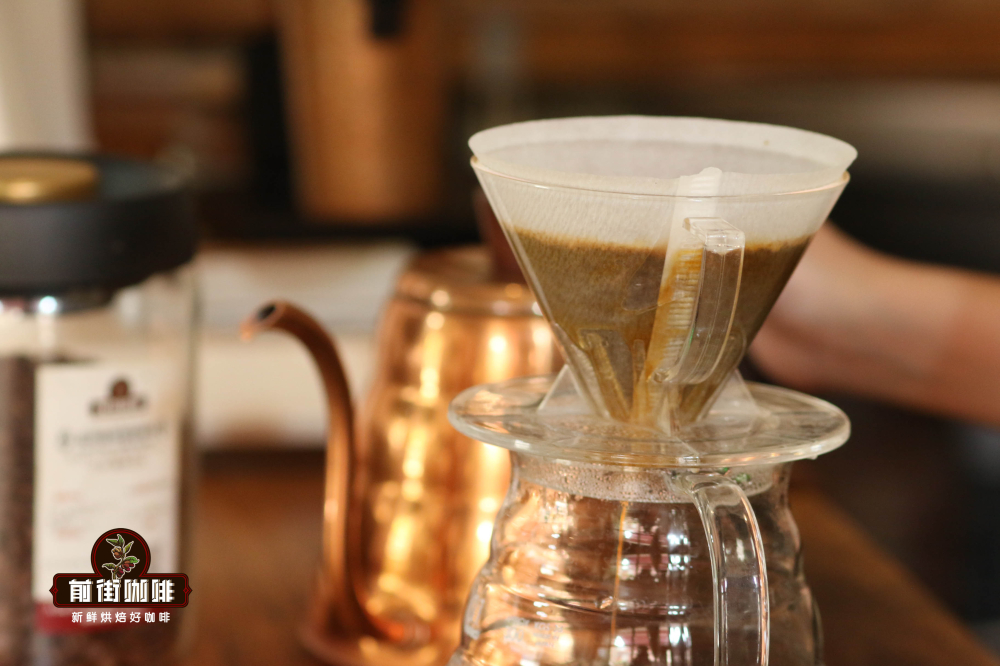
The extraction method is as follows. First, inject 30g of water for blooming, with a bloom time of 30 seconds. Second, inject water to about 125g, then wait for the coffee liquid to drop. When it has dropped halfway, inject the final water to reach 225g. Wait until all the coffee has filtered through before ending extraction. Total extraction time is generally around 2 minutes and 10 seconds.
FrontStreet Coffee Recommendation
This article's subject is exactly the bean to buy: FrontStreet Coffee Brazil Queen's Estate Yellow Bourbon. Grown in Mogiana at 1400-1950m on the Carvalho Dias family's Fazenda Rainha, it is processed as a pulped natural to hold both sweetness and cleanliness, then roasted medium-dark. Expect rich nutty and cocoa aromas, a brown sugar sweetness, and a bright, refreshing balance with low bitterness.
If you prefer to start with a more classic, affordable Brazilian single origin, FrontStreet Coffee's Cerrado Red Bourbon is a half-washed (pulped natural) lot from the well-known Cerrado region, roasted medium. It shows creamy peanut, toast, caramel, and hazelnut, with a round, smooth body, little acidity, and a light bitter note. Both beans suit pour-over as well as moka pot, espresso SOE, siphon, and French press.
For brewing, FrontStreet Coffee suggests a lower water temperature and a medium-coarse grind because these medium-dark beans are easy to over-extract. The store's reference recipe is a Kono dripper, 88°C water, 15g of coffee at a 1:15 ratio, and a medium-fine grind at a 70-75% pass-through rate on a China standard #20 sieve.
Important Notice :
FrontStreet Coffee is a long-established specialty coffee roaster in Guangzhou China, selling freshly roasted beans from its own farm in Yunnan as well as dozens of carefully selected single-origin beans from around the world for both pour-over and espresso. The products deliver consistently excellent quality and great value, with shipping within 24 hours. Guangzhou's FrontStreet Coffee shop is recommended by many coffee lovers, and the beans are now available online at the Tmall 。
FrontStreet Coffee has moved to a new address:
FrontStreet Coffee Address: 315,Donghua East Road,GuangZhou
Tel:020 38364473
 Scan and follow the En Gafei WeChat official account. Please indicate that the reprint comes from "En Gafei".