Barista Techniques: How to Perfectly Froth Milk and Essential Tips to Consider
Frothing Milk: The Art and Science Behind Perfect Microfoam
Frothing milk is a crucial step in making a good latte, and novice baristas often end up with foam that is far too thick. So how do you build a pitcher of perfect milk foam? The stability of the foam depends on the casein micelles and whey protein in the milk. Casein micelles create tension at the surface of the milk. When steam strikes that surface, countless bubbles of different sizes form. Adjusting the position of the steam wand then sets up a vortex in the milk that chops the larger bubbles apart, leaving fine foam with a smooth texture. Normally whey protein has a hydrophilic exterior, which gradually unfolds through stirring or heating and exposes its hydrophobic parts. Those parts attach to the bubbles that have formed, lowering surface tension and slowing how quickly the bubbles burst, which makes the foam more stable.
Common Issues in Milk Frothing
Here are some of the problems that come up most often when frothing milk.
Issue 1: Milk Splashing During Frothing
This is a genuinely dangerous situation. Beginners learning to froth milk do not yet have steady control over the angle of the steam wand or the depth of the steam tip in the milk. Splattering can happen the moment the steam is switched on, or later when the hand wobbles, causing the pitcher to move too much so that the steam holes meet the surface of the milk and blow it out of the pitcher.
Solution: Keep the milk pitcher in contact with the steam wand at all times.
When beginners cannot yet control the movement of the pitcher steadily, FrontStreet Coffee suggests using the pitcher's spout as a pivot point, so that the edge of the pitcher stays in contact with the steam wand. Whether you later need to adjust the pitcher's angle or move it up and down, always keep the two touching, so they never suddenly separate and let steam escape from the milk.
Issue 2: Foam Is Not Fine Enough
What frustrates beginners most is not failed latte art but foam that never becomes fine, full of large bubbles that make the drink unpleasant once it is mixed with coffee.
Solution: Turn on the steam briefly before frothing the milk.
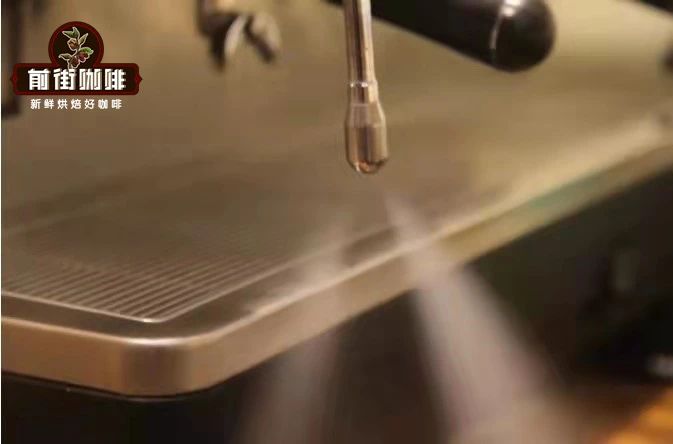
When the steam inside the wand of a semi-automatic espresso machine cools, it condenses into water that stays in the wand. Before every frothing session, therefore, purge the steam until no water sprays out. Milk frothed with steam that still carries water will produce large bubbles.
Position the steam wand in the pitcher at a 45-degree angle.
A 45-degree angle means aiming the steam wand toward the 2-3 o'clock or 9-10 o'clock direction of the pitcher. Frothing at this angle quickly creates a small vortex, and the vortex pulls coarser foam up to the surface.
Place the steam tip 0.8cm-1cm below the surface of the milk.
The steam tip should not sit too deep, because frothing milk is mainly about folding air into it. If the tip is too deep, the steam holes cannot reach air to form a vortex. If it is too shallow, the steam hits the surface, creating rough bubbles and causing the milk to splash.
Issue 3: Milk Foam Is Too Thick
The thickness of the foam depends on the foam created when steam properly meets the surface of the milk, a stage we call aeration. The longer the aeration goes on, the more foam is produced and the thicker the milk foam becomes.
The aeration stage only needs 4-5 "hissing" sounds.

Set the steam tip depth to 0.3cm and turn on the steam switch. You will hear a "hissing" sound; this is the aeration stage. For latte art the ideal foam thickness is 1cm, so there is no need for excessive aeration. After 4-5 hissing sounds, return the steam wand to a depth of 0.8-1cm and keep the 45-degree angle, so the vortex breaks down coarse bubbles while the milk heats to the right temperature.
FrontStreet Coffee Recommendation
Once the foam is right, the bean matters just as much, because the flavor of the coffee controls where a latte is heading. Most espresso blends are medium-dark roasted, which pushes a latte toward rich nuts, chocolate and a strong coffee presence. For a first choice, FrontStreet Classic Blend is built specifically for espresso and moka pot, and its greatest strength is outstanding crema: even a beginner on a non-professional home machine can pull dense, fine crema. It follows the traditional Mamba-style recipe, mellow and rounded, and it works for a latte, a cappuccino or a Dirty with equal ease. For anyone who wants abundant crema, FrontStreet Commercial Blend also contains a small amount of Robusta, which adds more golden foam and lifts the body and caramel aroma.
Not everyone is chasing maximum crema. For beginners, or shop owners watching costs, a good mouthfeel at a fair price matters more, and FrontStreet Black Cocoa Blend answers exactly that. It is 100% Arabica, with ample crema and a bold body at a friendly price, which keeps both quality and value in balance. FrontStreet Specialty Blend, meanwhile, has served FrontStreet's own cafe for close to ten years; it pairs Brazil Cerrado with Colombia Huila for a classic espresso flavor that is exactly what most people picture when they think of Italian-style coffee.
If you want a milk drink that tastes clearly of fruit, FrontStreet Strawberry Candy is a popular fruit-forward espresso blend. It lets the native flavors of Arabicas from different regions meet and re-creates a vivid strawberry-gummy sweetness, and it suits both daily drinking at home and commercial service in a cafe. You can also froth milk for pour-over, though the lower strength of filter coffee means the milk can easily mask it, so a medium-dark single origin such as FrontStreet Queen's Estate, FrontStreet PWN Golden Mandheling or FrontStreet Paradise Bird is the better partner. For cold brew with a splash of milk, fruit-forward or wine-like medium roasts work best, such as the passionfruit notes of FrontStreet Colombia Sidra or the rose-like FrontStreet Strawberry Candy Geisha Blend.
Important Notice :
FrontStreet Coffee is a long-established specialty coffee roaster in Guangzhou China, selling freshly roasted beans from its own farm in Yunnan as well as dozens of carefully selected single-origin beans from around the world for both pour-over and espresso. The products deliver consistently excellent quality and great value, with shipping within 24 hours. Guangzhou's FrontStreet Coffee shop is recommended by many coffee lovers, and the beans are now available online at the Tmall 。
FrontStreet Coffee has moved to a new address:
FrontStreet Coffee Address: 315,Donghua East Road,GuangZhou
Tel:020 38364473
 Scan and follow the En Gafei WeChat official account. Please indicate that the reprint comes from "En Gafei".