The Correct Way to Make Iced Latte - What's the Ratio of Iced Latte Coffee to Milk and Ice?

Making espresso is an essential skill for every barista, and nearly every coffee shop builds its menu around espresso-based beverages. What we commonly call espresso coffee refers to the whole family of drinks made with espresso as the base. Today, let's make the easiest milk-based espresso drink of them all — the iced latte.
The Simplicity and Complexity of Iced Latte
On paper, an iced latte could not be simpler: add ice, pour milk, then add coffee. In practice, pulling off a genuinely delicious iced latte takes real understanding and close attention to detail.

First Point: Selecting Suitable Ingredients
Why is the iced latte so simple that virtually every coffee shop lists it, yet every shop's iced latte tastes different? The primary reason is that the materials — milk and coffee beans — vary from place to place. The flavor profile of the beans directly shapes where an iced latte ends up. Most espresso blends push the drink toward rich nutty, chocolate, and heavy coffee flavors, while a smaller number of beans are chosen to let the sweet, fragrant richness of the milk take the spotlight.

The choice of milk matters just as much. Considering whole fresh milk alone, there are more than 10 common varieties on the market. Some have a heavy milk flavor and thick texture, while others are light and watery. The standard for choosing milk is not to blindly chase the thickest, most aggressively milky option, but to pick milk that pairs well with coffee. A heavy milk flavor will bury the coffee notes, while a noticeably watery milk will leave the latte tasting diluted.
Second Point: Appropriate Milk-to-Coffee Ratio
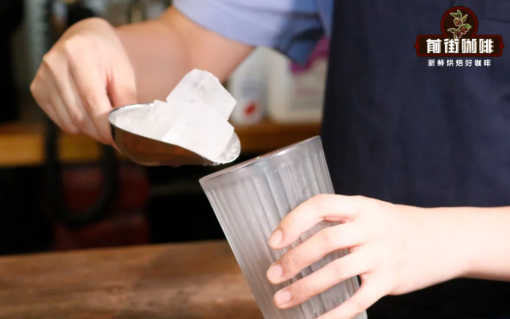
Do good beans and good milk guarantee a delicious iced latte? Only with a sensible ratio. FrontStreet Coffee's iced latte uses the Sunflower · Warm Sun blend with Kowloon Dairy fresh milk, at an espresso-to-milk ratio of 1:6 — that is, 40 grams of espresso extract matched with 240 grams of iced milk and 75 grams of ice cubes, served in a transparent glass of roughly 300ml capacity.
Treat this ratio as a reference, not a golden rule. FrontStreet Coffee arrived at these numbers through repeated adjustments with the specific ingredients above, guided mainly by tasting feedback. When you make iced latte at your own bar, adjust to taste: more milk will mute the coffee, less milk will push it toward bitter, and extra ice will water it down.

Third Point: Operational Details
Even though the method — ice, milk, then coffee — is simple and clear, a few small details still deserve attention. The most important is espresso extraction. Whether a latte tastes good depends first on whether the espresso meets standard. Common extraction faults such as channeling and incorrect extraction times will show up immediately in the final drink.

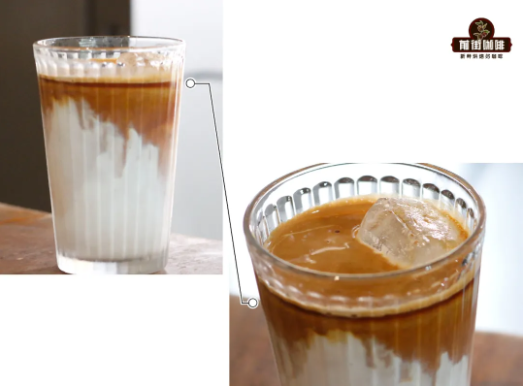
Speed matters too. Here, "quick" means the ice and milk should spend as little time as possible sitting in the glass before the freshly extracted espresso goes in. This is exactly why a freshly made iced latte shows a clean gradient layer between milk and coffee. If the ice soaks in the milk too long, it melts and a water layer forms on top, leaving the whole drink tasting thin. Espresso is even more sensitive: freshly extracted espresso carries rich crema, but after 30 seconds the crema visibly fades, and espresso without crema also struggles to float on the surface.
FrontStreet Coffee Recommendation
For iced lattes and other milk-forward drinks, FrontStreet Coffee's Classic Blend is the house first choice — built on the traditional Mamba recipe, it produces exceptionally thick, velvety crema and a mellow, rounded cup that suits lattes, cappuccinos, and Dirty drinks alike. If you prefer a budget-friendly, all-Arabica option, the FrontStreet Black Cocoa Blend delivers full crema with a smooth chocolate-nut profile. And when you want a fruitier signature milk coffee, the Strawberry Candy Blend reproduces a bright strawberry gummy sweetness that cuts beautifully through milk.
Important Notice :
FrontStreet Coffee is a long-established specialty coffee roaster in Guangzhou China, selling freshly roasted beans from its own farm in Yunnan as well as dozens of carefully selected single-origin beans from around the world for both pour-over and espresso. The products deliver consistently excellent quality and great value, with shipping within 24 hours. Guangzhou's FrontStreet Coffee shop is recommended by many coffee lovers, and the beans are now available online at the Tmall 。
FrontStreet Coffee has moved to a new address:
FrontStreet Coffee Address: 315,Donghua East Road,GuangZhou
Tel:020 38364473
 Scan and follow the En Gafei WeChat official account. Please indicate that the reprint comes from "En Gafei".