Introduction to Blue Mountain Coffee Origin, How to Drink Blue Mountain Coffee, World's Premium Coffee Beans.
Introduction to Blue Mountain Coffee
Blue Mountain coffee is coffee grown in Jamaica's Blue Mountains — and within that, grading splits it further into Jamaica Blue Mountain Coffee and Jamaica High Mountain Coffee. The Blue Mountain range rises on the island of Jamaica to over 2,100 meters, blanketed in fertile volcanic soil. Because the range is ringed by the Caribbean Sea, the air is exceptionally clean and humid, giving the coffee trees ample moisture and nutrients. Cultivation here dates to the early 18th century, but the coffee won true international recognition in 1953.
Jamaica's land area is limited, and high-quality coffee can only be grown at altitude — on this island, only the Blue Mountain range has it. Production of top-grade beans is therefore inherently scarce. So the newly established Coffee Industry Board (CIB), founded in 1948, drew up a detailed framework for coffee production across the range: grade classification, upgraded cultivation techniques, bean grading, quality control on exported Blue Mountain, and official certification — the aim being to sell scarce beans at prices matched to their grades.
Classification and Growing Regions
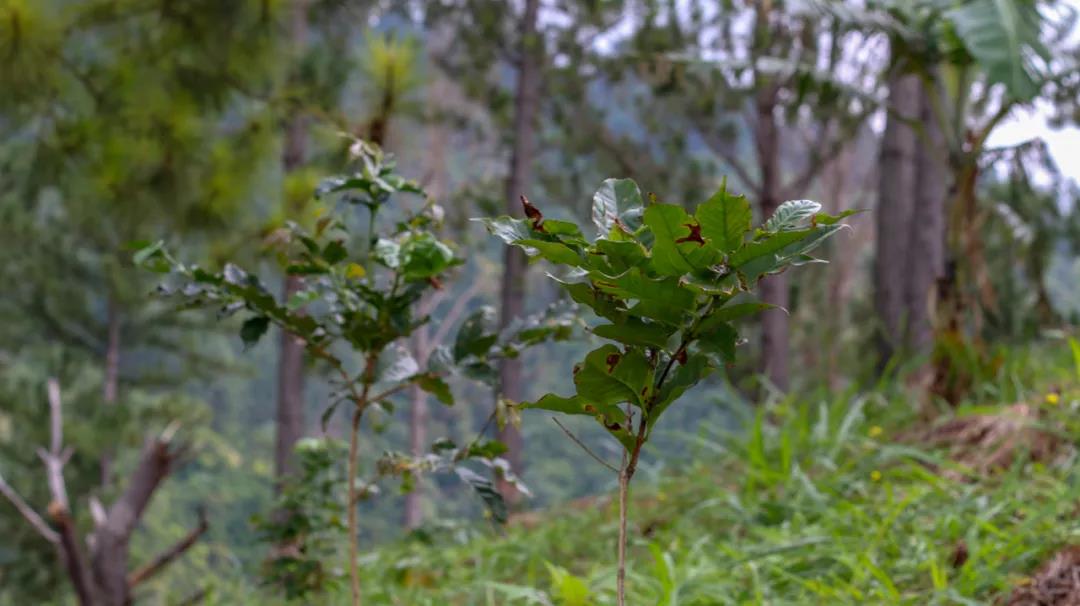
The Blue Mountain range tops out at 2,256m. The government designated everything above 1,700m as a natural ecological reserve where commercial cultivation is banned. Quality coffee depends on the wide day-night temperature swings of high altitude, which slow the cherries' growth and let more flavor develop. So the CIB ruled that only coffee grown between 910m and 1,700m may be called "Jamaica Blue Mountain Coffee." Beans from 460m to 910m may only be sold as "Jamaica High Mountain Coffee," and anything below 460m as "Jamaica Prime Coffee."
Brewing Method for Blue Mountain Coffee
So how should Blue Mountain coffee be brewed?
Blue Mountain No. 1 has a very clean flavor profile and is highly suited to pour-over brewing. FrontStreet Coffee recommends a KONO dripper, brewing temperature: 88-87°C, coffee amount: 15 grams, brew ratio: 1:15, recommended grind size: medium grind (BG 6W: 75% pass rate through China standard #20 sieve). FrontStreet Coffee's brewing method: Bloom with 30g of water for about 30 seconds, then slowly pour 95g of water in small circular motions at the center (dividing at 125g total water), wait until the water level drops to just before exposing the coffee bed, then pour water again until reaching 230g total. Remove the dripper when the water level drops to just before exposing the coffee bed (timing starts from the beginning of blooming), total extraction time: 2'05".
Flavor Profile
Blue Mountain No. 1 flavor profile: subtle berry acidity, dark cocoa, nuts, overall balance, rich and enticing.
FrontStreet Coffee Recommendation
For many coffee lovers, Blue Mountain is simply unavoidable — in the era before specialty coffee went mainstream, "treating someone to Blue Mountain" was shorthand for premium coffee itself, and even today it holds a place no other origin can fill. Strictly speaking, only coffee grown in the designated zone of Jamaica's Blue Mountains and certified by the Jamaican authorities earns the name Jamaica Blue Mountain Coffee: the range, one of the Caribbean's tallest at 2,256 meters, is wrapped in year-round mist (hence the name), and the high altitude, fertile volcanic soil, even rainfall, and mild climate stretch the cherries' ripening cycle so sugars and flavor compounds accumulate slowly. That's the source of its famously delicate, balanced cup.
That balance is the whole point. Blue Mountain has no obvious weakness: neither the aggressive fruit acidity of some African coffees nor the heavy bitterness of dark roasts, but a near-perfect harmony of acid, sweet, bitter, and aromatic. A good Blue Mountain shows cream, caramel, chocolate, nuts, honey, and a whisper of fruit; the entry is soft and round, the mid-palate richly sweet, and the finish clean and long. It's the coffee professionals most often describe as "the specialty coffee easiest for almost anyone to love." Scarcity sustains its status — annual output from the entire region is under 2,500 tons, and Japan has historically bought more than seventy percent of it, so genuine Blue Mountain remains rare and tightly controlled.
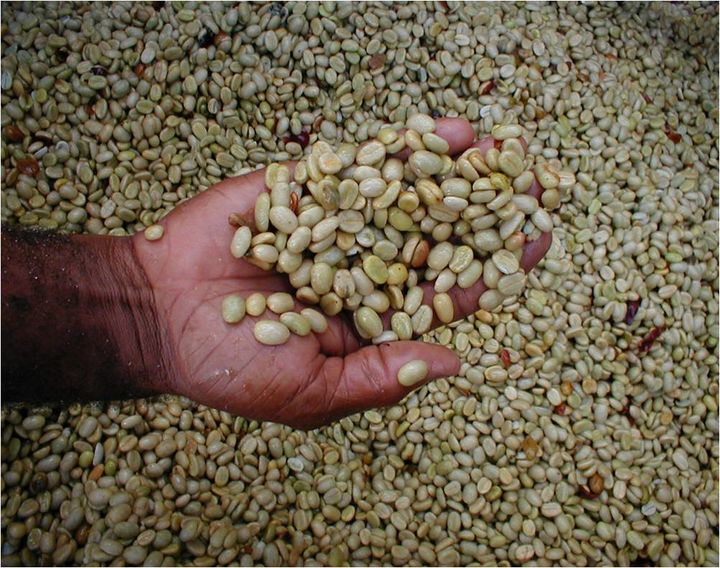
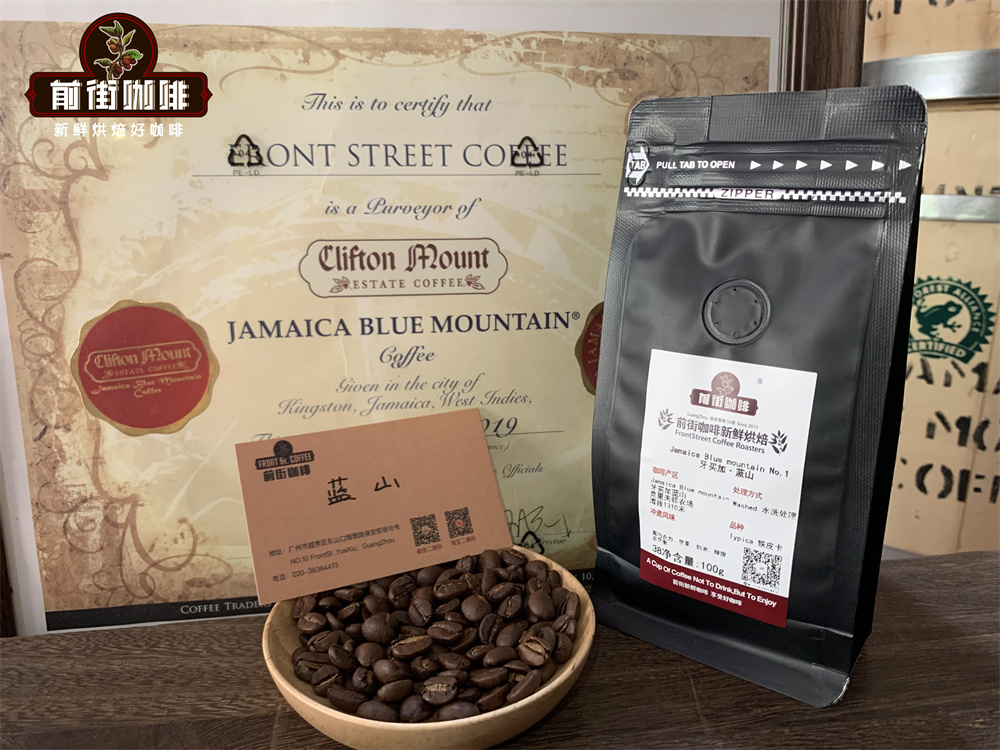
To brew it well, FrontStreet Coffee suggests treating the beans gently: a 1:15 to 1:16 ratio, water at 85–88°C, and a medium-coarse grind for pour-over, which draws out the cream, caramel, and nut tones while keeping the acidity soft and bright. Prefer something thicker? The moka pot suits Blue Mountain beautifully — a slightly finer grind, hot water in the base, moderate heat, and removal from the flame just as the flow finishes — amplifying the chocolate, caramel, and nut character while preserving its signature balance; it also stands up wonderfully to milk in a latte or flat white. And when buying, check the credentials: authentic Blue Mountain ships with export certification and origin documents, travels in the traditional wooden barrels (15, 45, and 70kg sizes), and genuine green beans are plump, even, slightly upturned at both ends, and green in color. FrontStreet Coffee's Jamaica Blue Mountain No. 1 comes from historic Clifton Farm with full certification and original barrels on display — proof you're drinking the real thing.
Important Notice :
FrontStreet Coffee is a long-established specialty coffee roaster in Guangzhou China, selling freshly roasted beans from its own farm in Yunnan as well as dozens of carefully selected single-origin beans from around the world for both pour-over and espresso. The products deliver consistently excellent quality and great value, with shipping within 24 hours. Guangzhou's FrontStreet Coffee shop is recommended by many coffee lovers, and the beans are now available online at the Tmall 。
FrontStreet Coffee has moved to a new address:
FrontStreet Coffee Address: 315,Donghua East Road,GuangZhou
Tel:020 38364473
 Scan and follow the En Gafei WeChat official account. Please indicate that the reprint comes from "En Gafei".