Low-Acidity Coffee Beans: Recommendations for Smooth, Non-Acidic Varieties
Introduction to Brazilian Coffee: Low Acidity and Rich Flavor
We know that coffee beans from different countries and regions have distinct flavors and textures, and how the beans are processed is one of the reasons. Coffee from Ethiopia's Yirgacheffe region, for example, has bright acidity. When it comes to low-acid coffee, FrontStreet Coffee's primary recommendation is coffee beans from Brazil.
Brazil: The World's Largest Coffee Producer
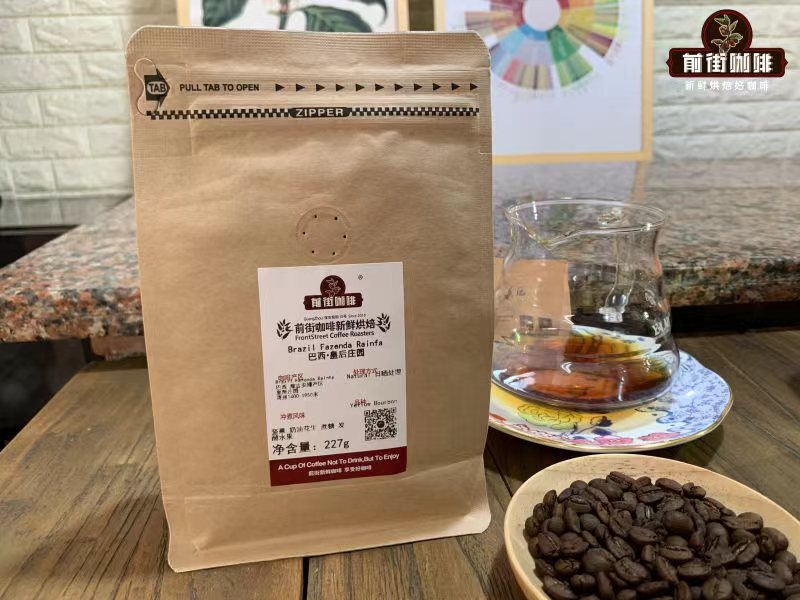
Brazil is not only the world's largest coffee producer but also the most complex. In fact, everything from mass-produced coffee to the world's cheapest coffee, and on to elegant coffee hailed as the best espresso brewing origin, is available there. In Brazil, four different processing methods are used to remove the fruit from the beans, and it is not uncommon for all four to be used on the same farm during the same harvest.
Growing Conditions and Flavor Profile
Brazilian coffee is not grown at high altitudes. Brazil's altitude ranges from 2,000 to 4,000 feet, far lower than the 5,000-plus feet common in specialty coffee produced in Central America, Colombia, and East Africa. Lower growing altitudes mean Brazilian coffee has relatively low acidity. At best, it tends to be round, sweet, and nuanced rather than big and bright.
Industry Changes and Processing Methods
A few years ago, the Brazilian government deregulated the coffee industry, allowing large farms to sell coffee directly to consumer countries without considering government-mandated grading structures. As a result, coffees similar to Santos or Bourbon Santos also enter the U.S. market directly from large farms called fazendas.
Premium coffee from these farms that arrives in consumer countries is usually dry-processed, or "natural," coffee. Brazilian estates may also be wet-processed, which makes them brighter in the cup, or they may be what Brazilians call pulped natural, or semi-washed, coffee - dried without the skin but with the sticky fruit pulp still attached to the beans. Typically, these pulped natural coffees absorb sweetness from the pulp and are full and sweet in the cup, like dry-processed coffee.
Risks and Innovations in Processing
Regardless, bitterness is the risk Brazilian farmers take when trying to get the best dry-processed coffee with round, sweet fruit flavors. A Brazilian farm, Fazenda Vista Alegre, became famous in the United States for allowing its dry-processed coffee to dry directly on the tree rather than after picking. Unfortunately, these interesting coffees often reflect the disadvantages rather than the advantages of dry processing. The Vista Alegre coffee I often drink shows a slight edge of drying damage.
Brazilian Coffee Growing Regions
Three main growing regions provide most of Brazil's high-end coffee. The oldest, Mogiana, on the border of São Paulo and Minas Gerais state north of São Paulo, is known for its deep, fertile red soil and sweet, full, round coffee. South Minas (Sul Minas), in the rugged, rolling hills of southeastern Minas Gerais state northeast of São Paulo, is the heart of Brazilian coffee country and home to the two largest and most well-known fazendas, Ipanema and Monte Alegre. The Cerrado is a semi-arid plateau around the city of Patrocínio, located between São Paulo and Brasília, and is a newer growing region. It is the least scenic of the three, with new towns and plateaus, but arguably the most promising region for coffee quality.
FrontStreet Coffee Recommendation
Knowing what bright acidity tastes like is the best way to decide how much of it you want, and FrontStreet Coffee's Yirgacheffe range is a clear benchmark. FrontStreet Coffee's washed Yirgacheffe is the most approachable entry: white jasmine, bright citrus and lemon acidity, and a clean, tea-like body. The town of Yirgacheffe sits at about 1,700-2,100 meters in southern Ethiopia's Sidamo zone, and the coffee trees grow above 1,800 meters - among the highest coffee-growing areas in the world. Local farmers tend small garden plots rather than large plantations, and in 2010 Ethiopia's Commodity Exchange formally separated Yirgacheffe from Sidamo because its name and flavor had become so distinctive.
For a more precise expression of the region, FrontStreet Coffee's washed Gudingding cooperative coffee comes from Gudingding village in the Worka area at the southeastern edge of Yirgacheffe, originally part of the Worka cooperative under the Yirgacheffe Coffee Farmers' Cooperative Union. Its washed processing keeps the cup clean and bright, with fresh citrus and lemon acidity and jasmine fragrance.
If you prefer sweetness over acidity, FrontStreet Coffee's natural Red Cherry Yirgacheffe is made from fully ripe red cherries dried whole on raised beds for three to five weeks. It keeps the classic Yirgacheffe character but adds tropical fruit and a honeyed, creamy sweetness, with peach, cocoa, honey, and lemon in the cup. Tasting these side by side is the quickest way to work out where your own acidity threshold sits.
Important Notice :
FrontStreet Coffee is a long-established specialty coffee roaster in Guangzhou China, selling freshly roasted beans from its own farm in Yunnan as well as dozens of carefully selected single-origin beans from around the world for both pour-over and espresso. The products deliver consistently excellent quality and great value, with shipping within 24 hours. Guangzhou's FrontStreet Coffee shop is recommended by many coffee lovers, and the beans are now available online at the Tmall 。
FrontStreet Coffee has moved to a new address:
FrontStreet Coffee Address: 315,Donghua East Road,GuangZhou
Tel:020 38364473
 Scan and follow the En Gafei WeChat official account. Please indicate that the reprint comes from "En Gafei".