How to Make the Best Coffee: Key Factors That Influence Coffee Flavor
Coffee has woven itself into daily life for most people, from instant coffee and espresso to the pour-over methods that dominate today's café menus. Among all of these, specialty coffee has become the drink of choice for anyone who cares about what is in the cup.
But no matter how a coffee is presented, the quality behind it cannot be faked. To consistently brew a great cup, there are several key factors you simply cannot ignore. FrontStreet Coffee breaks them down below.
Cleanliness of Equipment
The single easiest way to improve your coffee is to clean your brewing equipment. Natural coffee oils and fine particles build up over time, and rancid residues will transfer burnt, bitter, and sour notes into an otherwise fresh brew. You would not cook dinner in a dirty pan, do not brew coffee in a dirty brewer!
Freshness of Coffee Beans
Roasted coffee is extremely perishable and needs careful handling and proper storage. Whole bean coffee stays at its peak for roughly 2 weeks, while ground coffee holds optimal freshness for less than 1 hour in open air.
Grinding dramatically increases the surface area exposed to oxygen and speeds up staling. Store coffee in a cool, dry place away from light, heat, moisture, and strong odors. Grind with a burr grinder immediately before brewing to preserve aroma; stale coffee loses its fragrance and sweetness and turns malty, papery, and flat.
Coffee Grinding
Grinding reduces particle size and increases surface area, which plays a major role in how much aroma and flavor develop during extraction.
The grind size must match the brewing method, and it hinges on contact time. Short extractions, espresso and pour-over, call for a finer grind so flavors release quickly, while French press and other immersion brewers steep for much longer and therefore need a coarser grind. Burr grinders also produce far more uniform particles than blade grinders, which translates into a richer, more complex cup.
Time of Consumption
Brewed coffee is just as perishable as the beans are before grinding; coffee professionals recommend serving it immediately after preparation. Coffee held in a glass pot should be finished within 30 minutes, or within 60 minutes in a thermal carafe. Longer holding times let aromatics dissipate, draining the coffee of sweetness and acidity. Meanwhile, dissolved solids continue to settle out of the liquid, leaving the cup flat, heavy, and increasingly sour and bitter.
Water Quality is Crucial
Water makes up 98% to 99% of a cup of coffee, so brewing water must be neutral, odorless, at the right temperature, and precisely measured.
Brewing water should be free of any off-flavors. The Specialty Coffee Association of America (SCAA) recommends total dissolved solids between 50ppm and 100ppm, free of iron, colorless, tasteless, free of sediment, with a pH between 6.5 and 7.5.
Water temperature is especially critical in specialty coffee brewing. Only water at 92°C to 96°C can fully draw out the enticing body and flavor coffee has to offer.
Water that is too cold under-extracts, while water that is too hot scorches the grounds and pushes the cup toward flatness and bitterness.
The amount of water also determines your coffee-to-water ratio. For drip coffee, the classic "golden ratio" is 64 ounces of water to 3.25 to 4.25 ounces of freshly ground coffee.
Combined with the right temperature and purity, this ratio extracts 18% to 22% of the coffee's soluble material, keeping total dissolved solids in the cup between 1150TDS and 1350TDS.
FrontStreet Coffee Recommendation
If you want a truly foolproof brewing setup, the French press is hard to beat, using it is as simple as steeping tea: add ground coffee, pour in hot water, stir, then press the plunger down to filter. Because it is a full-immersion brewer with a metal mesh filter, the coffee keeps more of its oils and delivers a heavier, fuller body. Those who dislike sediment and fines, however, may want to look elsewhere.
Since immersion extraction involves prolonged contact between grounds and hot water, the French press theoretically suits medium to dark roasts best, as they express sweetness and caramelized flavors more clearly than delicate light roasts.
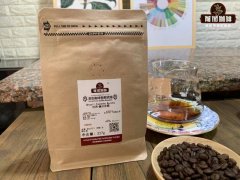
For a low-acid, full-bodied black coffee, FrontStreet recommends its PWN Golden Mandheling, one of Asia's best-known specialty coffees. The beans go through three rounds of hand sorting plus one machine pass, and after medium-dark roasting they show rich spice, caramel, cedar, and dark chocolate aromas, with a thick mouthfeel and pleasant crema when brewed in a French press.
Grind size: FrontStreet suggests a coarse-sugar grind, setting 10.5 on an EK43s electric grinder, or 26 clicks on a typical hand grinder, something closer to small gravel than fine sand. Grinding too fine lets fines slip through the metal mesh and leave a muddy sediment at the bottom of the cup; if you do grind finer for extra layers of flavor, shorten the steep time to avoid over-extraction.
Ratio: start at 1:15 (15 grams of coffee to 225 grams of water), which yields a strength in the 1.1% to 1.2% range and a rich, full-bodied cup. Adjust either coffee or water on the next brew until you find your preferred balance.
Water temperature: without a thermometer, let boiling water sit for 2 to 3 minutes so it drops to around 90 degrees. Because a French press pour happens all at once with no agitation during the steep, FrontStreet suggests running 1 to 2°C hotter than you would for pour-over to compensate for the lower extraction.
Steeping time: with no stirring to boost extraction, time has to do some of the work. Most brews land between 3 and 5 minutes, 5 minutes can push a darker roast toward bitterness and astringency, while 3 minutes may leave a lighter roast underdeveloped. FrontStreet recommends starting with a 4-minute steep: add the grounds, pour in 15 times their weight in hot water, stir gently, rest the plunger on top without pressing, wait 4 minutes, then press down slowly and pour carefully without disturbing the bed of grounds at the bottom.
Important Notice :
FrontStreet Coffee is a long-established specialty coffee roaster in Guangzhou China, selling freshly roasted beans from its own farm in Yunnan as well as dozens of carefully selected single-origin beans from around the world for both pour-over and espresso. The products deliver consistently excellent quality and great value, with shipping within 24 hours. Guangzhou's FrontStreet Coffee shop is recommended by many coffee lovers, and the beans are now available online at the Tmall 。
FrontStreet Coffee has moved to a new address:
FrontStreet Coffee Address: 315,Donghua East Road,GuangZhou
Tel:020 38364473
 Scan and follow the En Gafei WeChat official account. Please indicate that the reprint comes from "En Gafei".