Premium Costa Rican Coffee Beans: The Connection Between Coffee Bean Hardness and Growing Altitude
When it comes to Costa Rican coffee, some people may not know it well, but mention the musician Beethoven and everyone recognizes the name. At FrontStreet Coffee, Beethoven, Mozart, and Bach are premium coffees from Costa Rica's Musician Series, widely beloved by coffee enthusiasts.
A highly regarded Costa Rican coffee typically comes from the Caturra (Coffea arabica var. caturra) coffee plant variety and sometimes Catuai, and it exhibits excellent body - often full-bodied - along with rich, intense flavors and crisp acidity. Costa Rica's finest high-grown coffees are especially notable, renowned for their good body and fruitiness as well as bright acidity and a clean, refreshing taste.
Growing Regions
Costa Rica is a relatively narrow country flanked by oceans with long coastlines, yet it still achieves ideal altitudes for coffee cultivation.
Costa Rican "Tarrazu" Coffee
The Tarrazu county region consistently produces some of Costa Rica's finest coffees. The capital of San Marcos sits at approximately 1,350 meters above sea level, but the surrounding mountains reach up to 1,700 meters, providing very high altitudes ideal for developing the finest coffee. The Tarrazu region is located in the country's inland mountainous area, with a minimum altitude of 1,200 meters, and the region's finest coffees are known for their relatively heavy body and complex aroma. Almost all Tarrazu coffees are Strictly High Grown.
San Marcos de Tarrazu is particularly famous for producing outstanding coffee. The La Minita coffee farm in Tarrazu is renowned for its highly regarded Arabica coffee.
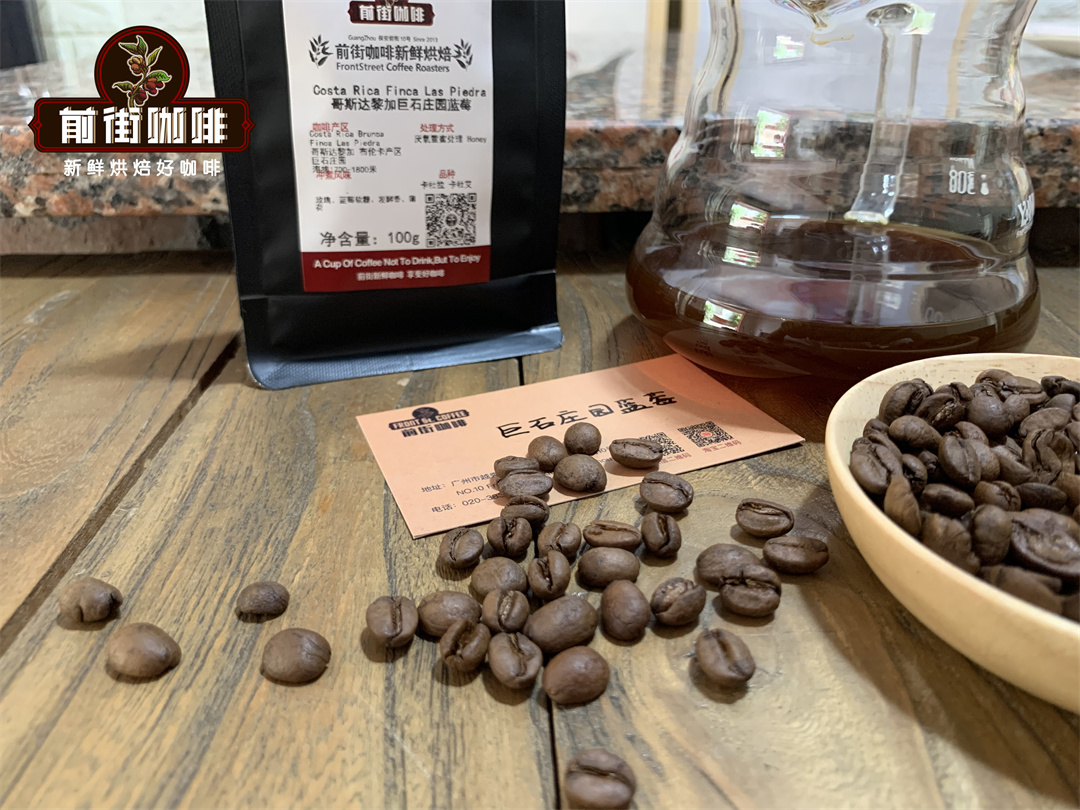
Varieties
Other coffee plant varieties grown in Costa Rica include Caturra (known for producing rich, bright coffee), Catuai, and Mondo Novo.
The green coffee grading system for Costa Rican coffee is based on altitude and is graded by hardness, which is influenced by altitude. More precisely, it is affected by the time required for the cherries (fruit) to mature on the coffee plant. Generally, higher regions produce denser, harder coffee beans, which are considered better quality. Local brokers and distributors work with green coffee importers to bring unroasted coffee to the United States and Canada. It is then sold in 132-pound bulk coffee bags to large coffee roasters.
Costa Rican coffee is also commonly available with Fair Trade and Organic certifications. Rainforest Alliance certification is also popular in Costa Rica.
Costa Rican Grading System
The Costa Rican grading system includes the following classifications:
Strictly High Grown (SHG) / Strictly Hard Beans (SHB), grown at altitudes above 1,200 meters;
Good Hard Beans (GHB), grown at altitudes between 3,300 feet (1,000 meters) and 3,900 feet (1,200 meters); and
Medium Hard Beans (MHB), grown at altitudes between 500 meters and 900 meters.
FrontStreet Coffee Recommendation
Costa Rica's hardness-based grading reflects a simple idea that holds across the coffee world: higher altitude usually means slower cherry maturation, denser beans, and a brighter, more layered cup. FrontStreet's range is a good place to taste that idea across origins. FrontStreet's Jamaica Blue Mountain No. 1 is a Typica - one of the archetypal Arabica varieties - and it is famous for its balance: neither the sharp fruit acidity of some African coffees nor the heavy bitterness of a dark roast, but a careful equilibrium of acidity, sweetness, bitterness, and aroma. It shows cream, caramel, chocolate, nuts, honey, and a light fruit note, smooth on entry with a rich mid-palate and a clean, long finish.
For the high-altitude, intensely floral end of the spectrum, FrontStreet's Panama Red Label Geisha from Hacienda La Esmeralda sits in the Boquete area of Chiriqui province, where fertile volcanic soil, old-growth forest, and year-round mist and rainfall create ideal growing conditions. The cup is elegant and floral, with citrus, peach, and complex fruit acidity, a creamy mouthfeel, and an oolong tea sweetness in the aftertaste.
If you prefer a fruit-driven Arabica with more body, FrontStreet's Colombia Sidra is grown at 1650-1800 meters and given a double anaerobic natural process with a medium-light roast, showing jasmine and citrus in the dry aroma and passion fruit, blueberry, grape, and apricot on the palate, with a bright, soft acidity and a lasting cocoa sweetness.
Important Notice :
FrontStreet Coffee is a long-established specialty coffee roaster in Guangzhou China, selling freshly roasted beans from its own farm in Yunnan as well as dozens of carefully selected single-origin beans from around the world for both pour-over and espresso. The products deliver consistently excellent quality and great value, with shipping within 24 hours. Guangzhou's FrontStreet Coffee shop is recommended by many coffee lovers, and the beans are now available online at the Tmall 。
FrontStreet Coffee has moved to a new address:
FrontStreet Coffee Address: 315,Donghua East Road,GuangZhou
Tel:020 38364473
 Scan and follow the En Gafei WeChat official account. Please indicate that the reprint comes from "En Gafei".