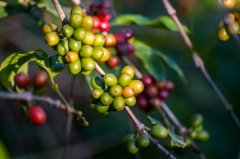
Grading of Kenya Premium Coffee Beans: What Do AA, AB, and PB Mean in Kenyan Coffee
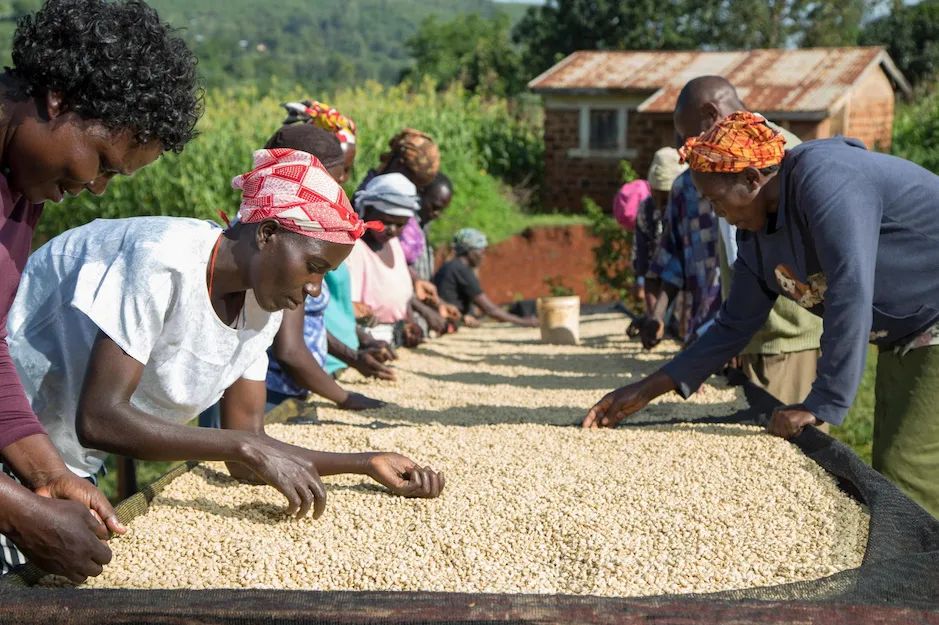
Kenya coffee has followed a strict grading system since the 1930s, based primarily on the size, shape, and hardness of the beans. The hierarchy from highest to lowest runs AA or AA+, AB, PB, C, E, TT, and T. This classification serves as a selection reference, with coffee flavor taken into account as well. Today, the grades most commonly found in the mainstream market are AA, AB, and PB.
Coffee Size Grading
AA is a classification name for green coffee beans, referring mainly to bean size. AA denotes larger beans, generally those at 17 mesh or above (17 mesh = a sieve aperture diameter of 6.75mm). AA size corresponds to 17 and 18 mesh, while AB covers 15 and 16 mesh.
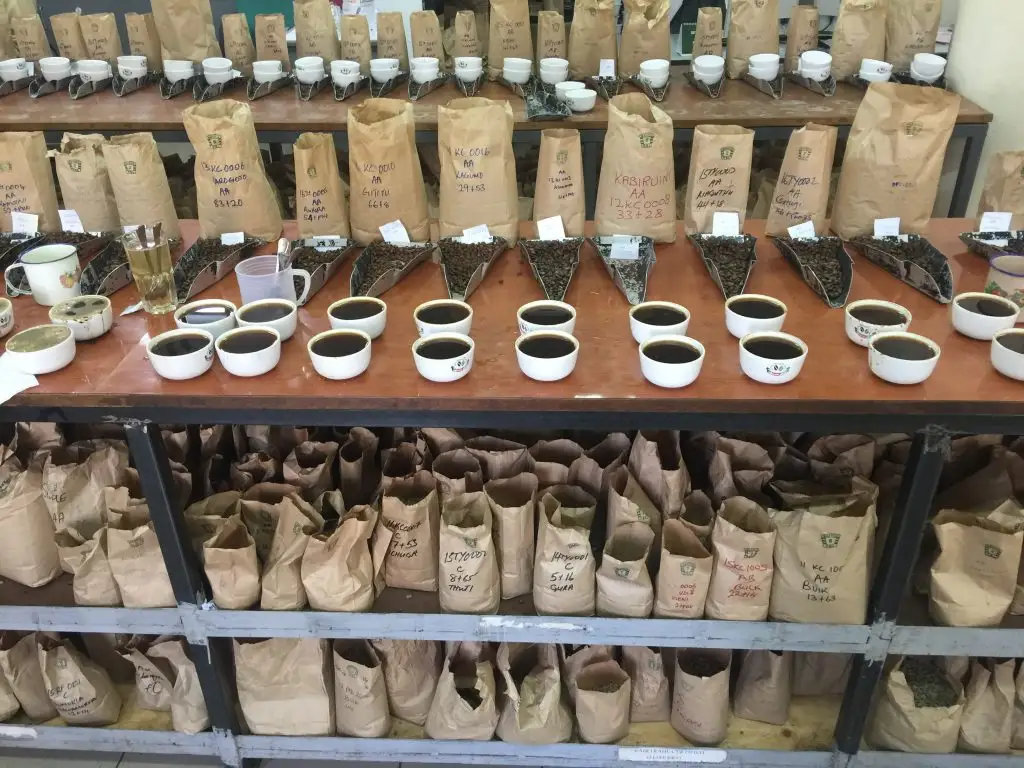
- AA Plus (AA+): exceptionally high cup quality (flavor, mouthfeel) among AA grade beans
- AA particle size (screen size): 17-18
- AB particle size (screen size): 15-16, making up the majority of production
- C particle size (screen size): smaller than AB
- TT: lighter beans separated from AA and AB lots using air screeners
- T: lighter beans separated from C grade lots using air screeners
- E (Elephant Bean): large mutant beans where two beans have merged, also known as elephant ear beans
- UG: beans that do not meet the standards above
- PB (Peaberry): classified by shape, unrelated to flavor or weight
Flavor Grades
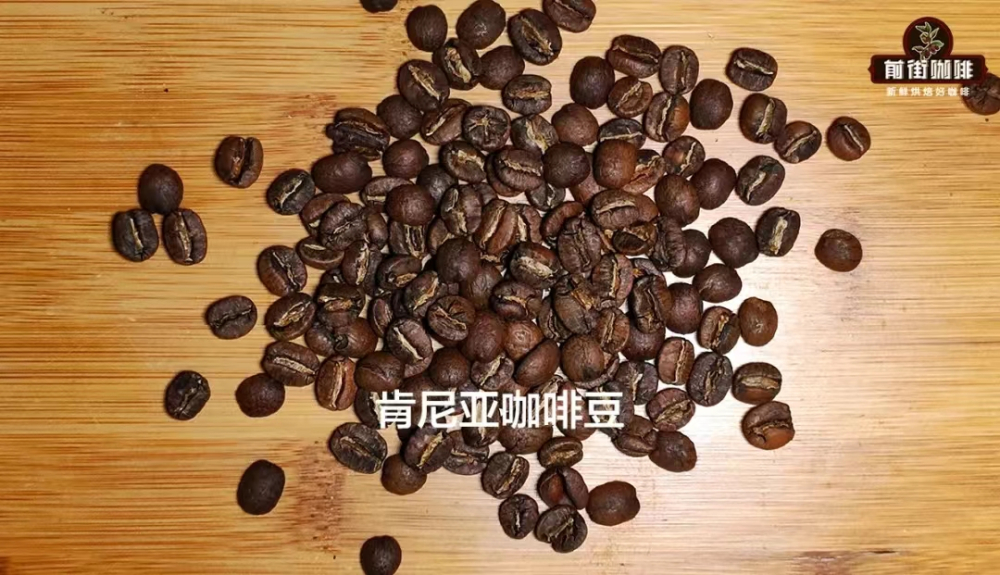
Beyond size grades, Kenya also applies a flavor grading system using TOP, PLUS, and FAQ classifications to single out the most delicious coffees. The evaluation criteria include green beans (size, color, defects), roasted beans, and cupping quality (acidity, body, flavor characteristics, defects). In practice, this is simplified to scoring each lot on Acidity-Body-Flavor, with each category rated 1-3 points. A bean marked 1-1-1 corresponds to TOP AA grade.
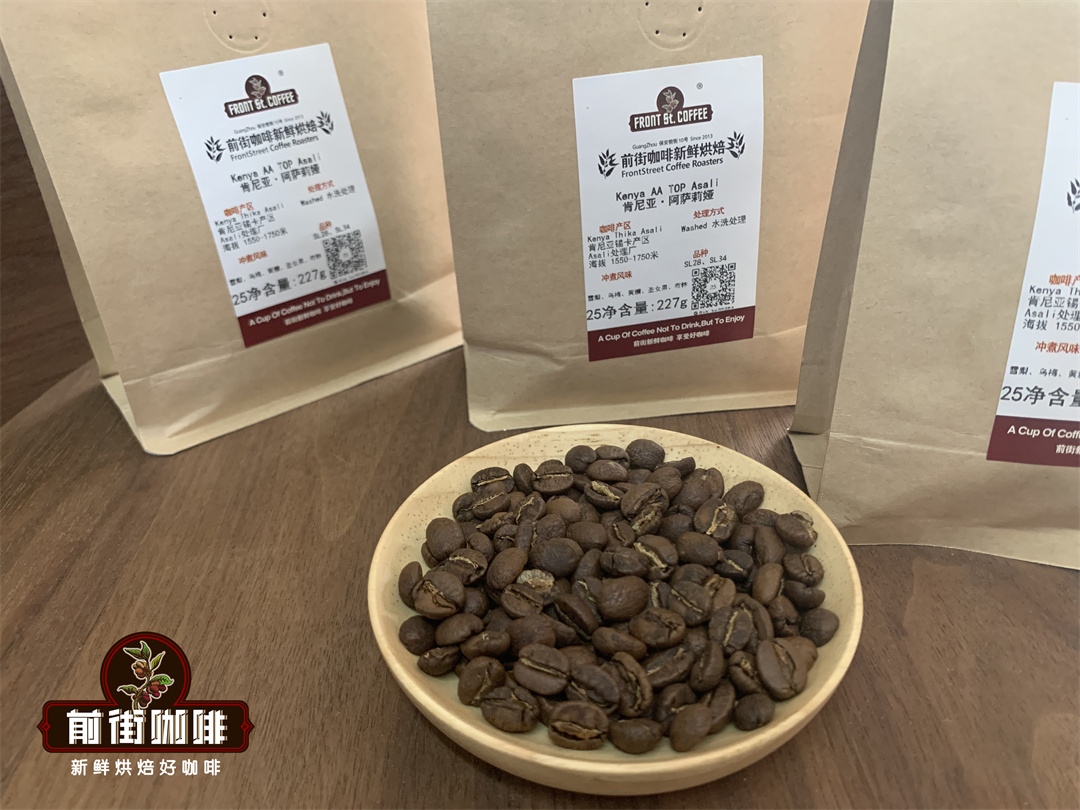
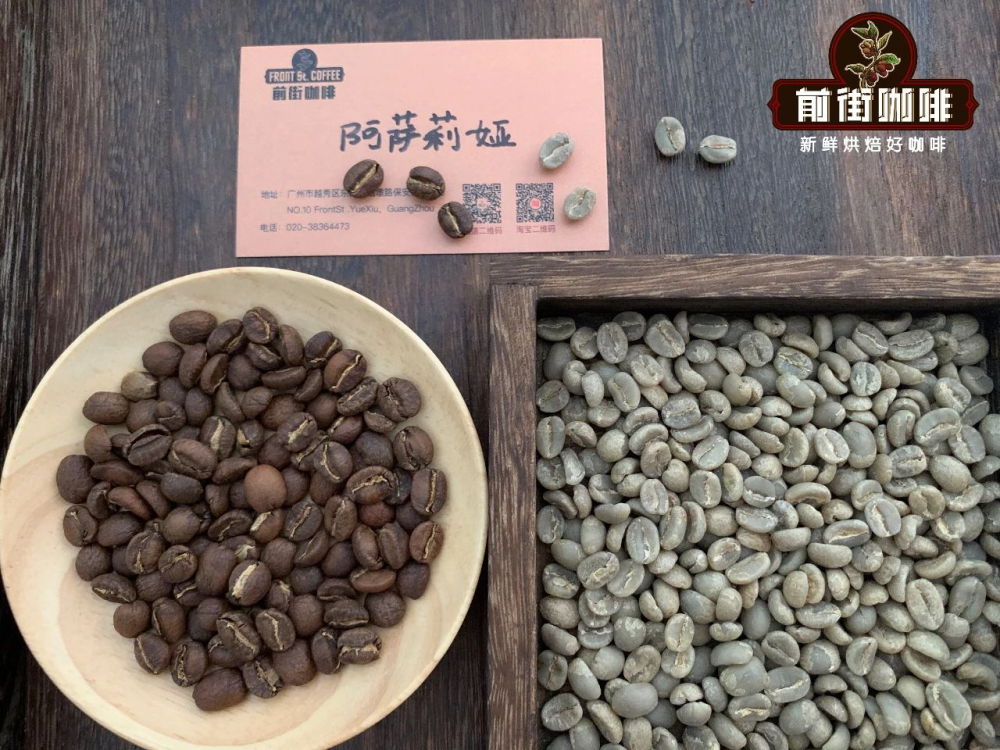
The Kenya Assalia beans, roasted in-house by FrontStreet Coffee, are AA grade. They come from the Thika region and have undergone Kenya's 72-hour wet processing method; the varieties are SL28 and SL34, making them a top choice for acidity-loving coffee drinkers. If you are tasting Kenya Assalia for the first time, FrontStreet suggests starting with a hot pour-over black coffee to best experience the character of Kenyan coffee.
Brewing Suggestions
Since these beans are lightly roasted, FrontStreet recommends a higher water temperature and a fast-flow dripper. The idea is to extract the bright acidity at high temperature while avoiding over-extraction—which is why the faster-flowing V60 is chosen. The main parameters: V60 dripper, coffee-to-water ratio 1:15, 15g of coffee, water temperature 91°C, and a grind with an 80% pass-through rate on a #20 standard sieve.
For technique, FrontStreet uses segmented extraction, also known as three-stage pouring. Pour 30g of water for a 30-second bloom, then 125g in the second circular pour. When the water level drops to just above the coffee bed, continue pouring to 225g. Total brewing time is 2 minutes, bloom included.
The flavor of Kenya Assalia: the first sip reveals dark plum and cherry tomato with intense, substantial acidity; the mid-palate offers prominent sweetness with a juicy sensation; and the aftertaste carries berry fruit aroma and brown sugar sweetness, accompanied by green tea fragrance.
FrontStreet Coffee Recommendation
If Assalia's bright berry acidity wins you over, two more FrontStreet entry-level beans deserve a spot on your shelf. FrontStreet Natural Huakui, a traditional natural Sidamo, bursts with berry, floral, jackfruit, sweet melon, and honey notes—the same ripe-tropical-fruit personality that made it famous. FrontStreet Washed Guodingding Cooperative Yirgacheffe takes the opposite route: jasmine florals, lemony acidity, and berry tones in a clean, transparent cup. And for those days you want something softer, FrontStreet Brazil Cerrado Red Bourbon delivers cream, peanut, and cocoa sweetness at a friendly price—an easy, balanced everyday pour-over.
Important Notice :
FrontStreet Coffee is a long-established specialty coffee roaster in Guangzhou China, selling freshly roasted beans from its own farm in Yunnan as well as dozens of carefully selected single-origin beans from around the world for both pour-over and espresso. The products deliver consistently excellent quality and great value, with shipping within 24 hours. Guangzhou's FrontStreet Coffee shop is recommended by many coffee lovers, and the beans are now available online at the Tmall 。
FrontStreet Coffee has moved to a new address:
FrontStreet Coffee Address: 315,Donghua East Road,GuangZhou
Tel:020 38364473
 Scan and follow the En Gafei WeChat official account. Please indicate that the reprint comes from "En Gafei".