How to Choose Low-Acidity Coffee Beans Which Coffee Beans Have Lower Acidity
Understanding Coffee Acidity
Without acidity, coffee's flavor becomes dull and lifeless. Acidity is a desirable primary coffee flavor sensation, described as a pleasant sharpness at the front of the mouth, a tingling at the tip of the tongue, or a dryness at the back of the upper palate and under the edges of the tongue, all of which are indicators of coffee quality.
Good acidity tends to be sweet, crisp and tangy, and it enhances coffee's other qualities. Coffees renowned for pleasant acidity include Kenyan AA, Ethiopian Yirgacheffe, Costa Rican and Nicaraguan varieties.
Coffee acidity does not refer to pH value but to one of the fundamental taste characteristics that, along with body, aroma, sweetness, bitterness and aftertaste, creates the complete flavor profile. Too little acidity leaves coffee tasting flat or dull.
For those with sensitive digestive systems, premium coffees may cause acid reflux or stomach discomfort because of higher concentrations of naturally occurring organic acids. While people with normal digestion can comfortably handle good acidity, which is beneficial to health, there remains a market for low-acid coffee.
Best Low-Acid Coffee Options
A good starting point for low-acid coffee is origin. Acidity levels vary within countries, significantly and in diverse ways, but origin still provides a foundation for narrowing your choices. Some of the world's best low-acid coffees come from Brazil, Sumatra and Nicaragua.
Coffee grown at lower altitudes tends to produce less acid during development, putting it among the lowest-acid coffees. Dry (also called "natural") processing also tends to yield lower acidity. FrontStreet Coffee's Brazilian coffee and Mandailing coffee, for example, have relatively low acidity.
The tradeoff is that the coffee will have less "kick." Low-acid coffees are often looked down upon by coffee snobs, but since coffee is a personal experience, only your own opinion truly matters.
Acidity is generally considered beneficial for coffee, providing brightness to flavor and enhancing other qualities. The organic acids in coffee contain powerful antioxidant properties that can offer health benefits, but for some people there are tradeoffs to consider.
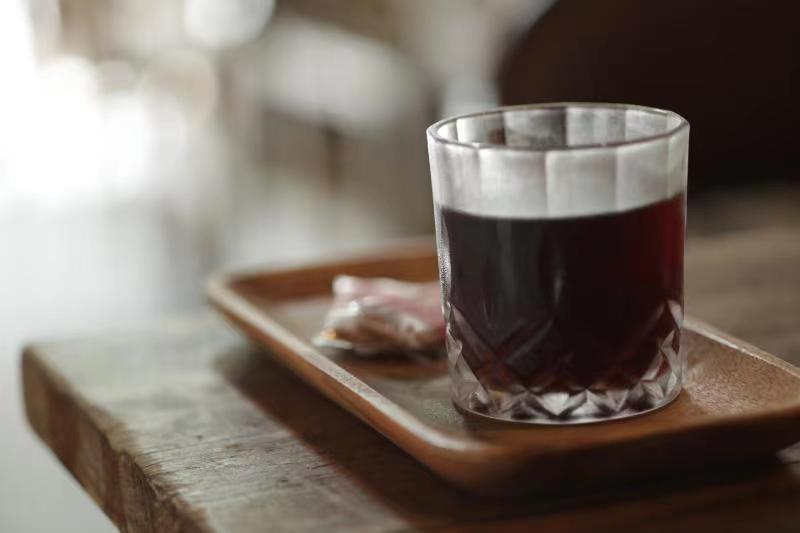
Roast Levels for Lower Acidity
Beyond selecting low-acid coffee by origin (even within a single country there are variations), roasting plays a role in reducing acidity. The acidity typically comes from organic acids in the coffee, and longer roasting times burn off more of them, removing them from the beans and consequently from the brewed cup as well.
Darker roasts typically have lower acidity than light roasts, because organic acids are broken down during roasting.
Two main organic compounds in coffee associated with stomach discomfort are N-alkanoyl-5-hydroxytryptamides and catechols. On the other hand, some compounds, such as N-methylpyridinium (NMP), have been shown to help alleviate stomach discomfort, and NMP is found in higher concentrations in darker roasts than in lighter ones.
Cold Brew's Effect on Low Acidity
Because of the lower extraction temperature over several hours, cold brew coffee tends to work well for those sensitive to coffee. Extracting some of coffee's acidic compounds requires higher temperatures, which are not present during cold brewing. Broadly speaking, darker roasts are also best suited to cold brew, which further reduces acidity.
Decaffeinated Coffee for Lower Acidity
The process used to remove caffeine also removes many other compounds naturally present in raw coffee beans. Regardless of how they are decaffeinated, whether by Swiss Water, carbon dioxide or other solvents, they lose more than just caffeine, which reduces the content of other acids as well.
While any decaffeination method removes some "healthy" compounds, none of them make coffee unhealthy. A common misconception is that solvents are less healthy than carbon dioxide or Swiss Water methods, but they burn off at temperatures far lower than those used for roasting coffee, leaving no trace of the compounds in the final roasted bean.
FrontStreet Coffee Recommendation
If you are chasing low acidity, Brazil and Sumatra are the classic origins to explore, and FrontStreet Coffee's Cerrado Red Bourbon is the place to start. This medium-roasted Brazilian single origin is low in acid and rounded, with creamy peanut, toasted bread, caramel and hazelnut, virtually no sourness and a faint bittersweet finish, and it is as forgiving in a moka pot or espresso machine as it is as a pour-over. Our Lindong Mandailing, wet-hulled in Sumatra and roasted medium-dark, goes even further toward the low-acid end, offering dark chocolate, nuts, herbal spice and caramel with a heavy, clean body.
For readers who enjoy acidity rather than avoiding it, the other end of the spectrum is FrontStreet Coffee's Washed Yirgacheffe, whose bright citrus and lemon acidity and jasmine florals make it the reference point for what lively, fruit-driven coffee tastes like; brew it on a V60 at 90-91°C with 15g of coffee at a 1:15 ratio. And if you want that fruit expression with more sweetness and body, our Natural Red Cherry Yirgacheffe adds tropical fruit, berry-juice sweetness, honeyed sugar and a creamy texture on top of the classic Yirgacheffe character.
Important Notice :
FrontStreet Coffee is a long-established specialty coffee roaster in Guangzhou China, selling freshly roasted beans from its own farm in Yunnan as well as dozens of carefully selected single-origin beans from around the world for both pour-over and espresso. The products deliver consistently excellent quality and great value, with shipping within 24 hours. Guangzhou's FrontStreet Coffee shop is recommended by many coffee lovers, and the beans are now available online at the Tmall 。
FrontStreet Coffee has moved to a new address:
FrontStreet Coffee Address: 315,Donghua East Road,GuangZhou
Tel:020 38364473
 Scan and follow the En Gafei WeChat official account. Please indicate that the reprint comes from "En Gafei".