What Types of Coffee Beans Are There and Why Does the Coffee Industry Use Diverse Coffee Beans
Introduction to Coffee Bean Varieties
When you pick up a bag of coffee at the supermarket, you quickly notice that there is more than one type of coffee bean. But how many types are there, really? If you care about what you are drinking, the flood of mixed information about coffee varieties can be overwhelming, and the labels on the bags don't help much either. Let FrontStreet Coffee sort it out for you.
Arabica Coffee: The Most Popular Variety
Arabica is the most common and most popular coffee species, and classic varieties like Typica and Bourbon belong to it. The species originated in Ethiopia. Some argue it was first discovered in Yemen; in fact, it was discovered and domesticated in Ethiopia and brought to Yemen shortly afterward, where it became famous through the port city of Mocha.
Arabica is the lower-caffeine option, containing about 1.5% caffeine. It happens to be a sweeter, fatter bean than Robusta, which produces a more flavorful, gentler cup that most people prefer. Overall, Arabica and its subspecies account for roughly 60% of world coffee production. The catch: Arabica is highly susceptible to pests and diseases, a pain point that has shaped the industry's entire history.
Its growing requirements are very specific: an average annual temperature of about 21°C, plus humidity, a balance of sun and shade, and high altitude. Not many countries can offer that landscape and climate.
Robusta: The Hardier, More Resistant Coffee Bean
Robusta also traces back to East Africa, but it was not recognized as a distinct species until roughly 100 years after Arabica. The name says it all: strong resistance to pests and diseases means that, compared with Arabica, it reliably produces a larger crop each year.
The downside is the cup. People often describe Robusta as tasting like burnt rubber and dirt, though roasting plays a part in that too. Considering Robusta has less than half the sugar and fat content of Arabica but about twice the caffeine (2.7%), it is easy to see why it is not a favorite among everyday drinkers.
For espresso, though, Robusta has long been a go-to: its chemical composition helps it produce a thick, abundant crema, which espresso is prized for. Given its punchy flavor, Robusta is also recommended for iced lattes, where a strong coffee flavor needs to cut through milk and ice, and by default the brewed coffee is stronger than with Arabica.
Coffee Blends: Balancing Flavor and Caffeine
Some coffees blend Arabica and Robusta precisely to balance flavor against caffeine content, since Arabica on its own carries less caffeine.
Commercial Coffee Subspecies
Both Arabica and Robusta have quite a few subspecies grown for commercial purposes. They are rarely called subspecies, partly because they have names of their own, and partly because most people simply don't realize that is what they are.
For example, you might find a "100% Arabica" bag on the shelf next to an "Arabica and Blue Mountain blend," and it would be wrong to assume Blue Mountain is a separate species, it is actually a variety of Arabica.
Liberica
When coffee leaf rust devastated Arabica crops, Liberica was brought to the Philippines. It has a more woody, somewhat smoky taste, with some floral notes, but the plant is quite challenging to cultivate.
Blue Mountain
Blue Mountain coffee grows only in Jamaica's Blue Mountains. It is not very bitter and has a distinctly sweet side, and it is a variety of regular Arabica.
Bourbon
A subspecies of Arabica that first drew attention on Réunion Island in the Indian Ocean, where it mutated and developed its own flavor. It was later introduced to East Africa in 1897, where it became known as "French Missionary" because French missionaries brought it to the region. In Rwanda, Bourbon is called Mayagurez.
Catimor
Catimor is a hybrid between the Caturra and Timor varieties, both themselves derived from Arabica lineage. This kind of branching is common in coffee breeding: many strains differ only slightly from their parent plants yet carry entirely different names.
Why Coffee Bean Diversity Exists in the Industry
How did we end up with such a large collection of coffee varieties, and how did Robusta rise to prominence if it doesn't taste that great? First, Arabica is a remarkably sensitive plant: vulnerable to pests and diseases, fussy about sunlight and shade, and demanding about growing conditions in general.
It is a laborious plant that only begins flowering 3-5 years after planting, and even then the cherries are not numerous.
Arabica yields far less than Robusta, which means many more plants are needed per harvest.
Then came the turning point: in 1867, coffee leaf rust became widely known in Sri Lanka, then called Ceylon (hence Ceylon tea, by the way). The fungus originally came from Ethiopia, and how it traveled all the way to Sri Lanka remains unknown.
The key point is that the large Arabica plantations were rendered useless, because Arabica infects easily and there is still no known cure.
So Robusta was planted where Arabica had been wiped out, in the hope of holding off the fungus. It worked, and most of Asia's Robusta crop today traces back to that event.
That is not the only reason Robusta grows there (and elsewhere), but it was a significant one.
Liberica was also called upon in some rust-stricken areas, since it too could resist the fungus and grow successfully.
Since then the industry has planted more and more varieties and hybrids: some bred for flavor plus disease resistance, others cultivated for particular aromatics and so on.
Origins of These Coffee Beans
Coffee has specific requirements that must be met wherever it grows. It needs plenty of rainfall, so freshwater must be nearby; the air should not be too dry (although one subspecies manages in the African desert); and the altitude should be at least 1200 meters.
The soil must be fertile and nutrient-rich, because coffee is a hungry plant. It depletes soil nutrients quickly, so it needs exactly the right kind of ground to thrive.
FrontStreet Coffee Recommendation
Ethiopia is one of the world's best-known specialty coffee origins and, as the birthplace of coffee, home to countless native varieties, a treasure land that coffee lovers keep coming back to. FrontStreet Coffee's Ethiopian lineup is a great place to start.
FrontStreet Washed Yirgacheffe: The first choice for tasting Ethiopian specialty coffee. Expect clear jasmine florals and bright citrus acidity. Yirgacheffe is a small town in southern Ethiopia where spring-like temperatures, mist, and cool humid air let thousands of coffee trees thrive, creating the region's signature weave of floral and fruit acidity. The cup is light and elegant with a tea-like finish, like a clean, refreshing lemon tea.
FrontStreet Guodingding Cooperative: Most Ethiopian coffee is grown in smallholder garden plots, with each farmer delivering cherries to a village-level processing station and selling under the station's team name, which is why we see so many cooperative coffees: FrontStreet's Guodingding, Worka, and Konga cooperatives among them. Guodingding sits in the Worka zone at the southeastern end of Yirgacheffe and was originally part of the Worka cooperative under the YCFCU union. As demand for traceability grew and single micro-regions were hunted down by coffee buyers worldwide, Guodingding, with roughly 300 member farmers, became an independent cooperative in 2012. Because the fruit is de-pulped before drying, the coffee's inherent character comes through with extra clarity: citrus and lemon tones with elegant white florals, bright and delicate throughout.
FrontStreet Natural Red Cherry: Unlike washed lots, natural processing starts by removing broken or moldy cherries, then dries the fruit in the sun for about two weeks so the sugars and essence of the fruit soak into the bean. Once moisture drops to 12%, the hardened skin, mucilage, and pods are scraped off mechanically, and the green beans pass density and color checks, with workers hand-sorting any remaining defects. Every bean is a gem: impeccably clean with rich, captivating fruit. Flavor notes for the Red Cherry natural: peach, cocoa, honey, lemon.
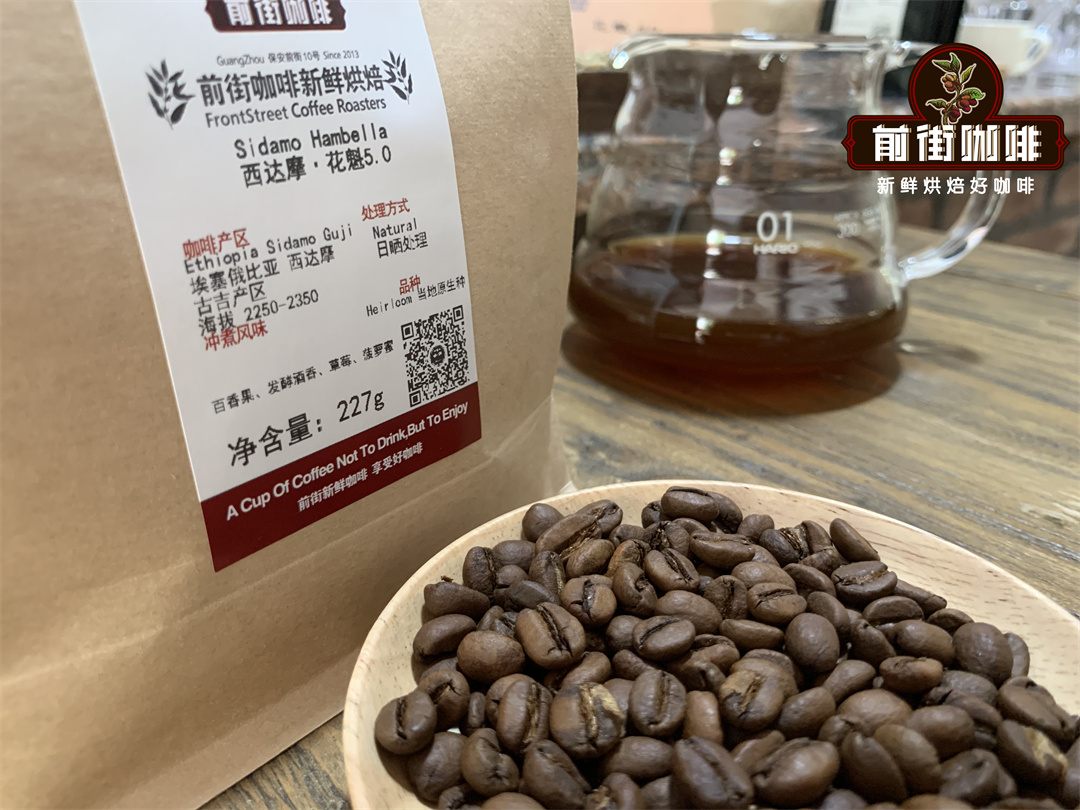
FrontStreet Natural Huakui: From the Hambela zone of Guji, Sidamo, on a 200-hectare farm using traditional natural processing. To keep the cherries from molding or picking up earthy taints during drying, workers spread them on raised beds for 21 days, turning them constantly for even drying and hand-sorting out defective beans every three to five days. Once the skin is dry and hard, it is hulled off, and the green beans get one final hand-sorting. Because the fruit dries intact, a medium-light roast reveals a light fermented wine aroma, florals, citrus, and mango, a much richer and more complex cup with honeyed sweetness, cocoa, a touch of spice, and a thick body with a long finish.
FrontStreet Natural Hamasho (Sidamo): The Hamasho mill is a fixture on Ethiopian green coffee competition winner lists thanks to its quality and distinctive character. Its coffee is built mainly on the JARC (Jimma Agricultural Research Center) 74-series disease-resistant varieties, and the small-beaned 74158 stands out for its florals and fruit. FrontStreet's Hamasho 74158 is alluring on the nose, with perfume-lemon, strawberry, and star-fruit sweetness; in the cup, clear strawberry, star fruit, and green grape sweetness lead into soft florals.
FrontStreet Kaffa Forest: Unlike the backyard-garden planting model most people picture, Kaffa Forest is best known for truly wild coffee: trees growing at 1400-2100 meters under shade, in virgin microclimates over red laterite soils with abundant rainfall. Roasted medium-light, it opens with pronounced white florals, then bright lemon acidity, sweet orange and bergamot, and a finish with subtle melon-fruit and nut notes and a green-tea-like texture.
Important Notice :
FrontStreet Coffee is a long-established specialty coffee roaster in Guangzhou China, selling freshly roasted beans from its own farm in Yunnan as well as dozens of carefully selected single-origin beans from around the world for both pour-over and espresso. The products deliver consistently excellent quality and great value, with shipping within 24 hours. Guangzhou's FrontStreet Coffee shop is recommended by many coffee lovers, and the beans are now available online at the Tmall 。
FrontStreet Coffee has moved to a new address:
FrontStreet Coffee Address: 315,Donghua East Road,GuangZhou
Tel:020 38364473
 Scan and follow the En Gafei WeChat official account. Please indicate that the reprint comes from "En Gafei".