Is Robusta Coffee Mainly Distributed in Asia? Is Indian Coffee Primarily Robusta?
When people talk about Asian coffee, they usually mention Indonesia's Mandheling, Vietnamese coffee, Laotian coffee, and Yunnan coffee. Indian coffee, by contrast, rarely comes up — surprising, given its remarkably long history. India was in fact the first country in Asia to cultivate coffee, and it has always held a significant place in the coffee world, ranking among the major producing nations. Today FrontStreet Coffee would like to introduce India, a country famous for curry, tea, and, yes, coffee.
Historical Origins
In early India, Arabs held a monopoly on coffee. In the mid-17th century, an Indian Sufi saint named Baba Budan traveled to Mecca on pilgrimage. He encountered coffee at the port of Mocha in Yemen and smuggled seven coffee seeds home, concealing them on his person. He planted them in the Chickmagalur mountains of southern India. To honor him, Indians renamed the range the Baba Budan Hills. Chickmagalur remains one of India's most important coffee-growing regions today. In 1696, Indian coffee was transplanted again, to Java in Indonesia, which shows just how early India began cultivating the crop.
Production Status
You may be surprised to learn that India produces far more coffee than Ethiopia and any Central American country combined, with 900,000 hectares given over to cultivation. India has roughly 140,000 coffee farms, more than 90% of them smaller than 10 hectares — small-scale growing by any measure. These farms are spread across the southern and eastern coastal mountain ranges, producing about 440,000-450,000 bags a year and making India the world's fifth-largest coffee producer. Nearly 80% of national production is exported to countries including Germany, Russia, Spain, Belgium, Slovenia, the United States, Japan, Greece, the Netherlands, France, and Italy, with most beans shipped through the Suez Canal.
Coffee Growing Regions
Karnataka, Kerala, and Tamil Nadu are India's main coffee-producing regions, together accounting for more than 90% of national output. Today two-thirds of Indian coffee is Robusta and only one-third Arabica. Coffee is concentrated in the southwestern state of Karnataka, where both varieties are grown and which alone accounts for 50% of India's total production. The southern state of Kerala focuses mainly on Robusta, contributing 30%, while the southeastern state of Tamil Nadu grows both and accounts for 10%. The remaining 10% is scattered across emerging northern growing regions.
Cultivated Varieties
Kent
Discovered in 1911 on a Kent coffee plantation in India's Mysore region, this is a Typica hybrid created by crossing S288 with Typica. It is characterized by high yield and resistance to rust. Its aroma has more body than Bourbon varieties, and it has been introduced to New World producers such as Kenya and Indonesia, making significant contributions there.
S795 (Local Name: Jember)
This variety was developed in the 1940s by crossing Kent — a Typica selection known for being tall, high-yielding, and highly resistant to leaf rust — with Liberica coffee. In 1955 the Indonesian Coffee and Cocoa Research Institute (ICCRI) named it Jember, and it is now widely grown in India, Indonesia, and Ethiopia. It shows some resistance to coffee leaf rust, though that resistance fades over time. Its flavors recall maple syrup or brown sugar. S795 is currently India's main variety, accounting for 70% of total Arabica production.
S274
India's most famous small-seeded Robusta, sold under the name Royal Robusta (Robusta Kappi Royal), is considered the world's most premium Robusta bean. Kappi Royal features a 16/17 screen size, a clean surface, hard beans, and a plump, attractive appearance. Compared with ordinary natural-processed Robusta, Kaapi Royal has none of the harsh astringency, earthy flavors, or rubbery notes. Some say it tastes of Japanese genmaicha, or brown rice tea; reports suggest that drunk on its own it does not much resemble typical coffee, with strong tea-like qualities and high viscosity.
Sln C×R
This is India's newest espresso-blend variety, breaking from the Arabica-Robusta hybrid tradition. Instead it is a cross between Congensis and Robusta (Congensis × Robusta). The coffee has now entered the American specialty market, processed by natural methods. It shows Indian spice flavors with a subtle fruity acidity and reportedly offers a unique tasting experience. Sln C×R is poised to become a strong competitor to Monsooned Malabar and Royal Robusta.
FrontStreet Coffee Recommendation
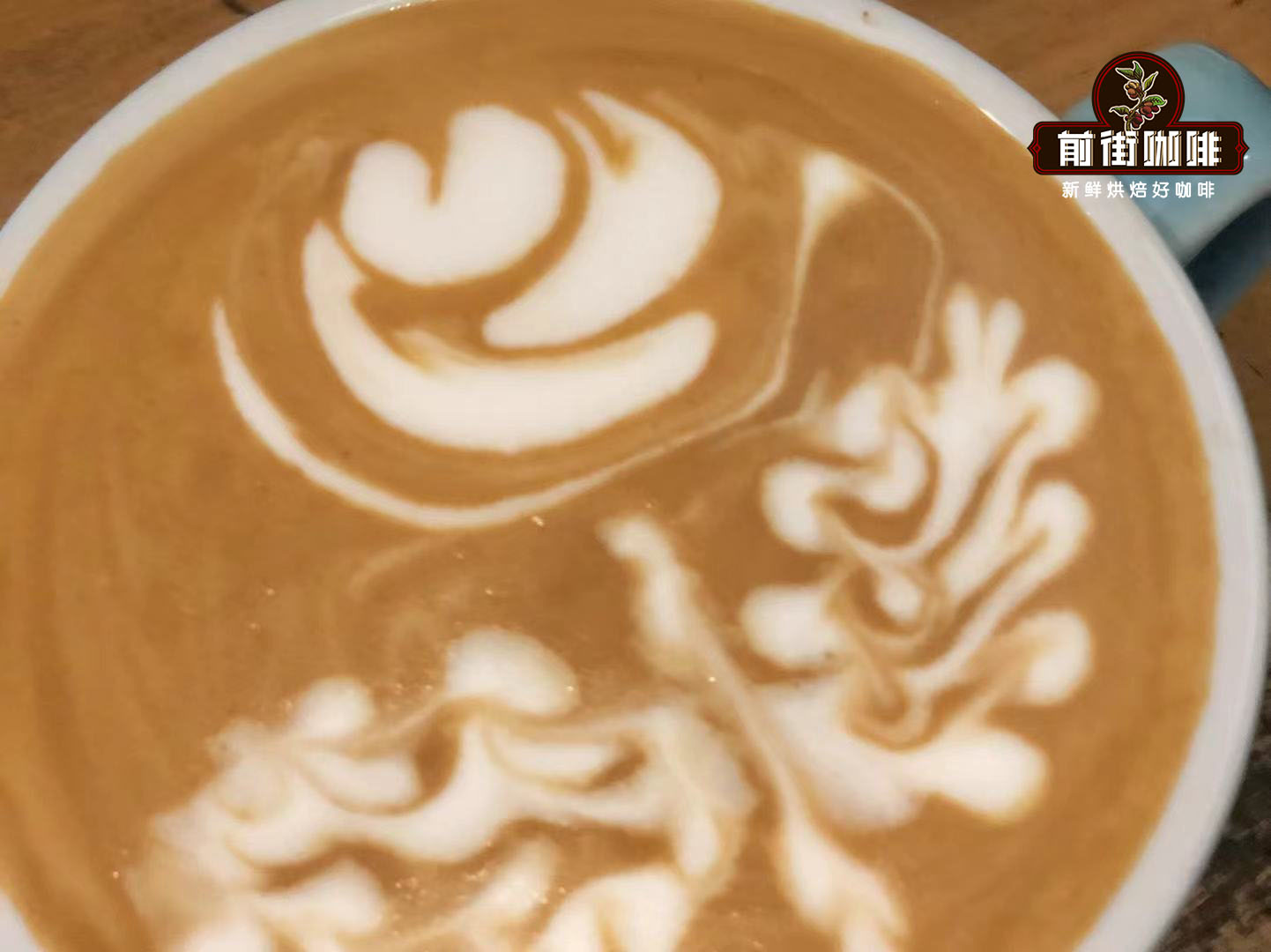
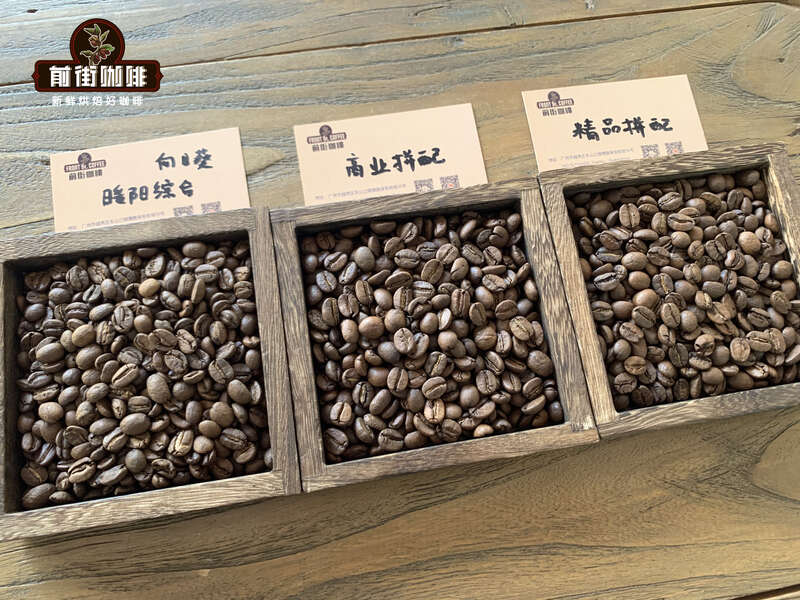
India's story is a story of Robusta, and if you want to taste how a carefully chosen Robusta can lift a blend, FrontStreet Classic Blend is the place to begin. Building on the creamy, nutty base of Brazilian coffee, it adds medium-dark Mandheling for pronounced butter, roasted chestnut, and caramel, with the Mandheling also bringing sandalwood, herbal, and spice notes that deepen the cup. A small amount of Robusta is included on top, which rounds out the body and boosts the richness of the crema — the golden foam that makes latte art and a layered Dirty easy, even for a beginner. The roast is deep, pushing dark chocolate, nut, and caramel to the fore.
For a pure single-origin contrast with no Robusta at all, FrontStreet PWN Golden Mandheling shows what a meticulous Asian Arabica can do. Sourced by PWN, which buys only premium Mandheling lots, it is built on strict standards and repeated hand sorting, yielding a clean, sweet, and full-bodied cup of sandalwood, herbs, spice, roasted hazelnut, caramel, and dark chocolate. Tasted beside the blend, it makes clear just how much a touch of well-grown Robusta contributes to crema and structure.
Important Notice :
FrontStreet Coffee is a long-established specialty coffee roaster in Guangzhou China, selling freshly roasted beans from its own farm in Yunnan as well as dozens of carefully selected single-origin beans from around the world for both pour-over and espresso. The products deliver consistently excellent quality and great value, with shipping within 24 hours. Guangzhou's FrontStreet Coffee shop is recommended by many coffee lovers, and the beans are now available online at the Tmall 。
FrontStreet Coffee has moved to a new address:
FrontStreet Coffee Address: 315,Donghua East Road,GuangZhou
Tel:020 38364473
 Scan and follow the En Gafei WeChat official account. Please indicate that the reprint comes from "En Gafei".