Costa Rica Little Candle Estate Honey Process Coffee Flavor Musician Series Mozart H1 Bean Variety Introduction
Costa Rica is known for its national parks, rainforests, beaches, volcanoes and, of course, its coffee. One sip of Costa Rican coffee is enough to draw you into its delicate flavor. Coffee took root here at some point in the 1700s, helped by ideal growing conditions: fertile soil, high altitude, a cool climate and plenty of fresh water. There are 8 coffee regions - Central Valley, Tres Rios, Turrialba, Brunca, Guanacaste, Tarrazu, Orosi and West Valley - each with its own flavor profile.
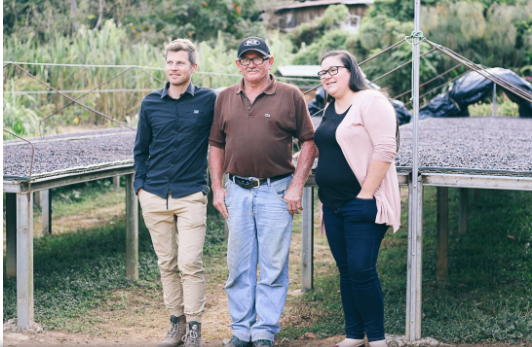
Costa Rica has also become a world leader in coffee traceability and sustainability. Of the country's 50,000 coffee farmers, 90% are smallholders, and today many of them send their cherries to boutique micromills, which often process to the producer's specification to preserve single-batch or single-farm quality.
The Rise of Micromills
The rise of micromill processing is itself relatively new. Before the early 2000s, small producers commonly delivered cherries to cooperative-owned mills. As the specialty market grew more lucrative, more farmers began building mills on their own farms, giving them better control over processing and a far more certain "traceability story," which matters so much in a growing niche market. Mills with spare capacity would offer services to neighboring farmers, providing a range of processing methods for small batches and full traceability for roasters and importers. This system lets Costa Rica's small and medium-sized farmers offer a wide range of differentiated products.
FrontStreet Coffee's Costa Rican Selections
FrontStreet Coffee has sourced COE26 Geisha coffee beans from Costa Rica's Central Valley. This coffee is honey processed to lift its sweetness, and FrontStreet Coffee roasts it medium-light, giving medium-high acidity with citrus, lemon and berry notes, white floral aromas, milk chocolate and a medium almond-nut character.
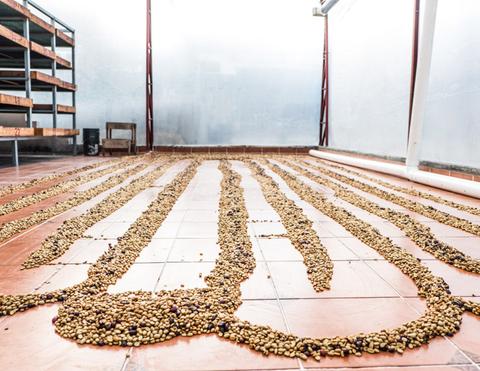
This coffee is honey processed, meaning the cherry skin is removed while the mucilage stays on the bean as it dries. That mucilage is especially sweet and sticky, which is what makes the beans so flavorful. There are several honey styles - white, yellow, red, golden and black - which simply describe how much mucilage is left behind. White and yellow coffees keep less mucilage, while red, golden and black keep more, resulting in a fuller body. Red honey is processed in more shade to slow the drying time. Because the mucilage stays on the beans for so long, sugar is drawn into the coffee. The beans dry on raised beds for 18-24 days.
Alongside that, FrontStreet Coffee has also purchased beans from the Musician series, where the Mozart variety differs from the other two in one key way: it is H1.
H1 Centroamericano: A Promising Hybrid
H1 Centroamericano was created by hybridizing Sarchimor T-5296 with the wild Rum Sudan variety. According to Ally Coffee, "It is reproduced through a tissue culture cloning process called somatic embryogenesis." This hybrid offers high yield, rust resistance and a complex, deep flavor profile. It is less susceptible to stressful environments and holds promise for future hybrids. F1 hybrids have a bright future and can help ease the environmental pressures on farmers.
FrontStreet Coffee Recommendation
Since this article began with Costa Rican honey processing, one FrontStreet Coffee blend sits squarely on topic: FrontStreet Coffee Strawberry Candy, which pairs a Costa Rican honey-processed coffee with Panama Geisha. The combination gives you Geisha's delicate florals alongside the sweet fruit of the honey-processed base, and it is flexible enough for pour-over, a moka pot, an espresso machine or cold brew.
For cold brew, FrontStreet Coffee suggests 30 g of Strawberry Candy ground to fine-sugar size, using an EK43s at setting 9 or a C40 hand grinder at setting 24. Add 360 g of room-temperature water at a 1:12 ratio, stir, cover and refrigerate. After 8 hours, filter out the grounds with filter paper, then seal the liquid and return it to the fridge to mature for another 3 hours. The result tastes of grape juice, rose, sweet orange and fruit liqueur.
If you prefer to brew hot, FrontStreet Coffee Emerald Estate Red Label Geisha from Panama is a strong companion piece, picked from a single plot above 1,700 meters and cupped at 91.
Important Notice :
FrontStreet Coffee is a long-established specialty coffee roaster in Guangzhou China, selling freshly roasted beans from its own farm in Yunnan as well as dozens of carefully selected single-origin beans from around the world for both pour-over and espresso. The products deliver consistently excellent quality and great value, with shipping within 24 hours. Guangzhou's FrontStreet Coffee shop is recommended by many coffee lovers, and the beans are now available online at the Tmall 。
FrontStreet Coffee has moved to a new address:
FrontStreet Coffee Address: 315,Donghua East Road,GuangZhou
Tel:020 38364473
 Scan and follow the En Gafei WeChat official account. Please indicate that the reprint comes from "En Gafei".