Nicaragua Mamamina Estate Natural Pacamara: Water-to-Coffee Ratio for Pour-Over

Costa Rican coffee is renowned for its excellent sweetness, gentle mouthfeel, rich body, and lively acidity — a distinction owed in large part to the country's unique honey processing methods. In this regard, FrontStreet Coffee has to mention the Musician Series from Costa Rica's Canet Estate. Each coffee in the series has its own personality, and together they capture what makes Costa Rican coffee distinctive. FrontStreet Coffee thinks of the flavor evolution across the Musician Series as leaping musical notes, which is exactly why Canet Estate produces it exclusively. With that, let's dig into the Costa Rica Musician Series coffee beans.
FrontStreet Coffee Costa Rica Mozart Coffee Beans

Country: Costa Rica
Region: Tarrazú
Altitude: 1800m
Varieties: Caturra, Catuai
Processing: Raisin Honey
Flavor: Raisin acidity, berries, floral notes, fermented wine aroma
Mozart, the child prodigy who came to epitomize classical music, was famous for his magnificent compositions. In the same spirit, the "magnificent fragrance" of FrontStreet Coffee's Mozart beans refers to the elegant floral notes — similar to white flowers like orange blossom — that rise from the grounds during brewing. The "magnificent mouthfeel" refers to the rich flavors of dark berries, raisins, and subtle red berries, with hints of plum acidity and a gummy-bear-like sweetness emerging in the middle and later stages. Even as the cup cools it holds onto its florals and sweetness. The flavor is genuinely distinctive, and the mouthfeel is every bit as luxurious as the name promises.
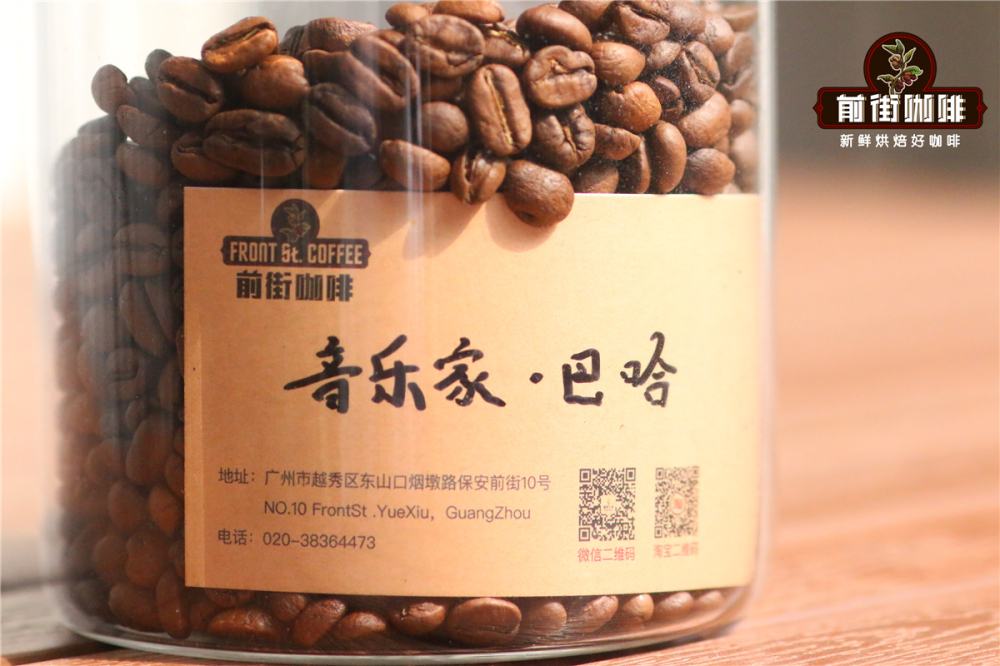
FrontStreet Coffee Costa Rica Bach Coffee Beans
Country: Costa Rica
Region: Tarrazú
Altitude: 1950m
Varieties: Caturra
Processing: Raisin Honey
Flavor: Fermented wine aroma, berries, fruit tea notes
Bach's music is exquisite, richly layered, yet clear and methodical. This FrontStreet Coffee Bach bean carries a dry fragrance of strawberry, blackberry, and raisin, with wafts of fruit aroma during the brew. Straight after brewing, distinct floral and fruit aromas emerge, and on tasting you get rich fruit character and sweet-tart notes, with a subtle red-wine-like touch in the middle to later stages. As it cools, a candied-fruit sweetness develops and the wine aroma grows more pronounced — even veering into plum wine territory. Such an intricate tasting experience truly resembles Bach's music, and every sip feels like being immersed in the grandeur and rigor of Baroque aesthetics.
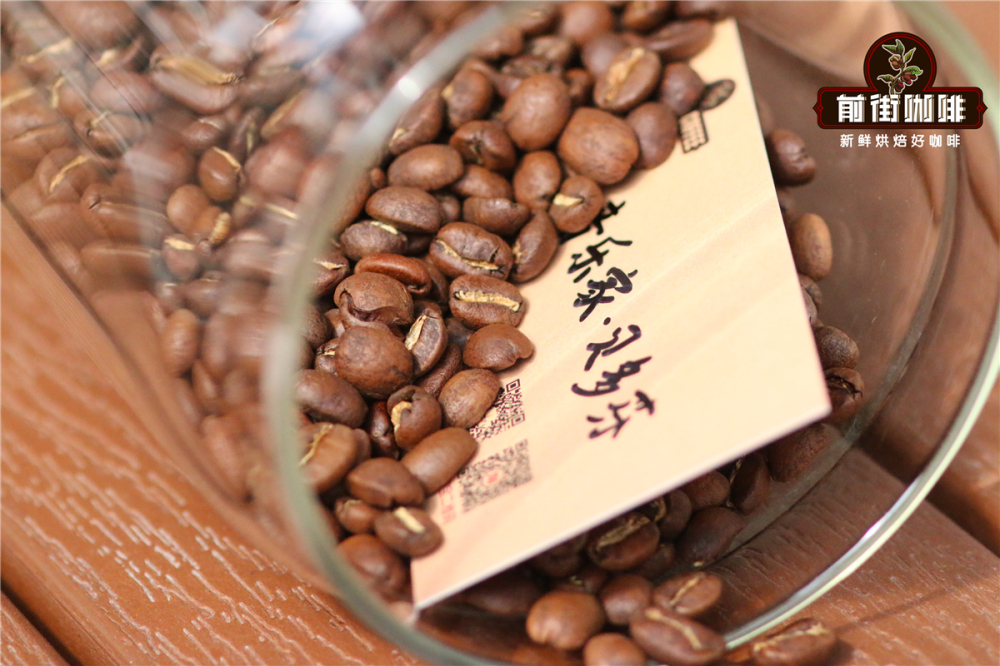
FrontStreet Coffee Costa Rica Beethoven Coffee Beans
Country: Costa Rica
Region: Tarrazú
Altitude: 1800-1950m
Varieties: Caturra, Catuai
Processing: Washed
Flavor: Citrus, berries, floral notes, subtle fermented wine aroma
Among the greats of classical music, Beethoven is arguably the most famous, and a coffee named for him has a lot to live up to. The dry fragrance features distinct red berries — strawberry most prominent — complemented by floral aromas. During brewing you can pick out floral notes, nectar-like sweetness, and green grape. On the palate, the sweet-tart character of green grapes and red berries arrives immediately, over a clean and smooth profile, and the red berry notes intensify as the cup cools. Some customers who have tried it at FrontStreet Coffee's shop have described it as a coffee with summer romantic sentiments.
Worth noting: unlike the other coffees in the series, which are processed with the raisin honey method, FrontStreet Coffee's Beethoven is fully washed to achieve a clean, refreshing, summer-like cup. That makes it the one FrontStreet Coffee most recommends enjoying in summer, for a completely different sensory experience from its siblings.
FrontStreet Coffee Costa Rica Chopin Coffee Beans

Country: Costa Rica
Region: Tarrazú
Altitude: 1800-1900m
Varieties: Catuai
Processing: Raisin Honey
Flavor: Rose, raisin, berries, fruit tea
Chopin is hailed as the "Romantic Piano Poet," and this FrontStreet Coffee Chopin bean from Canet Estate releases an overwhelming rose fragrance the moment you open the bag. Roses are indeed the language of romance. During brewing, the rose aroma grows even more fragrant with the steam, as if you were surrounded by a sea of them. On tasting, you find the sweet-tart notes of raisin and berries, with a finish reminiscent of fruit tea. The whole flavor journey progresses gradually, much like one of Chopin's romantic piano compositions — truly romantic, and living up to its name.
That covers the basic information for the FrontStreet Coffee Costa Rica Musician Series. Next, let's look at the story behind how these distinctive flavor profiles came to be.
Costa Rica Coffee Growing Conditions
Costa Rica, located in Central America, was the first country in the Americas to introduce coffee cultivation, and that long history has produced a highly sophisticated coffee organization system from production all the way through to sales.

Costa Rica's natural conditions for coffee cultivation are outstanding. Sitting on the Central American isthmus, the country has very fertile volcanic soil with good drainage, particularly in the central highlands. As FrontStreet Coffee has noted before, quality coffee cultivation requires not only a suitable climate and altitude but also fertile volcanic soil, which is rich in organic matter — ideal nutrients for coffee trees. Coffee grown under these conditions shows pure flavor, pleasant aroma, and well-balanced sweet, sour, and bitter notes, which is the foundation of the country's quality reputation.
Canet Estate Costa Rica
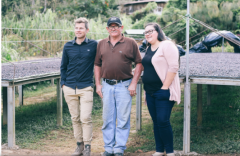
Canet Estate is located in Tarrazú, Costa Rica's most famous coffee-producing region. Tarrazú is also the highest-altitude coffee region in the country, at roughly 1200-1700m, which gives its beans hard, dense bodies and rich aromas and makes it the most valued coffee-growing area in Costa Rica. Canet Estate sits right here, specializing in Caturra and Catuai coffee cherries.
The Musician Series was born because the estate's owner is passionate about classical music: he names each coffee after the musician whose style its flavor profile resembles, matched to the different processing methods. And since Tarrazú is the highest-altitude region in Costa Rica, Canet Estate produces only SHB grade strictly hard beans — beans that inherently carry sweet flavors with fruit, wine, and tea notes.
Since we have mentioned strictly hard beans, let's explain what they actually are.
Costa Rica Coffee Bean Grades
Every coffee country grades its beans differently. Kenya grades by bean size, Ethiopia by defect count — while Costa Rica grades by altitude. The standards are as follows:
SHB: Strictly Hard Bean, grown at altitudes above 1500 meters.
GHB: Good Hard Bean, grown at altitudes between 1100-1200 meters.
HB: Hard Bean, grown at altitudes around 1000 meters.
Quality Costa Rican coffee is known as Strictly Hard Bean, grown above 1500 meters. The Tarrazú staple coffee on FrontStreet Coffee's bean shelf, for example, is the highest SHB grade. Generally speaking, higher altitude produces better beans — not only because it increases acidity and thereby enhances flavor, but also because cooler nighttime temperatures at elevation slow tree growth and concentrate the flavors in the bean.
Coffee Varieties
As mentioned, Canet Estate mainly cultivates Caturra, Catuai, and H1 variety coffee trees. What makes each of these special?
Caturra
Caturra is a natural mutation of the Bourbon Arabica variety, discovered in Brazil in 1937. The plant is shorter than Bourbon. Although it carries Bourbon lineage and is therefore relatively weak in disease resistance, its yield is higher. Despite being discovered in Brazil, Caturra never suited conditions there and was not widely cultivated in its birthplace. Instead it became popular across other Central and South American countries, with large-scale cultivation in Colombia, Costa Rica, and Nicaragua.

Catuai
Catuai is a hybrid created by artificially crossing Caturra with Mundo Novo. It resists natural disasters well, particularly wind and rain. Catuai trees are relatively low-growing, and the fruits grow more densely than on many other coffee trees, which makes them harder to pick. The fruits come in both red and yellow varieties, and no significant taste difference has been found between them to date — though some cupping tests have suggested that while certain yellow-fruit lots show good acidity, their flavor clarity falls short of the red-fruit coffees. Catuai was developed in Brazil and is now widely grown throughout Central America.

H1 Coffee Variety
H1 comes from the Sebaco laboratory in Nicaragua. Its full name is Centroamericano, developed by crossing T5296 with Sudan Rume. In terms of yield, H1 produces 22% to 47% more than traditional American varieties. The plant has green leaf tips, strong resistance to coffee leaf rust, moderate resistance to coffee berry disease, but is susceptible to nematode infestation.

Canet Estate Raisin Honey Processing
A coffee bean's flavor depends not only on variety and growing environment but also, significantly, on the processing method. What makes Canet Estate most noteworthy is its raisin honey processing. Three of the four coffees in FrontStreet Coffee's Costa Rica Musician Series use honey processing, which makes the beans sweeter with fermented notes. So what exactly is raisin honey processing?
Raisin honey processing retains 100% of the fruit mucilage and uses zero water.

That also makes it harder to execute than regular honey processing, demanding strict timing control. On harvest day, the coffee fruits are poured into large water tanks: mature, full fruits sink to the bottom, while underdeveloped or overripe fruits float to the surface and are removed. The selected fruits are then placed on raised beds to dry for at least three days, after which the cherry skin is removed while the mucilage is preserved, and the beans continue drying. That completes the raisin honey process.
FrontStreet Coffee considers this an exceptionally sweet processing method, with a white-wine-like mouthfeel and balanced acidity. The fermented notes are more intense than in other honey processes, since more mucilage is retained.
Of course, one coffee in the Musician Series uses washed processing — the Canet Estate Beethoven. Washed processing is the method that best preserves a bean's original character: washed beans keep the most original flavors and show a cleaner, more transparent mouthfeel. That is why Beethoven's flavor expression is the freshest of the series, and why customers who come to FrontStreet Coffee to taste it describe it as a coffee bean with summer romantic sentiments.

Washed Processing Flow
- Harvest mature coffee fruits
- Initial removal of impurities and defective beans
- Floating bean selection: Pour the fruits into water tanks, where mature, full fruits sink while immature or damaged fruits float to the surface
- Removal of skin and pulp: Selected fruits go into the depulper to strip the outer skin and pulp, leaving the seeds (coffee beans)
- Fermentation to remove mucilage: Seeds coated with mucilage are placed in fermentation tanks, where fermentation bacteria dissolve the mucilage
- Washing to remove impurities: Because fermentation residue remains on the beans, they are sent to washing channels for cleaning and a second selection (defective beans float). This step requires large amounts of fresh water to ensure a thorough wash
- Drying: The beans are machine-dried or sun-dried until the moisture content reaches 10-14%
- Removal of parchment and silver skin: Finally, hulling machines remove the remaining parchment and silver skin, completing processing for green bean packaging and shipping
That is FrontStreet Coffee's rundown of the basics and flavor profiles of the Costa Rica Musician Series. We hope it helps you find the Musician Series bean that best matches your taste.
FrontStreet Coffee Recommendation
If the fruity-floral style of the Musician Series sounds like your cup, FrontStreet Coffee's Mozart is the closest match in the pour-over lineup — its raisin character and floral-fruit profile make it a natural fit for a V60, where its layered sweetness really opens up. For a brighter, more classic washed cup, the FrontStreet Yirgacheffe Guodingding brings citrus, berry, and floral notes with a green-tea-like finish, and it is one of the easiest intro pour-overs to enjoy. And if tropical fruit is what you crave, the FrontStreet Ethiopia Huakui bursts with strawberry, passion fruit, jackfruit, and lychee aromas, with prominent sweetness and almost no bitterness.
Important Notice :
FrontStreet Coffee is a long-established specialty coffee roaster in Guangzhou China, selling freshly roasted beans from its own farm in Yunnan as well as dozens of carefully selected single-origin beans from around the world for both pour-over and espresso. The products deliver consistently excellent quality and great value, with shipping within 24 hours. Guangzhou's FrontStreet Coffee shop is recommended by many coffee lovers, and the beans are now available online at the Tmall 。
FrontStreet Coffee has moved to a new address:
FrontStreet Coffee Address: 315,Donghua East Road,GuangZhou
Tel:020 38364473
 Scan and follow the En Gafei WeChat official account. Please indicate that the reprint comes from "En Gafei".