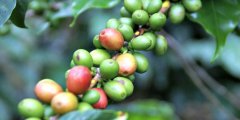
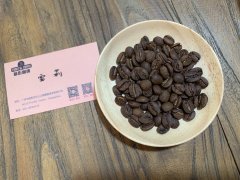
Honduras Sherry Wine Barrel Fermented Coffee Beans: Flavor Profile and Origin Story
FrontStreet Coffee's Honduras Sherry has long been one of our flagship beans. It works both as a component in espresso blends and as a single origin, and its rich wine aroma has made it a barista favorite on our daily menu. Today, FrontStreet Coffee takes a closer look at barrel aging — one of the more talked-about processing methods in the current coffee market. Beyond our Honduran barrel-processed coffee, the Colombia San Jose Estate lots we carry are also aged in rum barrels.

Barrel-fermented coffee does carry a fermented note, but it's worth remembering that many washed and honey-processed coffees show fermentation character too. Our Costa Rica Blueberry lot, for example, has a distinct fermentation aroma of its own.
Pairing alcohol and coffee into one delicious drink is an old pastime, and in recent years the combination has only grown more popular. Baristas and mixologists everywhere are experimenting with this powerful pairing.
The latest chapter in that story is barrel aging: resting fresh green coffee inside barrels that previously held whiskey, gin, rum, wine, and other spirits.
Barrel-aged coffee can be brewed hot or cold and enjoyed on its own, or folded into fresh cocktails to explore new depths of distilled flavor.
Adding a barrel-aged coffee to a roaster's lineup does more than spark customer curiosity — it poses a genuine creative challenge. Which coffee works best in a barrel? How long should it rest in there? And where is the balance between barrel influence and the roast itself?
Some roasters started barrel-aging programs out of pure curiosity or convenience; others built them as deliberate partnerships with distilleries.
Novelty was a big selling point early in the trend — by now, most people take it for granted. But do you know how coffee barrel aging actually works? The principle is simple: green coffee goes into the spirit barrels. During aging, trace amounts of rum trapped in the wood seep into the porous beans, layering distilled-spirit character over the coffee's own flavors. A rum-barrel-aged coffee generally comes through with notes of chocolate, honey, and rum!

Where did barrel-fermented coffee come from?
Coffee and alcohol have long appealed to roastmasters and mixologists alike, but the idea of building an artisan series around it crystallized in 2016 at Kauai Coffee. There, roastmaster Mike Wygant — inspired by collaborations with fellow Q graders and by hosting sensory workshops for Hawaii's coffee farmers — launched a Seed to Cup project. Sun-dried Typica and Acacia were the first limited-edition small batches to win wide acclaim.
Barrel-aging was a natural next step for the Seed to Cup project's fermentation experiments. Kauai Coffee had already partnered with Koloa Rum on other products, including the award-winning Koloa Kauai Coffee Rum released a few years earlier, so teaming up again on a coffee-forward product was an opportunity the roastery couldn't refuse.
Reusing rum barrels for coffee aging is also a sustainable practice: it extends each barrel's working life by one to two times beyond its rum-aging days — a commitment to sustainability in its own right.
FrontStreet Coffee Recommendation
If winey, barrel-aged profiles appeal to you, FrontStreet Coffee's Colombia lineup offers a fascinating counterpoint. Colombian coffee spans an unusually wide range: bright and fruit-acid forward, deep and full-bodied, or intensely aromatic — there is a style for almost every palate, and it works equally well as a pour-over single origin or as the backbone of an espresso blend.
For a classic, chocolate-driven cup, try FrontStreet Coffee's washed Huila from the hill country of Colombia's southern Central Cordillera. Grown above 1,500 meters in a region blessed with abundant rivers and moisture, this medium-dark roast highlights black chocolate, nutty sweetness, a moderate body, and a thick, round mouthfeel — equally at home in a pour-over, French press, moka pot, or espresso machine. It's the dependable daily-drinker side of Colombian coffee.
For something closer in spirit to barrel fermentation, FrontStreet Coffee's Colombia Boundary Estate Sidra is an anaerobic natural: the cherries ferment in a sealed, low-oxygen stainless environment where temperature, time, and pH are tightly controlled, converting sugars into layers of tropical fruit aroma. Roasted medium-light, it pours up passion fruit, grape, apricot, and dried-fruit sweetness — proof of how far processing innovation, from rum barrels to anaerobic tanks, can stretch what a single bean can express.
Important Notice :
FrontStreet Coffee is a long-established specialty coffee roaster in Guangzhou China, selling freshly roasted beans from its own farm in Yunnan as well as dozens of carefully selected single-origin beans from around the world for both pour-over and espresso. The products deliver consistently excellent quality and great value, with shipping within 24 hours. Guangzhou's FrontStreet Coffee shop is recommended by many coffee lovers, and the beans are now available online at the Tmall 。
FrontStreet Coffee has moved to a new address:
FrontStreet Coffee Address: 315,Donghua East Road,GuangZhou
Tel:020 38364473
 Scan and follow the En Gafei WeChat official account. Please indicate that the reprint comes from "En Gafei".