Does Guatemala's Specialty Coffee Have a Tobacco Note? Exploring the Characteristics of Guatemala's Major Coffee Regions
Understanding the Smoky Sensation in Coffee
After finishing a cup of coffee, do you ever feel your mouth and throat coated by a full, smoky sensation, similar to the feeling after smoking? That lingering coating is largely caused by the caffeine in the coffee.
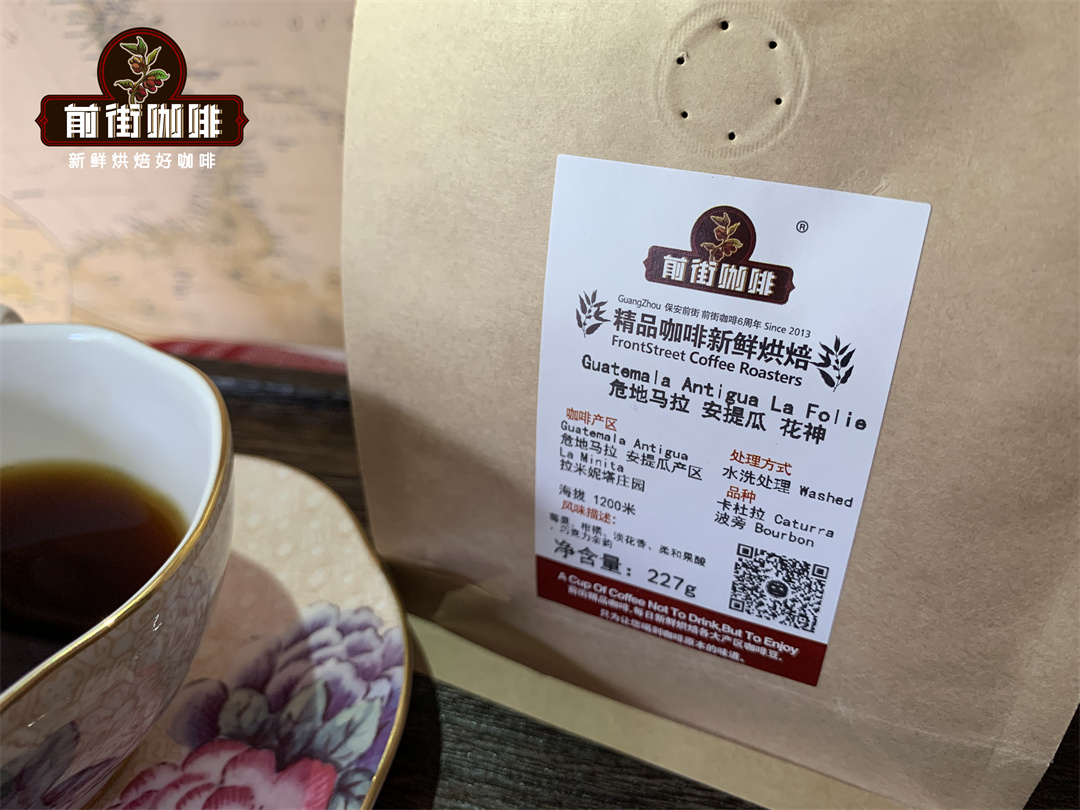
Coffee with an actual tobacco note, though, is genuinely rare. Rare, but not unheard of: at FrontStreet Coffee, a Flor de Café from Guatemala stands out for exactly this, a subtle smoky sensation with a distinct tobacco flavor. That special character owes much to the local volcanic climate.
Guatemalan coffee is special enough that FrontStreet Coffee wants to walk you through its regions, growing altitudes, and variety characteristics.
Guatemala's Eight Coffee Regions
Anacafe may be the most skilled national coffee association in the world when it comes to marketing. It was Anacafe that divided Guatemala into eight coffee regions. Yet among most drinkers, the familiar Guatemalan names are probably just Antigua and Huehuetenango.
FRAIJANES (Fraijanes Plateau)
This coffee plateau surrounds Guatemala City. Frequent volcanic activity keeps the soil very fertile, though it occasionally threatens personal safety and infrastructure.
Unfortunately, the coffee-growing area is gradually shrinking due to urban development and land-use change. Altitude: 1400-1800 meters, Harvest period: December-February, Varieties: Bourbon, Caturra, Catuai, Pache.
ANTIGUA (Antigua)
Guatemala's most famous region, and one of the most renowned coffee origins in the world. The name comes from the city of Antigua, famous for its Spanish colonial architecture and listed as a UNESCO World Heritage Site. Because the ANTIGUA name was so widely misused in the market, coffee from this region was devalued, and in 2000 it became a protected origin under the full name Genuine Antigua Coffee. The region truly does produce excellent coffee. Altitude: 1500-1700 meters, Harvest period: January-March, Varieties: Bourbon, Caturra, Catuai.
SAN MARCOS (San Marcos)
Guatemala's warmest and rainiest coffee-growing area. The Pacific-facing slopes receive rain first, so flowering starts earlier. All that precipitation makes drying after harvest a challenge, so some estates rely on sun-drying supplemented by mechanical dryers. Agriculture is central to the region, with crops including grains, fruits, meat, and wool. Altitude: 1300-1800 meters, Harvest period: December-March, Varieties: Bourbon, Caturra, Catuai.
NUEVO ORIENTE (New East)
The name means "New East," and as expected, the region sits in eastern Guatemala near the Honduran border. The climate is dry, and most coffee comes from smallholder farms. Coffee only reached this region in the 1950s, so its development came relatively late. Altitude: 1300-1700 meters, Harvest period: December-March, Varieties: Bourbon, Caturra, Catuai, Pache.
HUEHUETENANGO (Huehuetenango)
One of Guatemala's better-known regions, with a name that is fun to pronounce. It comes from Nahuatl, meaning "land of the ancients." The region contains the highest non-volcanic mountain range in Central America, well suited to coffee cultivation. The local economy relies heavily on coffee exports, and the region produces many remarkable coffees such as Injerto. Altitude: 1500-2000 meters, Harvest period: January-April, Varieties: Bourbon, Caturra, Catuai.
COBAN (Coban)
The region takes its name from Coban City, which prospered under the influence of powerful German coffee producers until World War II. Dense rainforest means humid weather, which complicates coffee drying. The region is remote, making transport costly and difficult, yet it still yields many excellent coffees. Altitude: 1300-1500 meters, Harvest period: December-March, Varieties: Bourbon, Maragogipe, Caturra, Catuai, Pache.
ACATENANGO (Acatenango Region)
Coffee here grows in the Acatenango River valley, named after the local volcano. In the past, producers in this area would sell their coffee to "coyotes," buyers who drove around in trucks buying coffee cherries for cash and hauled them to Antigua for processing to fetch higher prices. That practice is now much less common because Acatenango's own coffee is excellent and widely recognized; today the region commands better margins thanks to traceable production records. Altitude: 1300-2000 meters, Harvest period: December-March, Varieties: Bourbon, Caturra, Catuai.
ATITLAN (Lake Atitlán)
Coffee farms here ring Lake Atitlán. The lake area, at 1500 meters, is stunning and has captured the hearts of writers and travelers for generations. Strong winds blow in around noon or early afternoon each day, known locally as "Xocomil," meaning "the wind that blows away sins." The region hosts many private nature reserves protecting ecological diversity and preventing deforestation. Coffee production faces real threats, though: rising labor costs and competition for workers, plus urban expansion pushing up land values, with many farmers finding it more profitable to sell their land than to keep growing coffee. Altitude: 1500-1700 meters, Harvest period: December-March, Varieties: Bourbon, Typica, Caturra, Catuai.
FrontStreet Coffee Recommendation
If Guatemala sparked your curiosity about specialty coffee, FrontStreet Coffee keeps a set of approachable single origins that make an excellent starting point, origin by origin.
Ethiopia: FrontStreet Natural Huakui, FrontStreet Washed Guodingding Cooperative. Ethiopia is Africa's largest coffee-producing country and the world's recognized birthplace of coffee, with an enormous range of varieties, most beans named for their region or cooperative. The Yirgacheffe and Sidamo zones are the most famous. In the 1970s the government introduced washed processing to raise green quality, and Yirgacheffe has leaned washed ever since, with ever more cooperative-level micro-lots emerging. FrontStreet's washed Guodingding is a textbook Yirgacheffe: jasmine florals, lemon acidity, and berry tones. Sidamo is best known for naturals with pronounced tropical fruit and fermentation aromas, and FrontStreet's Sidamo Huakui uses traditional natural processing with flavors of berries, florals, jackfruit, melon, and honey.
Brazil: FrontStreet Cerrado Red Bourbon, FrontStreet Fazenda Rainha. Brazil is the world's number-one coffee producer, and even with commercial beans dominating the volume, high-quality lots abound. Most Brazilian coffee is grown in full-sun plantations, so cherries ripen quickly and the beans are softer, with gentle acidity, excellent sweetness, and a fine, smooth, balanced cup. FrontStreet's Brazilian house bean comes from the famous Cerrado region, easy-drinking and affordable, with classic cream, peanut, and cocoa notes when extracted. Fazenda Rainha grows at a higher altitude in the rare Yellow Bourbon variety: on top of Brazil's signature compound nuttiness (butter, melon seeds, macadamia, almond) it carries a sugarcane-like sweetness, and its thick, silky texture shines black or with milk.
Indonesia: FrontStreet Lintong Mandheling, FrontStreet PWN Golden Mandheling. Indonesia is famous for more than just its kopi luwak; its Mandheling is a landmark. FrontStreet's Mandheling uses wet-hulled (giling basah) processing, invented around the local climate: with frequent rain and limited funds for washed processing, workers strip the parchment off beans that are still half-dry to speed up drying, creating the unmistakable Mandheling character. The result is richer and smoother even than Blue Mountain, with herbal and spice notes, ideal for drinkers who avoid acidity. For a higher grade, choose the PWN Golden Mandheling: three rounds of hand-sorting plus one machine pass push the defect rate to a minimum, yielding a cleaner, smoother cup with clearer woody aromatics and caramel.
Colombia: FrontStreet Huila, FrontStreet Sidra, FrontStreet Big Navel. Colombian coffee is one of the few single origins marketed under a country name. The climate is mild and humid, and the diversity of microclimates keeps different regions and varieties ripening year-round. FrontStreet's Colombian house bean comes from Huila, the country's most famous specialty region: ringed by mountains, planted above 1500 meters, and watered by Colombia's most important rivers. Colombian cups lean toward gentle florals and soft fruit acidity; try the Sidra and Big Navel lots.
Costa Rica: FrontStreet Mozart, FrontStreet Blackberry, FrontStreet Tarrazu. Costa Rica grows coffee at high altitudes with big day-night temperature swings and rich volcanic soil, producing Strictly Hard Bean (SHB) lots full of elegant aromatics. The country is best known for honey processing, drying the beans with their mucilage attached for plenty of sweetness and clear definition. Start with FrontStreet's Blackberry, made with black honey, or the raisin-honey-processed Mozart, with raisin and blueberry sweetness plus osmanthus and rose fragrance. Whether pour-over, cold brew, americano, or latte, it brings out Costa Rica's signature sweetness.
Yunnan, China: FrontStreet Yunnan Catimor, FrontStreet 2013 Yunnan Typica. China has two coffee-growing regions, Hainan and Yunnan, but Hainan's hot, low-lying coastal climate cannot support Arabica, so the country's specialty coffee is concentrated in Yunnan. FrontStreet's Yunnan small-bean lot comes from Baoshan, washed, with traditional nut and chocolate flavors in a soft, balanced cup. The 2013 Yunnan Typica is an old Arabica variety grown at 1300 meters with an even cleaner profile; roasted medium, it releases hazelnut, dried apricot, black tea, caramel, and ripe plum aromatics.
Panama: FrontStreet Boquete Washed Gesha. Panama is famous above all for Gesha, and the most famous Gesha of all comes from Esmeralda Estate: citrus, berries, and florals in a balanced, silky cup, like a floral fruit tea with zero bitterness. For newcomers, Esmeralda can be a splurge, so baristas recommend the entry-level FrontStreet Boquete Gesha instead: pure Gesha genetics from Panama's most representative specialty region, washed processed, so the classic orange-blossom honeyed character comes through clearly, at a price that lets you explore it any way you like to brew.
Important Notice :
FrontStreet Coffee is a long-established specialty coffee roaster in Guangzhou China, selling freshly roasted beans from its own farm in Yunnan as well as dozens of carefully selected single-origin beans from around the world for both pour-over and espresso. The products deliver consistently excellent quality and great value, with shipping within 24 hours. Guangzhou's FrontStreet Coffee shop is recommended by many coffee lovers, and the beans are now available online at the Tmall 。
FrontStreet Coffee has moved to a new address:
FrontStreet Coffee Address: 315,Donghua East Road,GuangZhou
Tel:020 38364473
 Scan and follow the En Gafei WeChat official account. Please indicate that the reprint comes from "En Gafei".