Kopi Luwak: Origin, Flavor Profile, and the Dark Truth Behind This Famous Coffee
When Indonesian coffee comes up, most people picture Mandheling — that famously heavy, earthy cup. But Southeast Asia has produced another, far more controversial coffee: kopi luwak.
What Is Kopi Luwak?
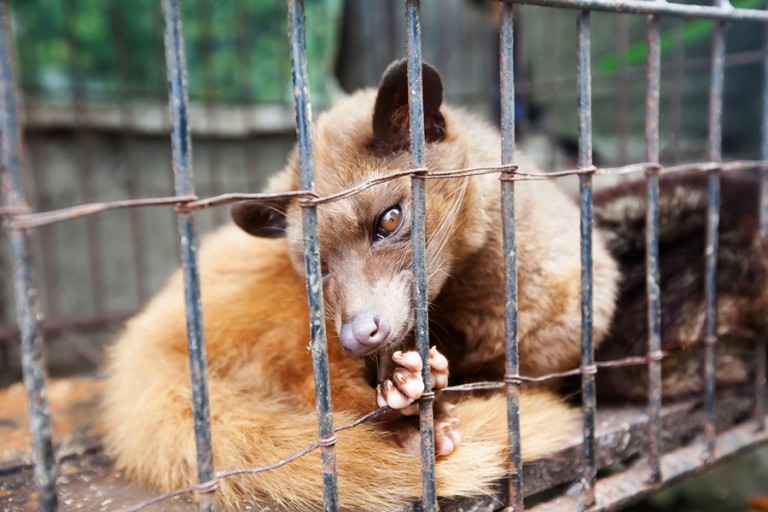
Kopi luwak is a coffee made with the help of the Asian palm civet — a small, cat-like mammal that lives in the forests of Southeast Asia. In China it's commonly nicknamed "cat poop coffee"; in Vietnam the same product is sold as "Weasel Coffee," and in the Philippines as "Civet Coffee." Today it is produced in Indonesia, the Philippines, and Vietnam.
The Unique Processing Method
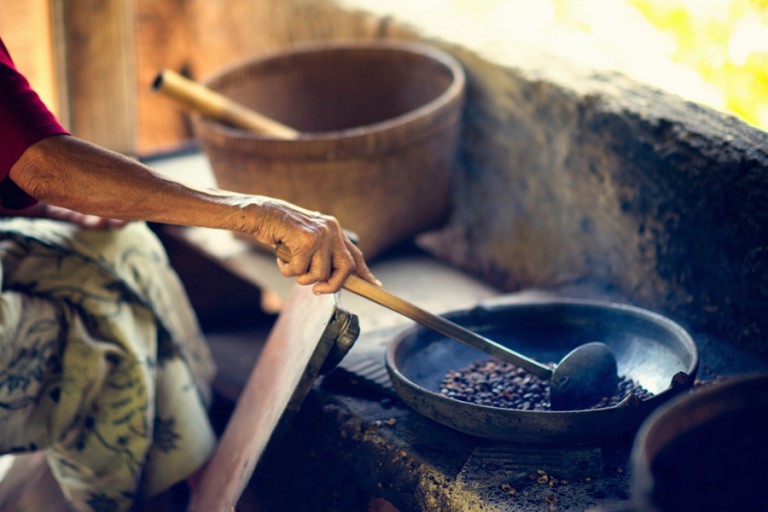
The civet eats ripe coffee cherries but cannot digest the beans themselves. Inside the animal's digestive tract, special enzymes strip away much of the bitterness from the beans, and the excreted seeds — still encased in parchment — are collected, washed, and dried. The resulting cup is famously smooth and non-bitter, with a rich, distinctive flavor that no conventional processing quite replicates. Bali, Sumatra, and Jakarta were among the first places where this coffee appeared.
Historical Origins
The origins lie in Indonesia's colonial era. The Dutch controlled the plantations and forbade local farmers from harvesting beans for themselves, leaving farmers with nothing to sell or even drink. Their workaround was to collect beans from the forest floor — beans that had passed through wild civets. To their surprise, this scavenged coffee tasted better than the "ordinary" coffee the plantations produced.
By the late 20th and early 21st centuries, kopi luwak had become a sensation in Western countries, and food enthusiasts worldwide now seek it out.
The Dark Side of Kopi Luwak
Because wild-collected beans are genuinely scarce and the digestive fermentation adds value, kopi luwak commands extremely high prices — it is one of the most expensive coffees in the world. And behind the glamour lies an ugly reality. To meet growing demand, civets are being pushed toward decline every day. Before buying any such product, it pays to understand exactly how it is made.
Historically, civets roamed freely through coffee plantations, and collecting their droppings harmed no one. But as demand exploded, civets were captured, caged, and force-fed coffee cherries — often as their only food. They've become a tourist draw too, which only deepens the captivity problem.
In an investigative article, PETA reported that much of the kopi luwak sold as "wild civet" coffee actually comes from caged animals. PETA sent an investigator to farms in Indonesia and found "sick, depressed civets suffering from infections and showing signs of zoososis, a stress-induced neurosis that causes captive animals to spin, pace, and bob their heads in constant, frantic displays of frustration." Many civets, malnourished, began losing their fur.
Kopi luwak is a sobering example of how a curiosity born from necessity can mutate, under commercial pressure, into something with serious ethical consequences.
FrontStreet Coffee Recommendation
If what draws you to kopi luwak is that signature Indonesian character — heavy body, low acidity, earthy and herbal depth — the good news is you can get an extraordinary version of it ethically. FrontStreet Coffee's PWN Golden Mandheling comes from Indonesia's PWN company, the gold standard for Sumatran coffee. Golden Mandheling is graded on a strict spec: beans must be screen 18 or larger, and every 300 g green sample must contain fewer than 3 defective beans to meet the top G1 grade, followed by three rounds of hand sorting. The result is a clean, full-bodied cup with wood and caramel notes and virtually none of the harsh edges.
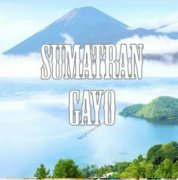
The secret behind that flavor is the wet-hulled process (giling basah) unique to Sumatra. Indonesia's rainy season overlaps with cherry harvest, humidity sits between 70–90% all year, and annual rainfall can exceed 2,000 mm — sun-drying for 2–3 weeks as in Africa simply isn't possible. So farmers strip the skin and pulp, dry briefly, then hull off the parchment while the beans are still half-dry, exposing them directly to the humid air. That shortcuts drying time but invites wild microbial fermentation — the source of Mandheling's unmistakable herbal, spicy intensity. Sumatra now supplies over 60% of Indonesia's coffee; the traditional Mandheling zone is the Lintong region around Lake Toba in North Sumatra, while the newer Gayo mountains near Lake Tawar in Aceh produce a more delicate, brighter style.
FrontStreet Coffee roasts both its Lintong Mandheling and the PWN Golden Mandheling medium-dark to bring out dark chocolate and caramel while keeping that wild herbaceous edge. For pour-over, FrontStreet Coffee recommends 15 g of coffee at a 1:15 ratio, water at 87–88°C, a coarse-sugar grind, and a three-pour method: a 30 ml bloom to degas, 100 ml to lift the crust and open the flavors, then a gentle final 95 ml center pour to push sweetness — yielding a thick, syrupy body with caramel, chocolate, and nut flavors. For espresso drinks, the FrontStreet Classic Blend (Brazil base plus medium-dark Mandheling with a touch of Robusta) adds butter, roasted chestnut, and caramel, boosts crema, and shines in lattes and Dirty espresso drinks alike.
Important Notice :
FrontStreet Coffee is a long-established specialty coffee roaster in Guangzhou China, selling freshly roasted beans from its own farm in Yunnan as well as dozens of carefully selected single-origin beans from around the world for both pour-over and espresso. The products deliver consistently excellent quality and great value, with shipping within 24 hours. Guangzhou's FrontStreet Coffee shop is recommended by many coffee lovers, and the beans are now available online at the Tmall 。
FrontStreet Coffee has moved to a new address:
FrontStreet Coffee Address: 315,Donghua East Road,GuangZhou
Tel:020 38364473
 Scan and follow the En Gafei WeChat official account. Please indicate that the reprint comes from "En Gafei".