Colombian Coffee Bean Varieties: Typica, Maragogype, and Castillo - History, Stories, and Appearance
Colombian Coffee Production
Colombia has been growing coffee since the early 1800s, and today it produces about 12% of the world's coffee, ranking behind only Brazil and Vietnam. The varieties grown include old Arabica types such as Typica, Bourbon, Caturra, Maragogype, and Castillo.
Typica
Typica can be found in every major coffee-growing region of the world, thanks to its long history.
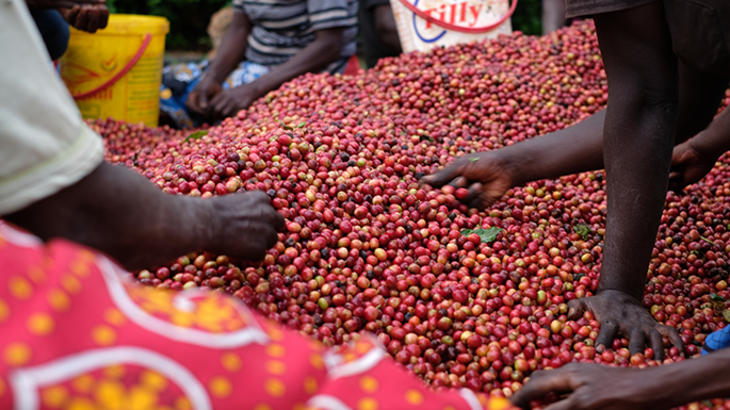
Typica's history reaches back to southwestern Ethiopia, like other Arabica coffees. Arabica was brought to Yemen between the 15th and 16th centuries and reached India by 1700. The seeds sent to the Malabar Coast of India and to Java, Indonesia, are what we now know as the Typica variety.
Bourbon
Bourbon followed a similar path to Typica through Yemen but was carried further east, introducing seeds to Bourbon Island, now Réunion, off the coast of Madagascar. Like Typica, Bourbon is an integral part of the coffee family tree and is still grown worldwide.
Castillo
The Castillo variety was developed by Colombia's coffee research institute, CENICAFE, in 2005 to combat the spread of La Roya, a fungus that attacks coffee leaves. It is a hybrid cross between Caturra as the male parent and Timor as the female parent, and its thick leaves let it withstand La Roya. It is a small tree, slightly taller than Caturra, with long branches, large leaves, and large beans. Against the common standard of Mandheling, Castillo runs slightly smaller. It is delicate and balanced, with light caramel and orange blossom aromas, and it suits drinkers who prefer a coffee that is not too strong. FrontStreet Coffee believes the greatest characteristic of Blue Mountain coffee is its balance - so balanced that it lacks obvious features, excelling in every respect.
Maragogype
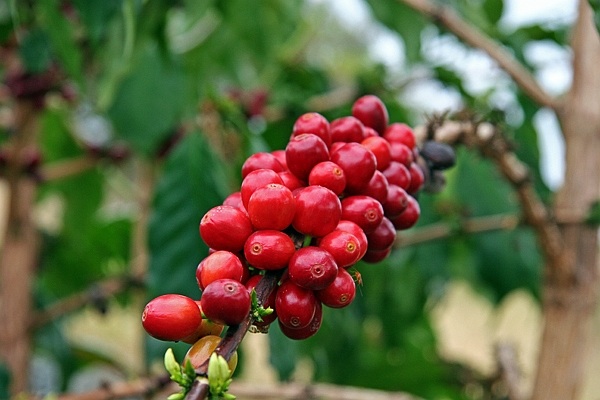
Maragogype has almost never been produced in large quantities, making it one of the rarest coffee types. Because of the size of the beans, few farmers dare to grow it, which earned it the nickname "Elephant Bean."
Maragogype generally delivers floral aromas with citrus acidity and gentle sweetness, though it falls short of Geisha. Even so, it surprises roasters and baristas. The plant developed through a natural mutation of Typica, originally discovered in the town of Maragogipe in the northeastern state of Bahia, Brazil.
The size of the beans means the trees need more space to grow and yield less than other coffee plants. The branches sit at wide angles to the trunk, with few secondary and tertiary branches, and carry large flowers and elongated cherries.
Today Maragogype is mainly grown in the Antioquia department of northwestern-central Colombia. If you want to taste one of the rarest coffee beans, the ones available are all single-origin varieties.
Colombian Instant Coffee
Thanks to its large output, Colombia is a major supplier to the instant coffee market. It is known for producing a very smooth, versatile flavor that makes excellent instant coffee.
FrontStreet Coffee Recommendation
If you are drawn to a balanced, delicate cup, FrontStreet Coffee's Indonesian Mandheling range is a rewarding contrast to try. FrontStreet Lintong Mandheling comes from the traditional Lintong region around Lake Toba and is roasted medium-dark, so it keeps a low acidity with a rich, mellow body, showing clove and woody aromas, a spicy, mint-like edge, and a strong, lingering caramel sweetness.
For the cleanest, sweetest expression of the style, FrontStreet PWN Golden Mandheling is the flagship. Pwani Coffee Company selects high-grade Mandheling green beans and hand-sorts them until only plump, defect-free beans remain, so the medium-dark roast delivers a full roasted aroma, a clean cup, and a heavy, syrupy body - an easy choice for anyone who dislikes acidic coffee.
To brew it, FrontStreet suggests 87-88°C water, 15g of coffee, and a coarse-sugar grind size at a 1:15 ratio, poured in three stages: a 30ml bloom to wet all the grounds, then 100ml to draw out the golden foam and lift the bed, then a gentle 95ml center pour to round off the sweetness. The result is a thick, full body with caramel sweetness alongside chocolate and nut notes.
Important Notice :
FrontStreet Coffee is a long-established specialty coffee roaster in Guangzhou China, selling freshly roasted beans from its own farm in Yunnan as well as dozens of carefully selected single-origin beans from around the world for both pour-over and espresso. The products deliver consistently excellent quality and great value, with shipping within 24 hours. Guangzhou's FrontStreet Coffee shop is recommended by many coffee lovers, and the beans are now available online at the Tmall 。
FrontStreet Coffee has moved to a new address:
FrontStreet Coffee Address: 315,Donghua East Road,GuangZhou
Tel:020 38364473
 Scan and follow the En Gafei WeChat official account. Please indicate that the reprint comes from "En Gafei".