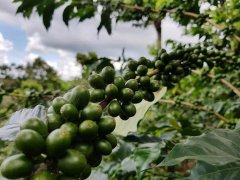
Introduction to Hawaiian Coffee Bean Regions: Kona Coffee Flavor Profile and Starbucks Reserve Ka'u Coffee?
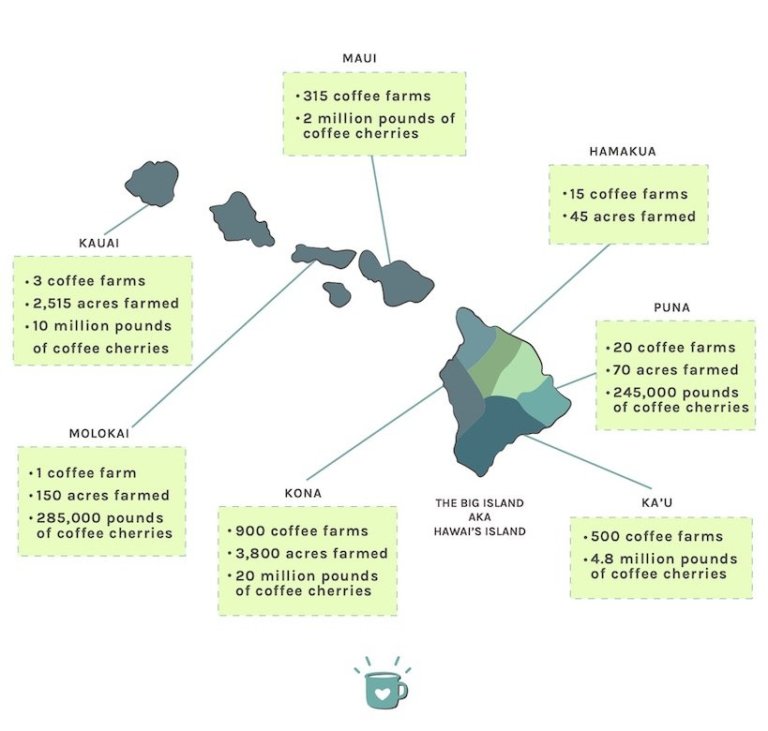
Kona may still be Hawaii's most famous coffee export, but new growing regions keep emerging. As agriculture shifted from sugar to coffee, more and more small farmers have appeared. Let FrontStreet Coffee introduce Hawaii's coffee regions one by one!
Starting with Hawaii's Most Famous Growing Region
Kona
Hawaii supplies just 0.04% of the world's coffee, yet Kona is recognized worldwide—a testament to both its quality and its marketing.
The name comes from the Kona district, which occupies most of the western half of the Big Island. Coffee farms cluster on the western slopes of the Mauna Loa and Hualalai volcanoes at elevations between 500 and 3,000 feet. About 900 farms fit within a strip roughly 30 miles long and 2 miles wide, known as the Kona Coffee Belt.
Sunny mornings, humid or cloudy afternoons, and mild nights define the local climate, and the volcanic soil is wonderfully fertile—ideal coffee conditions.
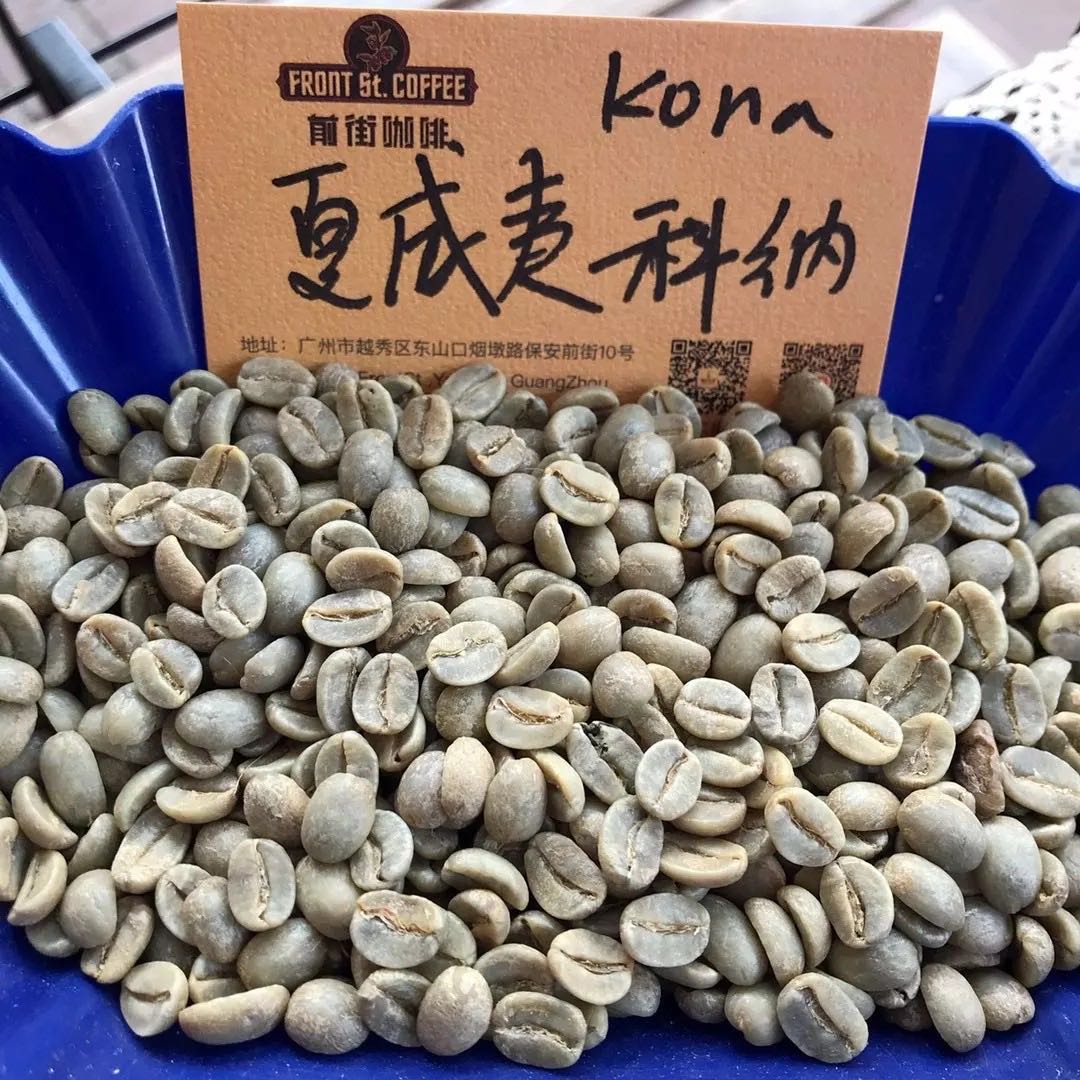
FrontStreet Coffee currently carries just one Hawaiian bean: Hawaiian Kona. Medium roasted, it shows balanced, gentle nectar sweetness and an elegant mouthfeel, with a mulberry aroma that lingers on the palate.
Ka'u
Ka'u coffee offers floral notes, unique aromatics, and a very smooth mouthfeel—Hawaii's "up-and-coming" region. In recent years, Ka'u lots have placed in the top ten at the cupping competition of the world's largest coffee event, the Specialty Coffee Association of America conference.
Once a celebrated sugar region, it turned to coffee after the sugar market collapsed. It sits southeast of Kona on the southern slopes of Mauna Loa, with most farms small—under 5 acres—and planted between 1,000 and 2,500 feet.
Hamakua
The Hamakua Coast is famous for rolling hills and spectacular drives. The tropical slopes of Mauna Loa here were once sugarcane land but are slowly becoming coffee country. Most Hamakua farms are small (averaging 5-7 acres), and the cherries are hand-picked. Hamakua coffee is said to have rich flavors with a chocolate-like smoothness—check it out for yourself.
Puna
Puna is the newest emerging coffee region on the Big Island, with significant untapped potential: 125 acres of cultivated land, all between 1,000 and 2,500 feet.
It is the wettest district on the island, with a relatively cool, cloudy climate. Most coffee here grows in lava, which lends it distinctive acidity, aroma, and body.
Maui
Maui tends about 600 acres of coffee and produces an even wider range of varieties, thanks to mountainous terrain and a spread of microclimates. Farmers here experiment boldly with varieties and processing techniques—helping the local industry advance.
Maui's most famous variety is Maui Mokka. This heirloom crop won worldwide recognition in 2012, when Starbucks featured it in its Special Reserve series among thousands of other coffees.
Kauai
Kauai hosted Hawaii's first commercial coffee plantation, and long before Kona took the spotlight it remained home to the state's largest single coffee farm. Notably, it is Hawaii's only coffee region not yet affected by the coffee borer beetle.
The island enjoys a stable year-round climate with abundant sunshine and mild nights. Most of its coffee grows on the lower slopes of Mount Waialeale, where rainfall is plentiful; runoff carries nutrients from the mountain soils down to fertilize the farms below.
Molokai
Molokai's coffee comes from a single large plantation growing the red Catuai Arabica variety. It covers 150 acres in the island's Kualapu'u area and, like the rest of Hawaii, benefits from fertile volcanic soil and a stable climate.
FrontStreet Coffee Recommendation
The secret to Hawaii's charm—Kona included—is balance, and balance is exactly what medium roasting delivers: roast darker and bitterness and heaviness take over; roast lighter and acidity dominates. If Kona's gentle, elegant style appeals to you, several FrontStreet Coffee medium roasts live in the same register. The FrontStreet Brazil Fazenda Rainha (Queen Estate), grown in the world's largest coffee-producing country from the local Yellow Bourbon variety, is quietly sweet and mellow, with cream peanut, chocolate, toasted bread, and sugarcane aromas—perfect for pour-over, moka pot, or espresso.
Want something sweeter? The FrontStreet Strawberry Candy Geisha Blend unites a Costa Rica honey-processed coffee with Panama washed Geisha, medium roasted to show orange-blossom honey notes and rounded sweetness across cold brew, pour-over, or espresso. And the crown jewel of balance remains the FrontStreet Jamaica Blue Mountain No. 1: Typica grown in Blue Mountain's privileged terrain, medium roasted so its acidity, bitterness, sweetness, and body fuse into an elegant whole—chocolate, roasted nuts, cream, and caramel from the very first sip, a refinement few coffees can match. For a budget-friendly nod to the same idea, the FrontStreet 2013 Natural Yunnan Typica offers nut, brown sugar, black tea, and dried apricot in a soft, balanced medium roast for pour-over, cold brew, or drip machines.
Important Notice :
FrontStreet Coffee is a long-established specialty coffee roaster in Guangzhou China, selling freshly roasted beans from its own farm in Yunnan as well as dozens of carefully selected single-origin beans from around the world for both pour-over and espresso. The products deliver consistently excellent quality and great value, with shipping within 24 hours. Guangzhou's FrontStreet Coffee shop is recommended by many coffee lovers, and the beans are now available online at the Tmall 。
FrontStreet Coffee has moved to a new address:
FrontStreet Coffee Address: 315,Donghua East Road,GuangZhou
Tel:020 38364473
 Scan and follow the En Gafei WeChat official account. Please indicate that the reprint comes from "En Gafei".