How to Perfectly Prepare Latte Art Foam: A Comprehensive Guide to Espresso Latte Foam Techniques
A beginner's daily journey into milk frothing is filled with thoughts like: "Should I just give up? No, I must persist. Oh, it's too thick again, I give up. I'm not giving up, let me try again." I know what you'll say: "Please take away the surveillance camera." As an essential part of making a milk coffee, the degree and quality of milk frothing directly affect the visual and tactile experience of a latte.
Why can milk form stable foam?
What is the principle of milk frothing?
What affects the stability of milk foam are the casein micelles and whey proteins in milk protein. The presence of casein micelles creates tension on the milk's surface. When steam strikes the milk surface, it forms numerous bubbles of different sizes. Adjusting the position of the steam wand then creates a vortex in the milk that "chops up" the larger bubbles, producing fine milk foam with a smooth surface texture.

Under normal circumstances, whey protein has a hydrophilic exterior. Through stirring or heating it gradually "unfolds," exposing its hydrophobic parts. These parts adhere to the bubbles that have formed, reducing surface tension and slowing the bursting speed, which makes the foam more stable.
Common problems for beginners in milk frothing,
Try these small tips.
Problem 1: Milk splashes during frothing
This is a very dangerous situation. Beginners lack stable control and a grasp of the steam wand angle and the depth of the steam wand tip (hereafter, the steam tip) in the milk. It can happen when the steam is first turned on or when the hands become unsteady during heating, causing the pitcher to shift too much, so that the air vent contacts the milk surface and the force of the steam sends milk splashing out.
Tip 1: Always keep the milk pitcher in contact with the steam wand
When you cannot yet control the pitcher's range of motion steadily, FrontStreet Coffee suggests using the pitcher's spout as a pivot point and keeping the edge of the pitcher in contact with the steam wand. From there, whether you change the pitcher's angle or move it up and down, maintain contact between the two, so you never suddenly become "suspended" and let steam escape out of the milk.

Problem 2: Milk foam is not fine enough
What breaks beginners down isn't failed latte art but the fact that the foam never turns fine and stays full of large bubbles. Once it's mixed with coffee, the texture in your mouth sends a clear signal.
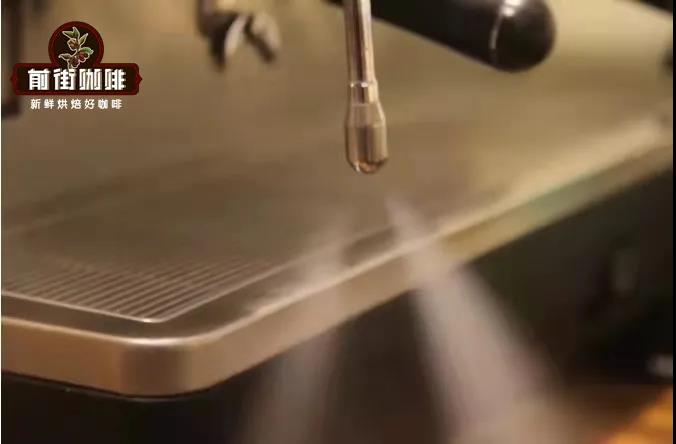
Tip 1: Turn on the steam briefly before frothing milk
When the steam in a semi-automatic machine's steam wand cools, it condenses into water and stays in the tube. So before every frothing session, release some steam first until no water sprays from the tube. Steam that contains water produces large bubbles when frothing milk.
Tip 2: Place the steam wand in the milk pitcher at a 45-degree angle
A 45-degree angle means positioning toward the 2-3 o'clock or 9-10 o'clock direction of the pitcher. Frothing at this angle helps the milk quickly form a small vortex, and that vortex "rolls" the coarser foam down into the liquid surface.
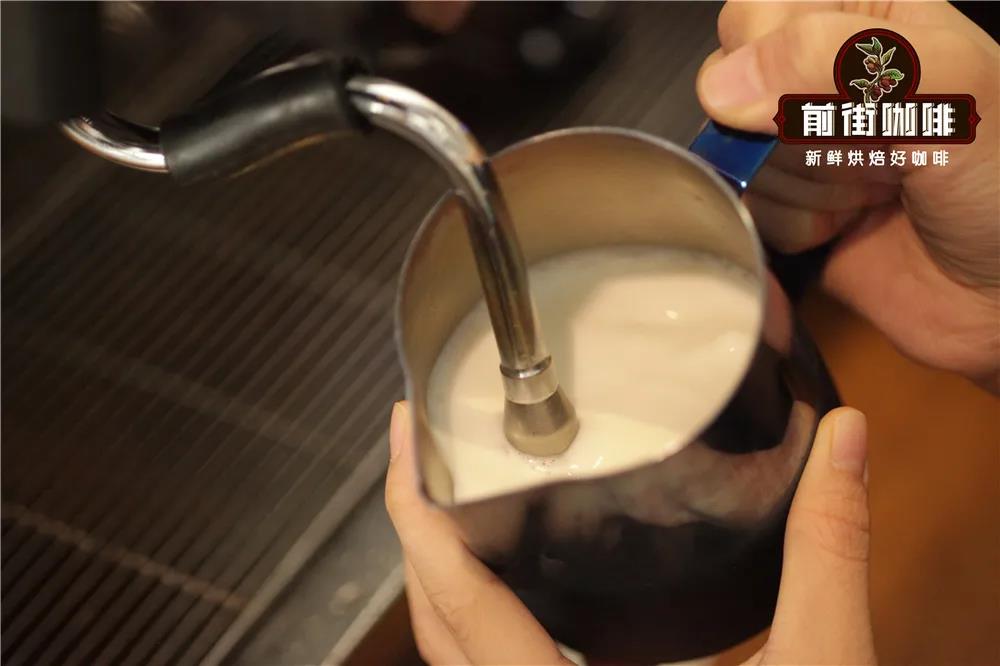
Tip 3: Insert the steam tip 0.8-1cm deep into the milk surface
The steam tip shouldn't go in too deep, since frothing is mainly about incorporating air into the milk. Too deep, and the steam holes cannot contact air to create a vortex. Too shallow, and the steam strikes the surface, making rough bubbles and causing splashes.
Problem 3: Milk foam becomes too thick
The thickness of the foam depends on the foam produced when steam properly contacts the surface, what we call the aeration process. The longer the aeration, the more foam is produced and the thicker the milk foam becomes.
Tip 1: You only need to "hiss" 4-5 times during aeration
Set the steam tip insertion depth to 0.3cm and turn on the steam switch. You'll hear a "hiss, hiss" sound; this is the aeration stage. For latte art the ideal foam thickness is 1cm, so we don't need excessive aeration. After hearing the hissing sound 4-5 times, set the steam tip depth back to 0.8-1cm, keep the 45-degree angle to create a vortex that eliminates large bubbles, and heat to the right temperature.

Problem 4: How to determine the temperature for milk frothing?
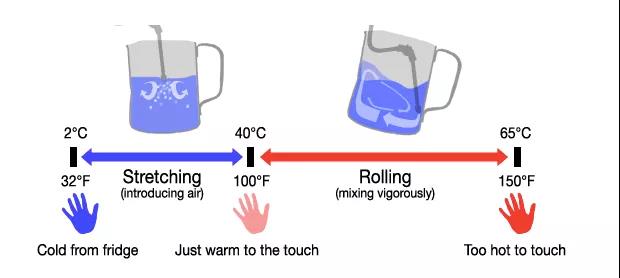
Is milk temperature really that important? Yes. The ideal temperature for milk frothing is between 55-65°C, never exceeding 70°C. Within that range, lactose and other sugars are at their most "active." Froth the milk to this range and combine it with coffee, and you'll find the milk coffee tastes sweet in both aroma and flavor, even without added sugar.
Tip 1: Use a thermometer, don't practice "iron palm technique" from the start
Insert a digital thermometer into the milk pitcher before you begin, and gradually feel the change in the pitcher's temperature with your palm as you go. One important note: if you need to froth the milk to 55°C, for example, you can stop heating when the thermometer shows 53°C, because the milk will keep rising by 1-2°C after you stop.
FrontStreet Coffee Recommendation
Frothing smooth, fine foam is only half the job; for latte art you also want a stable espresso with enough body and crema to hold the pattern. The FrontStreet Classic Blend is the go-to for anyone learning latte art at home. It is a medium-dark espresso recipe built from three origins, inspired by the old "Mamba" blend of Mandheling and Brazil, and finished with a small amount of Robusta to add aroma and crema. It pours with clear aromas of butter, toasted bread, and caramel cookie, a strong flavor, a solid body, and fine crema, and it extracts very consistently, making it an essential home coffee for beginners.
Alternatively, for a nutty, richer style, the FrontStreet Premium Blend is a medium-dark espresso bean built on the classic pairing of washed Colombian coffee and semi-washed Brazilian coffee. It delivers nut, dark chocolate, and caramel notes, and whether you make an americano, a latte, or a flat white, it brings out the smooth aromas of cream, almond, and cocoa. Its crema easily matches what a cafe produces and is more than enough for practicing latte art, which makes it especially suited to those planning to open a shop or learn at home.
And if you have already mastered the basics, the FrontStreet Commercial Blend is tailored for those about to open a cafe: a traditional espresso recipe built on FrontStreet Coffee's Premium Blend plus a small amount of Robusta, designed to add more fine, deep-brown crema and a fuller character. Whether you make an americano, latte, or mocha, it carries nut, cocoa, and caramel flavors and makes latte art effortless.
Important Notice :
FrontStreet Coffee is a long-established specialty coffee roaster in Guangzhou China, selling freshly roasted beans from its own farm in Yunnan as well as dozens of carefully selected single-origin beans from around the world for both pour-over and espresso. The products deliver consistently excellent quality and great value, with shipping within 24 hours. Guangzhou's FrontStreet Coffee shop is recommended by many coffee lovers, and the beans are now available online at the Tmall 。
FrontStreet Coffee has moved to a new address:
FrontStreet Coffee Address: 315,Donghua East Road,GuangZhou
Tel:020 38364473
 Scan and follow the En Gafei WeChat official account. Please indicate that the reprint comes from "En Gafei".