Ethiopian Coffee Origin Legend and Yirgacheffe Gedeb Coffee Bean Brewing Guide
The Legacy of Ethiopian Coffee
Many coffee enthusiasts consider Ethiopian coffee their favorite. In their eyes, Ethiopian coffee beans, with their rich fruit flavors and abundant floral aromas, are always winners. Undoubtedly, for many years, Ethiopian coffee has been among the most acclaimed single-origin premium coffee beans in the world. As the world's fifth-largest coffee producer, Ethiopia has mastered the art of harvesting and processing coffee beans, resulting in flavor profiles that are remarkably complex and delicious. To meet the demands of coffee lovers, FrontStreet Coffee offers nine different coffees from various Ethiopian regions on its menu. Later, we will introduce the characteristics of these nine coffees one by one. Before that, FrontStreet Coffee would like to give you a brief introduction to the history of Ethiopian coffee.
The Origins of Coffee
The coffee world still debates coffee's origins. Ethiopia claims to be the birthplace of coffee. So does Yemen.
The Yemeni Legend
The earliest documented origin of coffee comes from the mid-15th century, when Sufi monks were the first to drink coffee and demonstrate knowledge of it. Legend has it that they imported coffee from Ethiopia and used these trees to brew a kind of "wine." They claimed this wine provided spiritual intoxication for their deities. With this legend, there is credible evidence that could be considered confirmation. But here is the question: if Ethiopia did not recognize its value, why would they export coffee trees?
The Ethiopian Legend
This leads to the Ethiopian legend. Ethiopia is the more popular presumed founder of coffee, but as you read, please remember that this story is unfounded. The story goes that a goatherd named Kaldi saw goats eating berries from what is now known as the coffee tree and observed that it made them particularly active. He reported this observation, and people began using these "magic" beans for trade. As legends about these vibrant coffee beans grew, by the 15th century, coffee had spread throughout the Arabian Peninsula.
According to botanical evidence, Arabica coffee originated in the highlands of southwestern Ethiopia, from where it spread to Yemen and then to the rest of the world. Arabica coffee is endemic to the African mountain rainforests of Ethiopia, where wild coffee populations still grow in the highlands of the southwest and southeast. Studies confirm that, within a small range, Ethiopian wild coffee plants show higher genetic variability compared to Yemeni wild coffee populations, which exhibit lower genetic diversity. Ethiopia's high coffee genetic diversity is attributed to the country's native traditional coffee production systems. Moreover, the presence of high genetic diversity in coffee plants is due to Ethiopia's suitable altitude, abundant rainfall, appropriate temperatures, and planting materials.
Regardless of which origin story is true, coffee is delicious, and everyone should thank both countries for their contributions to coffee.
Ideal Growing Conditions
Unsurprisingly, Ethiopia possesses ideal growing environments for producing premium coffee. High altitudes and mountainous terrain create excellent growing conditions. Ethiopia cultivates over a thousand varieties of coffee beans. Since coffee trees grow naturally in Ethiopia, most coffee is grown under the shade of other plants without the use of pesticides. Experts believe that coffee was discovered around the 9th century, making it nearly 1,000 years old. It is almost certain that coffee consumption began as people eating the cherries and their seeds and experiencing the stimulating effects of caffeine. Modern brewing methods likely developed later as people drew inspiration from older tea traditions.
Evidence suggests that the first step toward modern coffee was grinding coffee beans into a thick paste, making it easy for travelers to pack and carry. The word-of-mouth and trade of this paste were responsible for coffee eventually spreading from Africa to the rest of the world.
As these vibrant coffee beans grew in popularity, the coffee we know began to take shape, first as a fermented, wine-like beverage. It is unclear exactly when coffee beans began to be roasted and brewed as they are today, but historians' best guess is sometime around the 13th century. It is often said that Ethiopian coffee is boiled, but this is actually inaccurate. Boiling coffee began as an Islamic ritual near Turkey after coffee spread from its Ethiopian origins to the region.
Interestingly, it is speculated that the term "coffee bean" originated from a mispronunciation in English of "Kaffa" (believed to be coffee's birthplace) and "bunn" (the word for coffee in the local language). Thus "Kaffa bunn" became "coffee bean." Of course, this type of etymology is difficult to determine accurately, but the similarity in wording is striking.
Modern Ethiopian Coffee Production
Today, coffee remains an important part of Ethiopian culture and economy. Coffee is Ethiopia's largest export product and has been for decades. While Kaldi's story may be somewhat exaggerated, calling Ethiopia the birthplace of coffee is not. Coffee was originally native to a relatively small region of Africa and spread through trade among early travelers to become the global phenomenon it is today.
Today, Ethiopian coffee production thrives, and recent movements are helping ensure that coffee cultivation remains a viable means of livelihood for Ethiopians. Ethiopian coffee is unique, even among African coffees, and completely different from Central and South American coffees. Most coffee is produced by small farmers. Farmers can sell their coffee through the Ethiopia Commodity Exchange (ECX), which was established by the government in 2008. ECX makes this possible through standardized procedures. Once brought to ECX, coffee from similar regions is mixed together and sold. The problem with ECX is that it makes tracing coffee to specific farms very difficult, which is important for specialty coffee roasters. However, as of March 2017, new policies allow farmers to store coffee separately before auction and allow direct purchases through individual washing stations. This enables companies to seek out better coffee and build relationships for future coffee sourcing.
This transparency also encourages farmers to invest in their methods and produce better coffee. Since coffee will be sold without being mixed with other beans, it will be priced based purely on its quality. The better the taste, the higher their potential price.
FrontStreet Coffee's Ethiopian Selection
In this article, FrontStreet Coffee has traced the history of Ethiopian coffee, as well as the history of coffee itself. We conclude with an overview of FrontStreet Coffee's Ethiopian coffees and some brief brewing suggestions.
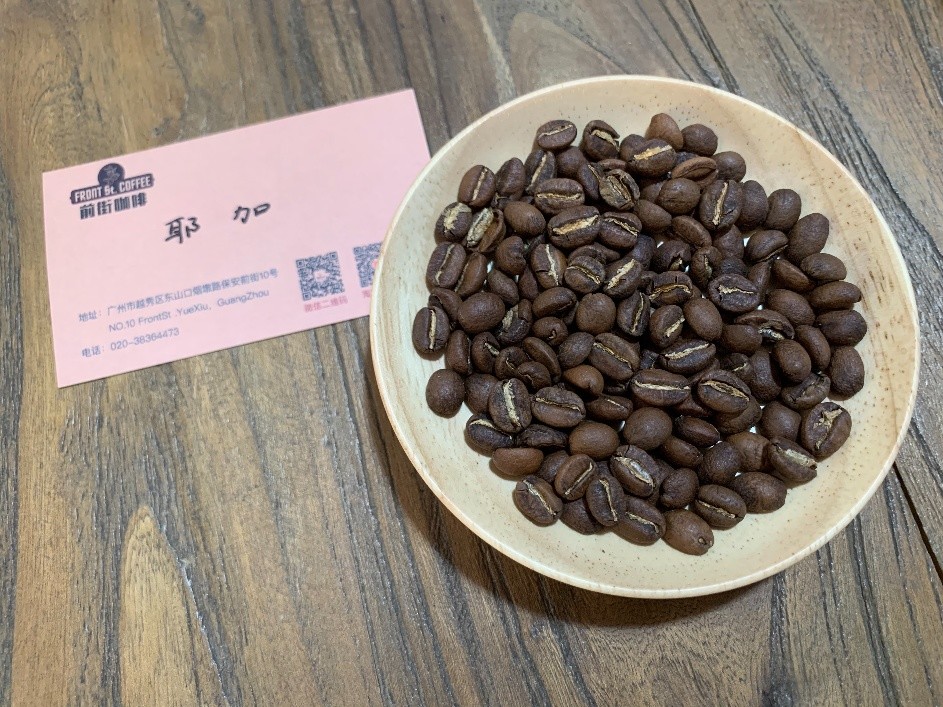
Take FrontStreet Coffee's Yirgacheffe Gotiti, for example. It uses the washed processing method and is roasted to a cinnamon level. It has delicate jasmine floral aromas, with distinct citrus flavors upon entry. The caramel sweetness is quite prominent, and the tea-like finish stands out with a clean, bright taste.
Recommended brewing method: Pour-over
Filter: V60 dripper
Water temperature: 90-92°C
Dose: 15 grams
Coffee-to-water ratio: 1:15
Grind size: Medium-fine grind (80% pass-through rate on China standard #20 sieve)
Brewing technique: Segmented extraction
Use 30g of water for blooming, with a blooming time of about 30 seconds. Pour 125g of water in a small circular motion at the center for segmentation. When the water level drops and is about to expose the coffee bed, continue pouring to 225g to finish. Remove the filter when the water level drops and is about to expose the coffee bed (timing starts from blooming). Extraction time is 2'00".
FrontStreet Coffee Recommendation
If this introduction to Ethiopia's birthplace of coffee has sparked your curiosity, start with FrontStreet Coffee's classic washed Yirgacheffe. Grown at elevations of 1,700-2,100 meters in the Gedeo zone of southern Ethiopia, it is beloved for its white jasmine florals, bright citrus and lemon acidity, and a clean tea-like finish. For a step up, try FrontStreet Coffee's washed Gotiti cooperative coffee from the Worka area at the southeastern edge of Yirgacheffe, which offers even more vibrant citrus character and jasmine fragrance with none of the traditional bitterness.
Important Notice :
FrontStreet Coffee is a long-established specialty coffee roaster in Guangzhou China, selling freshly roasted beans from its own farm in Yunnan as well as dozens of carefully selected single-origin beans from around the world for both pour-over and espresso. The products deliver consistently excellent quality and great value, with shipping within 24 hours. Guangzhou's FrontStreet Coffee shop is recommended by many coffee lovers, and the beans are now available online at the Tmall 。
FrontStreet Coffee has moved to a new address:
FrontStreet Coffee Address: 315,Donghua East Road,GuangZhou
Tel:020 38364473
 Scan and follow the En Gafei WeChat official account. Please indicate that the reprint comes from "En Gafei".