Black Coffee Making: Can Americano Have Latte Art & How to Create Milk Foam Without Large Bubbles
"I'd like an Americano, with latte art on top!"
Many people's first reaction to this might be: Isn't an Americano just black coffee? How can it have latte art without milk? In this article, FrontStreet Coffee will share how to make an Americano with latte art.

The Composition of an Americano
An Americano is espresso extracted at a 1:2 ratio and then diluted with an appropriate amount of water. The traditional Americano uses a coffee-to-water ratio of 1:8, but this ratio cannot be applied to all espresso. So when deciding how much water to add, adjustments need to be made based on the beans you are using.
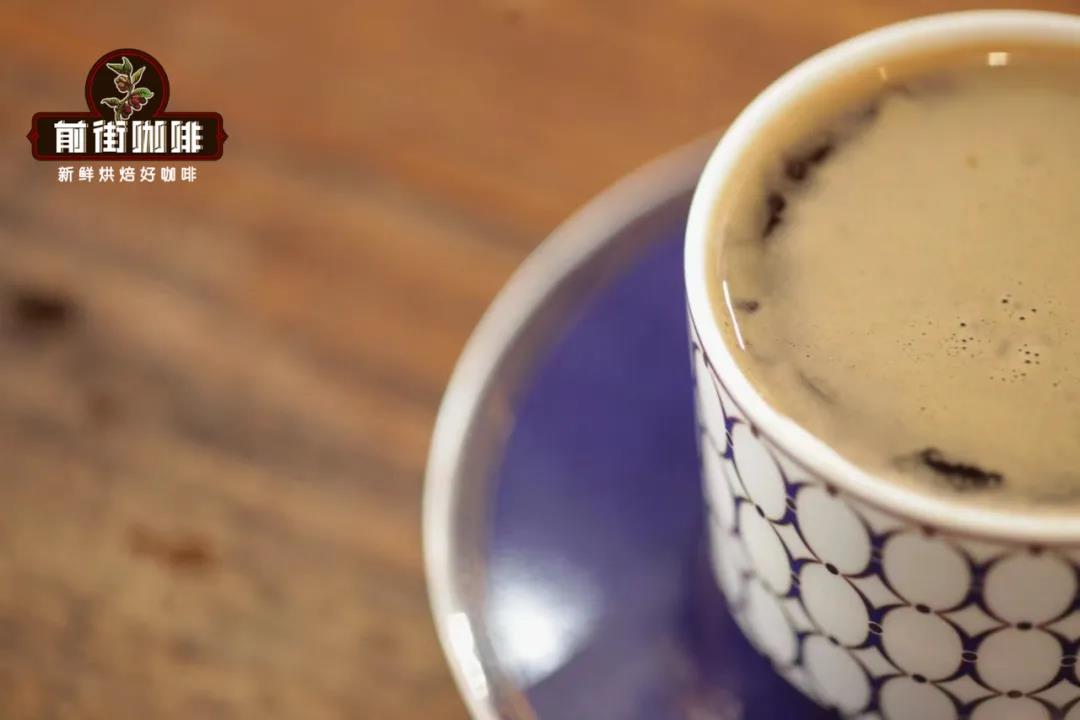
Using espresso extracted from FrontStreet Coffee's Ethiopian Natural Red Cherry and Honduras Sherry Blend as an example, FrontStreet Coffee dilutes the 40g of coffee liquid extracted from 20g of grounds at different ratios, finally settling on a 1:6 ratio (40g of coffee liquid diluted with 240g of water) to make the Americano.
How to Make an Americano with Latte Art?
Prepare an Ice Water Mixture
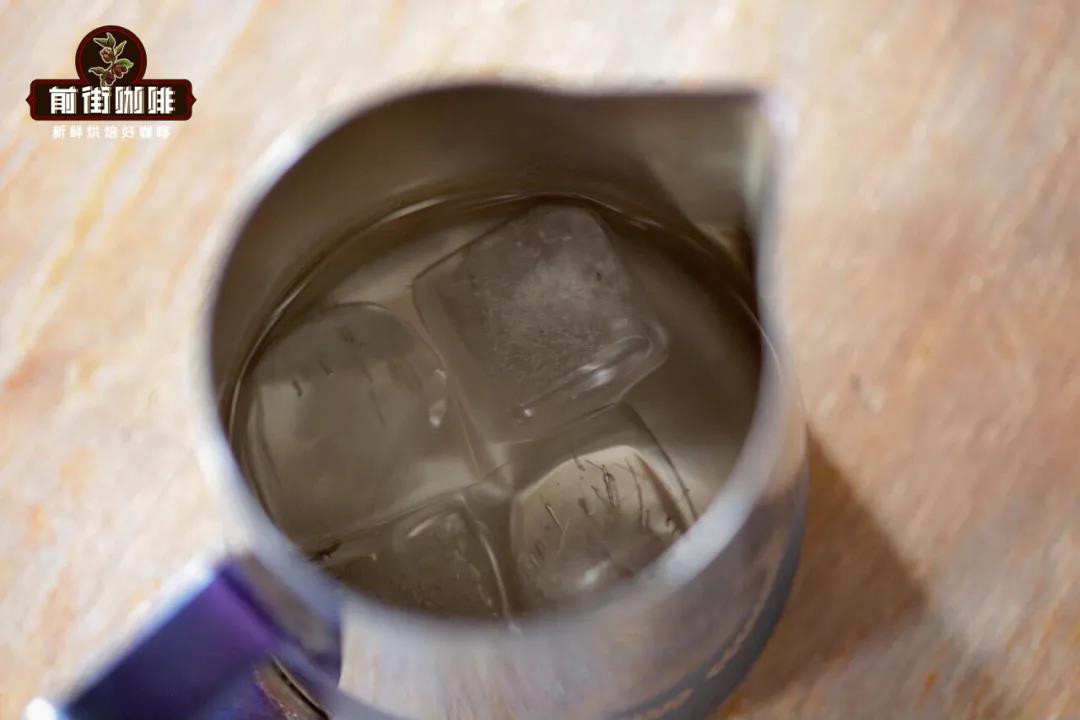
Add 100g of ice cubes and 140g of room-temperature water to a latte pitcher (this is the amount FrontStreet Coffee uses for an Americano; adjust according to your own situation). This pitcher of ice water is the "key player" in Americano latte art, especially crucial during the frothing stage of the "milk foam" later on.
Extract Espresso
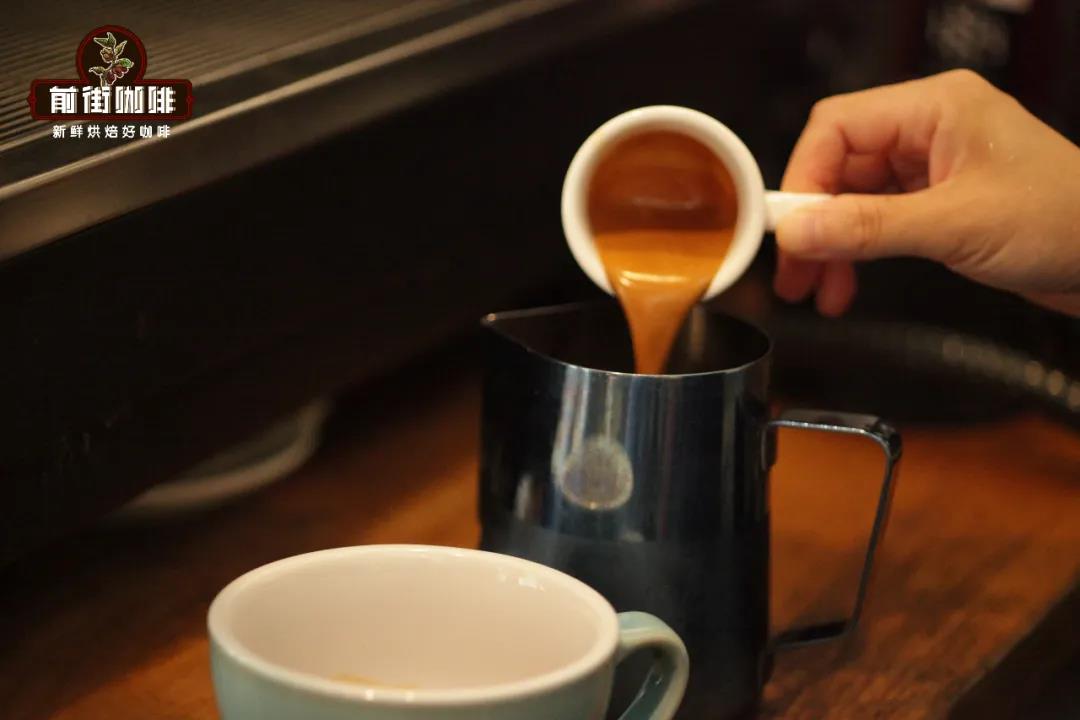
FrontStreet Coffee uses 20g of grounds to extract 40g of coffee liquid, with a total extraction time of 28 seconds. Using a double-spouted portafilter, split the shot into two portions: pour one into a cup and set it aside, and add the other to the prepared ice water mixture.
Coffee Foam Frothing
Since this is an Americano, dairy cannot be used to froth the foam. So for the "milk foam," we use the espresso portion added to ice water, frothing it to create fine microfoam. Frothing takes time, and without ice to control the temperature, the coffee in the pitcher heats up quickly.
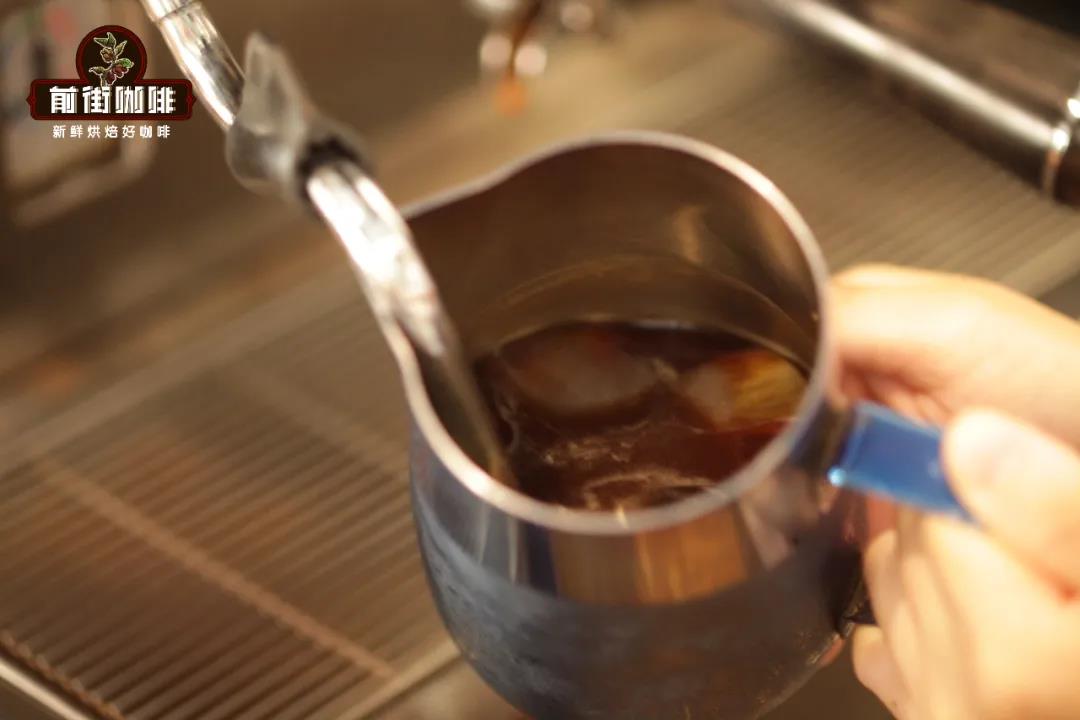
In that situation, not only will the foam not have time to become fine, but the excess heat will also make the coffee bitter. The frothing temperature for coffee foam should therefore be controlled between 70°C and 75°C (note: this temperature is far too high for real milk foam - it applies only to coffee foam), since anything hotter makes latte art impossible.
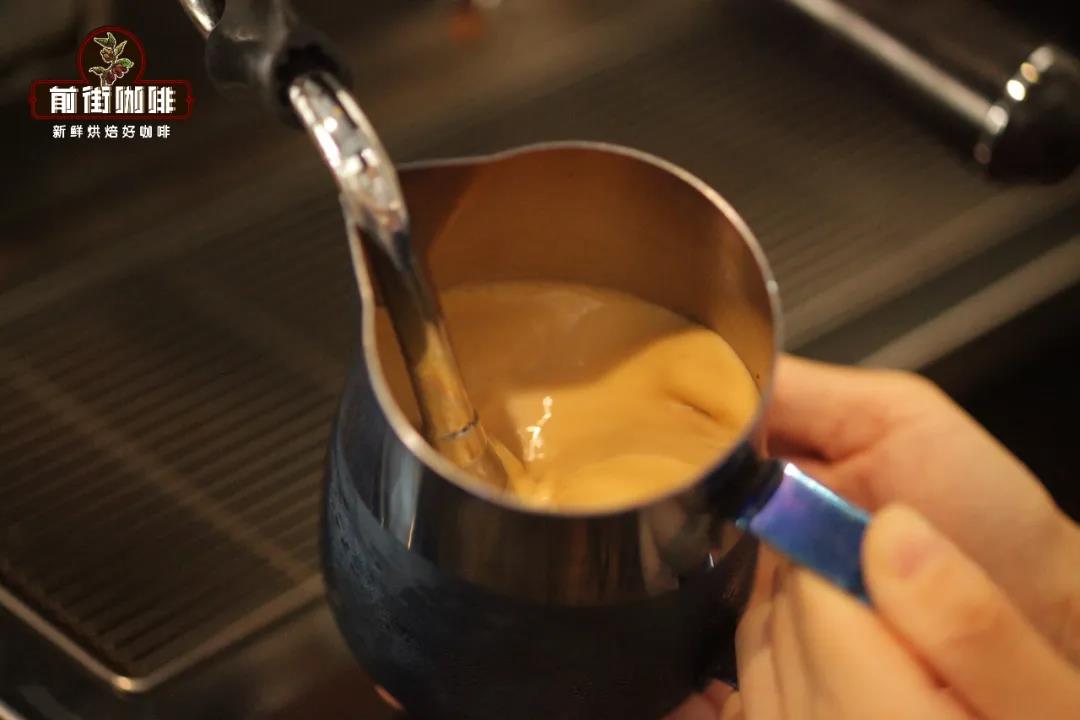
The thickness of the frothed coffee should be the same as latte milk foam - about 1.5cm. During frothing, aerate for only 3-4 seconds, then use the stable vortex created while heating to break down any coarse bubbles.
Integrating Coffee Foam with Espresso
The frothed coffee foam should be integrated with the espresso in the cup as quickly as possible. Coffee foam dissipates faster than milk foam, which means the pouring speed also has to pick up. When integrating, be sure to mix the foam fully with the espresso base - insufficient integration will leave "jagged edges" when you draw the pattern.

For professional coffee knowledge exchange and more coffee bean information, please follow Coffee Workshop (WeChat public account: cafe_style)
FrontStreet Coffee Recommendation
If the Americano experiment leaves you curious about FrontStreet's Ethiopian Natural Red Cherry, it is worth a proper pour-over. As a natural-processed Yirgacheffe coffee, the Red Cherry Project uses only fully ripe, defect-free cherries, which are sorted again at the mill and then laid directly on drying racks. For the first few days the fruit is turned every 2-3 hours to prevent uneven heating and over-fermentation. After three to five weeks of sun-drying, workers machine-scrape off the outer pulp depending on weather and temperature, then move the beans to warehouse storage. Because the cherries dry with the pulp on, the coffee keeps its classic Yirgacheffe character while gaining tropical fruit from the natural process: citrus-like acidity, a berry juice quality, honeyed sweetness, and cream-smooth texture.
Ethiopia is a world-famous specialty coffee origin and the birthplace of coffee itself, home to countless native varieties. For an accessible starting point, FrontStreet's everyday washed Yirgacheffe is the classic pick: white jasmine florals, bright citrus and lemon acidity, and a tea-like finish, at a friendly price that has made it many people's first specialty bean. The town of Yirgacheffe sits in southern Ethiopia's Sidamo province at 1,700-2,100 meters - one of the world's highest coffee regions - and its name has become shorthand for Ethiopian specialty coffee thanks to its unmistakable white florals and lemon-citrus acidity.
If you prefer naturals with even more intensity, FrontStreet's Huakui (Flower Champion) natural from Hambella in Guji, Sidamo, deserves a try. The farm spans 200 hectares and uses traditional natural processing: ripe cherries are sun-dried on raised beds for 21 days, turned constantly to dry evenly, with workers hand-removing defective or moldy beans every three to five days. Once the skins harden they are hulled, and the green beans face one final sorting. Roasted medium-light, it shows a faint fermented wine note, florals, citrus, and mango - a much richer, more complex cup with honeyed sweetness, a cocoa undertone touched with spice, a thick body, and a long finish.
Important Notice :
FrontStreet Coffee is a long-established specialty coffee roaster in Guangzhou China, selling freshly roasted beans from its own farm in Yunnan as well as dozens of carefully selected single-origin beans from around the world for both pour-over and espresso. The products deliver consistently excellent quality and great value, with shipping within 24 hours. Guangzhou's FrontStreet Coffee shop is recommended by many coffee lovers, and the beans are now available online at the Tmall 。
FrontStreet Coffee has moved to a new address:
FrontStreet Coffee Address: 315,Donghua East Road,GuangZhou
Tel:020 38364473
 Scan and follow the En Gafei WeChat official account. Please indicate that the reprint comes from "En Gafei".