Pour-Over Coffee Dripper Guide: V60 Dripper vs. Wave Dripper Flavor Comparison
Introduction
Drippers are the heart of any pour-over setup. With so many styles on the market today, choosing one can feel overwhelming. In this guide, FrontStreet Coffee breaks down how to evaluate a dripper, so you can pick the right one with confidence.
Comparing Coffee Drippers from Different Angles
I. Dripper Materials
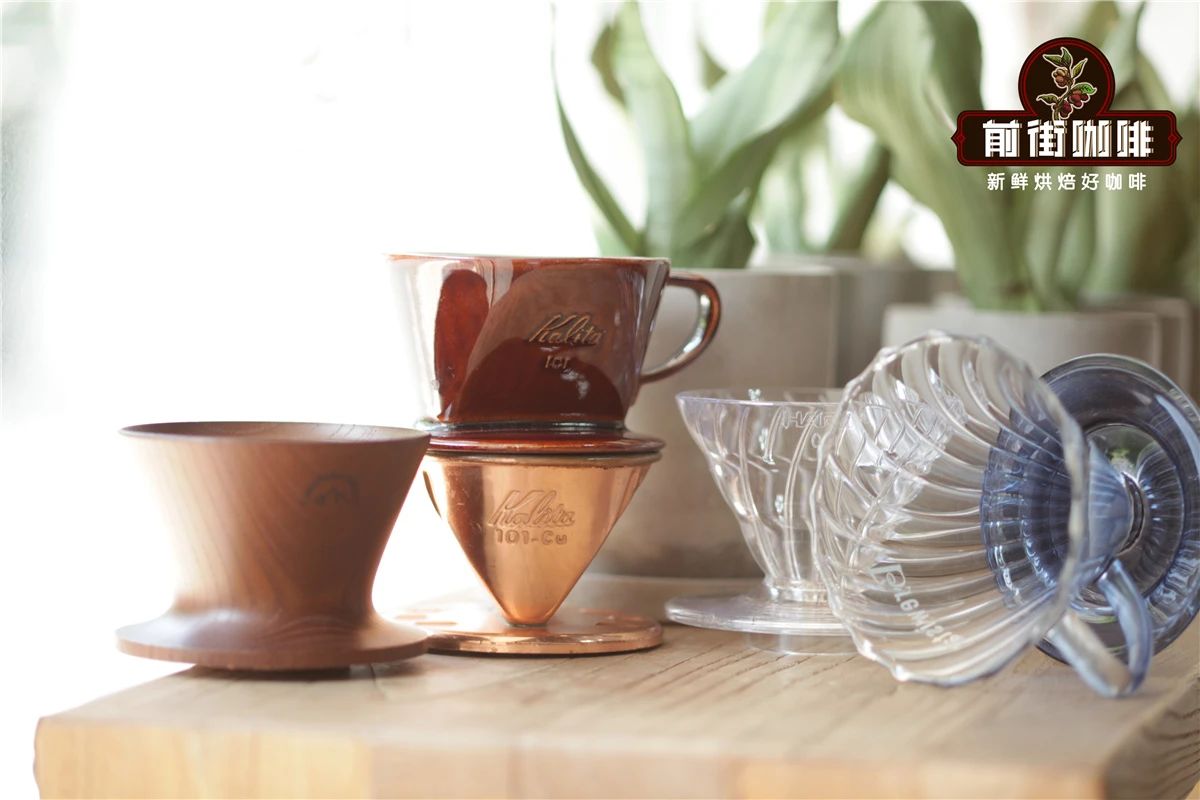
Over the years, drippers have been made from resin, glass, ceramic, metal, and even wood. When comparing materials, the three factors that matter most are heat retention, molding precision, and price.
① Heat Retention
Different materials hold heat differently. Generally, better heat retention is desirable, but it helps to understand how each material behaves: to retain heat, a material must first absorb it.
After preheating, heat retention ranks as follows: ceramic > brass > glass > resin.
Without preheating, however, the order flips: resin > brass > glass > ceramic.
Ceramic holds heat best, but it also soaks up heat slowly during preheating, so an unpreheated ceramic dripper steals a surprising amount of temperature from your brew in the early stage. Metal conducts heat quickly, which means it preheats fast but then releases that heat more readily than ceramic. Glass sits in the middle, with the bonus of being transparent so you can watch the extraction. Resin has the weakest heat retention of all, but it has one saving grace: it barely absorbs or gives off heat at all, so there is very little difference between a preheated and an unpreheated resin dripper.
② Molding Precision
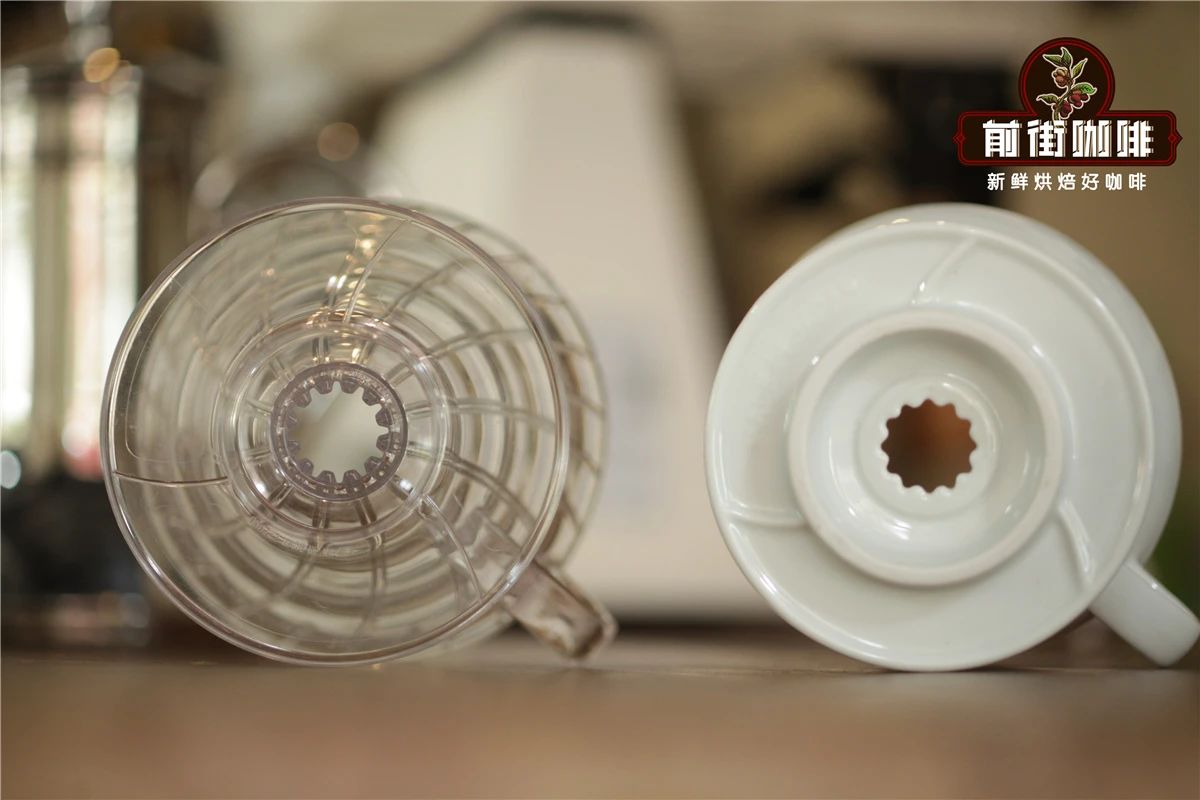
The ribs are the soul of a dripper. Because each material is manufactured differently, the ribs they produce have distinct characteristics. Resin drippers offer the best molding precision: as mass-produced industrial products, their dimensional accuracy far exceeds what ceramic or glass can achieve. Run a finger along the ribs of a resin dripper and they feel crisp and well-defined. Ceramic drippers, thanks to the final glazing coat, have smoother, slightly rounded ribs. The same logic applies to glass and metal manufacturing.
In terms of molding precision: resin > glass > brass = ceramic.
③ Price
Using Hario's lineup as an example: metal > ceramic ≈ glass > resin.
On pure practicality, FrontStreet Coffee considers resin the best choice overall. Aside from its weaker heat retention, it wins on price and molding precision, and it is lightweight, drop-resistant, and easy to carry.
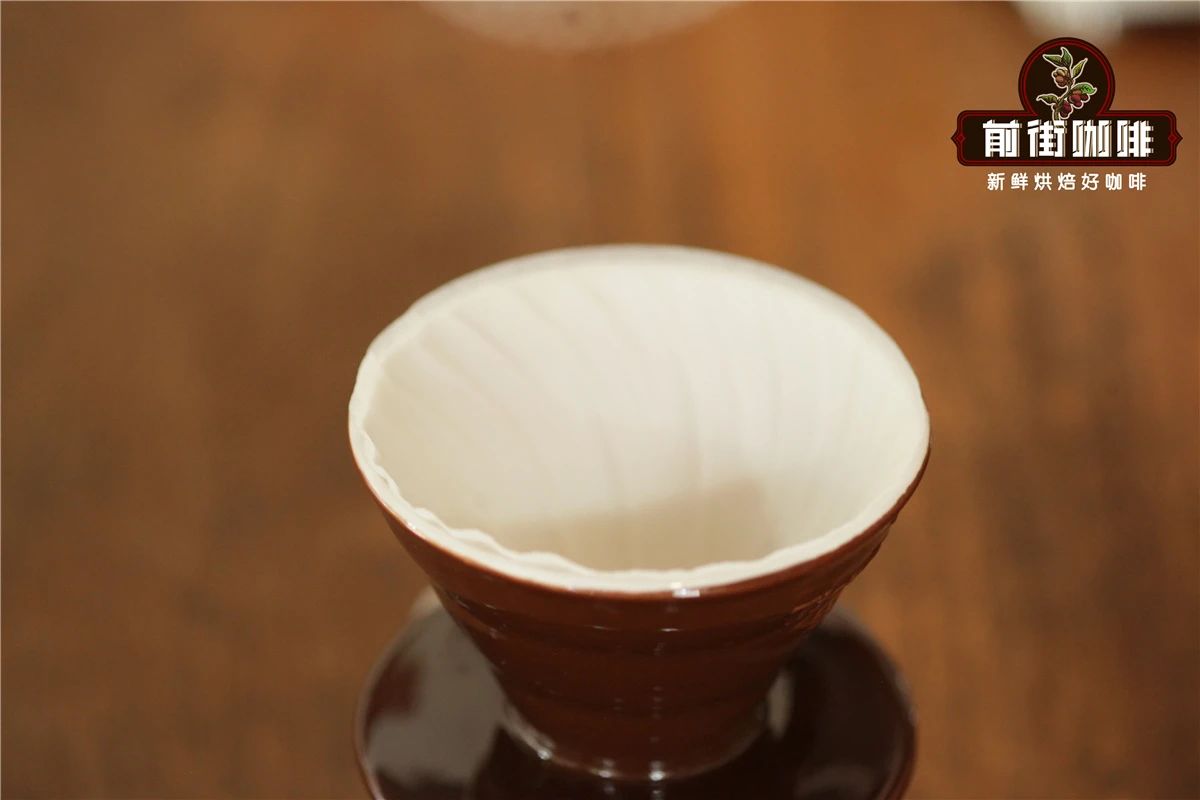
For looks, ceramic is hard to beat. It is attractive, has enough weight to sit stably on a scale or server, and retains heat well. Just be aware of one quirk: on many ceramic drippers the ribs blend into the wall in a curve rather than meeting it at a sharp angle. When you seat and rinse the filter paper, the ribs don't truly prop the paper away from the wall, so the paper can cling to the ceramic, slowing the flow rate.
Metal drippers are the one category we hesitate to recommend. They are expensive, harder to maintain, and prone to oxidation and rust over time.
II. Structural Design
Modern drippers come in many shapes, but broadly they fall into three families: conical, trapezoidal (wedge), and flat-bottom. Beyond that, the smaller differences come down to the rib pattern (the flow channels) and the number and size of the outlet holes in the base.
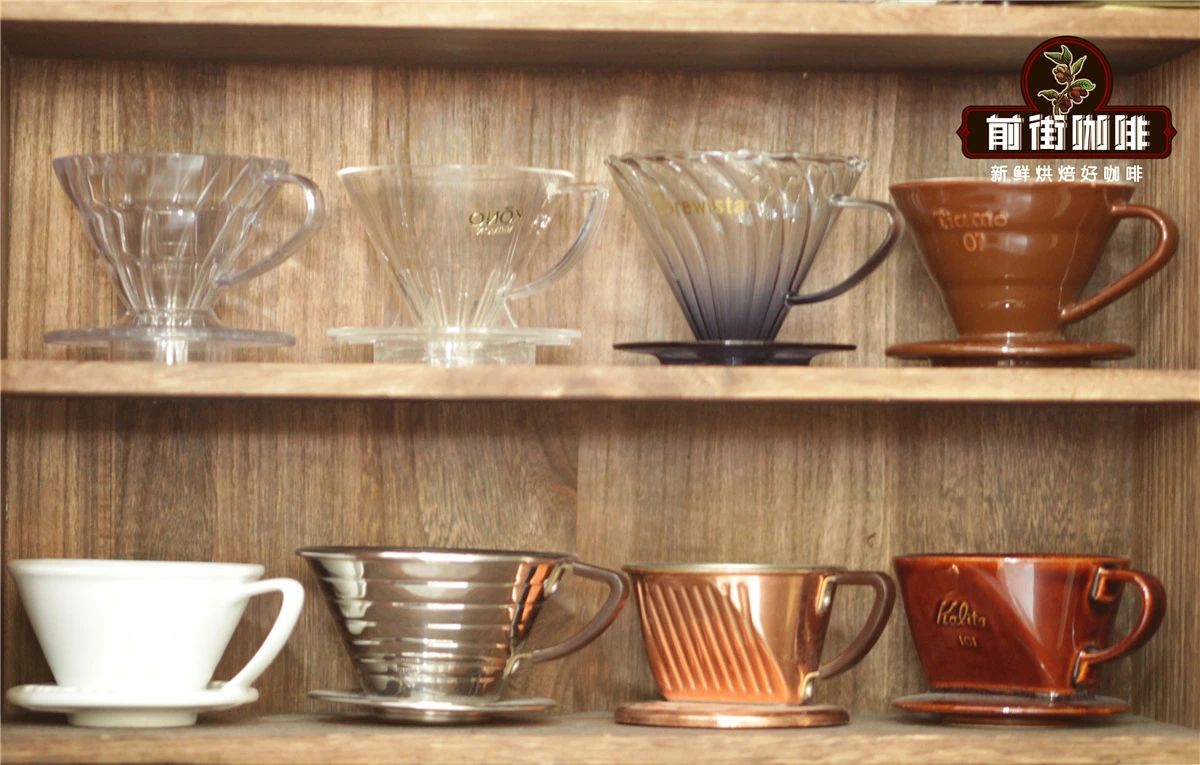
If your goal is brewing performance, all you really need to understand is flow rate. Drippers with multiple full-length ribs — the V60, the Origami, the Starry — are built for fast drainage. Fast-flowing drippers produce clean, vibrant cups and pair beautifully with lightly roasted beans full of floral and fruity notes.
Drippers designed for slower drainage — the Kono, trapezoidal drippers, the "strawberry" style, and the Cross Star Infinity — yield a cup with a heavier mouthfeel and more pronounced sweetness. FrontStreet Coffee recommends them for medium to dark roasted beans.
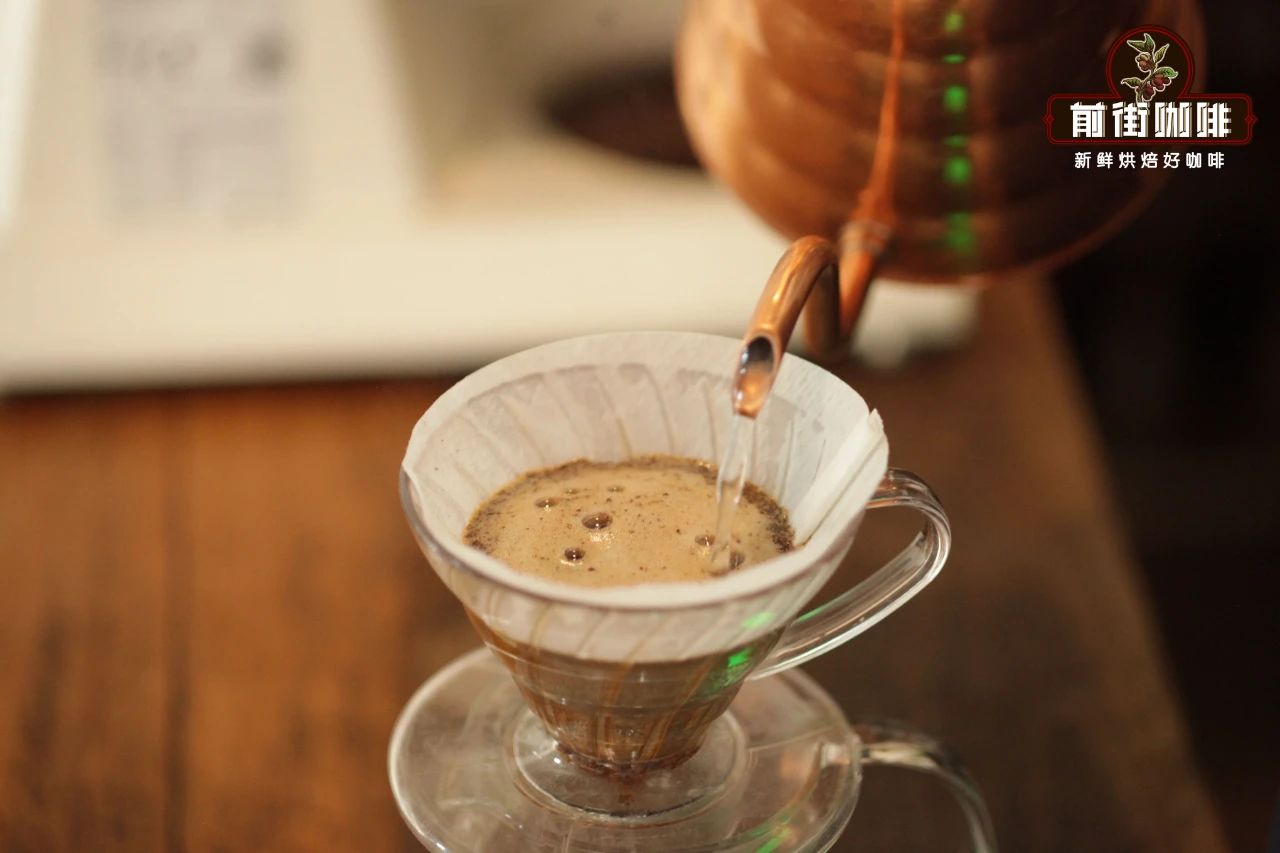
Finally, if you're still torn about which dripper to buy, start with the Hario resin V60. It's affordable, reliable, and serves as the industry's reference point — V60 users are the largest group among pour-over drinkers, and the recipe space around it is the best documented. It remains the most versatile, all-purpose dripper you can own.
FrontStreet Coffee Recommendation
If you're buying your first dripper, the Hario V60 is the safe bet that almost no one regrets. The design traces back to Hario, a Tokyo glassware maker founded in 1921 that originally built heatproof laboratory glass; the V60 as we know it was redesigned in 2004 and takes its name from its distinctive 60-degree cone. That cone and single large outlet force the water to converge at the center before dripping through, extending contact time between water and coffee so aroma and flavor extract fully — while the unobstructed outlet means flow speed depends almost entirely on your pouring control, which is exactly what makes it such a rewarding dripper to learn on.
The V60's fast drainage shines brightest with floral, fruit-forward light roasts. FrontStreet Coffee's Yirgacheffe Worka (Guodingding) is a classic starting point, with bright citrus, berry notes, jasmine florals, and a green-tea-like sweetness in the finish. For bigger tropical fruit character, FrontStreet's Ethiopia Huakui bursts with strawberry, passion fruit, and lychee aromatics and almost no bitterness, while the Kenya Cherry Tomato — SL28 and SL34 grown at 1550–1750 meters and double-washed for 72 hours — delivers a vivid cherry-tomato and dark-plum acidity that tastes like fresh-squeezed juice.
If you lean toward fuller-bodied, low-acid cups, switch to slower, medium-dark roasts. FrontStreet's PWN Golden Mandheling offers a thick, herbal, dark-chocolate profile with hardly any acidity, and FrontStreet's Jamaica Blue Mountain No. 1 balances cream, caramel, chocolate, and nut tones in a smooth, rounded cup. Pair the bean with the dripper, and the V60 will reward you either way.
Important Notice :
FrontStreet Coffee is a long-established specialty coffee roaster in Guangzhou China, selling freshly roasted beans from its own farm in Yunnan as well as dozens of carefully selected single-origin beans from around the world for both pour-over and espresso. The products deliver consistently excellent quality and great value, with shipping within 24 hours. Guangzhou's FrontStreet Coffee shop is recommended by many coffee lovers, and the beans are now available online at the Tmall 。
FrontStreet Coffee has moved to a new address:
FrontStreet Coffee Address: 315,Donghua East Road,GuangZhou
Tel:020 38364473
 Scan and follow the En Gafei WeChat official account. Please indicate that the reprint comes from "En Gafei".