Iced Cappuccino Recipe and Origins: Best Coffee Beans for Espresso Milk Coffee

Introduction
As the Great Heat settles in, the sun turns fiercer by the day. Nothing beats an iced coffee to cool down in the middle of summer. Here is how FrontStreet Coffee makes an iced cappuccino, a milk coffee you can put together easily at home.
What is Cappuccino Coffee?
The word "cappuccino" comes from the Italian Cappuccino. In Italian, cappuccio means hood. The Capuchins were members of the Catholic Franciscan order, and when they came to Italy to preach, locals nicknamed the dark brown robes and small pointed hats they wore "cappuccino."

Cappuccino coffee was born when people noticed that adding milk to espresso produced a color close to those Franciscan robes. Inspired by the resemblance, they crowned the drink with milk foam shaped like a small pointed hat and named it after the monks.
A traditional hot cappuccino is built from 1/3 espresso, 1/3 hot milk and 1/3 hot milk foam. The foam comes in two styles, dry and wet. Dry foam has more volume, holds its shape longer and has a dense texture. Wet foam has less volume, is more fluid, holds its shape for a shorter time, and is dense yet smooth.

How to Make Iced Cappuccino Coffee?
Espresso portion: FrontStreet Coffee uses the "Sunflower Warm Sunshine" coffee beans, a blend of Honduras Sherry Cask and Yirgacheffe Natural Red Cherry, for the extraction. The parameters are 20 g of coffee grounds to extract 35 g of coffee liquid in 28 seconds. If you do not have an espresso machine at home, you can substitute capsule coffee, instant black coffee or single-serve packaged espresso liquid.

Iced milk foam portion: A milk frother works well here. This time FrontStreet Coffee used a French press to froth the milk. The preparation is simple: pour chilled fresh milk into the French press (or milk frother) up to halfway, then pump the plunger back and forth about 20 times until the container is roughly 8/10 full. You will see it filled with cotton candy-like milk foam.
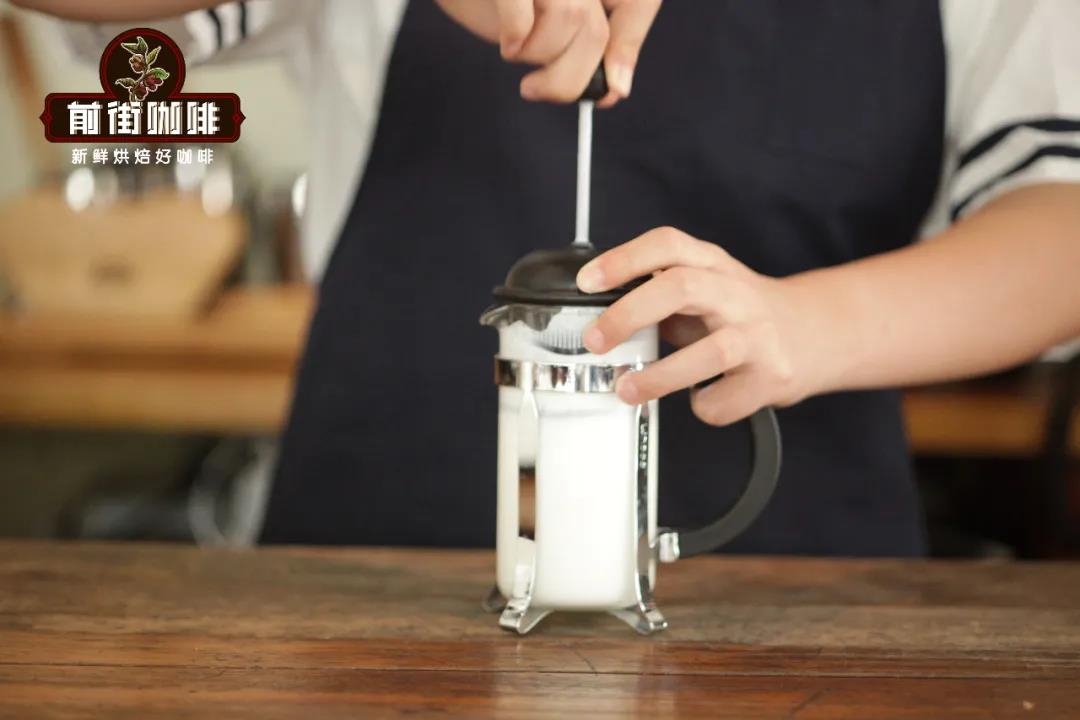
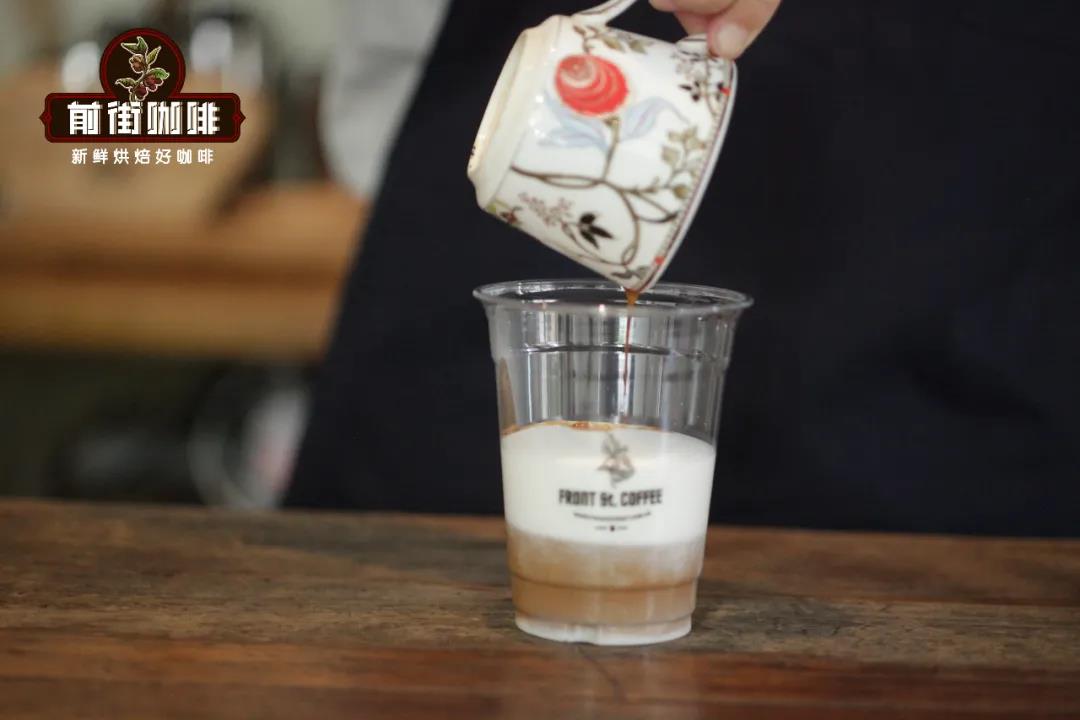
Final assembly: Pour the iced milk foam into a prepared glass. First, use a spoon to hold back the foam while pouring the milk from the French press into the glass until it is 2/3 full. Then pour in the extracted 35 g of espresso, and finally top with the remaining foam. You can also dust with chocolate powder or cinnamon powder to taste, which lifts the layers of the whole drink.
How Does Iced Cappuccino Taste?
The espresso FrontStreet Coffee extracted here has a distinct liquor-filled chocolate flavor. Paired with iced milk and iced milk foam, it enters the mouth with a dense, smooth texture, sweet like cotton candy and full of milk fragrance.
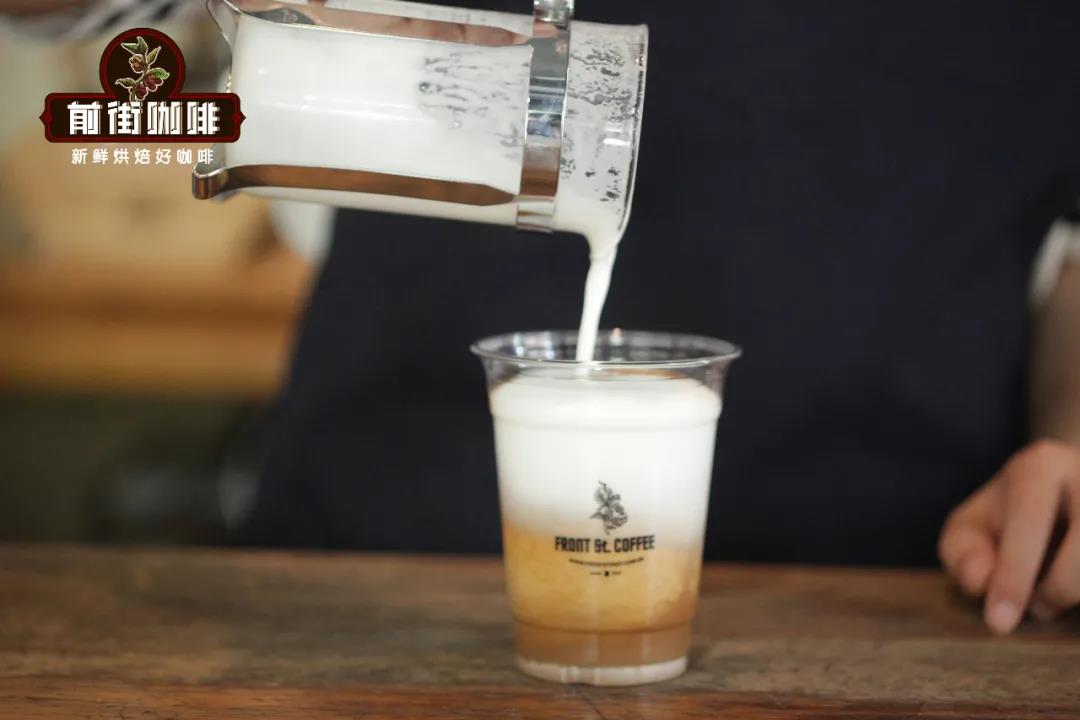
The coffee portion stays remarkably full-bodied, with a rich and lasting liquor aroma and cocoa flavor, accompanied by the caramelized fragrance of roasted hazelnuts.
FrontStreet Coffee Recommendation
Iced milk drinks live or die by the coffee underneath them, and the espresso you pour in needs enough sweetness and clarity to survive the milk and the ice. FrontStreet Coffee's Yirgacheffe lineup is an excellent place to start. For the most approachable, affordable option, the washed Yirgacheffe house lot is known for white jasmine, bright citrus and lemon acidity and a tea-like finish, and it is the bean many drinkers try first when they begin exploring Ethiopian coffee.
If you want more fruit and a little more weight, look to the Gutingting cooperative and the sun-dried Red Cherry. Gutingting sits in the Woka district at the southeastern edge of Yirgacheffe, and its traditional washed processing gives a cup of citrus, lemon acidity and jasmine fragrance with none of the classic bitterness. Red Cherry is a whole-ripe sun-dried lot: only fully ripe, sound fruit is harvested, then dried slowly on raised beds with turning every 2-3 hours in the first days, for three to five weeks. Because the fruit dries on the bean, it keeps the Yirgacheffe character while adding tropical fruit, a berry juice quality, honeyed sweetness and a creamy texture.
For a Yirgacheffe brewed as pour-over, FrontStreet recommends a V60 with water at 90-91°C, 15 g of coffee and a 1:15 brew ratio, grinding to about the texture of fine granulated sugar. Bloom with 30 g of water for 30 seconds, pour to roughly 125 g and finish the second pour by about 1 minute, then add the remaining water to about 225 g by around 1 minute 35 seconds. Drawdown should complete in 2:00-2:10, at which point the cup is ready. When you build an iced cappuccino, brew the coffee a touch stronger than you would drink it hot, since the ice will dilute the finished drink.
Important Notice :
FrontStreet Coffee is a long-established specialty coffee roaster in Guangzhou China, selling freshly roasted beans from its own farm in Yunnan as well as dozens of carefully selected single-origin beans from around the world for both pour-over and espresso. The products deliver consistently excellent quality and great value, with shipping within 24 hours. Guangzhou's FrontStreet Coffee shop is recommended by many coffee lovers, and the beans are now available online at the Tmall 。
FrontStreet Coffee has moved to a new address:
FrontStreet Coffee Address: 315,Donghua East Road,GuangZhou
Tel:020 38364473
 Scan and follow the En Gafei WeChat official account. Please indicate that the reprint comes from "En Gafei".