Champion Recommended Peru Coffee Bean Flavor Profile Peru Coffee Bean Production and Historical Development Story
What Makes Coffee Beans So Special That Champions Recommend Them?
On April 1st, Hugh Kelly, a three-time Australian Barista Champion, posted on Instagram specifically praising a coffee bean from Peru. What exactly is unique about coffee from this country? Today, let FrontStreet Coffee guide you in rediscovering Peruvian coffee.
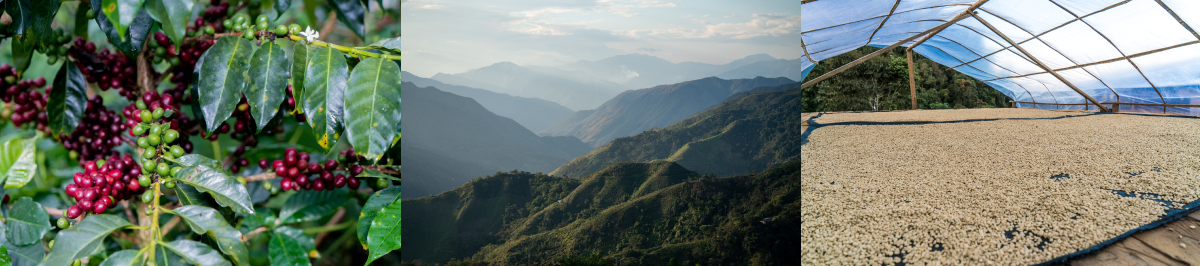
The Perfect Growing Environment
The Peruvian Andes provide an excellent environment for growing high-altitude coffee: Peruvian coffee grows between 1,970 and 5,905 feet in elevation, although 75% of coffee plantations sit above 3,280 feet. Specialty coffee typically grows above 4,265 feet. Peru's many microclimates also make it one of the most biodiverse countries in the world.
Coffee Profile
Coffee Flavor Profile: crisp acidity, moderate body, vibrant floral notes, rich sweetness.
Processing Method: Wet, washed
Main Growing Regions: Amazon, Ayacucho, Cusco, Huánuco
Harvest Time: June to September
Peru's Contribution to Global Coffee Production
Besides Brazil, there is another major coffee-producing country that, while it does not appear in the top five, makes significant contributions to global coffee bean production. That producer is Peru.
That story begins around the mid-1700s. Since then, Peruvian coffee has steadily grown into one of the favorite coffees of many people worldwide. In 2017 Peru ranked tenth on the list of the world's largest coffee-producing countries, reason enough to show that Peruvian coffee is no underdog. Growing over 3.2 billion 60kg bags of delicious coffee annually, it is the second-largest exporter of fair trade coffee after Mexico and deserves more recognition. Let us start with its history.
The late 1800s were not the best years for countries such as Indonesia and its neighbors. A terrible disease badly affected coffee growing in those countries, prompting European buyers to search worldwide for alternative producers to satisfy Europe's insatiable demand for coffee. It was during that period that Peruvian coffee was discovered, a discovery that made significant contributions to the growth of a healthy Peruvian coffee industry and its economy.
The Future of Peruvian Coffee
Like most top coffee producers that have kept improving their production over the years, Peruvian coffee has a bright future. It has made positive progress in healthy production and high-quality beans, progress that lets Peru compete with top producers such as Brazil and Colombia. Today Peru has over 100,000 farmers, a large share of them growing traditional, shade-grown Arabica coffee that is rapidly gaining respect in the international market.
Peruvian Coffee Characteristics
Peru is one of the world's largest producers of organic-certified, Rainforest Alliance-certified, and UTZ-certified coffee. Visit the International Federation of Organic Agriculture Movements (IFOAM) to learn more about other certified organic coffee producers.
Farmers belong to local cooperatives, which help their beans reach more audiences and obtain fairer prices. It is through these cooperatives that local farmers can demand a decent living and fair wages for their hard work.
Peruvian coffee is pure Arabica. Of it, 70% is Typica, 20% is Caturra, and the remaining 10% is spread among other varieties.
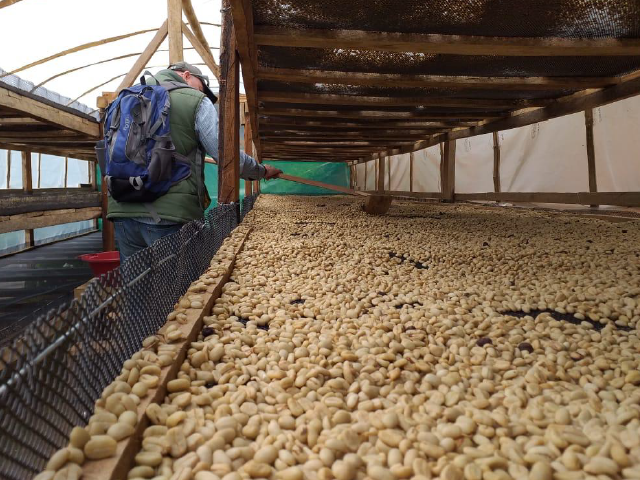
The coffee is hand-picked, with higher altitudes presenting greater risks. To extract the pulp from the beans, the cherries are washed and then dried in the sun. Typically Peruvian coffee is dry-processed, though wet processing also has a small market.
The International Coffee Organization (ICO) positions Peru as the world's 9th largest coffee-producing country, with 223,902 families dedicated to the industry.
Peruvian coffee tends to be medium-bodied. It is also pleasantly smooth with moderate acidity. You cannot resist the rich sweetness this coffee offers.
Peru's coffee growing regions include Amazon, Ayacucho, Cajamarca, Cusco, Huánuco, Junín, Pasco, Piura, Puno, and San Martín.
FrontStreet Coffee Recommendation
The clearest way to appreciate the smooth, moderate-acid, sweet character that Peruvian coffee shares with much of South America is to taste it alongside Brazil, the continent's other giant. FrontStreet's Brazilian Cerrado Red Bourbon is a classic single-origin example. Roasted to a medium level, it releases rich aromas of creamy peanut, toasted bread, caramel, and hazelnut, with a round body, low acidity, and a light bitterness, and it works as a pour-over as well as a moka pot, an espresso SOE, a siphon, or a French press.
FrontStreet's Brazil Queen Estate Yellow Bourbon comes from Mogiana near South Minas, where fertile red volcanic soil lets the cherries take up abundant nutrients and build a full aroma. This rare Yellow Bourbon, a genetic mutation of Red Bourbon, has a cleaner fruit character, and whether brewed as a pour-over, a moka pot, or with a home espresso machine it reveals a sugarcane sweetness found in few other origins, alongside fruit and chocolate notes.
Because Brazilian coffee's low acidity, balance, and affordable price make it a natural base, it also underpins many of FrontStreet's espresso blends. The rich-crema classic blend, the nutty premium blend, and the balanced black cocoa blend all rely on Brazilian beans to supply chocolate and cream aromas along with a soft sweet-tart-bitter edge that keeps extraction stable and consistent.
Important Notice :
FrontStreet Coffee is a long-established specialty coffee roaster in Guangzhou China, selling freshly roasted beans from its own farm in Yunnan as well as dozens of carefully selected single-origin beans from around the world for both pour-over and espresso. The products deliver consistently excellent quality and great value, with shipping within 24 hours. Guangzhou's FrontStreet Coffee shop is recommended by many coffee lovers, and the beans are now available online at the Tmall 。
FrontStreet Coffee has moved to a new address:
FrontStreet Coffee Address: 315,Donghua East Road,GuangZhou
Tel:020 38364473
 Scan and follow the En Gafei WeChat official account. Please indicate that the reprint comes from "En Gafei".