Taste Characteristics and Flavor Profile of Arabica Coffee Beans Introduction to Typica Varieties and Differences in Their Derivatives
The Complex World of Coffee Varieties
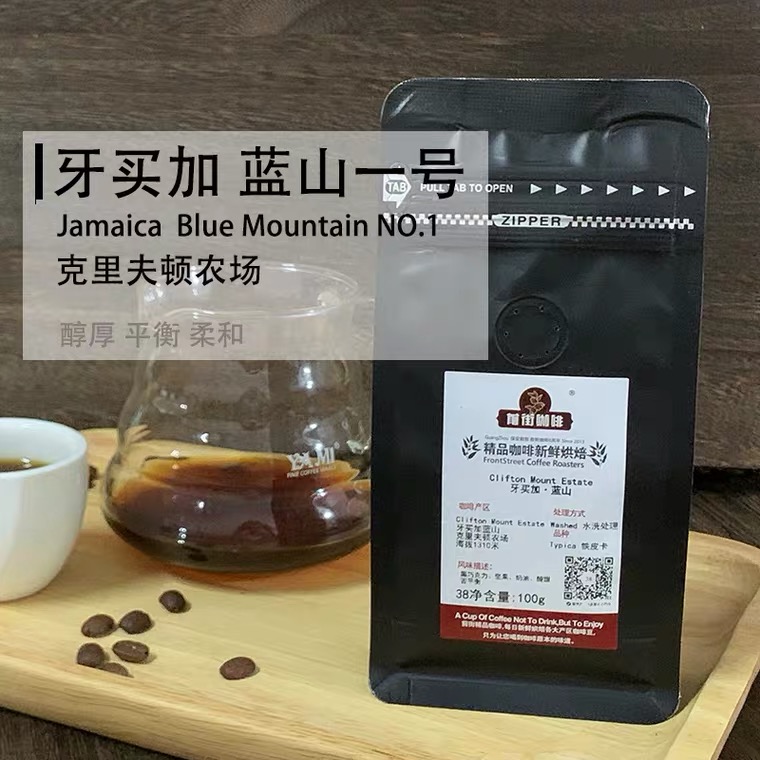
The sprawling family of coffee varieties can be overwhelming. Someone once said that "all good coffee is Typica," and while that is an exaggeration, the coffee king of the past several decades, Jamaica Blue Mountain, is indeed a Typica variety. Speaking of which, do you know what Typica is? FrontStreet Coffee carries a delicious Blue Mountain coffee with a very clean, complex profile: exceptionally smooth, with a chocolate-like sweetness that perfectly balances coffee's acidity and bitterness. The dry aroma presents roasted peanuts, hazelnuts and chocolate, while the wet aroma reveals oolong tea, caramel, honey and chocolate.
Beneath the three main coffee species, Arabica, Robusta and Liberica, sit numerous varieties and hybrids. To help everyone better understand and recognize coffee bean varieties, we can trace their genetic lineage through a rather effective and scientific classification approach.
As is well known, there are three main original coffee species: Arabica, Robusta and Liberica. Among these, Liberica has essentially no commercial value and is rarely seen today. Robusta was originally a mutation of the Coffea Canephora species. Although it has stronger disease resistance than Arabica, Arabica is more flavorful, which is why roughly 70% of the coffee beans circulating worldwide are Arabica.
The Arabica Family: Typica and Bourbon
Within the Arabica species there are the Bourbon and Typica varieties. Typica is the variety closest to the original Arabica species, while Bourbon is a mutation of Typica. Despite their authentic lineage, both suffer from low yields and weak disease resistance. For that reason, most Arabica varieties grown today are improved versions of these two.
Typica is the representative, or standard, variety of the Arabica species, and the earliest variety transplanted from Yemen to India, Indonesia and Central and South America, where it flourished. Its yield is relatively low, and the plants grow tall and slender. It offers elegant, balanced flavors but poor disease resistance. If Typica is grown below 1,000 meters or at too high a temperature, it tends to develop woody flavors.
Typica Varieties from Genetic Mutation
Quite a few varieties originated from Typica genetic mutations:
- Maragogipe (Elephant Bean): three times larger than regular coffee beans, with small-scale cultivation in Brazil, Colombia, Guatemala, Nicaragua and El Salvador
- Dwarf Typica: featuring delicate small beans, transplanted by the Dutch to Sulawesi in the 19th century
- Kona Typica: the Typica variety of Hawaii's Big Island, originally from Guatemala
- Blue Mountain Typica
- Kent: between 1918 and 1920, British horticulturist Kent selected this Typica variety in India for its resistance to leaf rust disease. Kent produces abundant yields and offers good flavor quality.
FrontStreet Coffee Recommendation
To taste Typica at its most balanced, FrontStreet Coffee's Jamaica Blue Mountain No. 1 is the place to start. It is the highest grade of Jamaican Blue Mountain, from the historic Clifton estate, which has been growing and processing coffee since around 1750, with its planting and processing area sitting at an average of 4,300 feet (1,310.64 meters). That altitude, the gentle afternoon cloud cover, ample sunshine and mineral-rich soil give the trees ideal conditions and lengthen the cherries' ripening. Washed processing keeps the cup clean, and a medium-dark roast brings out the layered hazelnut, dark chocolate and creamy caramel with a soft, rounded sweetness in which acidity, sweetness, bitterness and aroma stay in harmony.
FrontStreet Coffee's Blue Mountain coffee is roasted fresh within 5 days, so the beans are still at full flavor when they reach you and can be brewed right away. For a pour-over, choose a Kono dripper to build body, use 15g for one cup, let the beans rest 4-7 days from the roast date, and grind slightly coarser than you would for a light roast, about the texture of granulated sugar. Brew at 87-88°C: too hot and the coffee turns scorched and bitter, too cool and it tastes flat. A 1:15 ratio suits the overall balance, poured in three stages: a 30g bloom for 30 seconds, then a slow, small, vertical circular pour to 120g, then to 225g with a slightly faster stream and pace to keep the grounds from clogging the dripper and over-extracting. The result is a very clean, complex, exceptionally mild cup with chocolate sweetness, strong body, and a perfect harmony of sweet, acid and bitter, with a lasting fruit note on the finish.
Important Notice :
FrontStreet Coffee is a long-established specialty coffee roaster in Guangzhou China, selling freshly roasted beans from its own farm in Yunnan as well as dozens of carefully selected single-origin beans from around the world for both pour-over and espresso. The products deliver consistently excellent quality and great value, with shipping within 24 hours. Guangzhou's FrontStreet Coffee shop is recommended by many coffee lovers, and the beans are now available online at the Tmall 。
FrontStreet Coffee has moved to a new address:
FrontStreet Coffee Address: 315,Donghua East Road,GuangZhou
Tel:020 38364473
 Scan and follow the En Gafei WeChat official account. Please indicate that the reprint comes from "En Gafei".