Yunnan Coffee Bean Varieties: Flavor Characteristics and Growing Regions - The Rise of Yunnan Small Beans
Yunnan coffee beans have won real recognition in the coffee world in recent years, with more and more enthusiasts seeking them out and passing fair judgment on them. But long before Yunnan coffee caught China's attention, it grew quietly in remote villages across the country, cultivated chiefly for export.
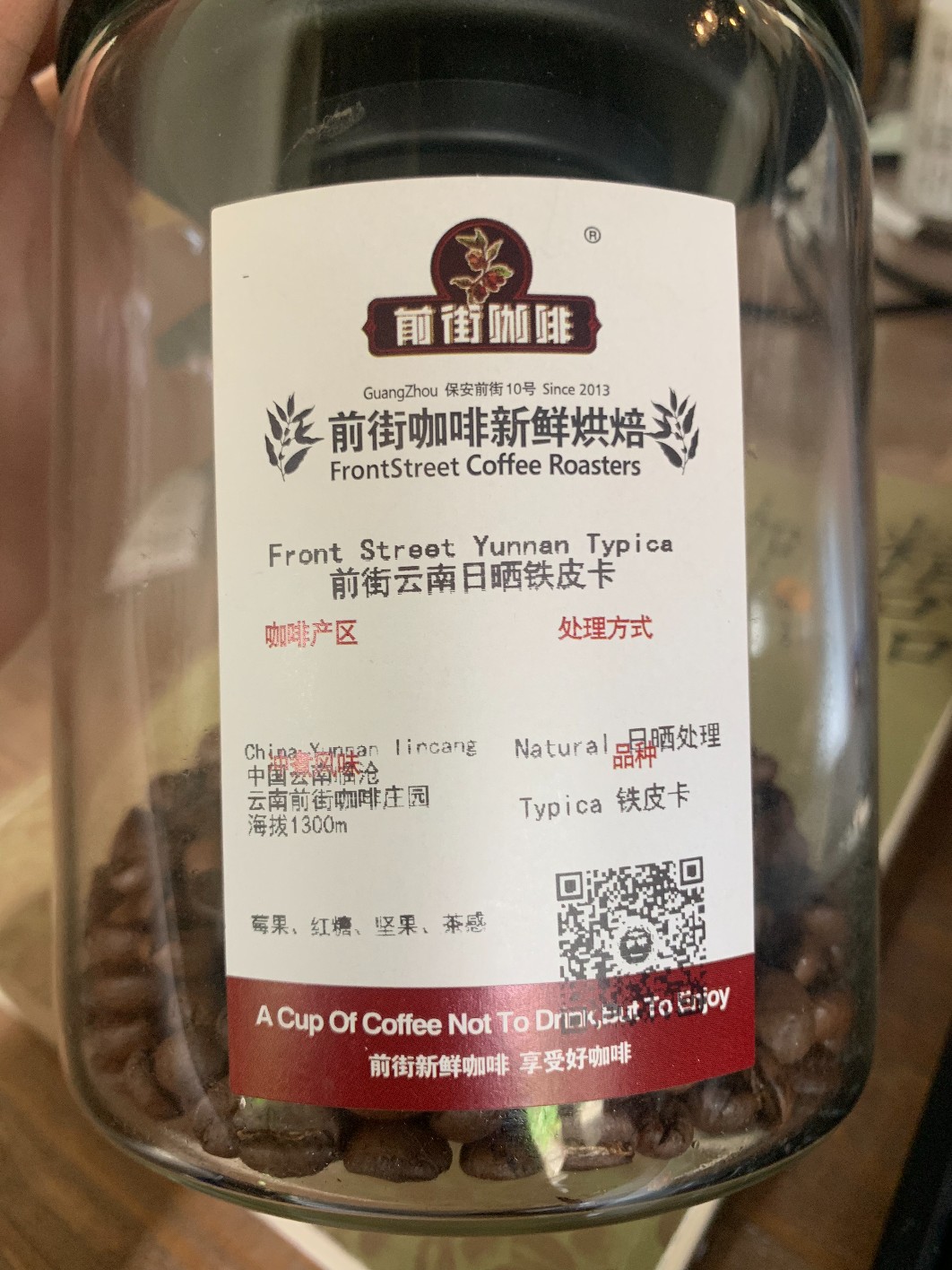
FrontStreet Coffee offers a natural-processed coffee from FrontStreet Estate in Lincang, Yunnan, with flavors of berries, brown sugar, and nuts.
A Development History
In 1892, in the twilight of the Qing Dynasty, coffee arrived in China with the French missionary Alfred Liétard at Zhukula Village in Dali, Yunnan. To this day, 24 coffee trees more than 90 years old still grow in Zhukula Township. In 1889 the Mengzi Customs Office officially opened, and in 1905 the French opened Yunnan's first coffee bar in Mengzi — the "Yunnan-Vietnam Railway Bar," a French-style café that blurred coffeehouse and tavern, the mainstream café model of Europe at the time. In 1904, as the Yunnan-Vietnam Railway went up, foreign engineers, technicians, and Western prospectors flooded into the province, bringing Western coffee culture with them. The line was completed on April 1, 1910, and between 1912 and 1915 coffee planting began along the railway — a few of those trees survive even now. In 1914, Jingpo communities along the border brought coffee to Nongxian Village in Ruili County, at first as courtyard ornamentals. The seeds took quietly to the land. Though mainstream histories often overlook Nongxian Village, it quietly shaped the course of Yunnan coffee, opening the door to the later large-scale plantings of Baoshan. In the spring of 1952, technicians from the Mangshi branch of the Yunnan Agricultural Experimental Station carried more than 70 kilograms of fresh fruit back from Nongxian Village for trial planting in Lujiangba, Baoshan; the trees adapted well and the quality proved excellent, and cultivation grew steadily from there. During the era of Sino-Soviet friendship, Baoshan's coffee seized a major opportunity — its crop was shipped specifically to the Soviet Union — making Baoshan the first area in Yunnan Province to industrialize coffee cultivation.
Yunnan coffee beans show pleasant complexity and overall richness: floral and citrus notes playing off each other, with a pronounced malt character.
Coffee Varieties
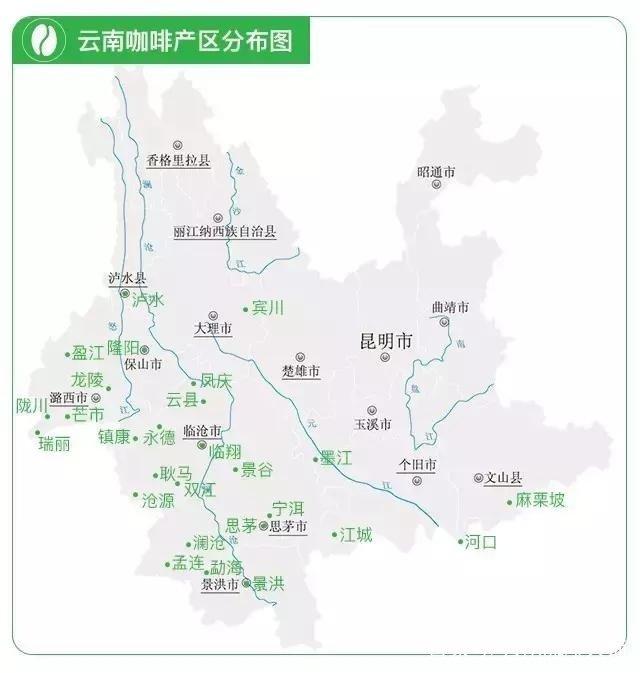
Yunnan coffee is dominated by Catimor, a hybrid carrying Robusta genes. Grown at Yunnan's high altitudes of 1,500 meters and above, Catimor gains aroma and cup purity, and with the right post-harvest handling it delivers excellent flavor. Catimor F6 is widely planted across Yunnan's coffee areas, including Dehong, Baoshan, Pu'er, Xishuangbanna, Lincang, Wenshan, and Yuxi.
"Yunnan small-bean coffee" originally referred to the Typica planted in Yunnan's earliest days. For historical reasons, Typica largely gave way to the hybrid Catimor after the 1980s, which now accounts for over 8% of the planted area — and so the name came to cover the coffee grown there today.
The Challenges
Set against the world's established origins, Yunnan coffee started late. Producers of every size are mixed together, quality is inconsistent, and small growers lack the management and marketing muscle to compete — their competitiveness remains thin.
FrontStreet Coffee Recommendation
To start exploring China's coffee at an easy price, choose FrontStreet Yunnan Small-Bean (Baoshan). From Baoshan — whose frost-free, dry-hot valley climate around Lujiangba, with warm days, cool nights, and modest rainfall, gives the coffee its signature lingering sweetness — this lot is washed and roasted to a medium level, showing gentle nut and chocolate aromas with a light plum acidity. It's the perfect first taste of Yunnan.
For a clearer, more defined Yunnan character, step up to the FrontStreet 2013 Yunnan Natural Typica, grown at FrontStreet's own estate from one of the oldest and purest Arabica varieties. Sun-dried the traditional way and roasted medium, it is fuller-bodied with heightened sweet-sour tension: dark berries and caramel sweetness, chocolate and a hint of dried apricot, closing on the lingering note of black tea.
Important Notice :
FrontStreet Coffee is a long-established specialty coffee roaster in Guangzhou China, selling freshly roasted beans from its own farm in Yunnan as well as dozens of carefully selected single-origin beans from around the world for both pour-over and espresso. The products deliver consistently excellent quality and great value, with shipping within 24 hours. Guangzhou's FrontStreet Coffee shop is recommended by many coffee lovers, and the beans are now available online at the Tmall 。
FrontStreet Coffee has moved to a new address:
FrontStreet Coffee Address: 315,Donghua East Road,GuangZhou
Tel:020 38364473
 Scan and follow the En Gafei WeChat official account. Please indicate that the reprint comes from "En Gafei".