Sidamo Guji Coffee Bean Flavor Profile & Origin Information: How to Make a Guji Flat White
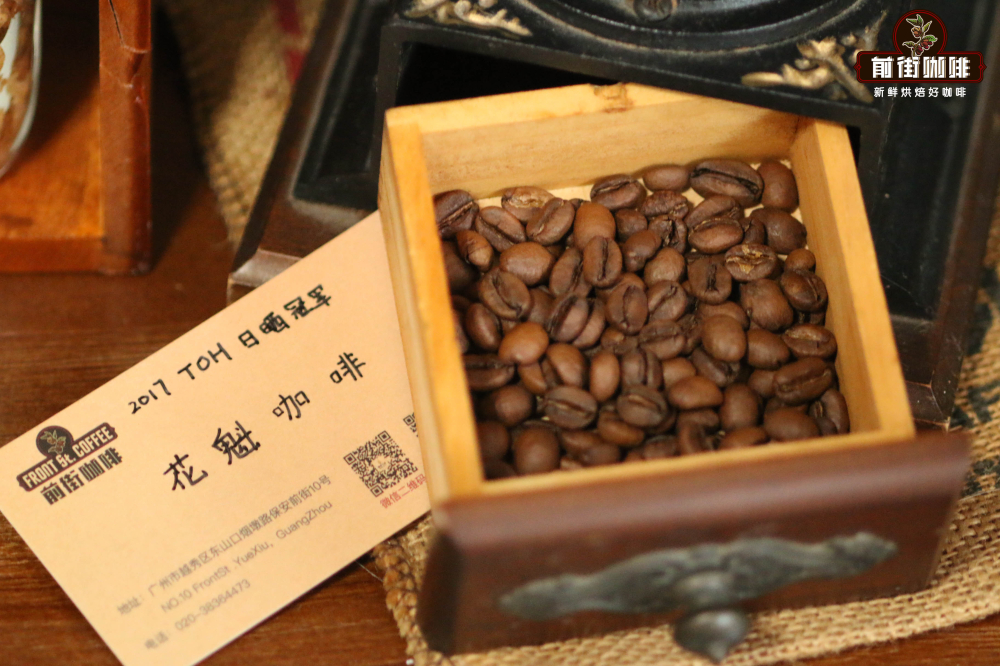
Sidamo Horse Champion (Huakui) coffee is an heirloom variety from Ethiopia, renowned for its explosive aroma and sweetness and a highly distinctive taste profile. It took first place in the sun-dried category at the Ethiopia International Coffee Cupping for the 2017 harvest season, and the winning lot of green beans was named "Horse Champion." During the harvest and processing season (December-January), its unique growing environment and natural climate create the coffee's signature flavors.
This Sidamo Horse Champion selects only fully red, completely mature cherries, all hand-picked, and dried on African raised beds. Sun-drying only begins once the cherries reach a sugar content above 21. The cherries are turned regularly around the clock for even exposure and ventilation, combined with low-temperature fermentation for 21 days (versus the usual dozen or so), allowing far more precise control of fermentation and resulting in exceptionally high sweetness. In cupping and pour-over tests, the wet aroma shows distinct winey and floral notes, and the pour-over drinks like a cup of strawberry fruit tea.

Through cupping and comparison, FrontStreet Coffee has determined that Horse Champion presents the following profile: strawberry, red wine, peach, cherry, sweet-tart berry notes, rose fragrance, an excellent aftertaste, and winey fermentation wrapped in tropical fruit sweetness.
The Story Behind the Sidamo Name
Sidamo takes its name from the indigenous Sidama people. Like Ethiopia's other ethnic groups, the Sidama have their own traditions and culture—and even their own New Year, Fiche Chambalala, recognized by UNESCO, which draws over 5 million people each year to the regional capital Hawassa to celebrate.
"Sidamo" was once the old provincial name in Ethiopia before the administrative reorganization of 1995. The Sidama people had settled in southern Ethiopia as early as the ninth century, with their own culture, religion, and language. At the end of the nineteenth century, after invasion by Emperor Menelik II of the Ethiopian Empire, Sidama was defeated and absorbed into the empire. The name "Sidamo" was actually imposed on the Sidama people by the empire's rulers, and it carries somewhat derogatory connotations.

After 1995, Ethiopia adopted a federal system and, out of respect for its many ethnic cultures, redrew its regions along the main ethnic settlement areas and languages. Sidama was incorporated into the new Southern Nations, Nationalities, and Peoples' Region (SNNPR), and the area was officially renamed with its original historical name: Sidama.
Still, before the reorganization, "Sidamo Coffee" was already world-famous for its distinctive aroma, so people remain more accustomed to saying "Sidamo" than "Sidama." And when the Ethiopian government protected the region's coffee through trademark registration, it chose the old name—Sidamo®—as the registered mark. To this day, most consumers call coffee from this region "Sidamo."

Note, too, that in the producing-area maps drawn by the renowned green coffee trader Trabocca, the so-called Sidamo coffee region is not entirely within today's Sidama—it also belongs to the Oromiya Region and the SNNPR. In other words, "Sidamo coffee" really means "coffee with Sidamo flavor characteristics." By the traditional definition, that flavor is bright citrus acidity, a smooth mouthfeel, and a fuller body than Yirgacheffe.
As elsewhere in Ethiopia, Sidamo coffee is grown mainly by smallholder farmers, each producing very little, with cooperatives and processing plants of every size handling the regional milling. During harvest, surrounding farmers deliver their cherries to nearby stations (often built beside water sources) for unified processing, selling under the station's name. As specialty coffee has matured, many producers now buy directly from farmers, tightening management and traceability of micro-lots—and raising both quality and the care put into each small batch.

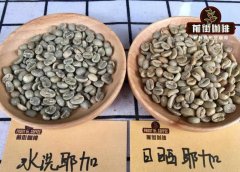
Sidamo coffee is cultivated at altitudes between 1400m-2000m. Agriculture dominates the local economy, with the main growing areas ringing the Great Rift Valley. Sidamo has developed rapidly in recent years and is an important coffee export hub. Its flavors are extraordinarily diverse—different soils, microclimates, and countless heirloom varieties give each town's coffee a distinct character. Sidamo beans typically use natural (sun-dried) processing, which deepens the layered complexity of flavor, making the coffee richer in fruit aroma and smoother than typical beans.
For many consumers, the first name that comes up is the recently celebrated Hambella Horse Champion—a strawberry-scented natural-processed bean suited to every mainstream method: pour-over, cold brew, ice drip, and SOE. The resulting coffee is clean, with pleasant acidity and sweetness.

Sidamo Green Bean Grading (graded by defect count per 300g of green beans)
| Grade | Number of defective beans (per 300g) |
|---|---|
| Grade 1 | 1-3 |
| Grade 2 | 4-12 |
| Grade 3 | 13-25 |
| Grade 4 | 26-45 |
| Grade 5 | 46-90 |
Before the Ethiopia Commodity Exchange (ECX) was established, export grades were set by the CLU department (Cupping and Liquoring Unit) under the Ministry of Agriculture, grading green beans primarily by defect count in 300g—per the table above. Washed beans were generally G1-G2, while naturals, hampered by the technology of the time, carried more defects and typically landed at G3-G5. With improvements in natural processing, natural beans can now also reach G1-G2. Specialty and commercial grades are the export categories for the international market. The ECX divides green coffee into nine grades based on the combined score of physical attributes and cupping flavor, weighted 40% physical and 60% cupping.

Physical Characteristics (40%):
Washed processing: defect count (20%), appearance and size (10%), color (5%), odor (5%)
Non-washed processing: defect count (30%), odor (10%)
| Grade | Washed/Non-washed Score |
|---|---|
| Grade 1 | 91-100 |
| Grade 2 | 81-90 |
| Grade 3 | 71-80 |
| Grade 4 | 63-70 |
| Grade 5 | 58-62 |
| Grade 6 | 50-70 |
| Grade 7 | 40-49 |
| Grade 8 | 31-39 |
| Grade 9 | 20-30 |
Then G1-G3 are cupped again under SCAA standards to evaluate flavor attributes more precisely. G1 and G2 scoring no less than 85 points are classified as Q1; G1, G2, and G3 scoring between 80 and 85 points are Q2; all G1, G2, and G3 below 80 points are reclassified as G3.
Q1 and Q2 export as specialty grade. G4-G9 keep their original grades and, together with G3, export as commercial grade.
Sidamo Processing Methods
Washed Method
Washed processing runs through these steps: bean selection, pulp removal, fermentation, washing, drying, hulling, sorting, and grading. Mature cherries are sorted by floatation screening, then mechanically depulped and either left in fermentation tanks for static fermentation—letting bacterial action break down the mucilage—or passed through more powerful machinery that brushes all mucilage off the green beans. After washing, the beans are sun- or machine-dried to about 12% moisture. Washed coffee has clear flavor, more prominent acidity, better cleanliness, a medium mouthfeel, and the most consistent green bean quality.

Natural Method
The natural method is the oldest of all, also called "natural drying." Beans are laid directly in the sun, with drying periods of up to 27-30 days. One caution during drying: excessive sun exposure can crack the beans, creating defects. The process itself is simple, but naturally processed beans don't look pretty, which limits their popularity. Unlike washed coffee's clean profile, naturals carry more complex fruit flavors and a more integrated, prominent taste. The biggest difference between the two is that natural processing skips two steps—floatation tanks to remove floating beans and pulp screeners to clear unripe fruit—so the proportion of defective beans runs higher.

Now let's look at the pour-over flavor of Sidamo Horse Champion 8.0.

FrontStreet Coffee: Ethiopia Sidamo Horse Champion 8.0 Coffee Beans
Region: Guji, Sidamo
Processing Station: Buku Abel
Altitude: 2250-2350m
Variety: Heirloom
Processing: Natural
Brewing Flavors: Jasmine fragrance, fermented wine aroma, creamy strawberry, jackfruit
What Else Can You Make with Sidamo Horse Champion 8.0 Besides Pour-Over?
With a fruit-forward bean like Horse Champion 8.0, FrontStreet Coffee believes all the current mainstream methods work: pour-over, cold brew, ice drip, mocha, and the increasingly popular SOE (Single Origin Espresso) Flat White. To express the bean's unique aromatics, FrontStreet Coffee builds its Flat White around a small cup, thin milk foam, and a concentrated espresso base.

For the base, FrontStreet Coffee pulls a double ristretto—30g of coffee liquid from 20g of grounds, with an extraction time of 22-26 seconds. The extracted coffee is poured into a preheated cup while 150ml of milk goes into the pitcher for frothing.

The milk takes in less air than for a latte, producing a thinner, denser foam. Keep the temperature between 50-60°C for the best mouthfeel.

Finally, the frothed milk is blended evenly with the coffee; latte art is optional. Because the thin foam never brings the liquid flush to the cup rim, the surface looks relatively flat—hence the name "Flat White."

Tasting this Horse Champion SOE Flat White, FrontStreet Coffee found buttery cookies, plum, and almond in the upper layer of the crema, accompanied by red berry aromas and a rich chocolate-cookie mouthfeel.
FrontStreet Coffee Recommendation
Ethiopia is Africa's largest coffee producer and the world's acknowledged birthplace of coffee, with a dazzling array of varieties, most beans named for their region or cooperative. Among its regions, Yirgacheffe and Sidamo are the most famous. In the 1970s, the government introduced washed processing to raise green bean quality, and Yirgacheffe coffees became dominated by the washed style, subdivided today into ever more cooperative-level lots. The FrontStreet Coffee washed Gedeb (Guodingding) Cooperative is a classic Yirgacheffe representative: jasmine florals, lemon acidity, and berry tones.
Sidamo's naturals are what made the region legendary—more pronounced tropical fruit and fermentation aromatics. The FrontStreet Coffee natural Floral Champion (Huakui) is exactly this style, processed by traditional sun-drying: the farm spans 200 hectares, workers spread ripe cherries on raised beds for 21 days of drying with constant turning to prevent mold or earthy taints, hand-sorting out defective beans every three to five days, then de-hulling once the skin has dried hard, followed by one final selection of the green beans. Roasted medium-light, it shows a light fermented wine note, florals, citrus, and mango—a far richer, more complex cup with honeyed sweetness, a cocoa undertone, a touch of spice, and a thick body with a long finish. Its main flavors: berry, floral, jackfruit, melon, honey.
For another take on Sidamo's modern breeding, the FrontStreet Coffee Hamacho (from the Hamacho processing plant, a fixture on Ethiopian green coffee competition winner lists) leans on the JARC 74-series disease-resistant varieties; the FrontStreet Hamacho 74158 is perfumed like zest lemon, strawberry, and star fruit, with clear strawberry, star fruit, and green grape sweetness on entry and a soft floral lift following.
Important Notice :
FrontStreet Coffee is a long-established specialty coffee roaster in Guangzhou China, selling freshly roasted beans from its own farm in Yunnan as well as dozens of carefully selected single-origin beans from around the world for both pour-over and espresso. The products deliver consistently excellent quality and great value, with shipping within 24 hours. Guangzhou's FrontStreet Coffee shop is recommended by many coffee lovers, and the beans are now available online at the Tmall 。
FrontStreet Coffee has moved to a new address:
FrontStreet Coffee Address: 315,Donghua East Road,GuangZhou
Tel:020 38364473
 Scan and follow the En Gafei WeChat official account. Please indicate that the reprint comes from "En Gafei".