What's the difference between pour-over coffee and espresso? Can espresso beans be used for pour-over?

Coffee has grown steadily more popular in China, to the point where it now competes with fast tea drinks like milk tea, though each has its own loyal following. Within coffee, two methods stand apart: pour-over and espresso. Pour-over most often showcases single-origin beans, and its appeal lies in its honesty. Nothing is hidden, nothing is masked, nothing is simplified. It is simply another, gentler reading of what coffee can be, especially when set beside espresso.
On a quiet afternoon, coffee, a book, and a soft chair are enough to make a simple kind of happiness, much like the quiet beauty of a single-origin pour-over. With pour-over you can watch coffee take its truest form, dripping drop by drop through the filter. Compared with espresso, which is forced out under 9 atmospheres of pressure, this is the second reason I call pour-over gentle. Espresso has its own thrill, of course, but perhaps you have never felt it. That may be the third virtue of single-origin coffee: it is far easier for people who do not yet love coffee to fall for it and to enjoy coffee in its original form. Admittedly, espresso is the more foolproof method and the one more easily accepted by most drinkers. Yet it is precisely the particular beauty of pour-over that draws so many people in.
Let us look at how pour-over coffee and espresso actually differ.
1. Different coffee beans
Pour-over coffee
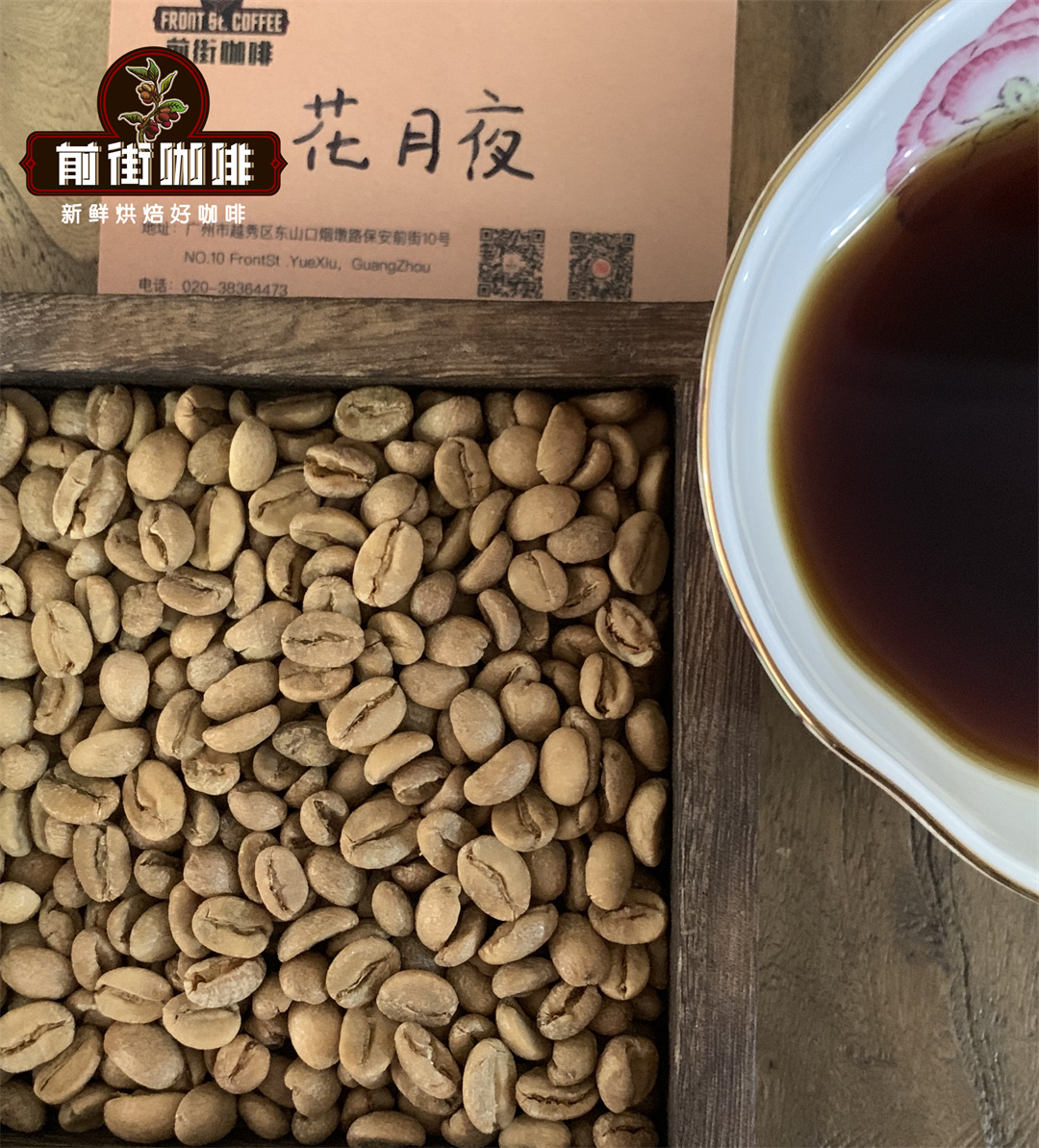
Pour-over coffee is usually brewed from single-origin beans, most often at a light to medium roast, though some drinkers prefer dark-roasted beans.
Espresso coffee
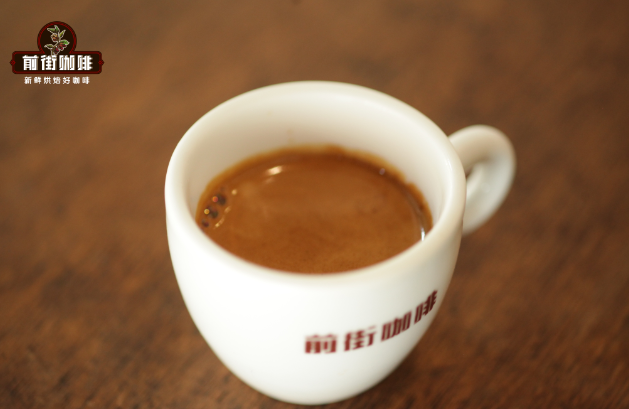
Espresso usually relies on blends, meaning two or more single-origin beans combined, and these blends are the backbone of drinks such as cappuccino, Americano, and latte. Most espresso blends are roasted darker so they can stand up to milk and hot water. Pulling this kind of shot calls for a professional espresso grinder, which is both the foundation and the key to a quality espresso.

2. Different preparation methods
Pour-over coffee
Pour-over coffee is normally made with a filter cup, so extraction happens at ordinary atmospheric pressure. With tools such as a Moka pot or an AeroPress, extraction pressure can reach 3 bar (three atmospheres).
Espresso coffee
Espresso is extracted on an espresso machine, and the pressure during extraction reaches 9 bar (nine atmospheres). The puck in the portafilter bears 133 kilograms of pressure, which drives out large amounts of coffee material, including flavor compounds that are difficult to dissolve at normal pressure. That is why espresso has a thicker body and why it suits milk, as in a latte, or hot water, as in an Americano.

3. Different caffeine content
Given the same dose of grounds and the same grind size, and because caffeine is water-soluble, the longer the brew, the more caffeine is released. Pour-over typically brews for 1-3 minutes, while espresso brews for just 20-30 seconds. With the same grounds and grind size, then, pour-over ends up with the higher caffeine content. This also explains why long-extraction methods such as cold drip and cold brew contain far more caffeine than other coffees.
As you can see, pour-over and espresso differ sharply in concentration. When milk is added to a single-origin coffee, it masks the bean's original aroma and flavor, which is why coffee shops generally advise against adding milk to pour-over.

How to make espresso
Many enthusiasts have gradually outfitted their kitchens with coffee tools, and espresso lovers have even stocked espresso machines so they can pull their own shots. Drawing on the espresso program at its own store, FrontStreet Coffee offers a brief walkthrough of how to make an espresso.
The machine at FrontStreet Coffee's store is a commercial single-group "Lelit Bianca," which allows extraction to be adjusted by changing pressure, up to a maximum of 11 bar. A home machine only needs to reach 9 bar to handle both extraction and milk frothing, paired with an espresso grinder.

FrontStreet Coffee uses a double portafilter basket, with about 18-20 grams of grounds; in service, FrontStreet Coffee doses 20 grams. The ratio of grounds to espresso liquid usually falls between 1:1.5 and 1:2.5. FrontStreet Coffee's extraction ratio is 1:2, meaning 20 grams of grounds yield 40 grams of espresso. Time depends on the flow rate of the grounds, and a single shot is typically held between 20-35 seconds: coffee pulled in under 20 seconds usually tastes thin, while anything past 35 seconds tends to be over-extracted, with a burnt bitterness. Most of FrontStreet Coffee's shots land in the 28-30 second range.

FrontStreet Coffee first wipes the portafilter dry, turns on the grinder, and grinds a double shot, setting the basket on an electronic scale and adjusting to exactly 20 grams. Next the barista uses a tool to distribute the grounds evenly and tamps the puck firmly for a more stable extraction. The brew switch is then turned on to run water, wetting the group head and rinsing away residual grounds. The portafilter is locked gently into the group head and extraction begins. When the scale reads 40 grams of espresso at about 30 seconds, extraction can be stopped. The shot is poured into an espresso cup and is ready to enjoy.
The taste and texture of an espresso depend on the beans. The espresso served at FrontStreet Coffee uses FrontStreet Coffee's Sunflower Warm Sunshine blend, a 7:3 blend of Honduras Sherry coffee and Ethiopia natural Red Cherry. Pulled as espresso, it has rich crema with a very noticeable whiskey aroma. The first sip reveals vanilla biscuit and berry acidity, with solid flavors, and after drinking, the whole mouth is filled with layered aromas.

Espresso can also be diluted with water into what menus call an Americano, with a fresh aroma. Adding milk makes a latte, showing off the sweet deliciousness of chocolate and cream.
How to make pour-over coffee
To brew pour-over at home you need the following: a pour-over kettle, a filter cup, a server, a grinder, filter paper, an electronic scale, and a thermometer. Here Yirgacheffe is a high-altitude, light-to-medium roast, and FrontStreet Coffee wants to draw out more of its rich aromatics, so it chooses a grind corresponding to 80% pass-through on a #20 standard sieve, equivalent to a setting of 10 on the EK43s grinder used in store. Light roasts also need hotter water to release their aroma, so the brew uses 91-93°C water and a V60 01 plastic filter cup.

Online you will find any number of pouring techniques, such as the single-pour, the three-stage method, and the four-six method, each coaxing a different expression from the cup. Based on its brewing experience, FrontStreet Coffee suggests beginners start with the three-stage pour. Three-stage extraction helps dissolve flavor compounds fully, adds layers to the mouthfeel, and avoids the over-extraction that comes from leaving the bed to soak too long.
For 15 grams of grounds at a 1:15 coffee-to-water ratio (225ml total water), the three stages use 30ml, 95ml, and 100ml, with the scale reading 30g, 125g, and 225g.

Fold the filter paper so it sits snugly in the cup, wet it with a little water so it adheres, and pour out the water from the server. Add the grounds and tap gently to level them. For the first stage, pour 30 grams of water gently to bloom, and let it bloom for 30 seconds. For the second stage, pour to about 125 grams, moving in steady, even outward circles. Wait for the liquid to drop, and when it is halfway down, pour the final stage to reach 225 grams. Wait for all the coffee to finish dripping; total extraction is usually around 2 minutes.

What people love about pour-over is this: when we actively explore the flavors coffee can express, adjust brewing to suit different varieties and roast levels, choose our vessels with care, and control grind size, temperature, flow rate, and pouring technique, every step can deliver a different taste and aroma. That is the charm of pour-over coffee.
FrontStreet Coffee Recommendation
For pour-over, the match that matters most is a light-roast single origin and a fast-draining cone. The Hario V60, made by a Tokyo glassworks founded in 1921 and redesigned in 2004, relies on its 60-degree cone and single large hole to pull water toward the center and lengthen contact with the bed, which is exactly what lifts floral and fruit notes into the cup. FrontStreet Coffee's resin V60 keeps the same geometry while holding heat better, and it pairs naturally with beans such as FrontStreet Ethiopia Yirgacheffe Gudingding, whose washed profile of jasmine, citrus and lemon acidity and green-tea finish is the classic introduction to the region, or FrontStreet Ethiopia Flower Champion, a natural single origin brimming with strawberry, passionfruit and jackfruit.
Espresso asks for something else: a darker roast with enough body and low acidity to carry pressure, milk, and hot water. FrontStreet PWN Golden Mandheling, graded G1 with beans of 18 screen or larger and fewer than 3 defects per 300 grams, is deep-roasted into herbal, dark chocolate and earthy notes that hold their shape in a portafilter, while FrontStreet Brazil Queen Estate brings a low-acid, balanced cup of nuts, cocoa and caramel that works just as well as a filter coffee or an espresso base.
Important Notice :
FrontStreet Coffee is a long-established specialty coffee roaster in Guangzhou China, selling freshly roasted beans from its own farm in Yunnan as well as dozens of carefully selected single-origin beans from around the world for both pour-over and espresso. The products deliver consistently excellent quality and great value, with shipping within 24 hours. Guangzhou's FrontStreet Coffee shop is recommended by many coffee lovers, and the beans are now available online at the Tmall 。
FrontStreet Coffee has moved to a new address:
FrontStreet Coffee Address: 315,Donghua East Road,GuangZhou
Tel:020 38364473
 Scan and follow the En Gafei WeChat official account. Please indicate that the reprint comes from "En Gafei".