What Are the Key Elements to Brewing Great Coffee? Introduction to Pour-Over Coffee Extraction Principles

FrontStreet Coffee sees coffee extraction as the process of passing water through coffee grounds to dissolve and pull out their compounds — and as a scientific principle you can experiment with. When water meets the grounds, most water-soluble substances are released and merge together, extracting the coffee's many flavors, good or bad, and ultimately brewing a cup.
Coffee extraction is a complex chemical change. Parameters such as roast level, dose-to-grind ratio, extraction amount, and water quantity all shift the aroma. But to brew any cup, the grounds and water have to meet. Good extraction heightens the taster's experience, which makes the way water penetrates the bed a critical action.
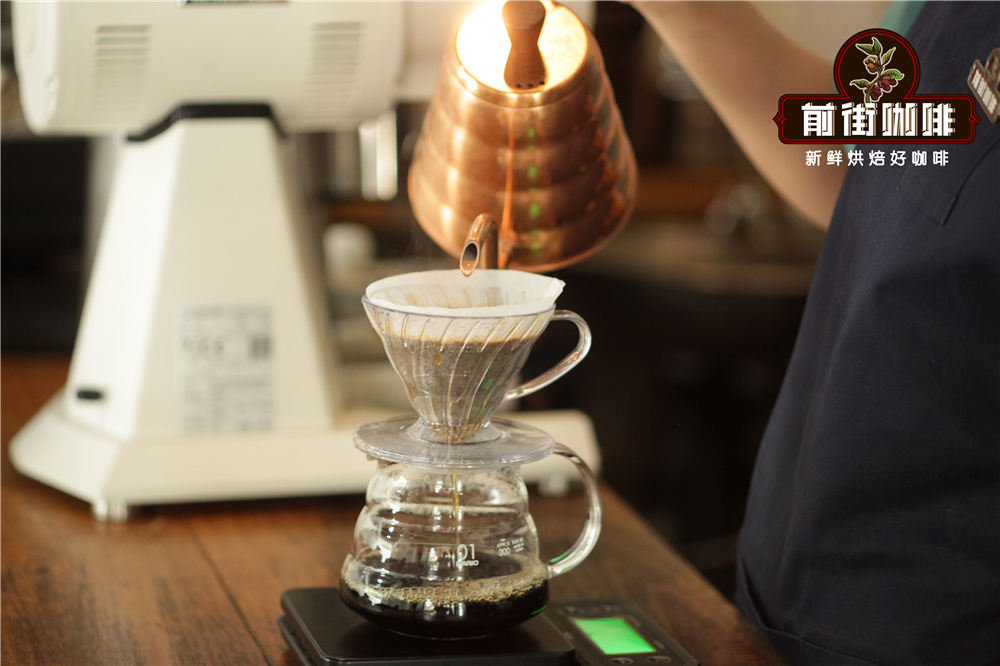
Generally, the first things released during extraction are aroma and acidity, which is why the air fills with coffee fragrance the moment water hits the bed, while sweetness and bitterness emerge gradually in the middle and later stages. If over-extraction occurs beyond that, you get excessive bitterness and astringency, leaving the final cup overly thick and hollow.
Particle size matters too. If the grounds are too fine, they over-extract easily, because they give up their compounds quickly and turn into soaking if the water has not yet drained through. If they are too coarse, they under-extract, because the water runs straight through before it has fully made contact. So for each brewing method you need to pair an appropriate grind size with the right parameters to interpret extraction properly.

Important Parameters Affecting Coffee Extraction
Golden Cup Theory
According to the Golden Cup Theory of the Specialty Coffee Association of America (SCA), a good cup must meet these figures: coffee concentration between 1.15-1.45% and extraction rate between 18-22%.
Coffee Concentration
- Below 1.15%: tastes too diluted, flavors too weak
- Above 1.45%: tastes too thick, flavors too strong
Extraction Rate
- Below 18%: excessive acidity, with too much sharp, uncomfortable sourness
- Above 22%: obvious bitterness, with a dry, astringent, unpleasant mouthfeel

From those figures you can see how important the balance between concentration and extracted compounds is. If one side runs too light, it raises the proportion of the other, producing experiences like over-acidity or over-bitterness. That is why the water-to-coffee ratio is another key factor in extraction.
About Extraction
The longer the extraction time, the more it suits coarsely ground particles; the shorter the time, the finer you should grind. Standardizing extraction time precisely lets a coffee show its unique flavors and pushes the final cup toward perfection.

- Longer extraction time: suits a coarser grind, for a refreshing sweet-sour taste
- Medium extraction time: suits a medium grind, for a balanced sweetness
- Shorter extraction time: suits a finer grind, for a rich, pure, slightly bitter taste
Next, FrontStreet Coffee uses its popular Emerald Estate Diamond Mountain as an example to show in detail how to brew a pot with reasonable extraction that highlights its caramel character.

Since caramel notes are often tied to richness, smoothness, and a strong body, FrontStreet Coffee suggests focusing the brew plan on three things — lowering the pour height, disturbing the coffee bed as little as possible, and using the soak — while stretching the extraction time a little, in order to release more of the compounds behind the aftertaste.
Brewing Parameters
- Coffee Beans: FrontStreet Coffee Emerald Estate · Diamond Mountain
- Coffee Amount: 15 grams
- Coffee-to-Water Ratio: 1:16
- Dripper: Ceramic Wave Dripper
- Water Temperature: 88-89°C
- Grind Size: Fine sugar / EK43s setting 10
- Pouring Technique: Four-stage method

In the first stage, FrontStreet Coffee still uses a thin stream to pour 30g of hot water clockwise from the center outward, then lets it bloom for 30 seconds so the grounds begin degassing. In the second stage, lower the kettle spout first, then use a slightly larger stream to pour 80g from a height of about 2cm, also circling continuously from the center outward — take care not to disturb the bed, and let the wave dripper's soaking character bring hot water into full contact with the grounds.

When the coffee in the wave dripper has almost finished dripping, at close to 1 minute 25 seconds, pour the third stage of 80g of hot water with a small stream, keeping the same low water level as before so the middle stage's sweet compounds release in an orderly way.

The final stage does not require waiting for all the water to dry up. When the liquid drops to halfway, still use a small stream to pour the last 50g from the center, completing all pouring by about 1 minute 45 seconds. Then wait for all the coffee to filter through, remove the wave dripper, and end extraction at 2 minutes 13 seconds.
FrontStreet Coffee Recommendation
Once you have the parameters dialed in, the V60 is the dripper FrontStreet Coffee reaches for most often, and its house lineup is full of beans that reward careful pouring. For a bright, easy start, FrontStreet Coffee's Gediding cooperative Yirgacheffe brings jasmine florals, citrus and berry notes, and a green-tea sweetness; for something sweeter and more tropical, FrontStreet Coffee's Ethiopia Hua Kui pours out strawberry, passion fruit, jackfruit, and lychee with almost no bitterness. Kenya fans can try FrontStreet Coffee's Kenya Small Tomato, grown at 1550-1750 meters in the Thika region from SL28 and SL34 and given a 72-hour double washed fermentation for vivid tomato, dark plum, pear, and black plum over a juicy, sweet-tart body.
At the top of the lineup, FrontStreet Coffee's Panama Esmeralda Red Label Geisha is harvested from a single Geisha plot and cupped for jasmine, citrus, and bergamot with a transparent, layered finish. On the fuller, lower-acid side, FrontStreet Coffee's PWN Golden Mandheling, Brazil Queen Estate, and Jamaica Blue Mountain No.1 suit people who prefer body and balance, while the Yunnan 2013 sun-dried Typica (clean citrus and caramel with light nut, chocolate, and brown-sugar notes) and the PNG Paradise Bird, a Typica grown at 1600-1800 meters on volcanic soil and rated AA, round out the options.
The V60 itself has a history worth knowing: Hario, the company behind it, was founded in Tokyo in 1921 and began as a maker of heat-resistant glass for scientific instruments. In 2004 it redesigned the V60 prototype into the shape we know, named for the 60° cone angle and V form, and released it a year later. The cone and single large hole force water toward the center before it drips through, extending contact with the grounds and letting aroma and flavor extract fully — which is why FrontStreet Coffee favors the resin version, for how well it holds heat and how consistent it is in mass production.
Important Notice :
FrontStreet Coffee is a long-established specialty coffee roaster in Guangzhou China, selling freshly roasted beans from its own farm in Yunnan as well as dozens of carefully selected single-origin beans from around the world for both pour-over and espresso. The products deliver consistently excellent quality and great value, with shipping within 24 hours. Guangzhou's FrontStreet Coffee shop is recommended by many coffee lovers, and the beans are now available online at the Tmall 。
FrontStreet Coffee has moved to a new address:
FrontStreet Coffee Address: 315,Donghua East Road,GuangZhou
Tel:020 38364473
 Scan and follow the En Gafei WeChat official account. Please indicate that the reprint comes from "En Gafei".