Coffee Processing Methods: What's the Difference Between Natural, Washed, and Honey Processing?
When buying specialty coffee, readers often notice a processing method printed on the bag. But what does it mean, and how does it shape the flavor? Today, FrontStreet Coffee will walk through the three common processing methods. First, a word on what coffee cherries are. Coffee beans are actually the seeds of coffee cherries, small, round, red fruits with thin, sweet flesh, and the beans are wrapped inside. Typically one cherry holds two beans. The coffee we drink comes from those beans, while the flesh and skin are discarded.
Before they become coffee beans, coffee cherries must be processed. Methods vary from region to region but fall mainly into dry (natural) and wet (washed or semi-dry) approaches.
After harvest, the cherries move into processing, which covers every step needed to separate the seeds from the remnants of the fruit so they are ready to roast. The method used has a major influence on the quality and flavor of the coffee. Natural Ethiopian coffee, for example, has a fragrant blueberry aroma, while washed Kenyan beans have a lively acidity.
Each producing region develops its own methods, usually shaped by geography, climate, and water availability. Processing can make a great cup or ruin one. If it is not done carefully, even the most carefully grown and harvested fruit can suffer. There are many ways to process coffee fruit. Some farmers process their own, with their own machinery and complete control over the coffee before they sell it. Others sell the fruit to centralized stations, which handle the drying and/or hulling.
There are three main ways you are likely to encounter when buying coffee: natural, washed, and honey. Most specialty coffee bags state which one was used.
Natural Processing Method
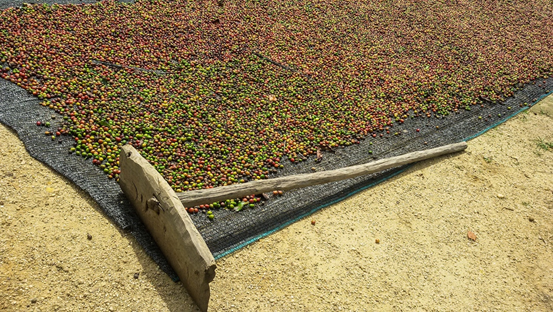
Coffee processed naturally, or by the sun-drying method, has an intense fruity aroma and flavors that come from the cherry itself. This method gives brewed coffee a deeper body with slightly subdued acidity. During natural processing, the cherries are spread out to dry in the sun and must be raked regularly to prevent over-fermentation, rot, or mold. It takes several weeks, depending on temperature and humidity, for the cherries to dry to the desired moisture level of about 10% to 12%, after which the dried pulp and parchment covering the seeds are removed, readying them for roasting. Some professionals dislike natural processing, feeling the coffee tastes dirty or over-fermented, but these flavors only appear when the cherries are not handled carefully. Others compare them to natural wines, unadulterated and authentic, and natural wines do retain more lively, sometimes eccentric and stylish flavors.
Natural processing is the oldest and least expensive way to process coffee. Although some farmers and experts consider it inferior, it is necessary for countries like Brazil and Ethiopia that lack water. Even so, some farmers have recently worked to improve the method, hoping to produce excellent coffee that changes the negative perception.
Washed Processing Method
Washed coffee, also known as wet processing, produces clean and lively flavors. Compared with natural processing, it brings out more delicate nuances, a lighter body, and deeper acidity, which makes washed beans the preferred type for many specialty roasters.
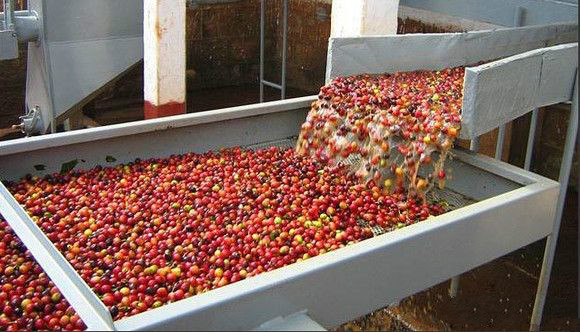
In washed processing, large automated machines or smaller manual ones first remove the pulp from the seeds or squeeze them out of the cherries. The remaining skins are composted for fertilizer or dried to make cascara, coffee cherry tea.
After the beans are extracted from the pulp, they are still coated in a slippery mucilage layer. The beans must be soaked in water tanks for 12 to 72 hours. This is fermentation, during which microorganisms feed on the sugary mucilage and consume it. Many factors affect the time, such as temperature and water quality, but the seeds must not soak too long or they will over-ferment and spoil the flavor.
After fermentation, the seeds are soaked again in clean water or washed, then moved to patios or raised drying beds, or dried with mechanical dryers. Patios and raised beds take several weeks, while machines take only a few hours. Once the moisture content drops to 10% to 12%, the beans rest for two months, after which the parchment is removed, producing green beans ready for export and roasting.
Honey Processing Method
Honey processing, also known as pulped natural drying or semi-washed, sits between washed and natural. First the pulp is removed, but instead of soaking in clean water the beans are dried while still coated in mucilage. After drying, the beans rest for about two months before being milled to remove the parchment and prepared for shipment.
Farmers use this method for environmental reasons, such as limited water, or for style, to reach a specific flavor. When done well, honey-processed coffee has a clean mouthfeel and acidity similar to washed coffee while keeping some intense aromas and complex fruit flavors, which sets semi-natural beans apart.
FrontStreet Coffee suggests comparing the flavors of these three methods next time and working out which one you prefer.
FrontStreet Coffee Recommendation
Ethiopia is one of the world's most famous specialty coffee origins and the birthplace of coffee, with countless native varieties that make it a destination for drinkers who want to trace a flavor to its source.
FrontStreet Coffee's washed Yirgacheffe is the classic entry point, with clear jasmine florals and bright citrus acidity. Yirgacheffe is a small town in southern Ethiopia where spring-like weather, frequent mist, and a cool, humid climate let thousands of coffee trees flourish, giving the region its blend of floral and fruit acidity, a light and elegant cup with a tea-like body that drinks like clean lemon tea.
Much of Ethiopia's coffee is grown in a garden style, with smallholders bringing their cherries to village stations and selling under the name of a production group, which is why cooperatives come in so many forms. FrontStreet Coffee's Giddingding cooperative sits in the Worka area at the southeastern edge of Yirgacheffe, originally part of the Worka cooperative under the Yirgacheffe Coffee Farmers Cooperative Union. As demand for traceability grew and single-origin lots were uncovered, Giddingding, with roughly 300 member farmers, became an independent cooperative in 2012. Because the pulp is removed before drying, its inherent aromas come through more clearly, showing citrus and lemon with elegant white florals and a bright, delicate profile.
FrontStreet Coffee's natural Red Cherry offers the other side of Ethiopia. Only fully ripe fruit is used, with broken or moldy cherries removed first, then dried in the sun for two weeks until the sugars and essence settle into the bean and the moisture drops to 12%. The hardened fruit, mucilage, and parchment are then stripped away, and the beans pass density and color checks before workers remove any remaining defects by hand, giving a clean cup with rich fruit aroma and notes of peach, cocoa, honey, and lemon.
For a deeper natural, FrontStreet Coffee's Huakui comes from the Hambella area of Guji, Sidamo, on a 200-hectare farm using a traditional natural process. To avoid mold and earthy off-notes, workers lay the ripe cherries on raised beds for 21 days, turning them constantly and removing defective or moldy beans by hand every three to five days before hulling. Roasted medium-light, it shows a light fermented wine aroma, florals, citrus, and mango, with a dense, complex cup, honey sweetness, a cocoa note with a hint of spice, a thick body, and a long finish.
FrontStreet Coffee's Sidamo natural Hamasho comes from another Sidamo site known for quality and a distinctive flavor, growing mainly the JARC 74-series disease-resistant varieties. The 74158 line runs a little small in the bean with a strong floral and fruit profile, carrying perfumed lemon, strawberry, and star fruit sweetness, a clear entry of strawberry, star fruit, and green grape, and a gradual emergence of light florals.
Finally, FrontStreet Coffee's Kafa Forest represents wild coffee rather than the usual garden model. The trees grow at 1,400-2,100 meters in shade, where the untouched ecosystem, microclimate, red soil, and abundant rain give them excellent conditions. Roasted medium-light, it shows pronounced white florals, a bright lemon acidity, sweet orange and bergamot, a finish of subtle melon and nut, and a green-tea-like body.
Important Notice :
FrontStreet Coffee is a long-established specialty coffee roaster in Guangzhou China, selling freshly roasted beans from its own farm in Yunnan as well as dozens of carefully selected single-origin beans from around the world for both pour-over and espresso. The products deliver consistently excellent quality and great value, with shipping within 24 hours. Guangzhou's FrontStreet Coffee shop is recommended by many coffee lovers, and the beans are now available online at the Tmall 。
FrontStreet Coffee has moved to a new address:
FrontStreet Coffee Address: 315,Donghua East Road,GuangZhou
Tel:020 38364473
 Scan and follow the En Gafei WeChat official account. Please indicate that the reprint comes from "En Gafei".