Colombian Specialty Coffee: Why Does Colombian Coffee Taste More Acidic Than Other Coffees?
Understanding the Acidity of Colombian Coffee
Geographically speaking, Colombian beans belong to the Central and South American coffee belt, where the flavor profile should be relatively balanced. Yet the moment the liquid touches my tongue, I cannot help exclaiming: "Wow, Colombian coffee is quite acidic!"
Is Colombian Coffee Really That Acidic?
Chemically, coffee is rich in organic acids — acetic acid, chlorogenic acid, citric acid, malic acid, and more. Measure the pH of a cup of coffee and you will find it averages around 5. (That said, perceived acidity has little to do with pH; it really describes the flavor experience of drinking the coffee.)
From a roasting perspective, roast depth explains why most consumers define coffee as "bitter": the deeper the roast, the more the organic acids decompose (especially chlorogenic acid), and the heavier the bitterness contributed by caramelization.
Understanding Acid Compounds in Coffee
First, a quick tour of the acid compounds in coffee (all organic acids except phosphoric acid):
Chlorogenic Acid
Robusta green beans contain 7%-10% chlorogenic acid, higher than arabica's 5.5%-8.0%. During roasting, chlorogenic acid slowly decomposes into quinic acid and caffeic acid, two organic acids that typically bring bitterness and astringency to the cup.
Citric Acid
Produced by metabolism, citric acid peaks at light to medium roast levels. On the palate it delivers a strong acidic sensation — like biting an unripe fruit — but with a character that leans toward lemon, citrus, and nectarine. Broadly speaking, Central American beans carry more citric acid.
Phosphoric Acid
This is coffee's inorganic acid, coming from soil and fertilizers. Coffee contains only 1% phosphoric acid, yet some say it is 100 times "stronger" than the other acids. Others claim phosphoric acid has no taste of its own, but when mixed with other acids it can conjure blackberry and black currant flavors.
Malic Acid
A product of cellular respiration, malic acid breaks down easily during roasting — a third of it is already gone by medium roast — yet it is a key player among the cup's soluble flavor compounds. Its flavor resembles citric acid but is more balanced, adding breadth to coffee's fruit character.
Acetic Acid
Plain vinegar acid, produced mainly during coffee fermentation. As roasting progresses, acetic acid content rises (from sucrose decomposition), but being volatile it gradually falls. At moderate levels it lends sweetness and a clean flavor to the coffee; in excess it produces a vinegar taste, a sign of over-fermentation.
Why Does Colombian Coffee Taste More Acidic Than Other Coffees?
Coffee Varieties
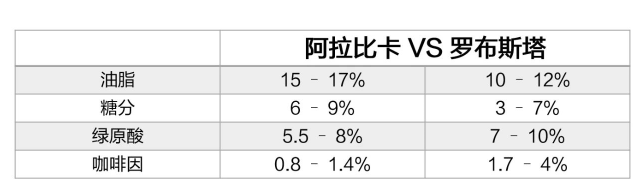
As everyone knows, Colombia grows only arabica. Although robusta's chlorogenic acid content runs about 2% higher than arabica's, that does not make robusta coffee more "acidic" — on the contrary, roasting decomposes its chlorogenic acid into quinic and caffeic acids, which taste bitter and astringent.
What's more, arabica's sugar and oil content both exceed robusta's. Beyond creating richer sweetness and more complex flavors, those sugars themselves decompose during roasting and produce acidic compounds.
Altitude of Cultivation
Colombian coffee is grown between 800m and 2300m. The high-altitude environment is near-perfect for coffee: low temperatures let cherries mature slowly, active metabolism helps accumulate acidic substances, the day-night temperature gap aids sugar accumulation, and leaf rust and coffee pests do less damage — all of which builds a more complex flavor profile in which fruit acidity stands out. The Nariño growing region, at an average altitude of 1800m, is a case in point: its citric acidity is its signature. High-altitude coffee is also harder and denser, standing up better to roasting, which further slows the decomposition of acidic compounds.
Processing Methods
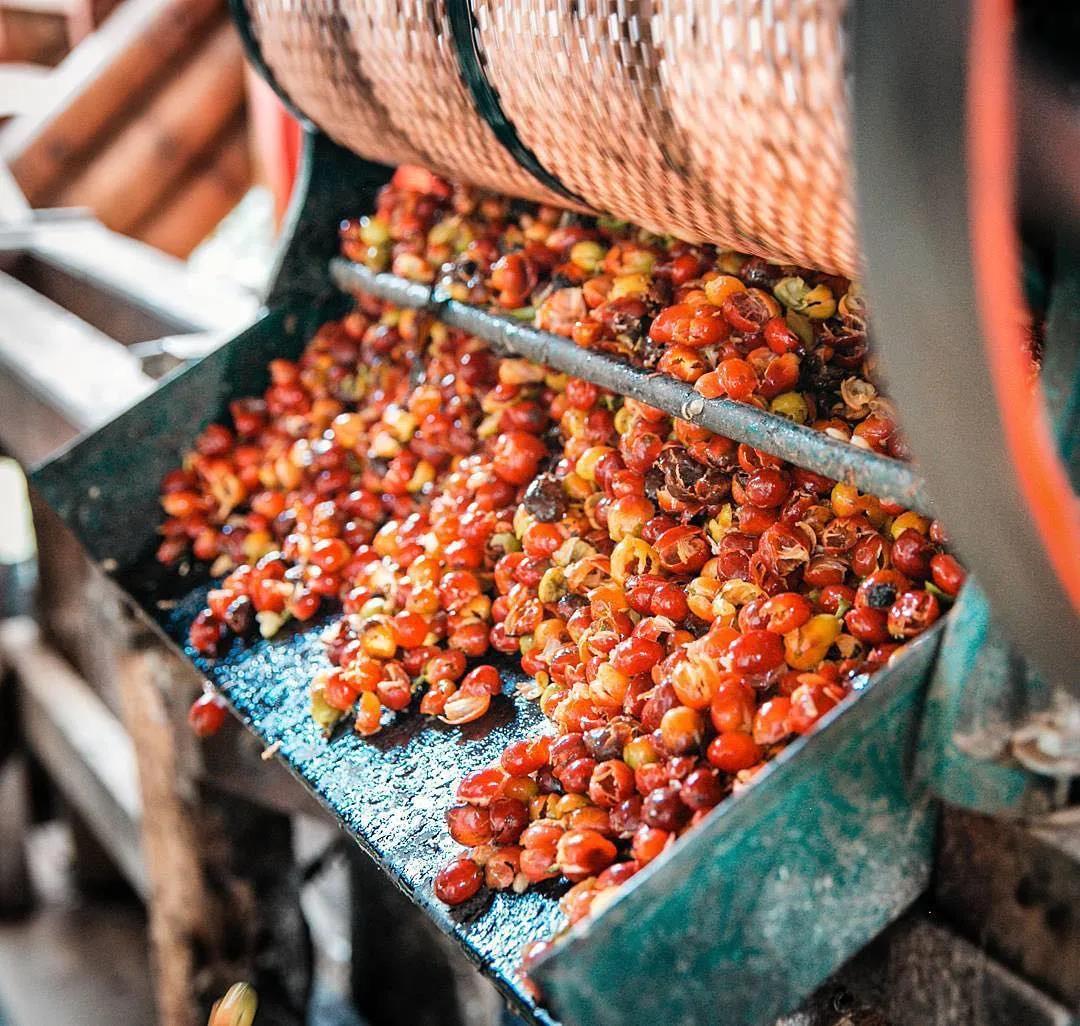
The vast majority of Colombian coffee is washed. The depulping and degumming steps filter out some sucrose and fructose, raising perceived acidity, and washed fermentation also promotes the formation of acetic acid. Natural processing, by contrast, dries the whole fresh cherry: the sugar-rich pulp never leaves the bean, lifting overall sweetness instead.
The Role of Acidity in Coffee
Acidity is an essential part of any cup — lively, bright, smooth, or fruit-like — though it can also turn sharp or astringent. Either way, it gives the taste buds rich territory to explore.
Moreover, different acidic compounds behave very differently across roast levels, so a "more acidic" coffee like Colombia's has higher roasting plasticity and expresses a more layered flavor profile — which, of course, puts the roaster's skill to the test.
Finally, the acidity in your cup is never the product of a few factors alone. Roast method, brewing technique and temperature, and grind coarseness all shape it, and even the three points above cannot fully explain "why Colombian coffee tastes more acidic" from the production side. Soil, rainfall, microclimate, cultivation practices, even the age of the tree — all play their part in how the flavor finally shows up.
FrontStreet Coffee Recommendation
Colombian coffee is one of the most versatile origins: it works in espresso blends and as a pour-over single origin, in bright fruit-acid styles, full-bodied styles, and aromatic styles alike.
To taste classic Colombia, start with FrontStreet Washed Huila from the southern central cordillera — the country's most famous specialty region, a hill country above 1,500 meters where Colombia's major rivers converge. Medium-dark roasted, it highlights black chocolate and nut aromas with moderate crema and full body, and brews happily as pour-over, French press, moka pot, or espresso.
For Colombia's more adventurous side, try the FrontStreet Sidra from the Boundary Line Estate, processed by anaerobic natural fermentation — an oxygen-free fermentation in pressure-capable stainless steel tanks with controlled temperature, time, and pH. The transformation brings out extra tropical fruit aromas, and a medium-light roast delivers passion fruit, grape, apricot, and dried fruit across pour-over, cold brew, drip bag, or moka pot.
And for espresso at home, the FrontStreet Boutique Blend pairs Brazilian creamy nuttiness with Colombian dark chocolate bitterness, extracting a fine golden crema that makes a rich, silky latte — beginner-friendly and a solid base for americanos, cappuccinos, and mochas.
Important Notice :
FrontStreet Coffee is a long-established specialty coffee roaster in Guangzhou China, selling freshly roasted beans from its own farm in Yunnan as well as dozens of carefully selected single-origin beans from around the world for both pour-over and espresso. The products deliver consistently excellent quality and great value, with shipping within 24 hours. Guangzhou's FrontStreet Coffee shop is recommended by many coffee lovers, and the beans are now available online at the Tmall 。
FrontStreet Coffee has moved to a new address:
FrontStreet Coffee Address: 315,Donghua East Road,GuangZhou
Tel:020 38364473
 Scan and follow the En Gafei WeChat official account. Please indicate that the reprint comes from "En Gafei".