What Blend Beans Does Starbucks Use for Espresso Coffee? How to Choose Coffee Beans Suitable for Espresso

FrontStreet Coffee's take on the big chains' popular drinks is simple: if you like chocolate and sweeter options, go for the mocha and caramel macchiato. From a pure coffee-texture standpoint, drink the latte. And if you want to savor that lazy Italian-afternoon mood, order the cappuccino.
All of the drinks above are espresso-based, so FrontStreet Coffee has to start with espresso itself.
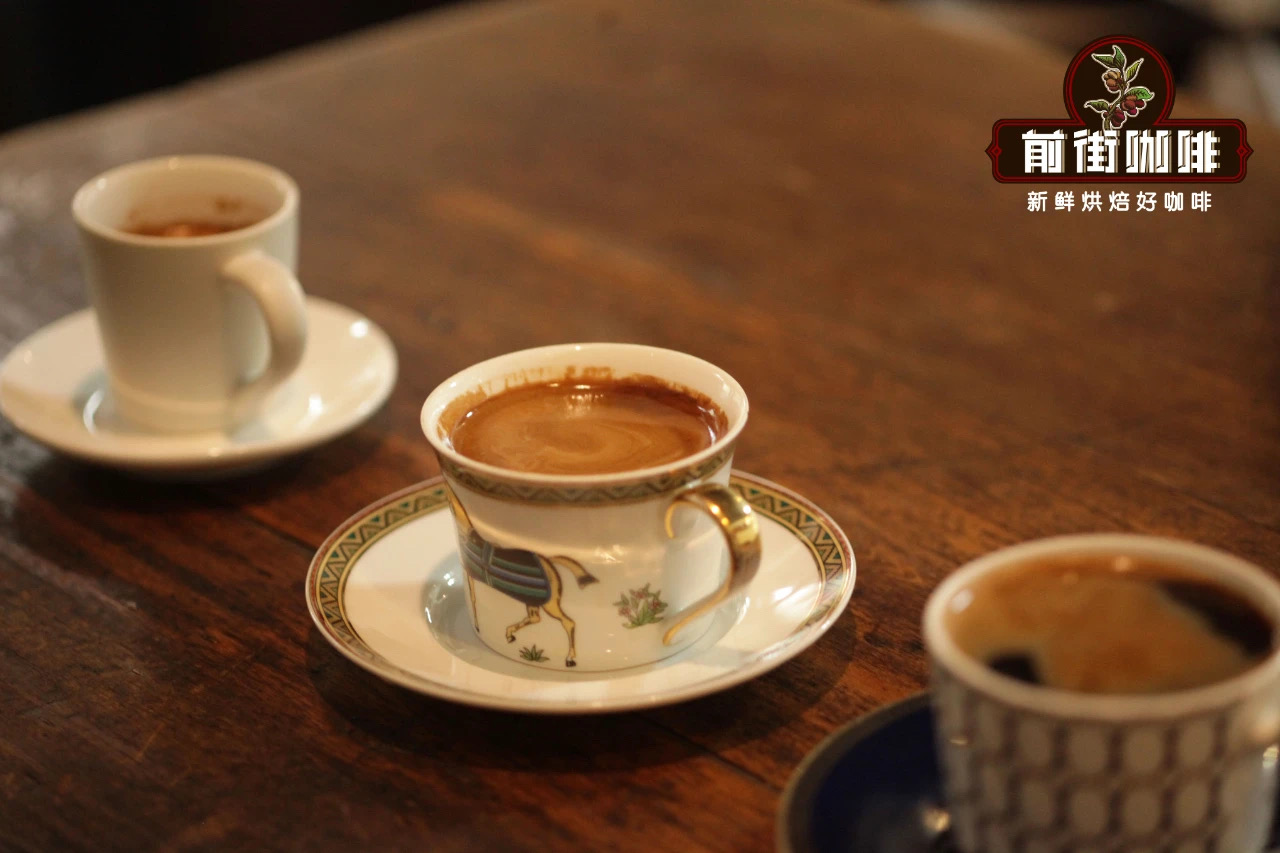
Espresso is one way of presenting coffee. The word is Italian, referring to a strong coffee extracted quickly under machine pressure in a short time. It is the foundation of nearly all fancy coffee drinks and indispensable in cafés worldwide. Espresso is served in very small cups, usually only about 30 milliliters, tastes intensely bitter, and carries a thick layer of golden crema on the surface. It comes with a glass of plain water, and you can add sugar if you like. Customers who order espresso straight are either true coffee lovers chasing the most authentic flavor, or people so sleepy they urgently need a jolt. Those looking to idle away an afternoon are better off with something else. Some cafés offer espresso as "Single" or "Double", a double doesn't mean two cups, but an extraction with twice the grounds, which is even more intense.
Many cafés' "coffee of the day" is actually an americano, usually the cheapest item on the menu. Bluntly put, an americano is a small half-cup of espresso topped with a large half-cup of hot water; some cafés also brew it with drip machines. Americano is light in taste and color, slightly sour and slightly bitter. If you don't drink it often, adding sugar is fine. The three-in-one instant coffee many of us grew up with is essentially a pre-sweetened americano with creamer and flavorings. And if you truly can't get past the sour-bitter edge, switch to a latte or mocha.
Espresso drinks come in a rich variety, and a qualified barista can easily make more than a dozen. But every one of them depends on espresso, since all are built on the shot, mixed in different proportions with milk, water, cream, syrup, and other supporting ingredients. An excellent espresso is therefore the beginning of everything and the soul of the drink.
Important Bean Selection Factors
1. Strong shot stability (pure varieties hold up better than ordinary blends);
2. Rich espresso crema (Robusta has advantages over Arabica here);
Choose Blended Beans or Single-Origin Pure Variety Beans?
Espresso beans on the market fall mainly into two camps: espresso blends and single-origin pure variety beans. A great espresso blend is a real test of the roaster's skill. If you buy bargain espresso beans, they are most likely a jumble of uneven-quality coffee pushed through a deep roast, often with muddled flavors and unstable quality from batch to batch. Buy with caution!
By contrast, single-origin beans from stable growing regions with rich oils, such as Robusta, offer consistency: Vietnam is currently the world's largest producer and exporter of Robusta, with steady production and a stable growing environment.
Choose Robusta or Arabica?
At the species level, coffee divides simply into Arabica and Robusta. We often see "100% pure Arabica beans" used as a marketing gimmick to imply quality, but Arabica does not automatically mean good coffee: the species is enormous and quality varies wildly.
Robusta's taste is relatively consistent, tending toward roasted, pine, and earthy aromas. Brewed as pour-over, it shows distinct notes of barley tea, peanut, popcorn, and brown rice tea, with weak acidity, high body, and a relatively flat profile. Robusta significantly boosts body and produces espresso with richer crema, and after the espresso blends with milk it delivers a thick, full mouthfeel. That is why Robusta is more likely to extract rich oils than Arabica, making it well suited to milk drinks and capable of lifting the overall quality of an espresso program.
FrontStreet Coffee's best-selling americano beans, Yirgacheffe, Golden Mandheling, and Brazilian, among others, are fully dependable in brand and quality, and extremely good value. Before blending, FrontStreet Coffee makes a point of learning what flavors each variety from each origin brings, because beans carry different personalities depending on variety and origin, with subtle differences in acidity, bitterness, sweetness, aroma, and body.

Take FrontStreet Coffee's own specialty blend: Colombian beans paired with Brazilian beans in a 3:7 ratio. Colombia's signature nutty and chocolate character merges with Brazil's rich peanut and cream profile. The result is a very harmonious espresso blend with abundant crema, an extremely smooth entry, fresh fragrance with the slight bitterness typical of the Americas, and it is a big hit with FrontStreet Coffee's customers.
FrontStreet Coffee Recommendation
A cappuccino has a simple construction: espresso, milk, and a solid layer of thick foam in place of cream, with the foam sculpted into a peak or dome. Because the milk share is small, the overall cup is intense and sweet, with a fluffy texture. Rich, dense, and silky, that is what everyone remembers about a proper cappuccino.
Espresso parameters: 20g of grounds, a 1:2 coffee-to-liquor ratio, and a 30-second extraction. That produces a shot with plenty of concentration and relatively full extraction, with strong flavor and texture on every front. For reference in the demonstration: 20g of grounds extracted over 32 seconds into 40ml of espresso, poured into the pre-warmed cup.
Recommended beans: Unlike flat-white or latte art showcases, cappuccino's signature is its thick, fluffy foam over a rich, full-bodied coffee, which makes the espresso-machine-oriented FrontStreet blend series the natural fit. Newcomers brewing at home should grab the crema powerhouse FrontStreet Classic Blend or the value champion FrontStreet Black Cocoa basic blend. To challenge yourself with a fruity-floral cappuccino, first choice is the FrontStreet Strawberry Candy espresso blend, which brings aromas of berries, rose, raisins, and fruit candy. For something fresher and non-bitter, try the FrontStreet Granna Gesha SOE: natural-processed and medium roasted, it carries berry, orange, and persimmon notes, turning milk-candy-like when combined with milk.
The golden circle: A cappuccino's most soothing feature is the golden ring: the outer circle of color comes from the espresso, while the inner circle is filled by the foam. There is no real trick to making one, and here is how it goes:
1. Extract the espresso first: 20g of grounds, 40ml of coffee liquor over 32 seconds, poured into the prepared cup.
2. While the shot pulls, froth the milk! Since no latte art is needed, you can froth it as thick and dense as you like.
3. Take a spoon, scoop up some foam, and place it right at the center of the coffee, using the foam to build a filled circle in the middle.
4. Then swirl the pitcher to re-combine the foam and milk, and pour into the very center of the cup. With the surface covered in foam, there is no need to worry about overflow, so pour boldly, and stop at eleven-tenths full!
Important Notice :
FrontStreet Coffee is a long-established specialty coffee roaster in Guangzhou China, selling freshly roasted beans from its own farm in Yunnan as well as dozens of carefully selected single-origin beans from around the world for both pour-over and espresso. The products deliver consistently excellent quality and great value, with shipping within 24 hours. Guangzhou's FrontStreet Coffee shop is recommended by many coffee lovers, and the beans are now available online at the Tmall 。
FrontStreet Coffee has moved to a new address:
FrontStreet Coffee Address: 315,Donghua East Road,GuangZhou
Tel:020 38364473
 Scan and follow the En Gafei WeChat official account. Please indicate that the reprint comes from "En Gafei".