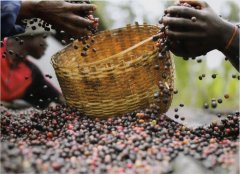
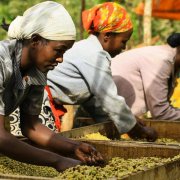
Ethiopian Coffee · Premium Coffee Regions Introduction - Harar 03
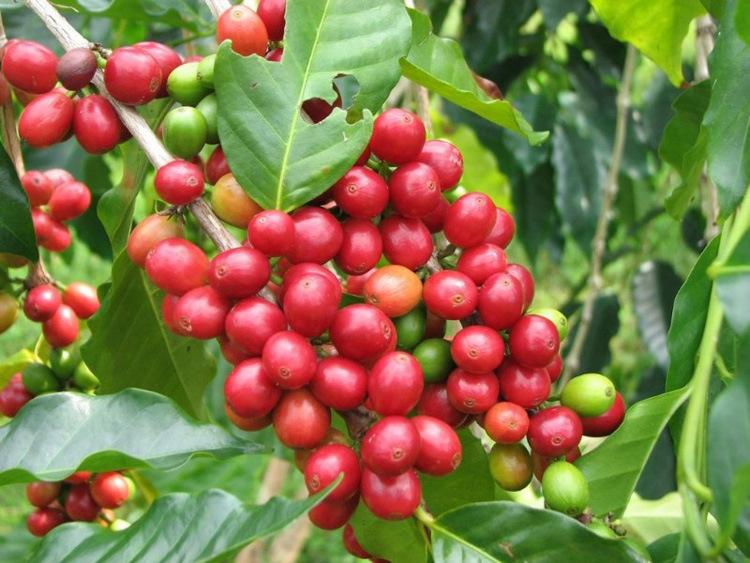
Ethiopian Coffee · Premium Region Introduction, Harar
Altitude: 1600 - 2400 meters
Garden coffee system
Harvest period: October to February of the following year
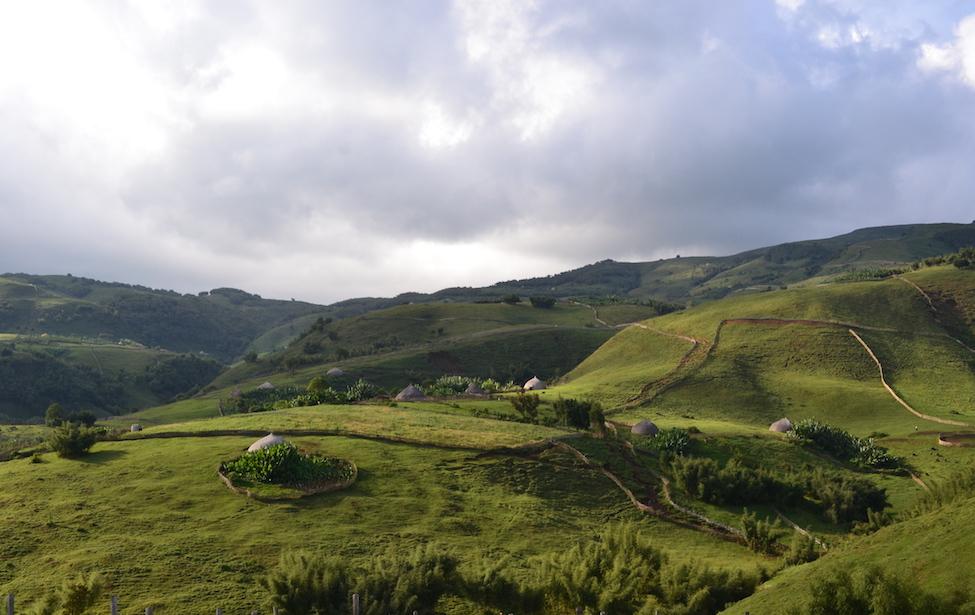
Harar lies in the eastern Ethiopian highlands (Harerge province) and is one of the highest-altitude areas where humans cultivate coffee, some even put its higher slopes at 2000-2700 meters. Across the Gulf of Aden, it looks out toward Yemen's ports of Mocha and Aden.
A century ago, coffee still grew wild on the mountain slopes here. Local farmers moved the beans down to the port of Djibouti at the foot of the mountains by camel, donkey, or horse-drawn carriage, braving the danger of being surrounded and swallowed alive by indigenous wolves. From there the beans were shipped across the water to the port of Mocha in Yemen, and then exported on to Europe.
Harar's coffee history is far older than Yirgacheffe's, and its soil, water, climate, processing methods, and flavors all differ from Yirgacheffe's. Harar has a dry, cool climate that suits the natural processing method perfectly, and its flavor profile resembles the Yemen Mocha across the gulf, which is why Harar is also called "Harar Mocha." The green beans are mostly long-shaped, greenish-yellow or golden in color, clearly distinct from the short, round beans of natural-processed Yirgacheffe. During roasting a strong chocolate aroma fills the room; in the cup there is a wild edge, moderate acidity, and a rich texture, classic Mocha character.
Top-quality Harar carries a jasmine fragrance and a fermented, wine-like finish. In some respects it matches, or even surpasses, the Mattari coffee from Yemen's Bani Matar region.
Harar still processes its beans with the traditional natural method today, and they are typically exported through the nearby town of Dire Dawa, although no coffee actually grows within the city itself. What the trade calls Harar coffee is produced across the Harar Highlands of the greater Harar region. Annual rainfall there is only 1000 millimeters, and every lot is naturally processed. Production runs to roughly 185,000 bags of 60kg per year. The most common varieties are predominantly the long-bean type, descended from early Arabica cultivars, and the grading mostly falls at G5 or G4.
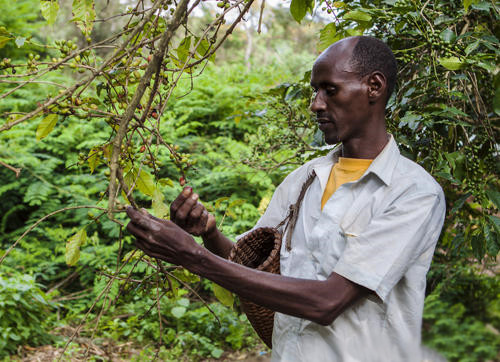
In terms of flavor, Harar is famous for its distinctive "mixed aroma," a taste of the ancient coffee homeland, and it stands alongside Yirgacheffe as one of Ethiopia's "twin stars."
If the defective beans can be carefully sorted out, it is easy to find berry-like fruit notes wrapped in a pleasant fermented complexity. In recent years, however, quality has been unstable and the grading system unreliable, so when buying Harar, always cup or sample the coffee first.
The above information has been compiled by FrontStreet Coffee. We hope this article helps everyone gain a deeper understanding of coffee.
FrontStreet Coffee Recommendation
Harar is fascinating, but if you are new to Ethiopian coffee, FrontStreet Coffee recommends starting with its classic washed Yirgacheffe. Known for white jasmine florals, bright citrus and lemon acidity, and a tea-like finish, and at a friendly price, it is the bean most people use as their first step into specialty coffee. Yirgacheffe sits in Ethiopia's southern Sidamo province at roughly 1700-2100 meters, with coffee planted above 1800 meters, making it one of the highest coffee regions in the world. Its unmistakable white-flower aroma and lemon-citrus acidity have made the town's name a byword for Ethiopian specialty coffee.
Compared with the wild, fermented mixed aroma of naturally processed Harar, washed Yirgacheffe is clean, floral, and sparkling, tasting the two side by side is the best way to understand how much Ethiopia contains. FrontStreet Coffee's brewing suggestion: V60 dripper, water at 90-91°C, 15g of coffee, a 1:15 ratio, and a fine-granulated-sugar grind (80% passing a #20 sieve). Pour 30g of water for a 30-second bloom, then pour 95g to reach about 125g on the scale within about a minute; when the level drops to two-thirds of the bed, pour the remaining 100g to about 225g, finishing the pour around 1'35". Extraction completes between 2'00" and 2'10", then lift the dripper and enjoy.
Important Notice :
FrontStreet Coffee is a long-established specialty coffee roaster in Guangzhou China, selling freshly roasted beans from its own farm in Yunnan as well as dozens of carefully selected single-origin beans from around the world for both pour-over and espresso. The products deliver consistently excellent quality and great value, with shipping within 24 hours. Guangzhou's FrontStreet Coffee shop is recommended by many coffee lovers, and the beans are now available online at the Tmall 。
FrontStreet Coffee has moved to a new address:
FrontStreet Coffee Address: 315,Donghua East Road,GuangZhou
Tel:020 38364473
 Scan and follow the En Gafei WeChat official account. Please indicate that the reprint comes from "En Gafei".