Ethiopia's Garden Coffee Cultivation System and Coffee Bean Cultivation Systems Distributed Across Ethiopia's Nine
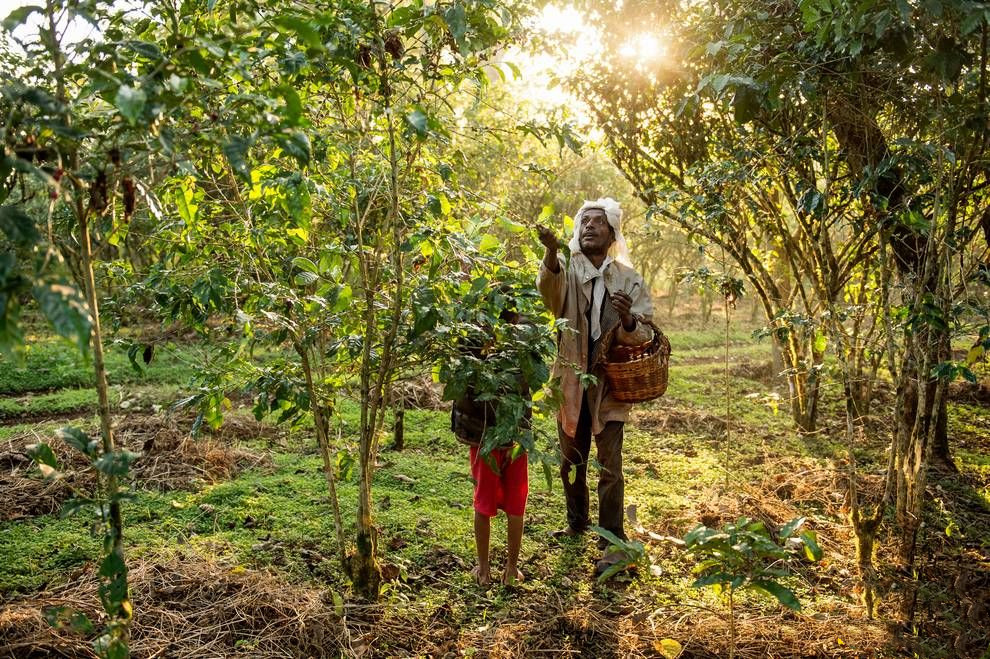
(Image from: National Geographic Chinese Website; photography: Amivitale, Panos)
According to FrontStreet Coffee's research, approximately 1.2 million smallholder farming families in Ethiopia rely on coffee cultivation for their livelihood. Each household farms less than 4 hectares, at an average elevation of 1,000-2,300 meters. Planting density ranges from 1,000-1,800 coffee trees per hectare, yielding approximately 600 kg per hectare.
Coffee cultivation is concentrated mainly in the western and southern regions, with smallholder families accounting for 90% of total cultivation.
In Ethiopia, 90% of coffee comes from gardens, forests and semi-forests, while large-scale corporate plantations are genuinely rare in the country.
Four Types of Ethiopian Coffee Cultivation
Coffee cultivation in Ethiopia can be classified into four types based on scale and model:
1. Forest Coffee
This means wild coffee, accounting for 10% of Ethiopia's total production. It grows in the wild coffee forests of the western and southwestern regions, known as the Kaffa Forest. The dense trees here give the coffee its most natural shade, requiring no artificial care — life and death are left entirely to Mother Nature. These forests are protected by the government, with designated personnel responsible for harvesting.
2. Semi-Forest Coffee
This means semi-wild coffee, accounting for 35% of Ethiopia's coffee production. It is found in the western and southwestern Kaffa Forest regions, where farmers in the forest-coffee system select small plots of wild forestland to raise yields. They hand-prune overly dense branches and leaves to balance shade and sunlight, helping the coffee trees photosynthesize and grow, and weed once a year to increase production. This is what we commonly call improving light transmission and fruit yield. The system uses a semi-natural, semi-managed approach to growing coffee.
3. Garden Coffee
Farmers grow coffee trees in their backyards or on their farmland, intercropped with other crops. Coffee from this system reaches 50% of Ethiopia's total. Although tree density is the lowest, at only 1,000-1,800 plants per hectare, it is the most popular method, because intercropping best meets farmers' livelihood needs and it is currently the primary way Ethiopian coffee is grown. Smallholder garden coffee is distributed mainly across southern Sidamo and the southeastern regions, and the government actively promotes it.
4. Plantation Coffee
This system uses modern agronomic management, with rules for seedling cultivation, pruning, fertilization, pesticide application and planting density. It is the only non-organic cultivation method, accounting for just 5% of national annual production. Established by state-owned or private entities for efficient mass production, plantation coffee accounts for 5%-10% of Ethiopia's coffee output.
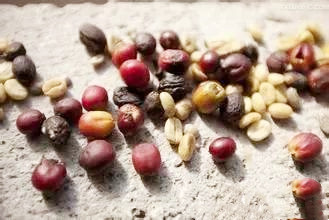
From these four major systems, it's clear that Ethiopia differs from the corporate, technologically advanced, high-efficiency plantations of Central and South America. Most Ethiopian coffee is grown using a mixture of wild and managed methods, which makes raising yields a challenge. Even so, Ethiopian agricultural experts remain undeterred, already cultivating high-yield, high-quality Arabica hybrid coffee trees in an effort to close the production gap with Central and South America.
Ethiopia's Nine Major Coffee Growing Regions
These four cultivation systems are spread across Ethiopia's nine major growing regions: Djimma, Sidamo, Yirgacheffe, Harar, Limu, Illubabor, Gimbi (Lekempti), Tepi and Bebeka. Overall, each region has its own flavor character. Beans from the western Tepi, Bebeka and Illubabor regions and the northwestern Lake Tana area are noticeably larger, with stronger wild flavors but lower fruit acidity. The central Limu and the central-southern Yirgacheffe and Sidamo regions offer rich fruit flavors, floral aromas and acidic fragrance, with relatively stable quality. Eastern Harar combines the wild flavors of the west with the fruit flavors of the central-south, though quality can vary significantly.
The above is information on Ethiopian coffee beans compiled by FrontStreet Coffee. We hope this article helps everyone better understand Ethiopian coffee.
FrontStreet Coffee Recommendation
Whether it comes from a garden, a forest or a semi-forest, Ethiopia's best coffee is defined by floral aroma and bright fruit, and FrontStreet's Ethiopian selection brings out both sides of that character. FrontStreet Washed Yirgacheffe is the classic entry point, with clear jasmine aroma and bright citrus acidity in a light, elegant, tea-like cup. FrontStreet Gudingding Cooperative, from the Worka area at the southeastern end of Yirgacheffe, is washed and shows citrus and lemon with elegant white flowers for a bright, delicate cup. For the natural side, FrontStreet Natural Huakui from Hambella in Guji, Sidamo, is medium-light roasted and delivers light fermented wine, florals, citrus and mango with honeyed sweetness, cocoa and spice, a full body and a long finish. And FrontStreet Kafa Forest, from Ethiopia's Kafa biosphere region, is medium-light roasted with distinct white flowers, bright lemon acidity, sweet orange and bergamot and a green-tea-like body — a fitting taste of the very forests this article describes.
Important Notice :
FrontStreet Coffee is a long-established specialty coffee roaster in Guangzhou China, selling freshly roasted beans from its own farm in Yunnan as well as dozens of carefully selected single-origin beans from around the world for both pour-over and espresso. The products deliver consistently excellent quality and great value, with shipping within 24 hours. Guangzhou's FrontStreet Coffee shop is recommended by many coffee lovers, and the beans are now available online at the Tmall 。
FrontStreet Coffee has moved to a new address:
FrontStreet Coffee Address: 315,Donghua East Road,GuangZhou
Tel:020 38364473
 Scan and follow the En Gafei WeChat official account. Please indicate that the reprint comes from "En Gafei".