What coffee beans are used in Piccolo Latte? How to make a Piccolo Latte?
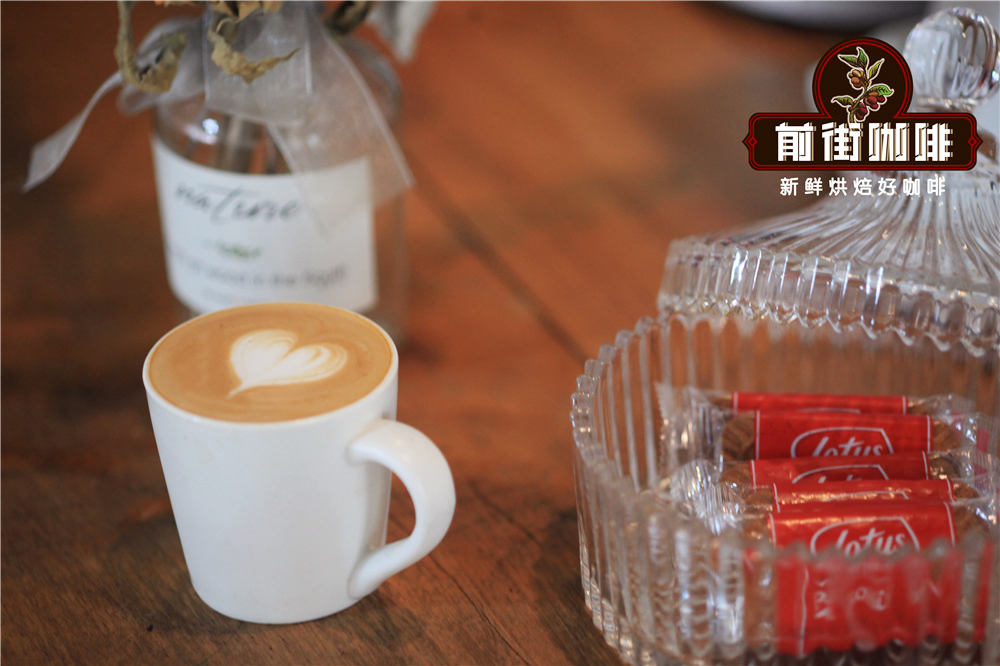
Espresso is a vast coffee system. Combining different ratios of milk to coffee gives us the latte, the cappuccino, the flat white, and so on. This time FrontStreet Coffee introduces a mini version of the latte called the piccolo latte.
What is Piccolo Latte?
Piccolo latte is translated from "Piccolo Latte," where "Piccolo" means "small" in Italian, so the piccolo latte is affectionately called the small latte. But to simply view the piccolo latte as a mini version of a latte would be to underestimate the name "Piccolo Latte."

A traditional piccolo latte is served in a 3-4 ounce (88-118ml) glass. Sasa, the 2015 World Coffee Championship winner, described piccolo coffee as containing 1 part espresso and 2 parts milk with a layer of delicate, silky milk foam in a 3-ounce cup—that is, a 1:2 ratio. By using a reasonable ratio of coffee to milk, the flavor of the coffee comes through without being too strong.
Why did Piccolo Latte appear?
Piccolo coffee first emerged because roasters or baristas wanted to test the compatibility between coffee beans and milk without making standard-sized lattes (a latte is generally 300ml, which would consume a lot of milk if testing in large quantities). Later it became a good choice for customers who did not want too much caffeine or a large cup of latte.

How does FrontStreet Coffee make piccolo latte?
Since FrontStreet Coffee does not offer piccolo latte, it is not equipped with 90ml glasses. FrontStreet Coffee therefore uses a 90ml ceramic cup as the vessel for piccolo latte.
According to the traditional piccolo latte recipe, it is 1 part espresso (about 30ml) and 2 parts milk with foam (about 60ml). Today FrontStreet Coffee uses weight units, because the volume of crema varies and the resulting milliliter volume differs, so calculating by weight is more accurate.

FrontStreet Coffee uses Sunflower Warm Sun Blend coffee beans, blended from sherry-processed coffee beans and Yirgacheffe red-cherry project coffee beans, with very rich vanilla, sherry-wine, and chocolate flavors.
FrontStreet Coffee uses 1 part espresso (20g) as the base for piccolo latte; counting crema, the volume is about 30ml. In making the espresso, FrontStreet Coffee uses a double portafilter, tamping 20g of coffee powder to extract 40g of coffee liquid within 27 seconds, and uses a splitter to divide the liquid into two parts.

For the milk, FrontStreet Coffee uses a 350ml milk pitcher, pours in 100ml of milk (too little milk is difficult to froth), froths to 0.5-0.7cm of fine milk foam, and then fully integrates the milk with the coffee to serve. Because the cup holds only 90ml, and about 30ml of that is coffee, there is no need to worry about an imbalance between the coffee and milk ratios.
FrontStreet Coffee Recommendation
A piccolo latte is essentially espresso carrying the flavor, with milk only in a supporting role, so the bean should have a strong, memorable profile—and FrontStreet Coffee's espresso blends are built for exactly that. If you like a richer, butter-and-cheese style, the FrontStreet Classic Blend is the traditional choice: full-bodied with low acidity, rich and fine crema, and a generous, creamy mouthfeel with milk. If you lean toward floral and fruity notes, the FrontStreet Strawberry Candy Espresso Blend has almost no bitterness, pulling with full grape and blueberry flavors and a pleasant sweet-sour balance, so a piccolo made with fresh milk takes on a strawberry-milkshake character. And for a clean, balanced everyday base, the FrontStreet Premium Blend works beautifully: a ristretto from just the first and middle of the shot—20g of coffee powder extracted to 32g of liquid in 22-25 seconds—pairs with roughly 160ml of fresh milk for a smooth, nutty, white-chocolate finish. Whichever blend you choose, chill the milk first and steam it until the pitcher is 50-55°C, keeping the foam thin, so the first sip is all coffee aroma carried on a silky, delicate foam.
Important Notice :
FrontStreet Coffee is a long-established specialty coffee roaster in Guangzhou China, selling freshly roasted beans from its own farm in Yunnan as well as dozens of carefully selected single-origin beans from around the world for both pour-over and espresso. The products deliver consistently excellent quality and great value, with shipping within 24 hours. Guangzhou's FrontStreet Coffee shop is recommended by many coffee lovers, and the beans are now available online at the Tmall 。
FrontStreet Coffee has moved to a new address:
FrontStreet Coffee Address: 315,Donghua East Road,GuangZhou
Tel:020 38364473
 Scan and follow the En Gafei WeChat official account. Please indicate that the reprint comes from "En Gafei".