Should Ice Be Added Before or After Pouring in Iced Pour-Over Coffee? A Detailed Guide to Japanese-Style Iced Pour-Over Parameters

Recently a customer asked, "How do you make your iced pour-over coffee? Is there a difference between adding ice before versus after brewing?" In this issue, FrontStreet Coffee runs an experiment comparing the two methods, hoping to give everyone a useful reference.
FrontStreet Coffee's Iced Pour-Over Parameters
FrontStreet Coffee uses 15 grams of ground coffee for iced pour-over, at a coffee-to-water ratio of 1:10. That means brewing 15 grams of coffee with 150 grams of hot water, then adding 100 grams of ice to cool and dilute the drink (whether the ice goes in before or after brewing is exactly what this article sets out to test).

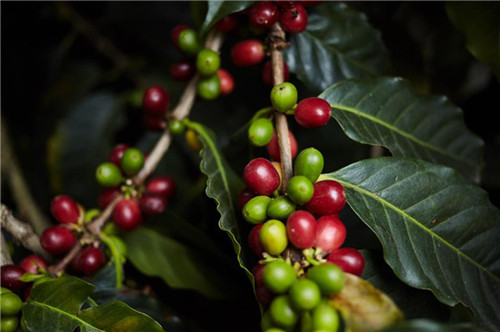
For this demonstration, FrontStreet Coffee selected the recently launched Kaffa Forest. As the region with the most extensive forest coverage in Ethiopia, the primary forests of the Kaffa Biosphere are globally recognized as the birthplace of coffee and the genetic treasury of the Arabica coffee we know today. The "Gesha" of the Geisha origin story is in fact one of the regions of Kaffa, in the west. Beyond its geographical significance, this washed-processed bean offers delicate white floral notes and juicy fruit flavors - sweet orange, dried apricot, honey peach, green grape, and yellow lemon.

The grind size should also be slightly finer than for hot pour-over. For the Kaffa Forest used here, FrontStreet Coffee's hot pour-over setting is 10 on the EK43s grinder (80% passing a #20 standard sieve), while iced pour-over uses the finer setting of 9 (85% passing a #20 sieve). For water temperature, light-roast coffee uses 90-91°C, while medium-dark roast uses 87-89°C.

Experimental Comparison
Ice First Method
First, place 100 grams of ice in the serving pot, then set the filter cup and filter paper on top, add 15 grams of ground coffee, and zero the scale.

Begin brewing. First pour 30 grams of hot water for a 30-second bloom, then pour 70 grams of hot water in circles from the center outward. Because the grind is slightly finer, the coffee bed rises quickly and drains more slowly than in hot pour-over. When the water level drops to the halfway point, continue with another 50 grams of water. Once all the coffee liquid has flowed into the lower pot, remove the filter cup - total extraction time is 1 minute 40 seconds. Then swirl the serving pot to chill the coffee quickly and distribute it evenly.

Ice After Method
After the same preparation, add 15 grams of ground coffee and begin pouring. First pour 30 grams of hot water for a 30-second bloom, then 70 grams of hot water in circles from the center outward. When the level drops to halfway, pour another 50 grams. Once all the liquid has drained into the pot, remove the filter cup - extraction time again 1 minute 40 seconds. Then add 100 grams of ice to the pot and swirl to chill and even out the coffee quickly.

Sensory Comparison
In repeated side-by-side tastings, the two methods are broadly consistent when properly swirled for even distribution. On first sip, the ice-first coffee seems cleaner and more refreshing, with delicate floral and fruit aromas, while the ice-after coffee has more concentrated, intense aromatics and shows more complexity in the cup. Of course, both produce very similar iced coffee - without a side-by-side comparison, they can be hard to tell apart.
As for why the ice-first method tastes more refreshing: comparing the two right after the initial swirl, the ice in the ice-first method has clearly melted more. Because the ice sits in the pot throughout, it is exposed to the hottest coffee first, so more of it dissolves; in the ice-after method the coffee cools toward room temperature before meeting the ice, so less ice melts.

Seeing these results, there is no longer any need to argue about whether ice goes in before or after - both work; pick the style you prefer.
FrontStreet Coffee Recommendation
Floral, fruit-forward beans shine over ice, and FrontStreet Coffee's Gesha lineup is a natural fit. For a first taste, the entry-level FrontStreet Boquete Gesha from Panama delivers classic orange-blossom sweetness and delicate fruit acidity; the FrontStreet Esmeralda Red Label and Green Label Gesha are the premium choices for showcasing Panamanian florals over ice. From Ethiopia, the medium-light roasted FrontStreet Genlana Estate Gesha offers bright citrus acidity, ginger-flower aroma, and the variety's signature refined finish.
For a no-dripper iced option, FrontStreet Coffee's Strawberry Candy Gesha blend - combining Costa Rican honey-processed and Panamanian washed Gesha lots - makes an excellent cold brew: grind 30g to a fine-sugar texture (EK43s at setting 9, or about 24 clicks on a Comandante C40), stir into 360g of room-temperature water at a 1:12 ratio, seal and refrigerate for 8 hours, strain through filter paper, then return the liquid to the fridge for 3 more hours to mature. Expect grape juice, rose, sweet orange, and fruity-wine flavors in every chilled sip.
Important Notice :
FrontStreet Coffee is a long-established specialty coffee roaster in Guangzhou China, selling freshly roasted beans from its own farm in Yunnan as well as dozens of carefully selected single-origin beans from around the world for both pour-over and espresso. The products deliver consistently excellent quality and great value, with shipping within 24 hours. Guangzhou's FrontStreet Coffee shop is recommended by many coffee lovers, and the beans are now available online at the Tmall 。
FrontStreet Coffee has moved to a new address:
FrontStreet Coffee Address: 315,Donghua East Road,GuangZhou
Tel:020 38364473
 Scan and follow the En Gafei WeChat official account. Please indicate that the reprint comes from "En Gafei".