Latest News on Peruvian Coffee: Falling Prices Force Peruvian Farmers to Switch to Coca Cultivation!
The Crisis in Peru's Coffee Industry
With global coffee prices collapsing, farmers in Peru's central jungle have been forced to clear their coffee plantations and plant coca instead - the raw material for cocaine. The trend has pushed Peru's coca production to roughly 55,000 hectares a year (yielding around 500 tons of cocaine), enough to cover more than three times the United States' annual cocaine demand.
How COVID-19 Hit Coca Production
As COVID-19 lockdowns choked off trafficking routes, coca prices tumbled to half their previous levels, with demand falling 23% across 2020 compared with the year before. Even so, steady demand means coca gives impoverished farmers more security than any other crop.
The End of Peru's Coffee Golden Age
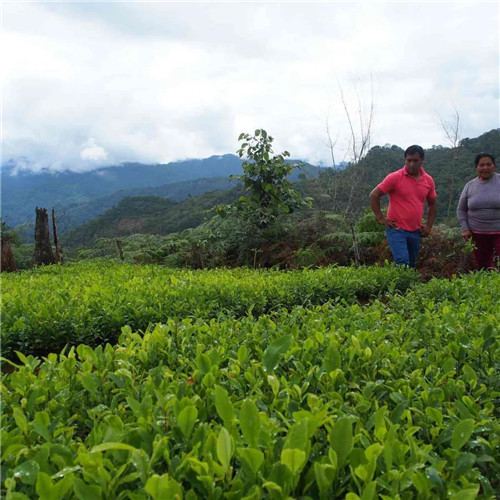
Yusbel Almonacid Santos, a farmer from the town of Satipo in Peru's central jungle, remembers when coffee was king: "People were really into coffee; back then, coffee was the golden bean. Ten years ago, Peruvian coffee prices were very high - up to $2.70 (1.97 pounds) per kilogram. But in 2010, coffee leaf rust swept through the jungle and destroyed Peru's plantations. The National Agricultural Bank offered loans to help farmers replant, and then prices plunged to $0.60."
What Local Farmers Say
"Growing coffee isn't profitable!" local farmers lament.
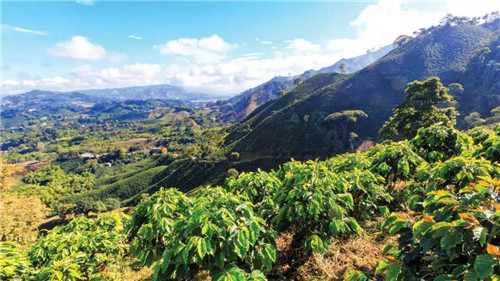
In Peru's growing regions, farmers must work steep slopes year-round. Every harvest means hiring a crew to pick the cherries and then sun-drying them. Year after year, buyers demand higher quality and more certified organic beans, driving up farmers' costs. "The workload of coffee farming is greater than the profit," one grower complains.
Marianne Zavala, who leads a local farmers' alliance, puts it plainly: "If the price is only $1.40 per kilogram, that is just enough to pay the pickers' wages - but for those who grow the coffee, it amounts to nothing. Harvesting coffee only puts growers into debt, so in 2020 many of them could not even be bothered to pick the ripe cherries."
A Wider Agricultural Crisis
Other crops don't pay well enough to survive on either. "We took out bank loans to plant one hectare of bananas. Just when the bananas looked beautiful and ready to harvest, prices fell to $0.40. How can a farmer make money at those prices? Now many farmers owe the banks, and because they cannot earn, they worry the bank will send people to collect the debt," says Marisol Díaz.
Extreme Poverty in Remote Regions
In areas far from Peru's major towns, extreme poverty is widespread. Houses are built from rough wooden planks with rammed-earth floors, and many lack electricity, sanitation, and running water. Malnutrition and anemia are common, especially among children. One coffee grower points to the swollen bellies of local children: "Look - the children here can only drink soup. People really cannot afford better food."
Coca as a Lifeline
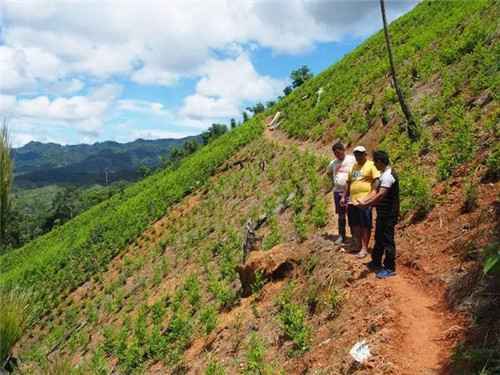
Coca has now become these farmers' lifeline. As a cash crop, it has clear advantages. It grows like a weed on steep slopes, in acidic soil, and at high altitude. It can be harvested within a year of planting, with a harvest cycle each March to April that gives families a steady income. The price for 25 kilograms of coca swings between $30 and $70, while coffee averages $37 for the same weight and yields only one harvest a year. "When leaf rust killed the coffee trees, those who grew coca could keep their farmland, while those who did not had to abandon their land for lack of income."
Coca: More Than Just a Crop
Coca is not simply a crop; it functions more like a savings account.
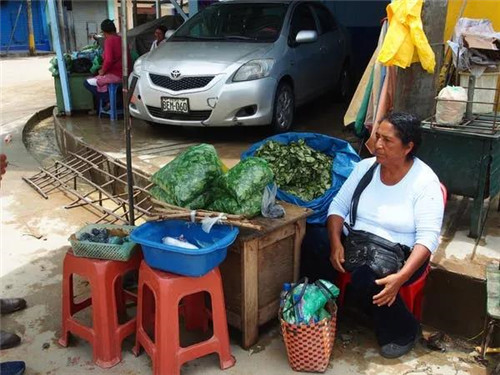
Coca carries deep social, cultural, and medicinal meaning in Andean indigenous culture, reaching back to pre-Columbian times. Since the 1970s, however, it has been used primarily to make cocaine. According to local civil organizations, of the 117,292 tons of dry coca leaf produced in Peru in 2017, a conservative estimate puts 106,401 tons toward drug production. Though illegal, the crop raises no moral qualms among farmers. "We are not committing a crime by growing coca; the crime is committed by those who buy cocaine base," one grower explains.
Government Response and Violence
Peru's government has answered coca's expansion with force, backed and funded by the United States. In April 2019, in the San Gabán region about 1,500 kilometers southeast of the capital, Lima, two coca growers were killed by government forces, and many more were injured defending their plantations.
Abandonment and Neglect
In the small town of Paratushali in Peru's central jungle, locals describe their region as "abandoned," "neglected," and "forgotten." In the rainy season the roads become impassable; public health and education infrastructure is thin; and farmers' loudest complaint is the state's failure to help them market their goods. "The state never cares about us small growers - they are more interested in cracking down on coca," says one local coca grower. "The development agency, DEVIDA, is supposed to help us replace coca with other crops, but it ends up spending 80% of its budget on salaries and cars. By the time the budget reaches us, all we get is a bag of fertilizer and a machete."
FrontStreet Coffee Recommendation
Stories like this are a reminder of how much rides on the price of a coffee cherry, and of why paying fairly for quality matters. When you want to taste coffee at its most vivid and fruit-forward, FrontStreet's light-roasted lots are the place to start.
FrontStreet's Yirgacheffe Gudingding is the first stop for many drinkers new to specialty coffee. Yirgacheffe commands a devoted following, and this lot brings vivid citrus, berries, and florals alongside a green-tea sweetness in the finish. Unlike the "sour coffee" some people picture, a good Yirgacheffe's acidity is gentle and bright - the sweet-tart of fresh fruit rather than a harsh bite - which makes it a forgiving entry point for anyone just starting with pour-over.
FrontStreet's Ethiopian Huakui is one of the most successful star lots of the specialty market in recent years. Its calling card is a burst of tropical fruit - strawberry, passion fruit, jackfruit, even lychee - with pronounced sweetness and almost no bitterness, so smooth and juicy that many drinkers call it "the coffee that doesn't taste like coffee." For anyone who dislikes the bitterness of conventional coffee, it is often the cup that overturns the stereotype. And FrontStreet's Kenya Small Tomato is a Kenya specialty washed coffee built around bright cherry-tomato and smoked-plum acidity with a full, juicy body. It comes from Kenya's Thika region, grown at 1,550-1,750 meters from the classic SL28 and SL34 varieties, with plump, round beans. The coffee gets Kenya's signature 72-hour double-washed fermentation to draw out fruit while keeping the cup clean, and FrontStreet roasts it light to preserve the lively acidity and layered fruit: the dry aroma already shows concentrated dried cherry tomato and florals, the sip leads with clear cherry tomato and smoked plum, the acidity bright and firm like freshly squeezed juice, the mid-palate sweet with a fresh snow-pear and black-plum note, and the finish clean and long with yellow-sugar sweetness and a faint green-tea lift.
Finally, FrontStreet's Ethiopian Kafa Forest coffee comes from the Kafa Forest in southwestern Ethiopia - a UNESCO-recognized biosphere reserve and the universally acknowledged birthplace of Arabica coffee. The very word "coffee" derives from the ancient Kingdom of Kafa, and the old legend of Kaldi the goatherd was born here. This 7,000-plus-square-kilometer mountain rainforest, at 1,400-2,100 meters, is wrapped year-round in mist and layered shade, and after millennia of natural evolution it nurtures more than five thousand wild Arabica genetic mother trees - including the ancestral stock of today's famous Gesha. Wild trees here grow on abundant rainfall and acidic red soil, with no dense human planting, and the coffee carries intense jasmine, citrus, and wild-berry aromas. As the last core habitat of wild Arabica on earth, the area runs cooperative, forest-friendly harvesting that protects rare coffee genetics while preserving traditional Ethiopian coffee ceremony - a pilgrimage site for drinkers tracing flavor back to its source.
Important Notice :
FrontStreet Coffee is a long-established specialty coffee roaster in Guangzhou China, selling freshly roasted beans from its own farm in Yunnan as well as dozens of carefully selected single-origin beans from around the world for both pour-over and espresso. The products deliver consistently excellent quality and great value, with shipping within 24 hours. Guangzhou's FrontStreet Coffee shop is recommended by many coffee lovers, and the beans are now available online at the Tmall 。
FrontStreet Coffee has moved to a new address:
FrontStreet Coffee Address: 315,Donghua East Road,GuangZhou
Tel:020 38364473
 Scan and follow the En Gafei WeChat official account. Please indicate that the reprint comes from "En Gafei".