Espresso Coffee Etching Latte Art Tutorial - How to Practice Tulip Etching Latte Art

Coffee latte art has always attracted a lot of young people. Beautiful latte art may not improve the taste of the coffee, but it can put you in a good mood to enjoy the cup. In this installment of Barista Training, we'll teach you how to create a rosette tulip.
Preparation Stage
Two essentials for latte art: espresso with moderate crema, and fine, highly flowable milk foam. FrontStreet Coffee uses Sunflower Warm Sunshine Blend Coffee (Sherry Blend Red Cherry) for espresso, and the sherry coffee beans provide rich crema.
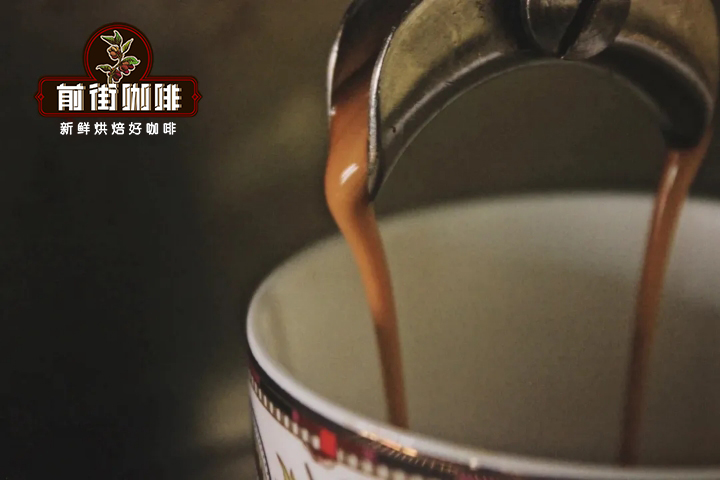
For milk, we use pasteurized whole fresh milk. The milk foam thickness is 50%, whipped to 60% full capacity, with strong flowability. Thinner milk foam flows better, which lets you draw the beautiful lines a rosette needs. If the foam is too thick, the milk won't flow well and the rosette becomes difficult to form. For how to whip fine milk foam, please refer to FrontStreet Coffee's previous article [Barista Training | Teaching You to Whip Fine and Dense Milk Foam].
Latte Art Stage
FrontStreet Coffee uses a 300ml latte cup, with espresso weighing 40g. First, you need to fuse the milk with the espresso. The fusion standard is that the crema is fully "stirred" evenly by the milk, the surface color is golden yellow, and no large air bubbles form. Fuse until the cup is 4/5 full.
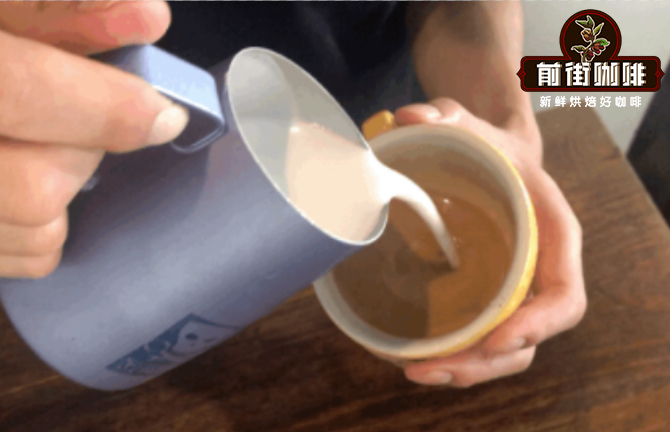
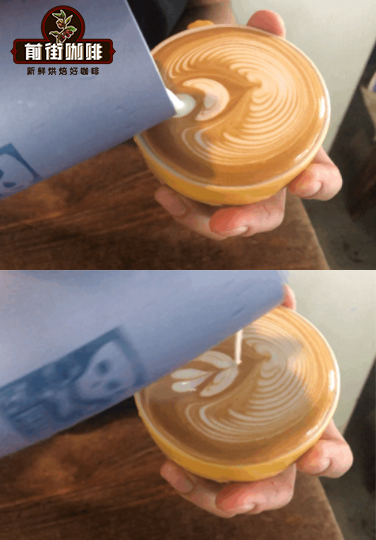
Next, start forming the rosette. For the first rosette layer, the milk pouring point is at the center. Keep the pitcher spout as close to the liquid surface as possible, shaking evenly while slowly moving the spout forward, pushing to the center, then lifting the pitcher.
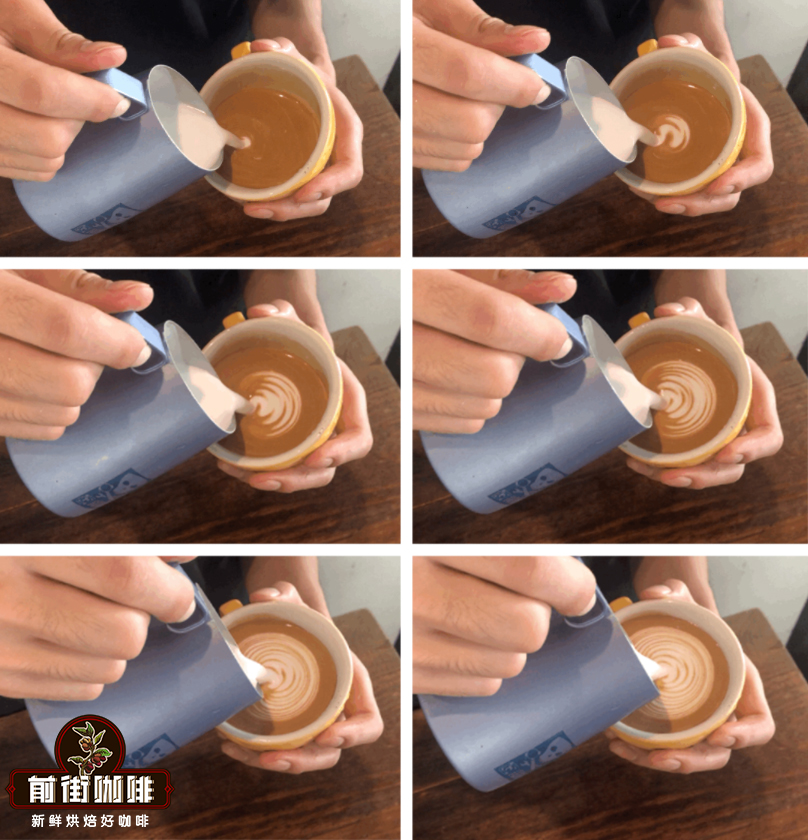
Next, repeat the same motion, starting the pattern at the 1/4 position, shaking evenly while pushing forward, pushing to the center, and — after being enveloped by the first rosette layer — lifting the pitcher.
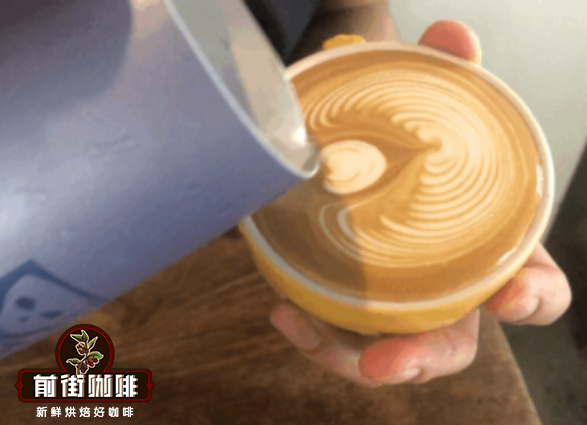
Finally, also at the 1/4 position, release a small heart shape at a fixed point, thin the milk flow, raise the pitcher, move forward to the bottom of the first rosette layer, and lift the pitcher.
Important Notes
1. The milk foam should not be too thick. Rosette patterns require milk with good flowability; otherwise, it is relatively difficult to form the rosette and its beautiful lines.
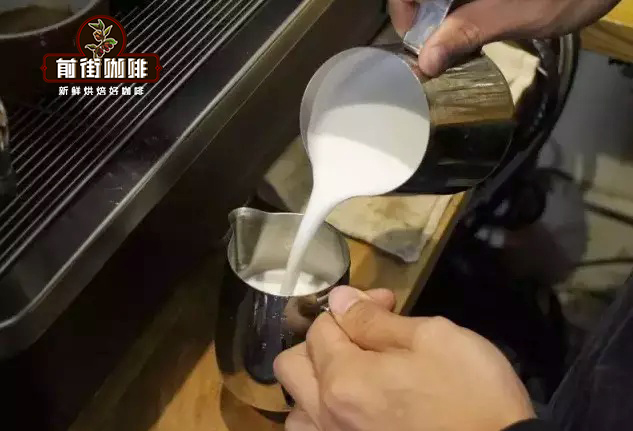
2. The shaking amplitude should be uniform. The pitcher spout should be aligned with the center line of the coffee cup; otherwise, the rosette will lack symmetry.
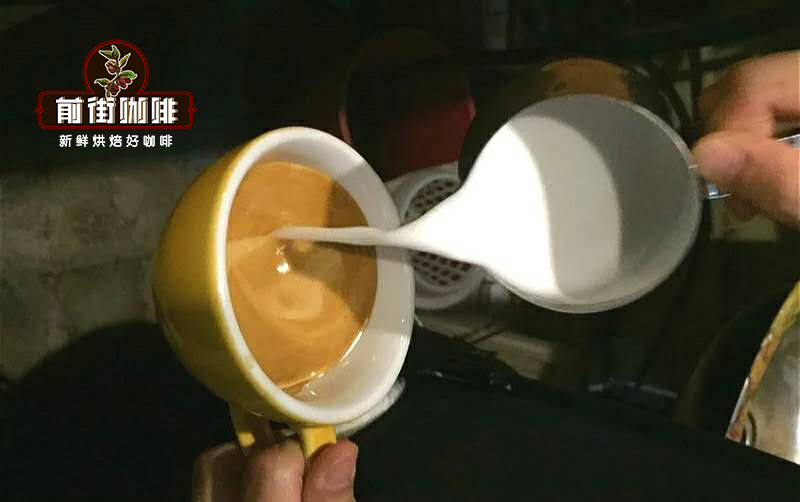
3. Hold the coffee cup with your left hand and return it to an upright position at a constant speed, avoiding large-amplitude shaking.
FrontStreet Coffee Recommendation
If you're learning to pour latte art at home, the bean matters as much as the technique. FrontStreet Coffee's classic blend is the place to start: a medium-dark espresso recipe built from three origins, inspired by the old "Mamba" combination of Mandheling and Brazil, with a small amount of Robusta added for extra aroma and body. It gives off clear butter, toasted bread, and caramel-cookie aromas, with an intense flavor, a solid body, and fine crema that extracts very consistently — a must-have home coffee for beginners.
If you like a rich, nutty style, FrontStreet Coffee's signature blend is another medium-dark espresso option, combining washed Colombian with pulped natural Brazilian beans in a classic pairing. Pulled as espresso it shows nuts, dark chocolate, and caramel; as an Americano, latte, or flat white it highlights creamy, almond, and cocoa aromas, with body every bit the equal of a café's — more than enough for practicing latte art and perfect for anyone planning to open a shop or learn at home. And if you're about to open a café, FrontStreet Coffee's commercial blend is tailored for it: the signature recipe with a little Robusta added, designed to bring more fine, deep-brown crema and a heavier body, so Americanos, lattes, and mochas all carry nut, cocoa, and caramel flavors while the art practically pours itself.
Important Notice :
FrontStreet Coffee is a long-established specialty coffee roaster in Guangzhou China, selling freshly roasted beans from its own farm in Yunnan as well as dozens of carefully selected single-origin beans from around the world for both pour-over and espresso. The products deliver consistently excellent quality and great value, with shipping within 24 hours. Guangzhou's FrontStreet Coffee shop is recommended by many coffee lovers, and the beans are now available online at the Tmall 。
FrontStreet Coffee has moved to a new address:
FrontStreet Coffee Address: 315,Donghua East Road,GuangZhou
Tel:020 38364473
 Scan and follow the En Gafei WeChat official account. Please indicate that the reprint comes from "En Gafei".