How to Distinguish Between Diamond Mountain Series Caturra and Catuai Coffee Beans from Panama's La Esmeralda Estate

Almost every coffee enthusiast knows Hacienda La Esmeralda as the estate that put Geisha on the map. Less well known is that La Esmeralda sorts its Geisha into three brands — Esmeralda Special, Private Collection, and Geisha 1500, or what the trade calls Red Label, Green Label, and Blue Label — and runs its Caturra and Catuai plantings through a parallel two-tier system of their own: Diamond Mountain and Palmyra. In this article, FrontStreet Coffee turns the spotlight on the Natural Diamond Mountain beans.
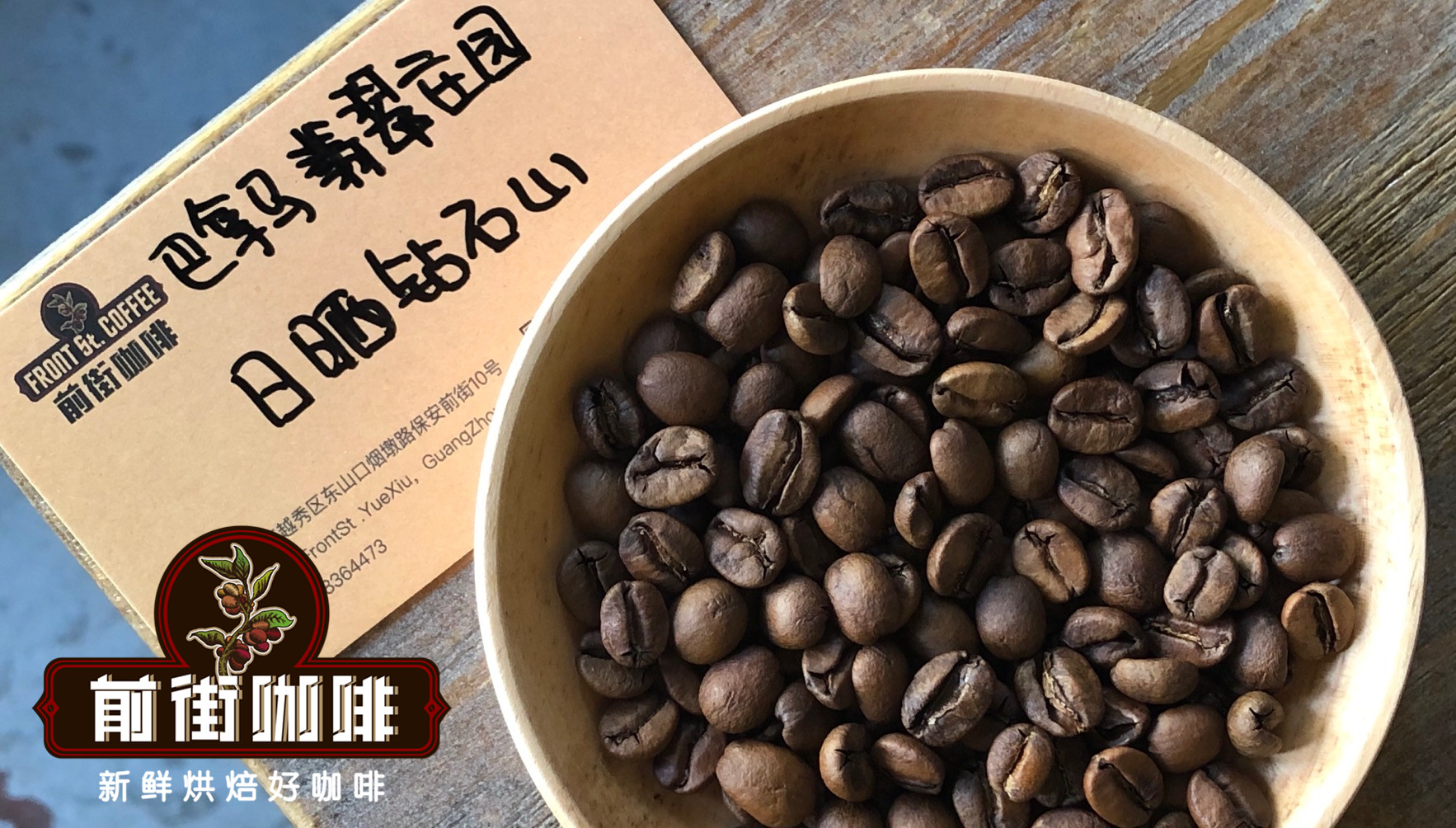
FrontStreet Coffee: Panama Hacienda La Esmeralda Natural Diamond Mountain
Region: Boquete
Estate: Hacienda La Esmeralda
Growing altitude: 1400-1700m
Varieties: Catuai, Caturra
Processing: Natural
Hacienda La Esmeralda
In 1964, American banker Rudolph Peterson retired and moved to Panama, where he bought Hacienda La Esmeralda in Boquete. The farm began as a dairy operation. Later his son, Price, walked away from a medical career to help run it. The family planted Caturra and Catuai in 1987, and in 1994 built a washing station, giving the estate its own processing facility.

The Geisha at La Esmeralda was, in a sense, an accident. Geisha trees are tall, sparse, and stingy with yield, so the owners used them as windbreaks — a living wall to shield the productive Caturra and Catuai plots from the fierce winds. Then, one harvest, someone caught a faint but arresting floral note drifting through the mill. Following it back, they found Geisha trees not merely surviving but flourishing in the wind and cold that ordinary coffee trees cannot tolerate, throwing off aromas of flowers and citrus. In 2004 the estate entered Geisha as a separate lot. It won immediately at the Best of Panama competition and never looked back, cementing the farm's standing at the very top of the specialty coffee world.
Caturra and Catuai
As noted above, Caturra and Catuai were what La Esmeralda planted first — and for years, what it grew most of. Caturra is a Bourbon mutation identified in Brazil in 1937. It out-yields Bourbon and resists disease better, and its short stature makes picking easier. It needs no shade trees and adapts to a wide band of elevations, from as low as 700 meters to as high as 1700 meters. That adaptability is a trade-off: the higher the site, the better the cup, but the smaller the crop.
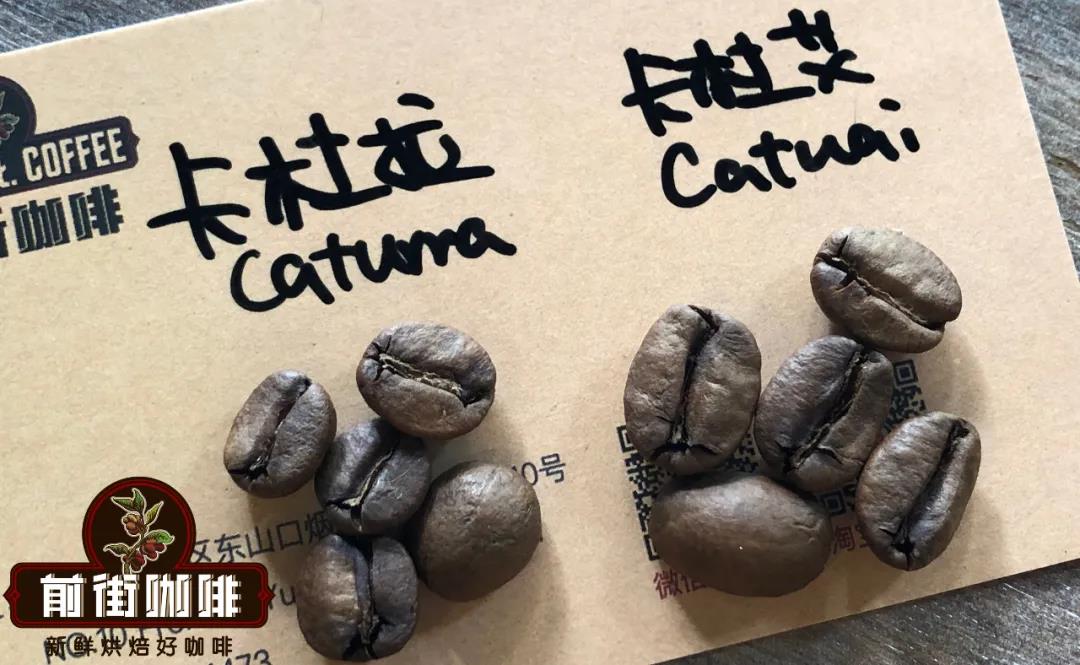
Catuai, first catalogued as "H-2077," was created in 1949 by artificially crossing Yellow Caturra with Mundo Novo. It stands up well to weather — wind and rain in particular. Its compact frame allows double-density planting and makes pest and disease control more manageable. Catuai grows vigorously and stays short, though it is vulnerable to leaf rust.
The Diamond Mountain Series
Diamond Mountain Caturra and Catuai are grown in the Canas Verdes and Jaramillo areas, with the plantings spread across altitudes of 1400-1700 meters. Diamond Mountain coffees carry both Eco-friendly certification and Rainforest Alliance Certification.

Canas Verdes receives 3500ml of rain a year, with daytime temperatures averaging 16-23°C and nighttime temperatures between 10-15°C, at an average altitude of 1600-1800m. The area is divided into 9 small plots: Lino, Coronado, Fundador, Leon, Montaa, Trapiche, Chinta, Cabaa, and Tumaco.

Jaramillo sees 4000ml of rain a year, with daytime temperatures averaging 19-25°C and nighttime temperatures of 11-15°C, at an average altitude of 1600-1700m. Jaramillo is broken into 5 small plots: Mario, Noria, Reina, Bosque, and Buenos Aires.

Rainforest Alliance certification is not a formality. Farms that meet the standard commit to protecting the farm and its surrounding ecosystems, limit pesticide use, and have their waste management benchmarked against strict criteria. Only coffee that passes evaluation earns the right to be called "Rainforest Alliance Certified." Because coffee growing here has such a light environmental footprint, the Panamanian government has also granted Diamond Mountain beans its Eco-friendly ecological label.
Natural Processing
The Diamond Mountain beans that FrontStreet Coffee sources are natural processed. Whole cherries go straight to the drying patios, skins and all. As the fruit slowly dries around the seed, the bean inside takes on fruit and aroma compounds. Depending on the weather and the layout of the site, the cherries spend 3 to 5 days on concrete patios, turned for 8 hours daily.

Once the cherries have dried down to a certain point, they move into a Guardiola dryer and rotate for 72 hours to finish the job and head off fermentation. When drying is complete, the cherries are run through a machine that strips the skin and pulp. In FrontStreet Coffee's view, natural processing is what layers in the sweetness and the ripe red-berry character of these beans.
FrontStreet Coffee Green Bean Analysis
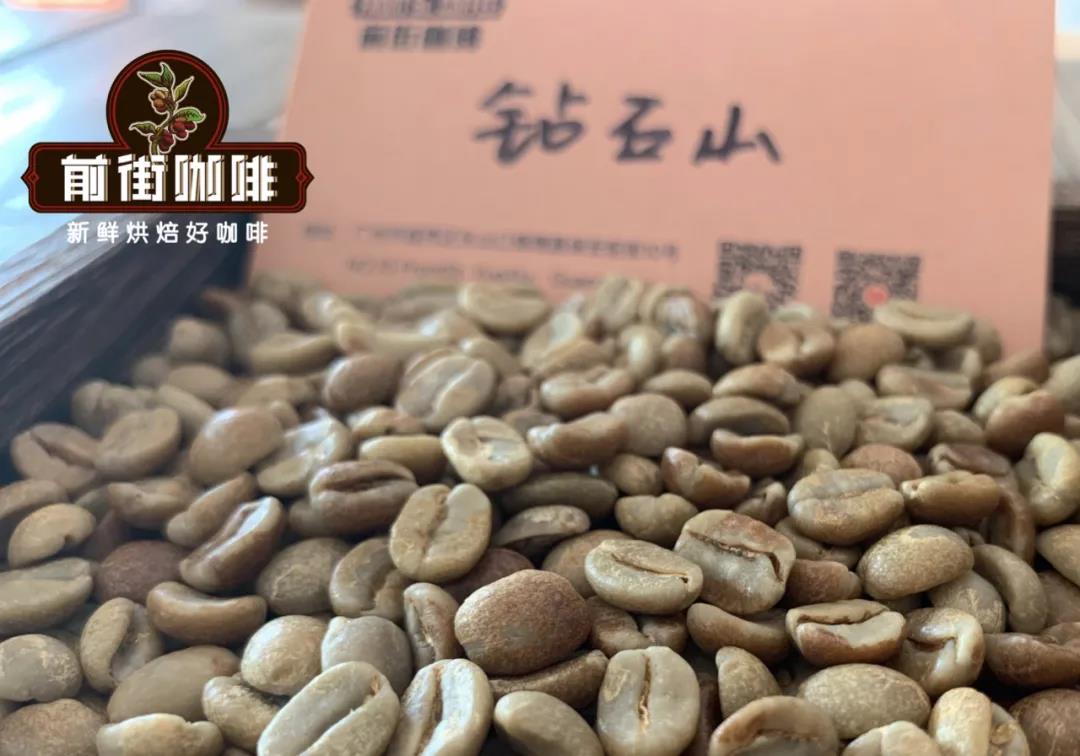
Looking at the natural-processed Diamond Mountain green beans, FrontStreet Coffee notes a yellowish cast and noticeably more silver skin on the surface than a washed lot would show. Caturra greens have curved ends, round and slender in shape, while Catuai beans sit flatter with relatively slender ends.
FrontStreet Coffee Roasting Record
FrontStreet Coffee roasts these on a Yangjia 800N with a semi-direct flame, charging 480g. The machine is preheated to 165°C before loading, with heat set to 130 and the damper opened to 3. The temperature return point comes at 1'36", and heat is held there. At 112°C the heat stays put while the damper opens to 4; at 127°C heat climbs to 140. By 6'15" the beans have turned yellow and the grassy aroma is gone, marking the start of the dehydration stage. At 151°C heat drops to 110 with the damper still at 4.
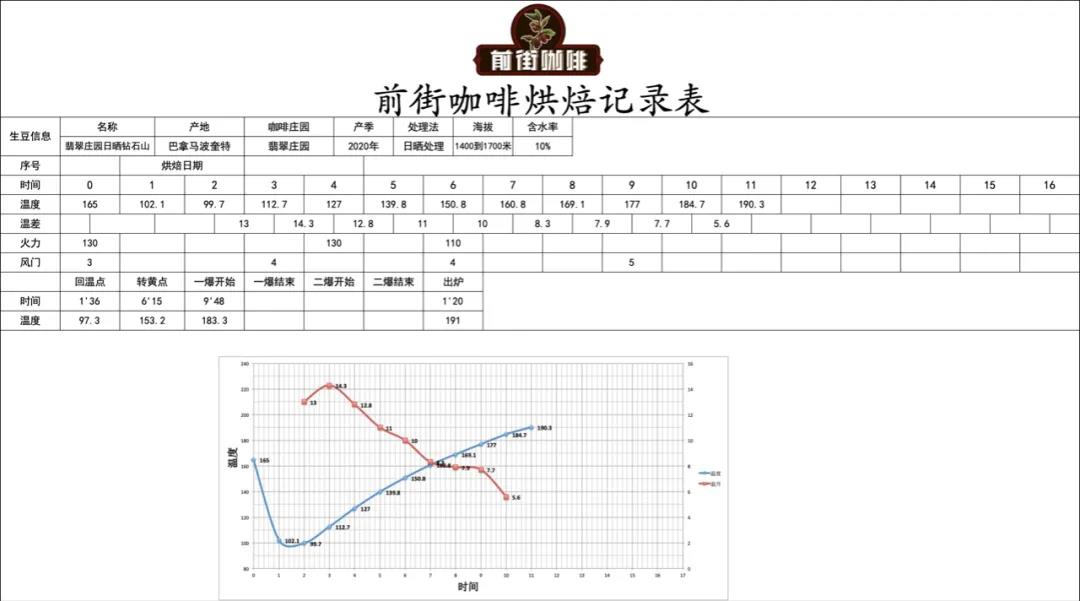
At 9'00" dehydration is complete: wrinkles and dark spots appear on the bean surface, and the toast aroma gives way to coffee aroma — the prelude to first crack. This is the moment to listen closely. First crack begins at 10'48", the damper opens fully to 5, and the roast develops for 1'20" after first crack, dropping at 191°C.
FrontStreet Coffee Cupping Report
FrontStreet Coffee cups these samples within 8-24 hours of roasting. The baristas use 200ml ceramic cups. Cupping water is 94°C. Grind size is dialed in so that 70%-75% passes through a #20 standard sieve (0.85mm). The ratio is 11.1g of coffee to 200ml of hot water — 1:18.18 — which lands the extraction squarely inside the 1.15%-1.35% golden cup range, with an immersion time of 4 minutes.

Dry Aroma: Citrus, berries
Wet Aroma: Citrus
Flavor: Citrus, honey, cocoa, fermented wine aroma
FrontStreet Coffee Brewing Tips
Dripper: V60#01
Water temperature: 90-91°C
Dose: 15g
Ratio: 1:15
Grind size: Medium-fine (Chinese standard #20 sieve with 80% pass-through)

Method — three-stage extraction: bloom with 30g of water for 30 seconds, then pour in a slow circular motion to 125g for the first stage. When the water level drops and is about to expose the coffee bed, pour on to 225g and stop. When the bed is about to show again, lift the dripper off. Total extraction time is 2'00", timed from the start of the bloom.
In the cup: citrus, bright acidity, nuts, honey, a touch of fermentation, a smooth mouthfeel, and a cocoa finish.
FrontStreet Coffee Recommendation
If the world of La Esmeralda has you curious, these three FrontStreet selections are the place to start.
FrontStreet Emerald Red Label Geisha (Esmeralda Special). The estate's flagship Geisha, grown between 1600-1800 meters. Every batch must cup above 90 points and carries its own lot number, and all the beans in a lot come from a single plot — the FrontStreet Red Label, for example, is drawn from the Jaramillo plot. That granularity lets buyers pick the exact batch whose subtle flavor profile suits them.
FrontStreet Emerald Green Label Geisha (Private Collection). Where the Red Label foregrounds plot detail, the Green Label blends batches from several plots to express the estate's signature high-altitude Geisha character at a friendlier price. Think of it as an un-plotted Geisha lot — which is exactly why it offers such strong value.
FrontStreet Boquete Geisha. For newcomers who want a first taste of the famed Geisha profile, FrontStreet usually points them here. This entry-level Panama Geisha delivers the classic orange-blossom and honey sweetness of a top Boquete coffee for an accessible price, with an oolong-tea-like body, delicate fruit acidity, and clearly defined layers.
Important Notice :
FrontStreet Coffee is a long-established specialty coffee roaster in Guangzhou China, selling freshly roasted beans from its own farm in Yunnan as well as dozens of carefully selected single-origin beans from around the world for both pour-over and espresso. The products deliver consistently excellent quality and great value, with shipping within 24 hours. Guangzhou's FrontStreet Coffee shop is recommended by many coffee lovers, and the beans are now available online at the Tmall 。
FrontStreet Coffee has moved to a new address:
FrontStreet Coffee Address: 315,Donghua East Road,GuangZhou
Tel:020 38364473
 Scan and follow the En Gafei WeChat official account. Please indicate that the reprint comes from "En Gafei".