Africa Uganda Mt. Elgon Region Zorro Hill Agri-Grand Processing Station Coffee Beans SL14 Coffee Variety
Ugandan coffee is something of a "shy one" among African origins, rarely stepping into the public spotlight. The reason is that Uganda has predominantly grown Robusta. In recent years, with the growth and support of the specialty coffee market, Uganda has also begun cultivating Arabica. FrontStreet Coffee sees Ugandan coffee as a rising star among African specialties - an origin worth anticipating. FrontStreet Coffee has also collected beans from several different Ugandan growing regions for cupping; in this article, we'll look at coffee from the Mount Elgon region.
Mount Elgon Growing Region
Mount Elgon
Mount Elgon is an extinct volcano in the Kapchorwa Province of eastern Uganda, bordering Kenya. It is said to have once been Africa's highest peak. Local people believe deities reside on the summit, far beyond mortal reach. When the deities are pleased, there is ample dew and rain, benefiting the whole mountainside where all things flourish in lush greenery. The Kawa members' coffee gardens are scattered across Mount Elgon. After volcanic activity ceased, a massive crater formed at the summit, later becoming a lake. Streams flowing down from the crater irrigate the crops on the mountainside. The volcanic soil's primary characteristics give Ugandan coffee a distinctive profile - aromatic, mellow, with moderate sweetness and acidity.
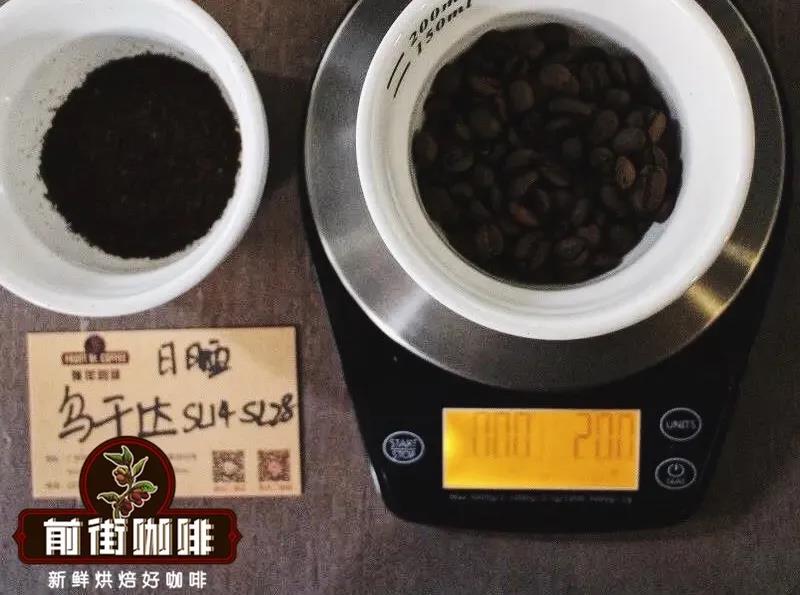
FrontStreet Coffee - Uganda SL14 SL28 Coffee Beans
Region: Mount Elgon
Processing Station: Sironko Highlands Processing Plant
Variety: SL14 & SL28
Processing Method: Natural processing
Sironko Highlands Processing Plant
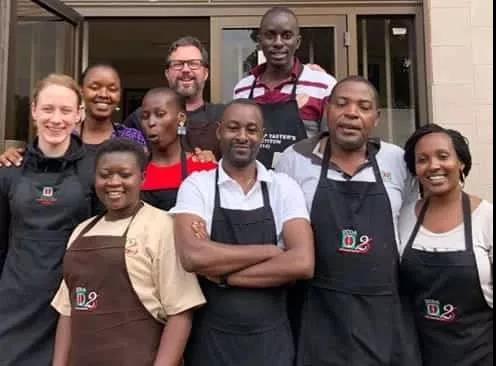
This Ugandan coffee comes from the Sironko Highlands Processing Plant, which placed fourth in the 2017 TOH competition. The Sironko Highlands Processing Plant was the first organization in all of Africa to join an organic sustainability program. Its "Hibby Organic Plan" launched in 2002, making it the first coffee in Africa to receive UTZ CERTIFIED certification. Compost is used as fertilizer, and the plantation has good shade coverage.
What Is the TOH Competition?
TOH (Taste of Harvest) is a green coffee competition initiated by the African Fine Coffees Association (AFCA). It is held annually among coffee-producing countries in Africa and is limited to beans harvested during the current season. In nature it is similar to America's COE (Cup of Excellence) or Panama's BOP (Best of Panama). What sets TOH apart is that, besides national-level competitions in Africa, there are also sub-regional and all-Africa level green coffee competitions.
Natural Processing Method
Natural
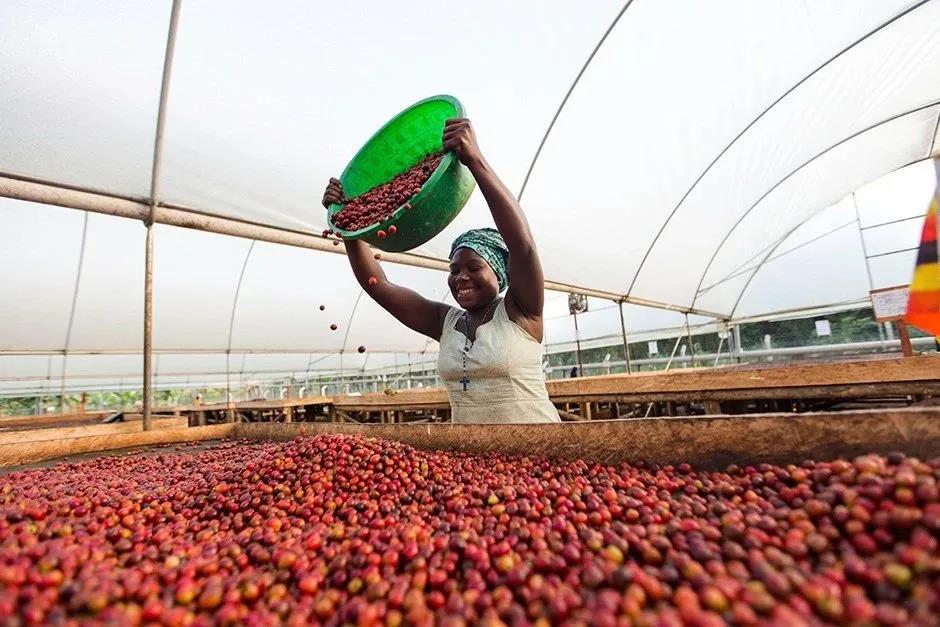
Uganda produces not only washed coffee but also small-batch natural coffees. This bean uses natural processing. After the cherries are harvested, defective, unripe, and overripe berries are sorted out, then the fruit is sent straight to raised racks and spread out to dry. Coffee processed this way takes 25-30 days to dry, and drying is complete only once moisture content drops to around 11%. FrontStreet Coffee believes naturally processed coffee offers higher sweetness and richer layering.
Coffee Bean Varieties & Analysis
SL28 & SL14
The varieties grown by Ugandan farmers are SL14 and SL28. The SL varieties come from research and selection by Scott Lab. Kenyan coffee became world-famous because of SL28 and SL34, so the Ugandan government promoted them heavily, distributing SL seeds to farmers.
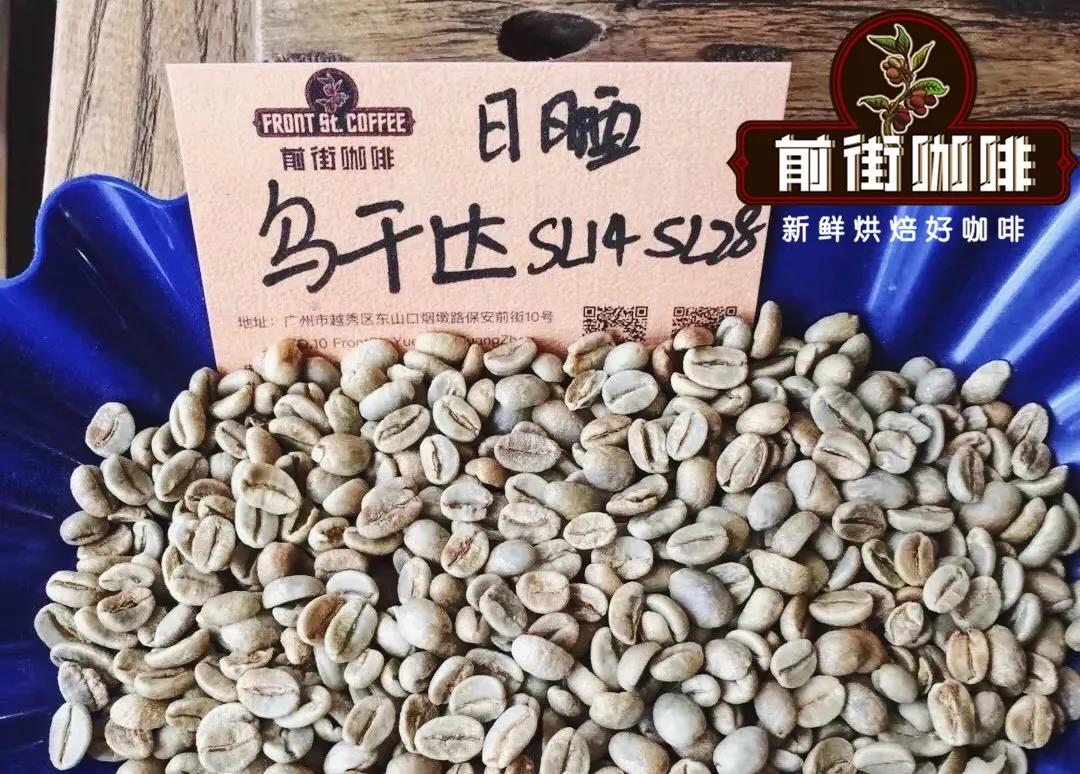
Among these, SL14 not only has excellent flavor but also drought resistance, and it can be harvested just two years after planting - quite suitable for farmers' needs. SL14 beans are slightly longer, greenish-yellow in color, with significant variation in bean size. SL28 features copper-colored leaves and broad, bean-shaped beans with wonderful sweetness, balance, and complex, varied flavors, as well as distinct citrus and dark plum characteristics.
FrontStreet Coffee Roasting Recommendations
FrontStreet Coffee's roaster uses a Yangjia 800N roasting machine with a 600g batch size: preheat the roaster to 200°C, open the damper to 3.5. After 30 seconds, reduce heat to 170°C, keeping the damper unchanged. The turning point occurs at 1'36", when the heat is adjusted once at 168°C. At this point the bean surface turns yellow, the grassy smell disappears completely, and dehydration is complete. Reduce heat to 130°C and adjust the damper to 4.
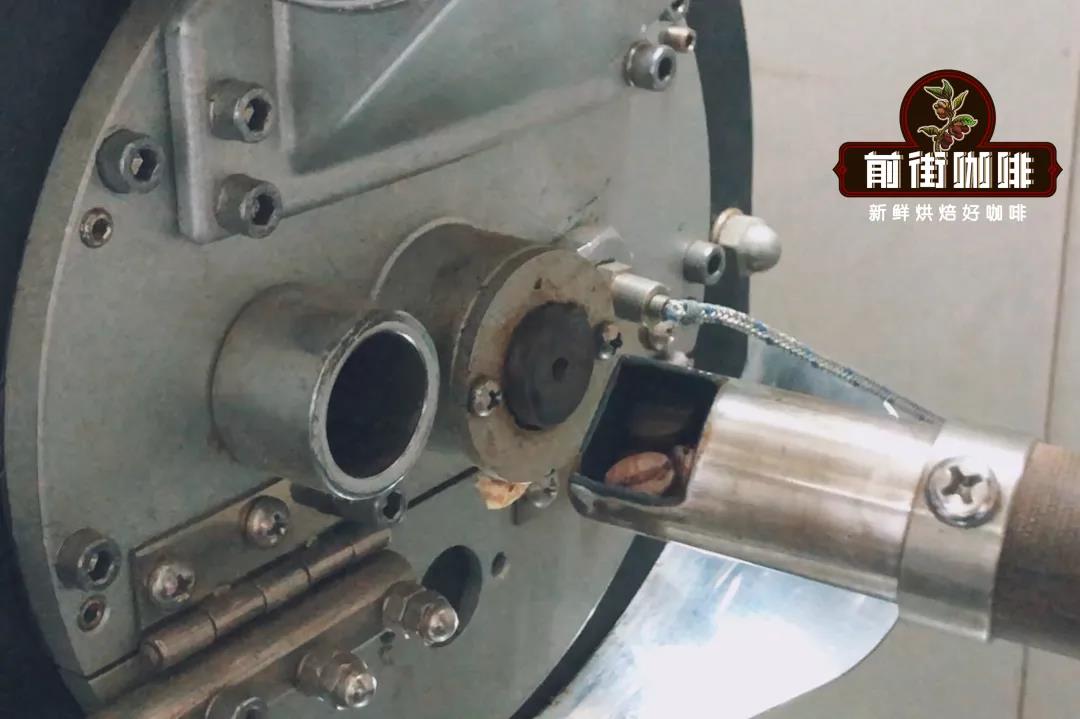
At 8'45", ugly wrinkles and black spots appear on the bean surface, and the toast aroma clearly shifts into coffee aroma - this can be defined as the prelude to first crack. At this point, listen carefully for the sound of first crack. First crack begins at 9'07"; reduce heat to 80°C and open the damper fully to 5 (be very careful when adjusting heat - don't reduce it so much that cracking stops). 1'50" after first crack, drop the beans at 198.4°C.
FrontStreet Coffee Cupping Report
FrontStreet Coffee cups samples 8 hours after each roasting batch. Using 200ml standard cupping bowls, with a grind size achieving 70%-75% retention on a #20 standard sieve and 11g of coffee. Water TDS is 120ppm, water temperature 94°C. First, grind and smell the dry aroma, then add water to fill the bowl. Confirm the wet aroma. After 4 minutes, break the crust and remove it, then move on to flavor evaluation.
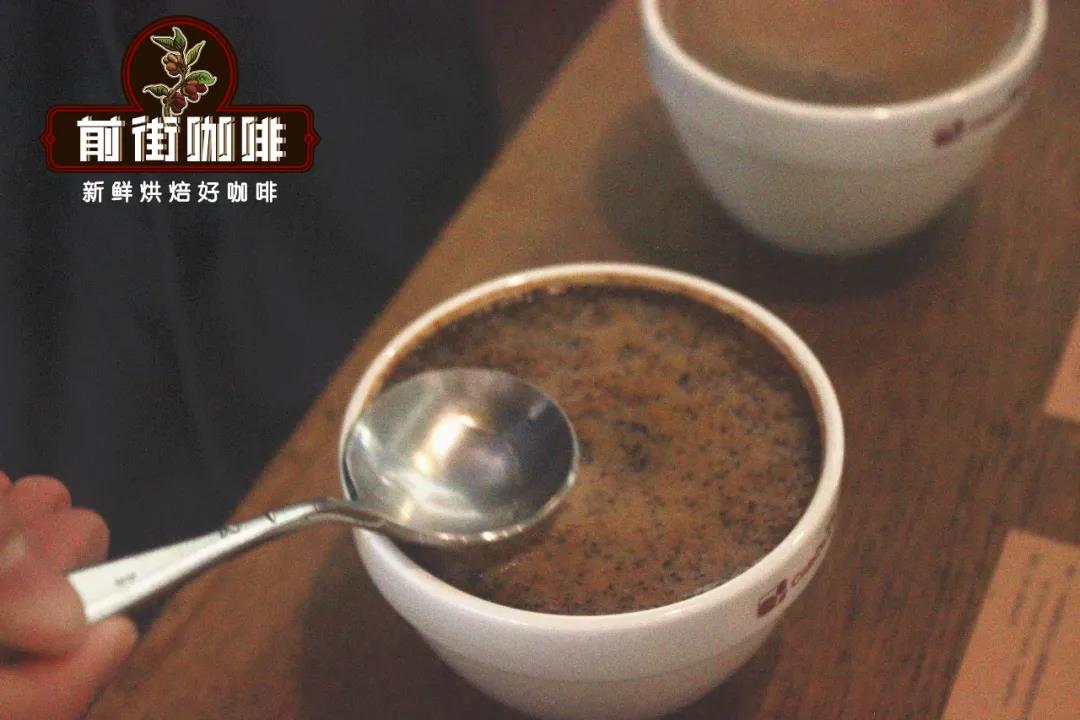
Dry Aroma: Wine aroma, roasted melon seeds
Wet Aroma: Sweet orange juice
Flavor: Citrus, berries, spices, woody notes, complex texture
FrontStreet Coffee Brewing Tips
Water Temperature: 90-91°C
Grind Size: BG #6m (fine-sugar size / 80% retention through #20 sieve)
Coffee-to-Water Ratio: 1:15
Coffee Amount: 15 grams
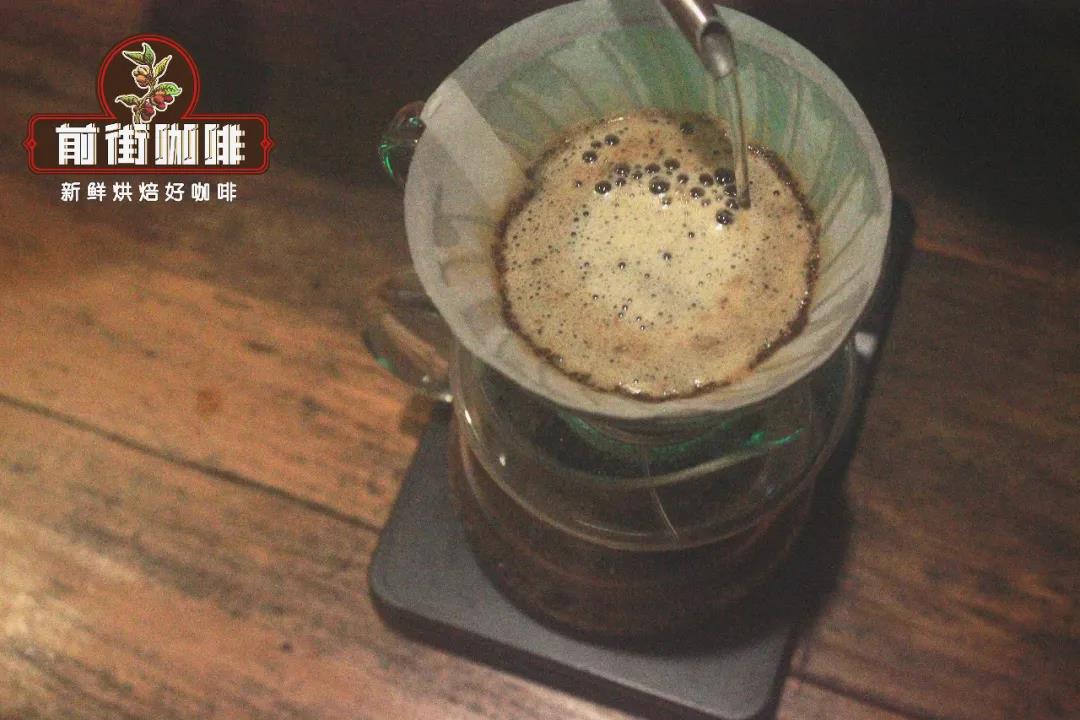
FrontStreet Coffee uses segmented extraction, a three-stage pour. 30g of water for bloom, wait 30 seconds. Second pour: a small stream in a circular motion to 125g, then stop. Wait for the water level to drop, then pour slowly again at even speed, keeping the water level from rising too high. Pour again to 225g and stop. Total extraction time is 2 minutes (including bloom time).
Brewing Flavor: Fruit flavors such as citrus and berries, fermented notes, clear and bright acidity, smooth texture, spices, woody notes, complex mouthfeel.
FrontStreet Coffee Recommendation
If natural processing is what draws you in, FrontStreet Coffee Sun-Dried Huakui is a superb Ethiopian counterpart. The variety is a local Ethiopian heirloom - several undistinguished varieties growing together, so bean sizes vary - with a delicate floral lift and especially prominent fruit aromatics. The classic sun-dried method delivers creamy strawberry, mango, jackfruit, citrus, and blueberry notes with the ripe tropical-fruit character typical of FrontStreet Coffee's Sidamo natural, the same rich berry fragrance that won first place at the TOH green coffee competition that year.
For a washed contrast with a similarly complex profile, FrontStreet Coffee Colombia Sidra comes from a Finca La Divisoria lot that won over the World Barista Championship stage in 2022. Grown at 1,650-1,800 meters and processed as a double anaerobic natural, it is roasted light-to-medium and pours with jasmine and citrus in the dry aroma, then passion fruit, blueberry, grape, and apricot in the cup, with bright, gentle acidity, a hint of spice mid-palate, and a lasting cocoa finish.
Important Notice :
FrontStreet Coffee is a long-established specialty coffee roaster in Guangzhou China, selling freshly roasted beans from its own farm in Yunnan as well as dozens of carefully selected single-origin beans from around the world for both pour-over and espresso. The products deliver consistently excellent quality and great value, with shipping within 24 hours. Guangzhou's FrontStreet Coffee shop is recommended by many coffee lovers, and the beans are now available online at the Tmall 。
FrontStreet Coffee has moved to a new address:
FrontStreet Coffee Address: 315,Donghua East Road,GuangZhou
Tel:020 38364473
 Scan and follow the En Gafei WeChat official account. Please indicate that the reprint comes from "En Gafei".