Geisha or Blue Mountain? Blue Mountain Launches First-ever Jamaica Blue Mountain Geisha Coffee Beans with Unique Flavor Profile
Blue Mountain Geisha: Jamaica's Exciting New Coffee Innovation
Earlier this year, FrontStreet Coffee introduced the new harvest of Jamaica Blue Mountain, this time with a special addition of natural processing. Many people are not quite sure what that means.
Back in the era when Blue Mountain coffee was at its peak, drinkers were enjoying Mandheling, Brazilian, and Colombian coffees with their traditional rich flavors. Blue Mountain set itself apart by achieving balance across multiple dimensions of flavor, and in doing so it earned a considerable standing in the coffee world of that time. Even today, plenty of merchants still create and sell Blue Mountain flavor and Blue Mountain blend coffees.
But times have changed.
The coffee we drink has changed too. First it was Yirgacheffe, then Geisha, and then a wave of new processing methods.
Look back and you begin to understand Jamaica Blue Mountain's urgency not to be forgotten. That is why this year there is natural-processed Blue Mountain: natural processing makes its acidity more prominent, and those who dislike it may say the coffee has become unbalanced.
Jamaica Blue Mountain coffee is of the Typica variety. Later there were reports that Jamaica was planting some Bourbon varieties. Hearing that news, several colleagues at FrontStreet Coffee discussed what they would do if they were Jamaica Blue Mountain coffee farmers. The conclusion: plant Geisha. Only by choosing better varieties can the region avoid competing with most other producing areas while holding on to its place in the coffee world.
Surprisingly, Geisha from Jamaica arrived at our door just a few days later.
Is that the end of the story? Not yet. Simply moving a variety to a new place does not guarantee good flavor, just as planting Yirgacheffe and Geisha in Yunnan does not necessarily deliver outstanding flavors after three or four years of harvests. Only by adjusting the next year's cultivation management and post-processing based on the first year's flavor can the results keep improving, eventually forming a fixed regional flavor profile.
In 1922, the British colonial government founded the Scott Agricultural Laboratories in Kenya to study higher-quality coffees suited to local cultivation. More than a decade later, SL28 and SL34 were selected from dozens of samples as suitable for the region. That process is a microcosm of this journey.
This year has been full of surprises. Last century, good coffee was defined by the Blue Mountain standard; this century treasures Geisha. So what happens when these two powerhouses combine? That is right: the Jamaica Blue Mountain region introduced Geisha coffee this year.
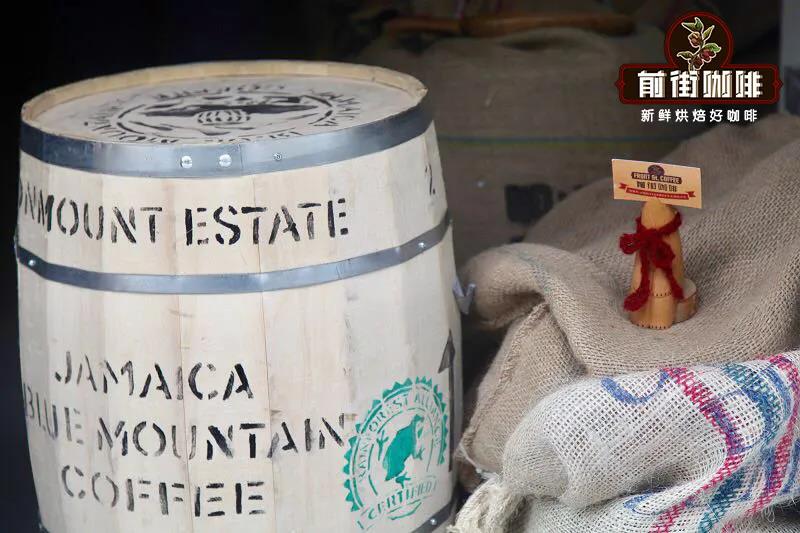
Blue Mountain Geisha
Until 2019, the Blue Mountain coffees circulating in overseas markets were all washed-processed Typica. This single processing method and single variety were precisely what allowed Blue Mountain coffee to keep its high-quality reputation decade after decade. Its balanced, rich taste is favored by many drinkers. Then in 2020, based on 2019 news, Blue Mountain first introduced natural-processed Blue Mountain No. 1, and later launched Blue Mountain Geisha.
Jamaica Blue Mountain Geisha
Region: Jamaica Blue Mountain Region
Farm: Clifton Farm
Altitude: 1310m
Variety: Geisha
Processing Method: Washed
As for why Blue Mountain began to diverge from its decade-long focus to innovate in recent years: earlier, there were indeed reports that Jamaica was trial-planting Bourbon varieties. When FrontStreet Coffee's team members heard this, they discussed the reasons behind the move. Before light-roast, acidic coffees became popular, the public's impression of coffee was the rich, aromatic flavor of traditional Mandheling and Colombian coffees. In that era, traditional Blue Mountain coffee was like the king among birds: its clean, rich, balanced flavor became the object of imitation, and alongside Hawaii Kona it was known as the "one king and one queen" of the coffee world.
Then times changed. First came Yirgacheffe coffee with its explosive fruity aromas, followed by the world-renowned Panama Geisha, which sparked a global wave of appreciation for coffee's pleasant acidity. Faced with this, traditional Jamaica Blue Mountain farmers felt Blue Mountain's status being shaken and gradually began to innovate. This year's additions of natural-processed Blue Mountain and Blue Mountain Geisha are excellent proof of that.
FrontStreet Coffee also obtained a barrel of Blue Mountain Geisha at the first opportunity. As with traditional Blue Mountain No. 1, exported coffees are all packaged in wooden barrels. This batch has limited production and comes from Clifton Farm. The barrel bears the Rainforest Alliance certification logo, and currently Clifton Farm is the only coffee farm in the Jamaica Blue Mountain region to hold that certification.

It is worth remembering that coffee trees are plants, and transplanting a variety from one region to another is not simple. It involves the adaptability and stability of the new plants in a new environment. To produce good flavors, excellent agronomic experience, time for adaptation, suitable growing conditions, and enough processing experience are all necessary. Clearly, Blue Mountain began planting other varieties quite early, and after years of breeding and flavor adjustment it has achieved results. The Geisha variety was discovered in 2004 by Panama's Hacienda La Esmeralda for its superb floral and fruity flavors. After more than a decade of spread, it has covered essentially every coffee-growing region, with Yunnan planting Geisha too. This year, Jamaica's introduction of a micro-batch Blue Mountain Geisha shows full confidence in the coffee.
Blue Mountain Geisha Processing Method
Blue Mountain Geisha still uses Jamaica's specialty washed processing. During processing, the skin and pulp are first removed, allowing fermentation for 12-18 hours. The fermented beans are then placed in pools and moved back and forth, using the friction of the beans and the power of flowing water to wash the coffee until it is smooth and clean. After washing, the beans are still encased in parchment with a moisture content of 50%. They must be sun-dried down to 12-14%, otherwise they will keep fermenting, mold, and spoil. After that, the beans are screened and stored in dedicated warehouses.
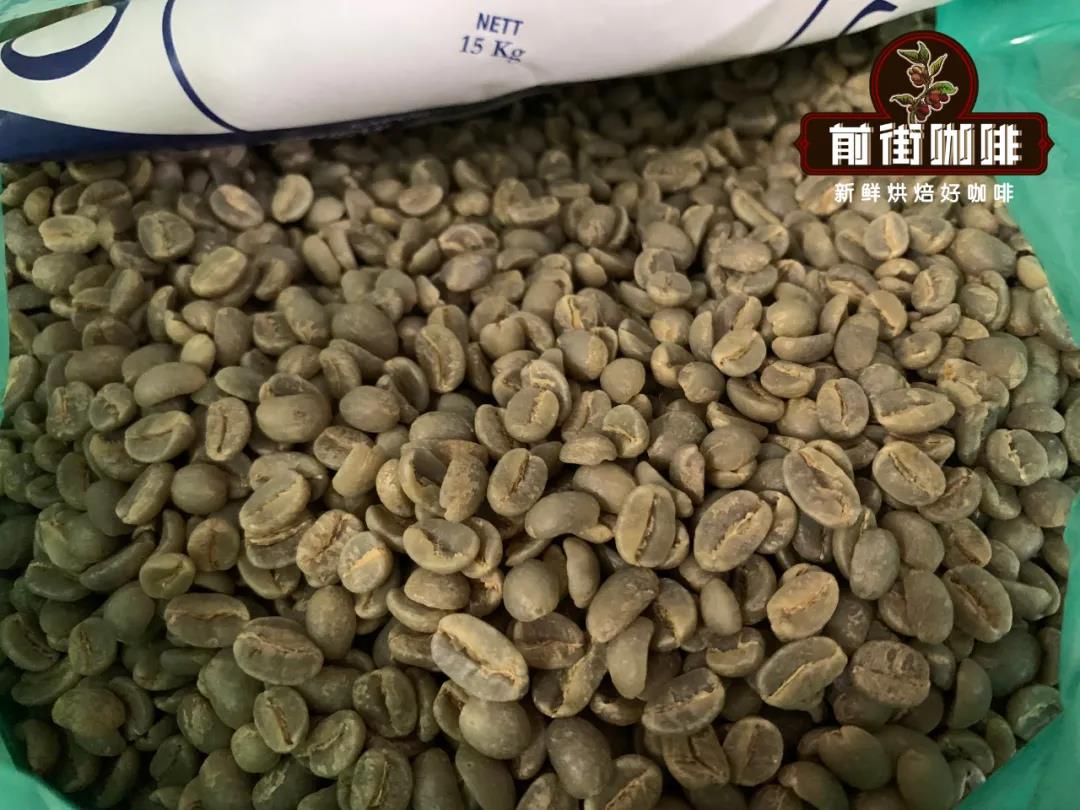
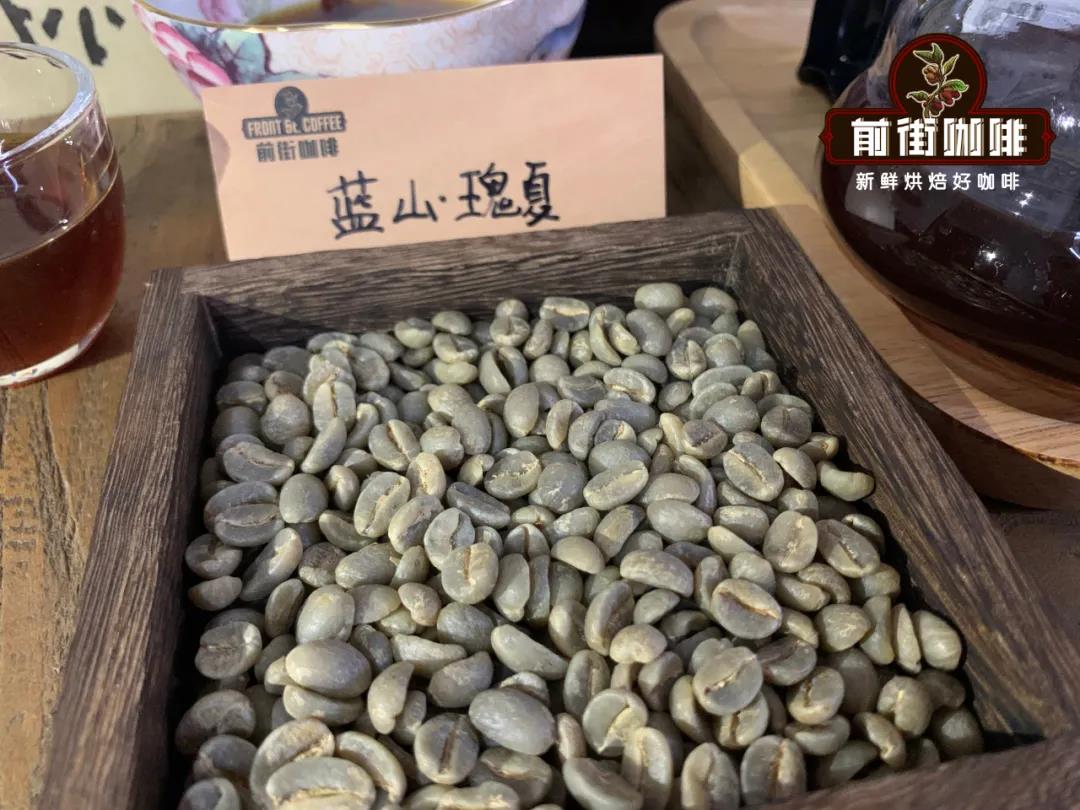
Looking at the raw beans, the color is a vibrant green, with a slightly pointed and elongated shape. The defect rate is extremely low, showing the maturity of the processing techniques and quality control.
FrontStreet Coffee Roasting Analysis
For this batch of Blue Mountain Geisha, FrontStreet Coffee's roasters faced a dilemma: should they highlight the Blue Mountain flavor or the Geisha flavor? Create a Blue Mountain taste and what is the point of using Geisha at all? Emphasize the Geisha flavor and does that betray the Blue Mountain name? Taking on the challenge, FrontStreet's roasters first roasted two versions: one traditional medium roast with a rich, mellow flavor, and one light roast with fruity and floral aromas. After several fine adjustments, they settled on an adjusted light roast curve that emphasizes Geisha's floral aromas and fruit acidity.
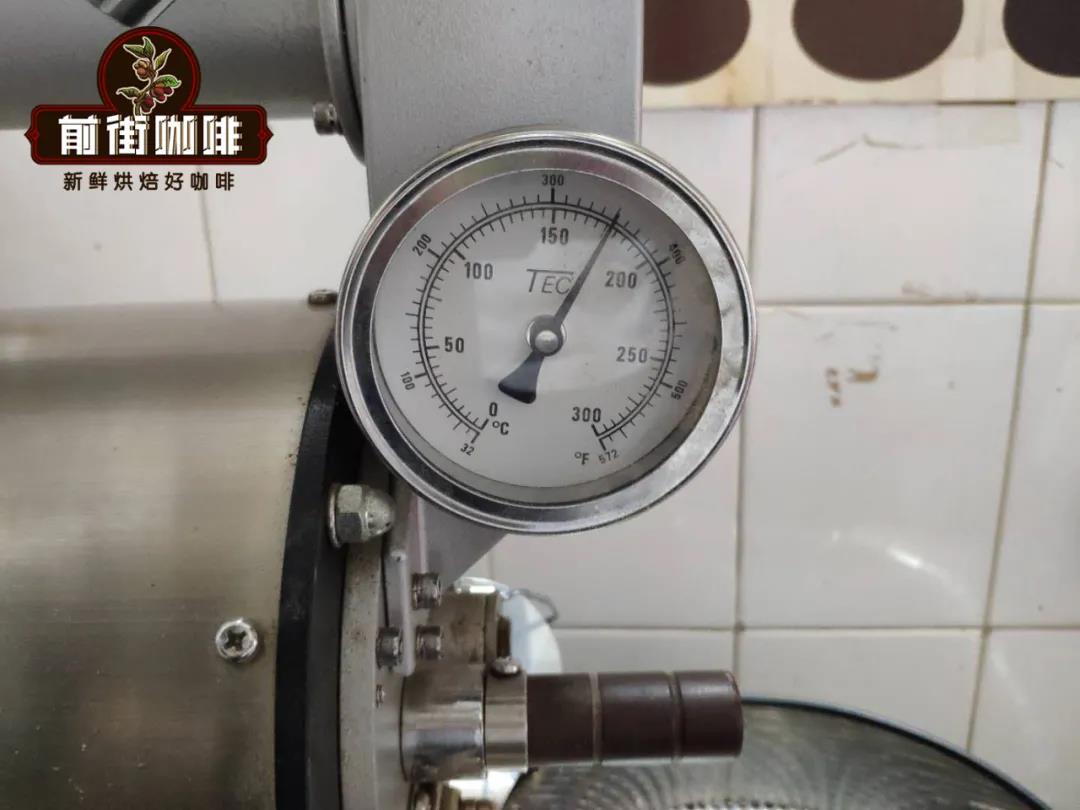
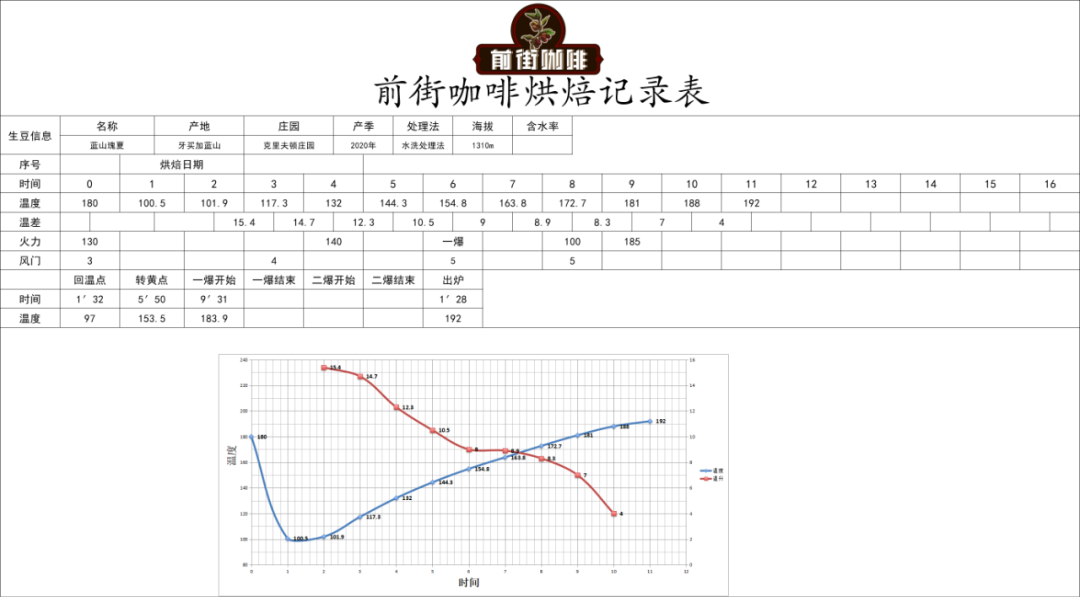
Drum temperature at 180°C, heat at 130, damper at 3; return temperature at 1'32", drum temperature at 97°C, heat unchanged; at 3 minutes the damper was adjusted to 4, at 4 minutes the heat was raised to 140. When the drum temperature reached 153.5°C, the bean surface turned yellow, the grassy aroma disappeared completely, and the roast entered the dehydration stage. At 8'36", ugly wrinkles and black spots appeared on the bean surface, and the toast aroma distinctly shifted toward coffee aroma, the prelude to first crack. From there, listen carefully for the sound of first crack, which begins at 9'31". The batch developed for 1'28" after first crack and was discharged at 192°C.
FrontStreet Coffee Cupping
Eight hours after each batch is roasted, samples are cupped. Using 200ml standard cupping bowls, with a grind size that passes through a #20 sieve at a 70%-75% rate, and 11g of coffee. Water TDS is 120ppm, water temperature 94°C. First grind and smell the dry aroma, then add water to fill the bowl. Confirm the wet aroma, and after 4 minutes break the crust and remove the grounds for flavor evaluation.
Region Introduction
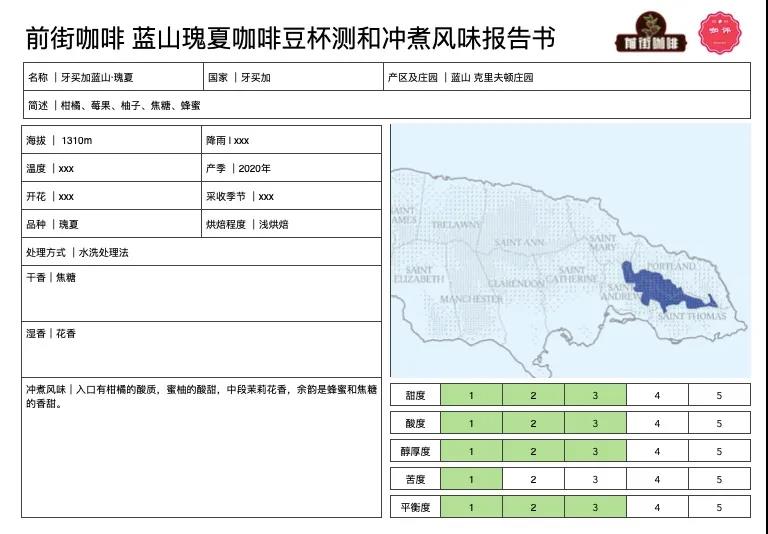
Jamaica Blue Mountain Coffee: Blue Mountain coffee and High Mountain coffee are each divided into four grades. From highest to lowest quality, they are NO.1, NO.2, NO.3, and PB (Peaberry). According to CIB standards, only coffee grown above 666 meters altitude may be called Jamaica Blue Mountain Coffee.
Brewing Recommendations
This brewing recommendation keeps to the principle of highlighting Geisha coffee's aroma and fruit character, using the following parameters:
Bean amount: 15g
Grind size: 78% pass through #20 sieve (a normal light roast pour-over grind)
Ratio: 1:15
Water temperature: 91°C
Dripper: V60
Pour-over method:
1. First pour 30g of water and let it bloom for 30 seconds.
2. After blooming, pour the second segment of water, 100g, in a circular motion from center to outer edge. This pour can be slow: Geisha coffee is very resistant to extraction and needs enough pouring time to release its aromas. Wait for the water level to drop to half.
3. When the coffee bed is about to be exposed, pour the third segment of 95g of water, for a total of 225g. Wait for the coffee to finish filtering, then remove the dripper. Total brewing time is 1 minute 50 seconds.
FrontStreet Coffee Recommendation
Blue Mountain Geisha sits at the intersection of variety and processing, and if it is the floral, fruit-forward side of coffee that draws you in, FrontStreet Yirgacheffe Gudingding Cooperative is a natural companion. Yirgacheffe has long been the gateway to specialty coffee for beginners and veterans alike, prized for its distinctive white florals and lemon-citrus acidity.
If you would rather explore how processing shapes that floral character, look to FrontStreet Yirgacheffe Natural Red Cherry. Only fully ripe, healthy cherries are harvested and dried whole on raised beds, turned every two to three hours in the first days to avoid uneven fermentation and dried over three to five weeks. Keeping the fruit on the bean gives it the typical Yirgacheffe profile plus a tropical fruit lift: citrus-like acidity, a berry-juice mouthfeel, honeyed sweetness, and a creamy smoothness.
Important Notice :
FrontStreet Coffee is a long-established specialty coffee roaster in Guangzhou China, selling freshly roasted beans from its own farm in Yunnan as well as dozens of carefully selected single-origin beans from around the world for both pour-over and espresso. The products deliver consistently excellent quality and great value, with shipping within 24 hours. Guangzhou's FrontStreet Coffee shop is recommended by many coffee lovers, and the beans are now available online at the Tmall 。
FrontStreet Coffee has moved to a new address:
FrontStreet Coffee Address: 315,Donghua East Road,GuangZhou
Tel:020 38364473
 Scan and follow the En Gafei WeChat official account. Please indicate that the reprint comes from "En Gafei".